MCQ
Emission spectrum of $C{O_2}$ gas
  • A
    Is a line spectrum
  • Is a band spectrum
  • C
    Is a continuous spectrum
  • D
    Does not fall in the visible region

Answer

Correct option: B.
Is a band spectrum
b
The emission spectrum of $CO _2$ gas that has been studied by the electron beam excitation method is a band spectrum.

Need a full question paper?

Generate a complete, print-ready paper with questions like this in minutes — across 16+ boards, with answer keys.
Start Generating Free

Similar questions

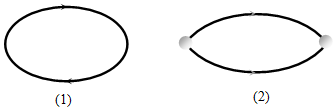
Below figures (1) and (2) represent lines of force. Which is correct statement
There are two electric bulbs of $40\, W$ and $100\, W$. Which one will be brighter when first connected in series and then in parallel,
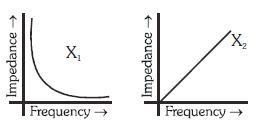
The graphs given below depict the dependence of two reactive impedances $X_1$ and $X_2$ on the frequency of the alternating $e.m.f$. applied individually to them. We can then say that
Two identical heaters rated $220\, volt$, $1000\, watt$ are placed in series with each other across $220 \,volt$ lines. If resistance do not change with temperature, then the combined power is ............. $watt$
The magnetic susceptibility for diamagnetic materials is:
A proton of energy $8\, eV$ is moving in a circular path in a uniform magnetic field. The energy of an alpha particle moving in the same magnetic field and along the same path will be.....$eV$
A particle of mass $m$ moves in circular orbits with potential energy $V ( r )=F r$, where $F$ is a positive constant and $r$ is its distance from the origin. Its energies are calculated using the Bohr model. If the radius of the particle's orbit is denoted by $R$ and its speed and energy are denoted by $v$ and $E$, respectively, then for the $n ^{\text {th }}$ orbit (here $h$ is the Planck's constant)-

$(A)$ $R \propto n ^{1 / 3}$ and $v \propto n ^{2 / 3}$

$(B)$ $R \propto n ^{2 / 3}$ and $v \propto n ^{1 / 3}$

$(C)$ $E=\frac{3}{2}\left(\frac{n^2 h^2 F^2}{4 \pi^2 m}\right)^{1 / 3}$

$(D)$ $E=2\left(\frac{n^2 h^2 F^2}{4 \pi^2 m}\right)^{1 / 3}$

A square of side ‘$a$’ has charge $Q$ at its centre and charge ‘$q$’ at one of the corners. The work required to be done in moving the charge ‘$q$’ from the corner to the diagonally opposite corner is
In a fission reaction ${}_{92}^{236}U \to {}^{117}X + {}^{117}Y + n + n$ , the binding energy per nucleon of $X$ and $Y$ is $8.5\,MeV$ whereas of $^{236}U$ is $7.6\,MeV$ . The total energy liberated will be about
If potential (in volts) in a region is expressed as $V (x,y,z) =6xy-y+2yz $ the electric field (in $N/C$) at point $(1, 1, 0)$ is