- AAre closer in regions of large electric fields compared to regions of lower electric fields.
- BWill be more crowded near sharp edges of a conductor.
- CWill be more crowded near regions of large charge densities.
- DWill always be equally spaced.
Equipotential surfaces are closer in regions of large electric fields because electric field intensity is inversely proportional to the separation between equipotential surfaces.
As the electric field intensities is large near sharp edges of a charged conductor or near the regions of large charge densities. Therefore, numbers of equipotential surfaces are closer to such places or in other words they are more crowded.
Generate a complete, print-ready paper with questions like this in minutes — across 16+ boards, with answer keys.
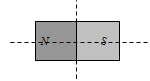
Time period for a magnet is T. If it is divided in four equal parts along its axis and perpendicular to its axis as shown then time period for each part will be

| (a) 4T | (b) T/4 | (c) T/2 | (d) T |
The angular momentum of electron in nth orbit is given by
|
(a) nh |
(b) |
(c) n |
(d) |
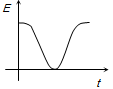
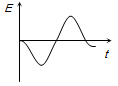
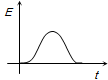
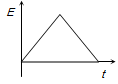
The variation of induced emf (E) with time (t) in a coil if a short bar magnet is moved along its axis with a constant velocity is best represented as

(a)
|
(b)
|
(c)
|
(d)
|
A charged particle of mass m and charge q travels on a circular path of radius r that is perpendicular to a magnetic field B. The time taken by the particle to complete one revolution is
|
(a) |
(b) |
(c) |
(d) |
In the given nuclear reaction A, B, C, D, E represents
|
(a) A = 234, B = 90, C = 234, D = 91, E = β |
|
(b) A = 234, B = 90, C = 238, D = 94, E = α |
|
(c) A = 238, B = 93, C = 234, D = 91, E = β |
|
(d) A = 234, B = 90, C = 234, D = 93, E = α |
A voltmeter essentially consists of
|
(a) A high resistance, in series with a galvanometer |
|
(b) A low resistance, in series with a galvanometer |
|
(c) A high resistance in parallel with a galvanometer |
|
(d) A low resistance in parallel with a galvanometer |
The effective resistance between points P and Q of the electrical circuit shown in the figure is
|
(a) 2Rr/(R + r) |
(b) 8R(R + r)/(3R + r) |
(c) 2r + 4R |
(d) 5R/2 + 2r |