Question
Evaluate $\left(3.2 x^6 y^3\right) \times\left(2.1 x^2 y^2\right)$ when $x = 1$ and $y = 0.5$.

Answer

To multiply algebraic expressions, we use commutative and associative laws along with the law of indices, i.e. $a^m× a^n= a^{m+n}$.
We have:
$ \left(3.2 x^6 y^3\right) \times\left(2.1 x^2 y^2\right) $
$ =(3.2 \times 2.1) \times\left(x^6 \times x^2\right) \times\left(y^3 \times y^2\right) $
$ =(3.2 \times 2.1) \times\left(x^{6+2}\right) \times\left(y^{3+2}\right) $
$ =6.72 x^8 y^5$
Substituting $\mathrm{x}=1$ and $\mathrm{y}=0.5$ in the result, we get:
$ 6.72 x^8 y^5 $
$ =6.72(1)^8(0.5)^5 $
$ =6.72 \times 1 \times 0.03125 $
$ =0.21$
Thus, the answer is $0.21$.

Need a full question paper?

Generate a complete, print-ready paper with questions like this in minutes — across 16+ boards, with answer keys.
Start Generating Free

Similar questions

A cylindrical vessel, without lid, has to be tin-coated on its both sides. If the radius of the base is $70\ cm$ and its height is $1.4m$, calculate the cost of tin - coating at the rate of $Rs\ 3.50$ per $1000\ cm^2$.
By what number should the following numbers be multiplied to get a perfect square in each case? Also, find the number whose square is the new number.
$8820$
Find $(x + y) ÷ (x − y)$, if $\text{x}=\frac{2}{3},\text{y}=\frac{3}{2}$
Find the value of
(i) $\left(3^0+4^{-1}\right) \times 2^2$
(ii) $\left(2^{-1} \times 4^{-1}\right)+2^{-2}$
(iii) $\left(\frac{1}{2}\right)^{-2}+\left(\frac{1}{3}\right)^{-2}+\left(\frac{1}{4}\right)^{-2}$
(iv) $\left(3^{-1}+4^{-1}+5^{-1}\right)^0$
(v) $\left\{\left(\frac{-2}{3}\right)^{-2}\right\}^2$
A wooden cylindrical pole is $7\ m$ high and its base radius is $10\ cm$. Find its weight if the wood weighs $225\ kg$ per cubic metre.
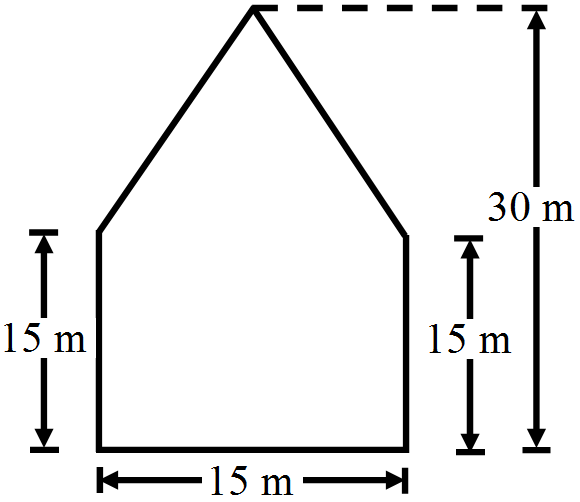
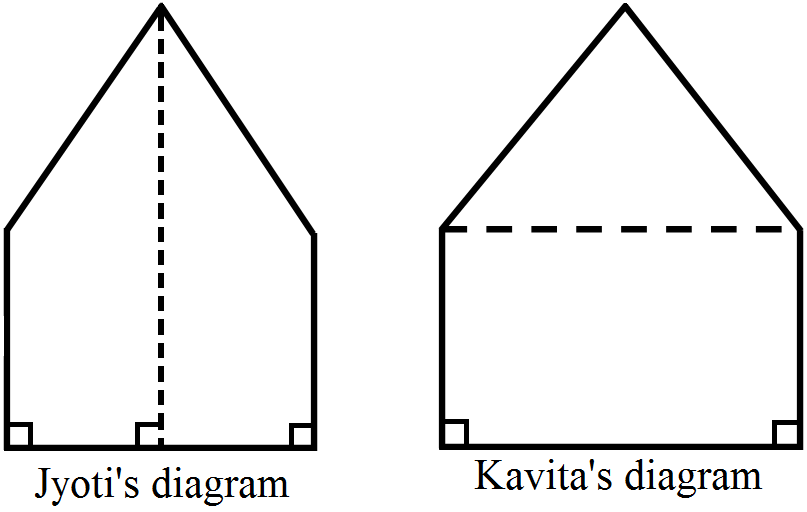
There is a pentagonal shaped park as shown in Fig. Jyoti and Kavita divided it in two different ways.

Verify the property: $x \times y = y \times x$ by taking: $\text{x}=0,\text{y=}\frac{-15}{8}$
Construct a quadrilateral $XYZW$ in which $XY = 5\ cm , YZ = 6\ cm , ZW = 7\ cm , WX = 3\ cm $ and $XZ = 9\ cm $.
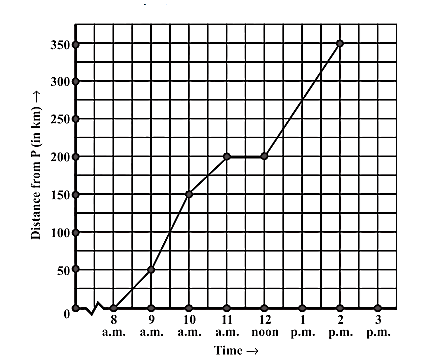
The given graph $($Fig$)$ describes the distances of a car from a city $P$ at different times when it is travelling from City $P$ to City $Q$, which are $350\ km$ apart. Study the graph and answer the following:
$i.$ What information is given on the two axes?
$ii.$ From where and when did the car begin its journey?
$iii.$ How far did the car go in the first hour?
$iv.$ How far did the car go during $(i)$ the $2^{nd}$ hour? $(ii)$ the $3$rd hour?
$v.$ Was the speed same during the first three hours? How do you know it?
$vi.$ Did the car stop for some duration at any place? Justify your answer.
$vii.$ When did the car reach City $Q$?
A cylinder is open at both ends and is made of $1.5\ cm$-thick metal. Its external diameter is $12\ cm$ and height is $84\ cm$. What is the volume of metal used in making the cylinder? Also, find the weight of the cylinder if $1cm^3$ of the metal weighs $7.5g.$