Question
Explain angular velocity. State the right hand thumb rule for the direction of angular velocity.

Answer

Get the step-by-step solution for this question inside the Vidyadip app.

Get the answer in the app

Need a full question paper?

Generate a complete, print-ready paper with questions like this in minutes — across 16+ boards, with answer keys.
Start Generating Free

Similar questions

Prove that an ideal capacitor in an AC circuit does not dissipate power
State and prove the principle (or law) of conservation of angular momentum.
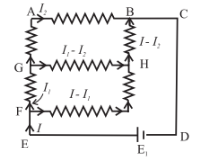
Find the equivalent resistance between the terminals F and B in the network shown in the figure below given that the resistance of each resistor is $10 ohm.$

Image
Permeability and Permittivity:
Magnetic Permeability is a term analogous to permittivity in electrostatics. It basically tells us about the number of magnetic lines of force that are passing through a given substance when it is kept in an external magnetic field. The number is the indicator of the behaviour of the material in magnetic field. For superconductors χ = – 1. If you substitute in the Eq. (11.18), it is observed that permeability of material µ = 0. This means no magnetic lines will pass through the superconductor.

Magnetic Susceptibility (χ) is the indicator of measure of the response of a given material to the external applied magnetic field. In other words it indicates as to how much magnetization will be produced in a given substance when kept in an external magnetic field. Again it is analogous to electrical susceptibility. This means when the substance is kept in a magnetic field, the atomic dipole moments either align or oppose the external magnetic field. If the atomic dipole moments of the substance are opposing the field, χ is observed to be negative, and if the atomic dipole moments align themselves in the direction of field, χ is observed to be positive. The number of atomic dipole moments of getting aligned in the direction of the applied magnetic field is proportional to χ. It is large for soft iron (χ >1000).

A metal wire of length $20 cm$ and diameter $0.2 mm$ is stretched by a load of $2 kg$ wt. If the density of the material of the wire is $7.8 g / cm ^3$, find the fundamental frequency of vibration of the wire.
About which axis of rotation is the radius of gyration of a body the least ?
Discuss analytically the composition of two linear SHMs having same period and along the same path.
Obtain the expression for resultant amplitude. Find the resultant amplitude when the phase difference is:
(i) zero radians (ii) \(\frac{\pi}{2}\) radians.
The total energy of a particle of mass $100$ grams performing SHM is $0.2 J$. Find its maximum velocity and period if the amplitude is $2 \sqrt{2} cm$.
Derive an expression that relates angular momentum with the angular velocity of a rigid body.
Two parallel S.H.M.s represented by $x_1=5 \sin \left(4 \pi t +\frac{\pi}{3}\right) cm$ and $x_2=3 \sin (4 \pi t+\pi / 4) cm$ are superposed on a particle. Determine the amplitude and epoch of the resultant S.H.M.