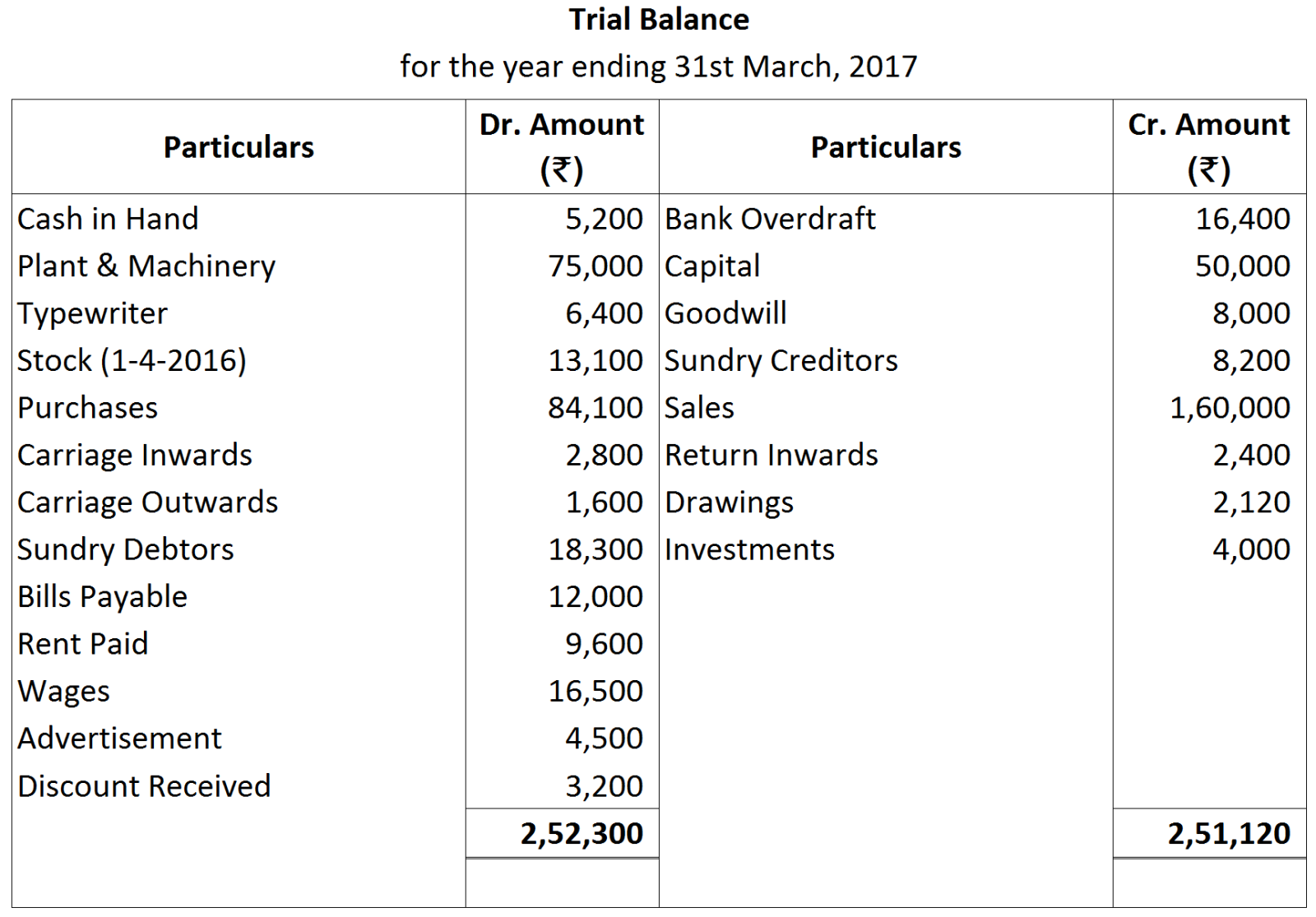
Question
Explain briefly any five advantages of accounting.

Answer

  1. Financial Information about Business: Financial performance during the accounting period, i.e., profit earned or loss incurred and also the financial position at the end of the accounting period is known through accounting.
  2. Assistance to Management: The management makes business plans, takes decisions and exercises control over the affairs on the basis of accounting information.
  3. Replaces Memory: A systematic and timely recording of transactions obviates the necessity to remember transactions. The accounting record provides the necessary information.
  4. Facilitates Comparative Study: A systematic record enables a businessman to compare one year's results with those of other years and locate significant fac leading to change, if any.
  5. Facilitates Settlement of Tax Liabilities: A systematic accounting record immensely helps in settlement of income tax and Goods and Services Tax (GST) liabilities, since it is a good evidence of the correctness of transactions.
  6. Facilitates Loans: Loan is granted by the banks and financial institutions on the basis of growth potential which is supported by the performance. Accounting makes available the information with respect to performance.
  7. Evidence in Court: Systematic record of transactions is often accepted by the Courts as good evidence.
  8. Facilitates Sale of Business: If someone desires to sell his business, the accounts maintained by him will enable the ascertainment of the proper purchase price.
  9. Assistance in the Event of Insolvency: Insolvency proceedings involve explaining many transactions that have taken place in the past. Systematic accounting records assist a great deal in such situation.

Need a full question paper?

Generate a complete, print-ready paper with questions like this in minutes — across 16+ boards, with answer keys.

Start Generating Free

Similar questions

What do you mean by dishonour of a bill? What entries will be made in the books of Drawer, if:
  1. Bill is with the drawer himself.
  2. Bill is discounted with the Bank.
  3. Bill is with the endorsee.
  4. Bill is sent to the Bank for collection.
Rectify the following errors assuming that Suspense Account was opened. Ascertain the difference in Trial Balance.
  1. Credit sales to Mohan ₹ 7,000 were recorded in Purchase Book. However, Mohan's Account was correctly debited.
  2. Credit purchases from Rohan ₹ 9,000 were recorded in Sales Book. However, Rohan's Account was correctly credited.
  3. Goods returned to Rakesh ₹ 4,000 were recorded in Sale Returns Book. However, Rakesh's Account was correctly debited.
  4. Goods returned from Mahesh ₹ 1,000 were recorded through Purchase Returns Book. However, Mahesh's Account was correctly credited.
  5. Goods returned to Naresh ₹ 2,000 were recorded through Purchases Book. However, Naresh's Account was correctly debited.
From the following particulars, prepare Bank Reconciliation Statement as on 31st December, 2008:Debit balance as per Cash Book ₹ 10,000.
  1. A cheque for ₹ 500 issued in favour of Karan has not been presented for payment.
  2. A bill for ₹ 700 retired by bank under a rebate of ₹ 20, the full amount of the bill was credited in the Cash Book.
  3. A cheque for ₹ 295 deposited in the bank has been dishonoured.
  4. A sum of ₹ 800 deposited in the bank has been credited as ₹ 80 in the Pass Book.
  5. Payments side of the Cash Book has been undercast by ₹ 200.
  6. A bill receivable for ₹ 1,000 (discounted with the bank in November 2008) dishonoured on 31st December, 2008.
Pass entries in the books of Krishnan of Bengaluru (Karnataka) in the following cases:
1.
Purchased goods from Karunakaran of Chennai for ₹ 1,00,000.
(IGST @18%)
2.
Sold goods to Ganeshan of Bengaluru for ₹ 1,50,000.
(CGST @ 6% and SGST @ 6%)
3.
Sold goods to S. Nair of Kerala for ₹ 2,60,000.
(IGST @18%)
4.
Purchased a Machinery for ₹ 80,000 from Surya Ltd. against cheque.
(CGST @ 9% and SGST @ 9%)
5.
Paid rent ₹ 30,000 by cheque.
(CGST @ 6% and SGST @ 6%)
6.
Purchased goods from Ram Mohan Rai of Bengaluru for ₹ 2,00,000.
(CGST @ 6% and SGST @ 6%)
7.
Paid insurance premium ₹ 10,000 by cheque.
(CGST @ 9% and SGST @ 9%)
8.
Received commission ₹ 20,000 by cheque which is deposited into bank.
(CGST @ 9% and SGST @ 9%)
9.
Payment made of balance amount of GST.
Overdraft shown by the passbook of Mr. Murli is ₹ 20,000. Prepare bank reconciliation statement on dated March 31, 2017.
  1. Bank charges debited as per passbook ₹ 500.
  2. Cheques recorded in the cash book but not sent to the bank for collection ₹ 2,500.
  3. Received a payment directly from customer ₹ 4,600.
  4. Cheque issued but not presented for payment ₹ 6,980.
  5. Interest credited by the bank ₹ 100.
  6. LIC paid by bank ₹ 2,500.
  7. Cheques deposited with the bank but not collected ₹ 3,500.
On 1st April, 2015, furniture costing ₹ 55,000 was purchased. It is estimated that its life is 10 years at the end of which it will be sold for ₹ 5,000. Additions are made on 1st April 2016 and 1st October, 2018 to the value of ₹ 9,500 and ₹ 8,400 (Residual values ₹ 500 and ₹ 400 respectively). Show the Furniture Account for the first four years, if Depreciation is written off according to the Straight Line Method.
X made the following sales to Y:
Date Amount (₹)
Jan. 01, 2017 20,000
Jan. 08, 2017 25,000
Jan. 10, 2017 10,000
Jan. 15, 2017 40,000
For all the sales X drew bills on Y payable after 60 days. Bill drawn on Jan. 01, 2017 was retained by X with him till its due date. The bill drawn on Jan. 08, 2017 was discounted by X from the bank at 9% p.a. The bill drawn on Jan. 10, 2017 was endorsed by X to his creditor Z in full settlement of ₹ 10,400. On March 12, 2017 X sent the bill drawn on Jan. 15, 2017 to his bank for collection. All the bills were met by Y on due dates.
Pass necessary journal entries in the books of X and Y and prepare Y' s account in the books of X and X's account in the books of Y.
The following is the Trial Balance prepared by an inexperienced accountant. Redraft it in a correct form and give necessary notes :-
2017
 
March 1
Sold to Chandra Light House
50 Tubelights @ ₹ 60 each Less: 20%
20 Heaters @ ₹120 each Less: 25%
March 5
Purchased from Charat Ram Electric Co.
March 10
25 Table Fans @ ₹ 600 each
20 Ceiling Fans @ ₹800 each
Chaudhary & Sons purchased from us
80 Dozen Bulbs @ ₹ 90 per Dozen
March 12
Purchased from Ram Lal & Sons one Typewriter for ₹ 6,000 on credit, for office use.
March 16
Sri Ram & Sons sold to us:
10 Electric Irons @ ₹ 180 each less: 10%
March 20
Chandra Light House returned
March 22
5 Tubelights sold on March 1.
Sold goods to Jai Bhagwan & Co. for cash ₹ 10,000.
March 25
Returned to Sri Ram & Sons 2 Electric Irons purchased on March 16.
You are required to prepare:
  1. Purchase Book.
  2. Sales Book.
  3. Purchase Return Book.
  4. Sales Return Book.
Pass entries in the books of all parties in the following cases assuming CGST @ 6% and SGST @ 6%:
2018
 
March 1
Mahesh Chandra of Bihar purchased goods for ₹ 1,00,000 from Sunil Soren of Jharkhand and sold the same to Deepak Patnaik of Odisha for ₹ 1,50,000.
March 5
Deepak Patnaik sold goods to Suresh Yadav of Odisha for ₹ 1,80,000.
March 10
Suresh Yadav sold goods to Ravi Chakravarti of West Bengal for ₹ 2,50,000.
March 14
Ravi Chakravarti sold goods costing ₹ 2,50,000 to Sanjay Diwedi of West Bengal at a profit of 40% on cost.