Question
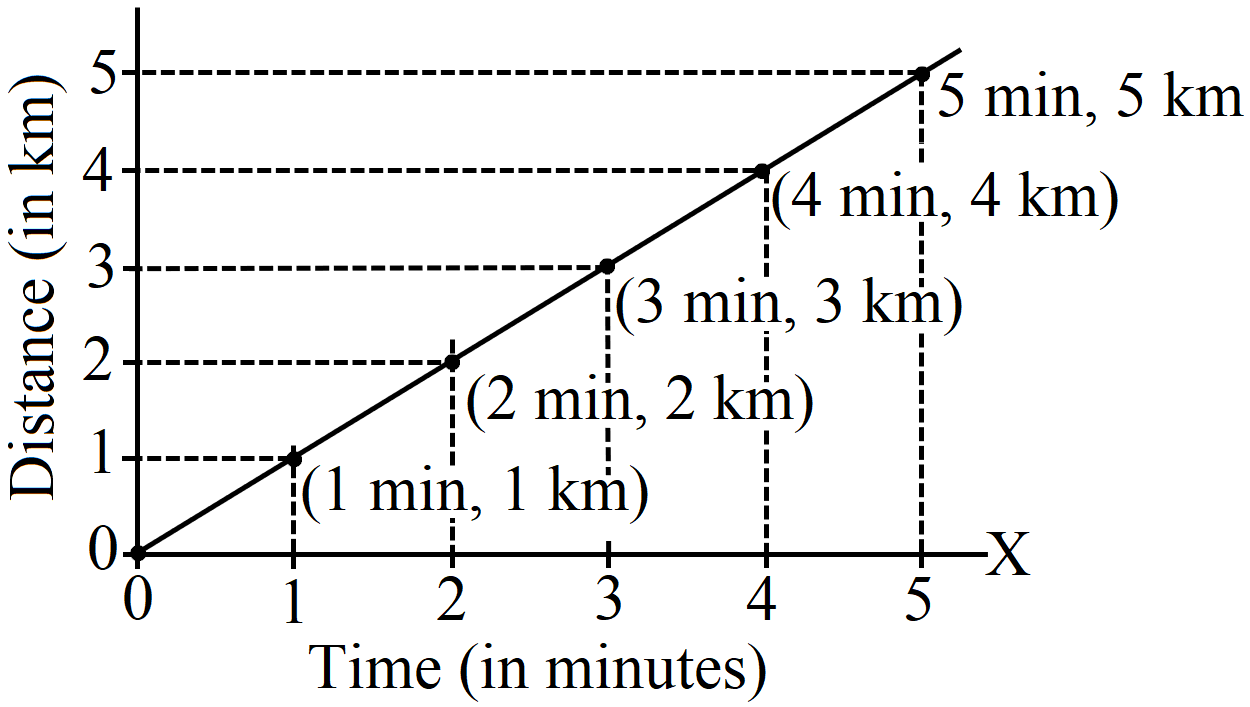
Explain by giving example that how can we choose a suitable scale.

Answer


While choosing the most suitable scale for drawing a graph, we should keep the following points in mind.
  1. The difference between the highest and lowest values of each quantity.
  2. The intermediate values of each quantity so that with the scale chosen, it is easy to mark the values on the graph.
  3. To utilise the maximum part of the paper on which the graph is to be drawn, assume that we have a graph paper of size $25cm$ x $25cm$ and we have to accommodate following data:
Time (AM)
Odometer reading
Distance from the starting point
$8:00 AM$
$36540\ km$
$0\ km$
$8:30 AM$
$36560\ km$
$20\ km$
$9:00 AM$
$36580\ km$
$40\ km$
$9:30 AM$
$36600\ km$
$60\ km$
$10:00 AM$
$36620\ km$
$80\ km$

Since, one of the scales will be,

Distance $5km = 1cm$ and Time $6$ min $= 1cm.$

Need a full question paper?

Generate a complete, print-ready paper with questions like this in minutes — across 16+ boards, with answer keys.

Start Generating Free

Similar questions

Match structures given in Column I with functions given in Column II.
Column I Column II
Stomata Absorption of water
Xylem Transpiration
Root hairs Transport of food
Phloem Transport of water
Synthesis of carbohydrates
Write a short note on how first silk industry began in China.
A wholesale woollen fibre dealer gets the woollen fibre of different textures sorted for various purposes. Match the items in Column I with the woollen fibre in Column II.
 
Column I
 
Column II
a.
Pashmina shawl
i
Camel wool.
b.
Woollen carpet
ii
Angora wool.
c.
Baby
iii
Kashmir goat.
d.
Wollen sweater
iv
sheep wool.
In the figure of a flower given in Figure, label the parts whose functions are given below and give their names.
  1. The part which contains pollen grains.
  2. The part where the female gamete is formed.
  3. The female reproductive part where pollen grains germinate.
  4. The colourful part of flower which attracts insects.
Classify the changes involved in the following processes as physical or chemical changes:

Photosynthesis

Dissolving sugar in water

Burning of coal

Melting of wax

Beating aluminium to make aluminium foil

Digestion of food
Distinguish between a parasite and a saprotroph.
Boojho’s uncle was hospitalised and put on dialysis after a severe infection in both of his kidneys.
  1. What is dialysis?
  2. When does it become necessary to take such a treatment?
Describe the different methods of asexual reproduction. Give examples.
Draw a labelled diagram of a simple electric circuit.
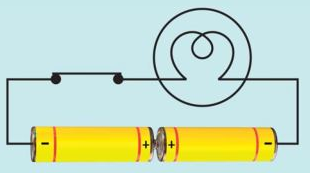
The bulb in the circuit shown in Figure does not glow. Can you identify the problem? Make necessary changes in the circuit to make the bulb glow.
Image