Question
  1. Explain Darwinian theory of evolution with the help of one suitable example.
  2. State the two key concepts of the theory.
  3. Amongst pea tendril, Opuntia spines, lemon thorn and Cucurbita tendrils, which ones are homologous structures. Why do you call them so?

Answer

  1. Any population has built in variation for every character.
Individuals with those characters which enable them to survive better in the given environment, would outbreed the others, who are less adapted. Fitness, according to Darwin, is reproductive fitness, i.e. individuals who are more fit in an environment leave more progeny than others.

These progenies survive better and more and more fit individuals are added to the population, i.e. natural selection.

The population thus comes to possess more fit individuals, i.e. nature selects the better fit invididuals and over a long period of time, through a number of generations, the population slowly becomes modified into a different form or a species, in the process called evolution, e.g. evolution of DDT-resistant mosquitoes.
  1. The two key concepts of Darwinian theory are:
  • Branching descent.
  • Natural selection.
  1.  
  • Lemon thorn and Cucurbita tendrils are homologous-as both are stem modified
  • Opuntia spines and pea tendrils are homologousas both are leaf modifications.
  • Homologous organs are those organs in different groups of organisms, that are similar in basic structural and developmental patterns, but perform different functions and are superficially distinct.
Need a full question paper?

Generate a complete, print-ready paper with questions like this in minutes — across 16+ boards, with answer keys.

Start Generating Free

Similar questions

Work out a monohybrid cross upto F, generation, between two pea plants and two Antirrhinum plants, both having contrasting traits with respect to colour of flower. Comment on the patterns of inheritance in the crosses carried above.
Explain the efforts for the conservation of biodiversity at international level.
Describe the experiment carried out by Hershey and Chase. Write the conclusion they arrived at.
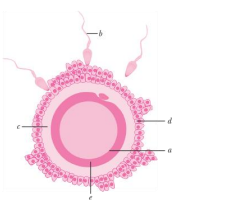
Study the illustration given and answer the questions that follow:

Draw a diagram of ‘b’ separately and label the parts:
  • That help its entry into ‘a’;
  • That carry genetic material;
  • That help in its movement.
A normal visioned woman, whose father is colour blind, marries a normal visioned man. What would be the probability of her (a) sons (b) daughters to be colour blind? Explain with the help of pedigree chart.
A flower of tomato plant following the process of sexual reproduction produce 240 viable seeds.
Answer the following questions giving reasons:
What is the minimum number of pollen grains that must have been involved in the pollination of its pistil?
Define gametogenesis. How does cell division take place during gamete formation?
A child suffering from thalassemia is born to a normal couple. But the mother is being blamed by the family for delivering a sick baby.
  1. What is thalassemia?
  2. How would you counsel the family not to blame the mother for delivering a child suffering from this disease? Explain.
  3. List the values your counselling can propagate in the families.
Match the items in Column I with those in Column II
S.No.
Column I
S.No.
Column II
(A)
Standing crop
(i)
The amount of mineral nutrients in the soil at a given time
(B)
Standing state
(ii)
Sedementary cycle
(C)
Climax community
(iii)
Herbivores and carnivores
(D)
Primary producers
(iv)
In near equilibrium with the environment
(E)
Phosporus cycle
(v)
Mass of living matter in a trophic level at a given time
(F)
Secondary producers
(vi)
Phytoplanktons
Arrange the following in the decreasing order (most important first) of their importance, for the welfare of human society. Give reasons for your answer.