Question
Explain divergent & convergent evolution with example.

Answer

→ Divergent evolution:
→ Organisms which have the same structure (formation) have developed, but are adapted in different directions and according to their different needs is known as divergent development.
→ This structure is called equivalent or structure similar.
→ Equivalence indicates common ancestors.
Example:
(1) Vertebrate Heart and Brain
(2) In plants, the thorn of Bougainvillae and Cucurbita represents homology.
(3) Whales, bats, leopards and humans have similarities in the bones of the forelimbs.
→ Convergent evolution:
→ Organisms in which the vision of the internal structure is not the same, but are adapted to perform the same function, such development is called convergent evolution.
→ These structures are also called functional structures.
Example:
(1) The wing of a butterfly and a bird look the same. But they are not anatomically similar.
(2) Eye of Octopus and Mammals
(3) Flippers of penguins and dolphins
(4) Roots of sweet potatoes and tubers of potatoes.
Need a full question paper?

Generate a complete, print-ready paper with questions like this in minutes — across 16+ boards, with answer keys.

Start Generating Free

Similar questions

Write a short note on adaptations of animal pollinated flowers.
  1. Select the homologous structures from the combinations given below:
  1. Forelimbs of whales and bats.
  2. Tuber of potato and sweet potato.
  3. Eyes of octopus and mammals.
  4. Thorns of Bougainvillea and tendrils of Cucurbita.
  1. ​​​​​​​​​​​​​​​​​​​​​​​​​​​​​​​​​​​​​​​​​​​​​​State the kind of evolution they represent.
Which disease is diagnosed by Western blot test? Write the scientific name of the pathogen and four symptoms of this disease.
Given alongside is an enlarged view of one microsporangium of a mature anther.
Name ‘a’, ‘b’ and ‘c’ wall layers.
Differentiate between monoecious and dioecious plants. Give one example of each.
Write the significance or importance of spermatogenesis.
What do you understand by differential reproduction and reproductive isolation? In what context are these term used?
Differentiate between bad and good ozone.
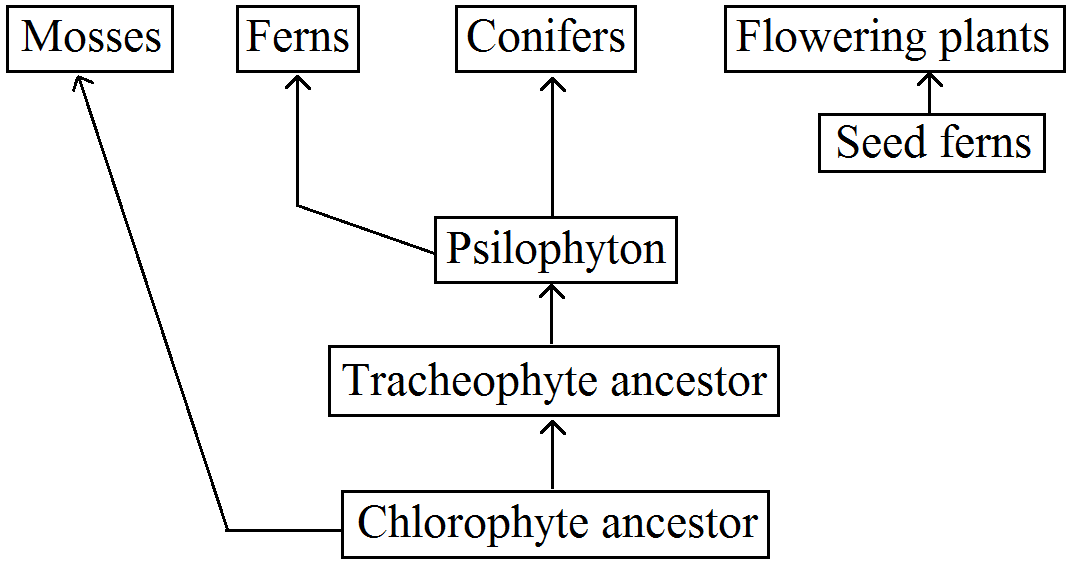
Study the schematic representation of evolutionary history of plant forms given below and mention
  1. The plant forms ferns and conifers are most related to.
  2. The nearest ancestors of flowering plants.
  3. The most primitive group of plants.
  4. Common ancestry of Psilophyton provides to.
  5. The common ancestor of Psilophyton and seed ferns.
  6. The common ancestors of mosses and tracheophytes.
Name the type of immunity that is present at the time of birth in humans. Explain any two ways by which it is accomplished.