Question
Explain Electrolysis of molten NaCl

Answer

→ We use molten NaCl , the products of electrolysis are sodium metal and $Cl _2$ gas.
→ Here, we have only one cation $\left( Na ^{+}\right)$which is reduced at the cathode
Cathode : $Na ^{+}$(aq) $+ e ^{-} \rightarrow Na$ (s) (reduction)
→ One anion $( Cl )$ which is oxidised at the anode
Anode $: 2 Cl ^{-}( aq ) \rightarrow Cl _2(g)+2 e ^{-}$(oxidation)

Need a full question paper?

Generate a complete, print-ready paper with questions like this in minutes — across 16+ boards, with answer keys.

Start Generating Free

Similar questions

Write the following conversions: nitrobenzene → acetanilide
How are the following conversions carried out?
  1. Benzyl chloride to benzyl alcohol,
  2. Methyl magnesium bromide to 2-methylpropan-2-ol.
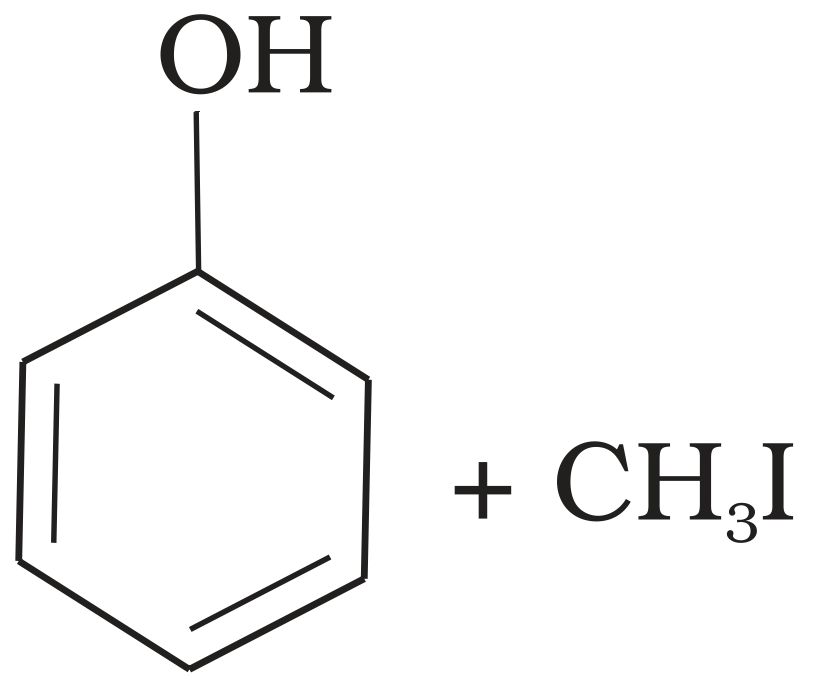
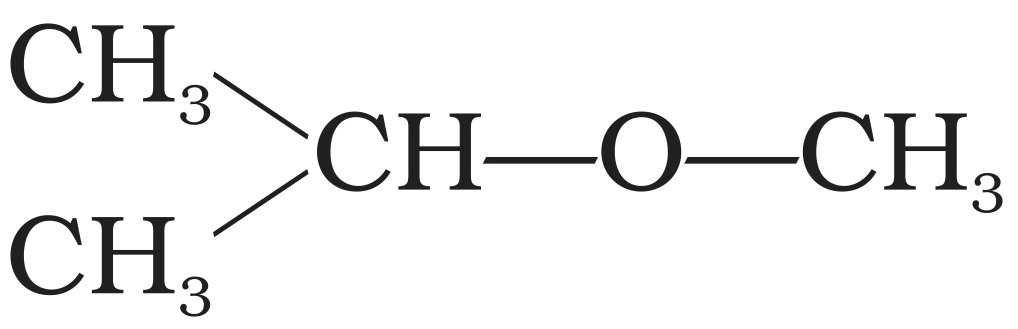
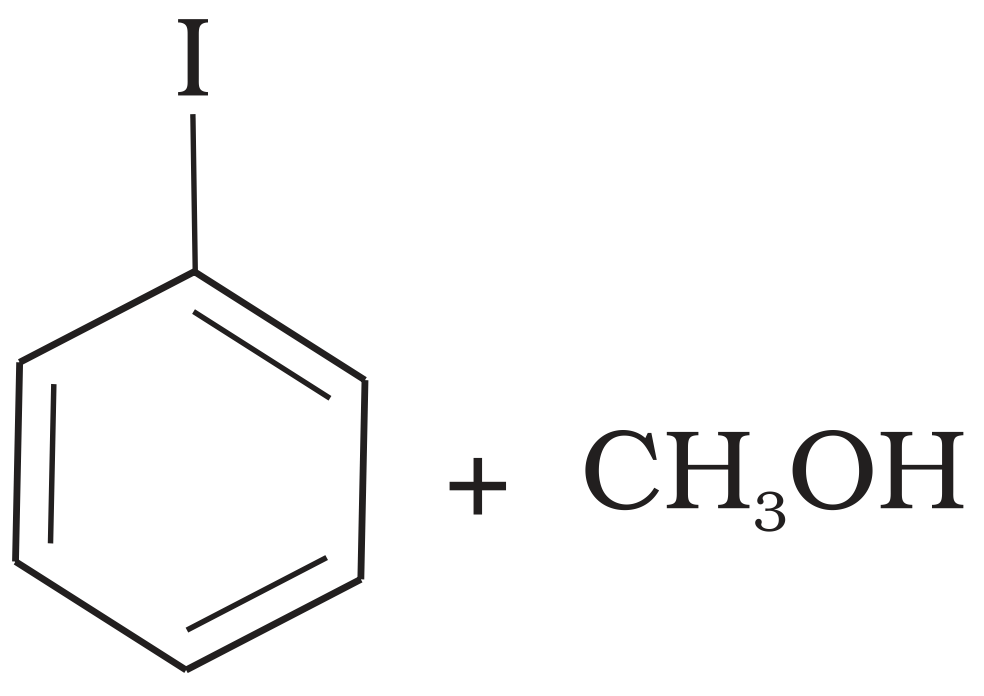
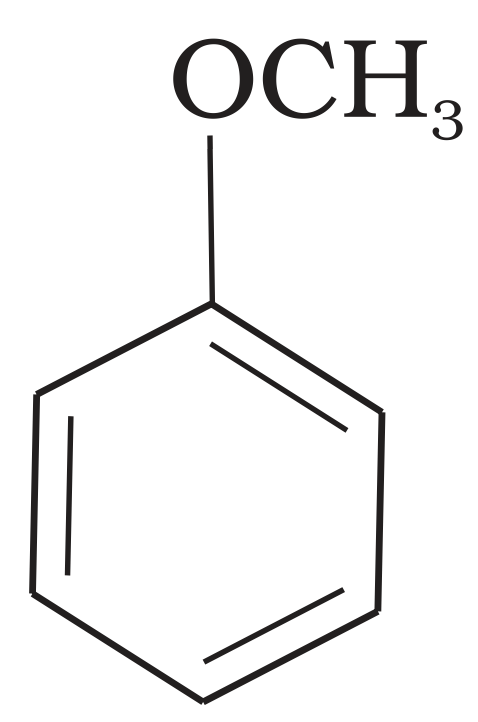
Match the starting materials given in Column I with the products formed by these (Column II) in the reaction with II.
 
Column I
 
Column II
(i)
$CH_3-o-CH_3$
(a)
(ii)
(b)
$\ \ \ \ \ \ \ \ \ \ \ \ \ \text{CH}_3 \\ \ \ \ \ \ \ \ \ \ \ \ \ \ \ | \\ \text{CH}_3-\text{C}-\text{I}+\text{CH}_3\text{OH} \\ \ \ \ \ \ \ \ \ \ \ \ \ \ \ | \\ \ \ \ \ \ \ \ \ \ \ \ \ \ \text{CH}_3$
(iii)
$\ \ \ \ \ \ \ \ \ \ \ \ \ \text{CH}_3 \\ \ \ \ \ \ \ \ \ \ \ \ \ \ \ | \\ \text{H}_3\text{C}-\text{C}-\text{O}-\text{CH}_3 \\ \ \ \ \ \ \ \ \ \ \ \ \ \ \ | \\ \ \ \ \ \ \ \ \ \ \ \ \ \ \text{CH}_3$
(c)
(iv)
(d)
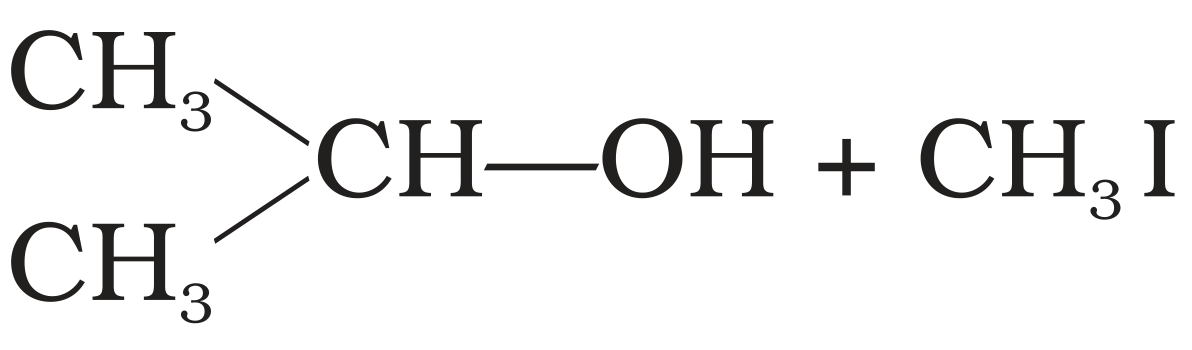
$CH_3-OH + CH_3-I$
 
 
(e)
 
 
(f)
 
 
(g)
$\ \ \ \ \ \ \ \ \ \ \ \ \ \text{CH}_3 \\ \ \ \ \ \ \ \ \ \ \ \ \ \ \ | \\ \text{CH}_3-\text{C}-\text{OH}+\text{CH}_3\text{I} \\ \ \ \ \ \ \ \ \ \ \ \ \ \ \ | \\ \ \ \ \ \ \ \ \ \ \ \ \ \ \text{CH}_3$
Out of o-nitrophenol and p-nitrophenol, which is more volatile? Explain.
Explain the difference between electrolytic conduction and metallic conduction.
Note: In the following questions a statement of assertion followed by a statement of reason is given. Choose the correct answer out of the following choices.
Assertion: Copper sulphate can be stored in zinc vessel.
Reason: Zinc is less reactive than copper.
Write balanced chemical equations for the following reactions:
  1. Aluminium dissolves in aqueous hydrochloric acid.
  2. Tin reacts with a hot alkali solution.
When $MnO_2$ is fused with $KOH$ in the presence of $KNO_3$ as an oxidizing agent, it gives a dark green compound $(A).$ Compound $(A)$ disproportionates in acidic solution to give purple compound $(B).$ An alkaline solution of compound $(B)$ oxidises KI to compound $(C)$ whereas an acidified solution of compound $(B)$ oxidises $KI$ to $(D).$ Identify $(A),\ (B),\ (C)$, and $(D).$
Short note on : Cellulose.
How do antiseptics differ from disinfectants? Give one example of each.