Question
Explain heterolytic cleavage with suitable example.

Answer

Heterolytic cleavage:
i. In hetcrolytic cleavage of a covalent bond, both shared electrons go to one of the two bonded atoms.
ii. This type of cleavage gives rise to two charged species, one with negative charge (anion) and the other with positive charge (cation).
iii. The negatively charged species has the more electronegative atom which has taken away the shared pair of electrons with it.
iv. Heterolytic cleavage can be represented as follows:Image

Where B is more electronegative than A and the movement of an electron pair is represented by a curved arrow.
v. Thus, the unsymmetrical breaking of a covalent bond between two atoms in such a way that the more electronegative atom acquires both the electrons of the shared pair. thereby fòrming charged ions is known as heterolytic fission or heterolysis.

Need a full question paper?

Generate a complete, print-ready paper with questions like this in minutes — across 16+ boards, with answer keys.
Start Generating Free

Similar questions

Veg puffs from a particular bakery have an average mass of 27.0 g, whereas egg puffs from the same bakery have an average mass of 40 g.
i. Suppose a person buys 1 kg of veg puff from the bakery. Calculate the number of veg puffs he receives.
ii. Determine the mass of egg puffs (in kg) that will contain the same number of eggs puffs as in one kilogram of veg puffs.
In repeated measurements in volumetric analysis, the end-points were observed as 11.15 mL, 11.17 mL, 11.11 mL and 11.17 mL. Calculate mean absolute deviation and relative deviation.
Explain the variation of the following property of elements down a group and across a period.
i. Metallic character
ii. Nonmetallic character
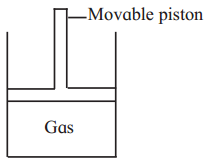
Consider a sample of a gas in a cylinder with a movable piston.

Image

Show digramatically the changes in the position of piston, if
a. Pressure is increased from 1.0 bar to 2.0 bar at constant temperature.
b. Temperature is decreased from 300 K to 150 K at constant pressure
c. Temperature is decreased from 400 K to 300 K and pressure is decreased from 4 bar to 3 bar.

The values of the first ionization enthalpy of $Al, Si$ and $P$ are $577, 786$ and $1012 \ kJ mol^{-1}$ respectively. Explain the observed trend.
Write Postulates of kinetic theory of gases.
Calculate the molarity of NaOH in the solution prepared by dissolving its 4 g in enough water to form 250 mL of the solution.
Write the Lewis structure of $CO$ molecule.
Calculate the oxidation number of underlined atoms.
a. $H_2SO_4$
b. $HNO_3$
c. $H_3PO_3$
d. $K_2C_2O_4$
e. $H_2S_4O_6$
f. $Cr_2O_7^{2-}$
g. $NaH_2PO_4$
Describe the industrial production of dihydrogen from steam. Also write the chemical reaction involved.