Question types

Basic Principles of Organic Chemistry question types

187 questions across 6 question groups — pick any mix to generate a Chemistry paper with step-by-step answer keys.

187
Questions
6
Question groups
5
Question types
Sample Questions

Basic Principles of Organic Chemistry questions

One sample from each question group in this chapter. Select any group above to see the full set with answer keys.

Q 1MCQ1 Mark
Identify the group that exerts electron withdrawing resonance effect.
  • A
    -OR
  • -COOH
  • C
    -OH
  • D
    -NHR

Answer: B.

View full solution
Q 2MCQ1 Mark
Which of the following statements is NOT correct?
  • Chlorine is said to exert +1 effect in the carbon chain.
  • B
    Resonance structures are represented by drawing → arrow between them.
  • C
    Carbocations, carbanions and free radicals are reaction intermediates.
  • D
    Homolytic cleavage of C-C bond gives free radicals.

Answer: A.

View full solution
Q 3MCQ1 Mark
Identify non-benzenoid aromatic compound from the following.
  • A
    Phenol
  • B
    Naphthalene
  • C
    Benzene
  • Tropone

Answer: D.

View full solution
Q 4MCQ1 Mark
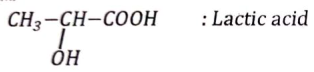
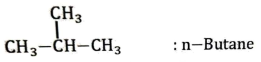
Identify the compound that does not correctly match with its common name.
  • A
    Image
  • B
    $\mathrm{C}_6 \mathrm{H}_5-\mathrm{NH}_2 \quad:$ Aniline
  • Image
  • D
    $\mathrm{H}-\mathrm{CHO} \quad$ : Formaldehyde

Answer: C.

View full solution
Q 5MCQ1 Mark
Identify ether from the following compounds.
  • A
    Benzene-1,2-diol
  • B
    Propan-2-ol
  • C
    Benzenol
  • Methoxymethane

Answer: D.

View full solution
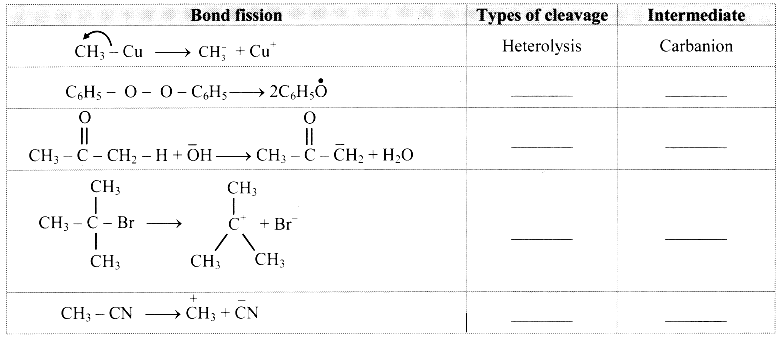
Some bond fissions are described in the following table. For each of them, show the movement of electron/s using curved arrow notation. Classify them as homolysis or heterolysis and identify the intermediate species produced as carbocation, carbanion or free radical.

Image

View full solution
Column ‘A’ Column ‘B’
i.Inductive effecta.Delocalization of π electrons
ii.Hyperconjugationb.Displacement of π electrons
iii.Resonance effectc.Delocalization of σ electrons
d.Displacement of σ electrons
View full solution

Image
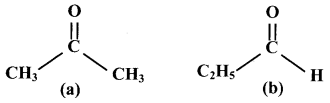
Observe the structural formulae (a) and (b).
i. Find out their molecular formulae.
ii. What is the difference between them?
iii. What is the relation between the two compounds represented by these structural formulae?
View full solution
Phytane is naturally occuring alkane produced by the alga spirogyra and is a constituent of petroleum. The IUPAC name for phytane is 2, 6, 10, 14-tetramethyl hexadecane. Write zig-zag formula for phytane. How many primary, secondary, tertiary and quaternary carbons are present in this molecule.
View full solution
i. Draw a bond line structure of benzene $(C_6H_6)$.
ii. How many $C – C$ and $C = C$ bonds are there in this structure?
iii. Write down the expected values of the bond lengths of the carbon-carbon bonds in benzene (Refer chapter 5).
View full solution
Find out the structures of glucose, vanillin, camphor and paracetamol using internet. Mark the carbon atoms present in them. Assign the hybridization state to each of the carbon and oxygen atom. Identify sigma $(\sigma )$ and pi $(\pi )$ bonds in these molecules.
View full solution

Generate a Basic Principles of Organic Chemistry paper free

Pick question groups from the list above, set marks and difficulty, and export a branded PDF with step-by-step answer keys. First 3 chapters free — no signup.

Download App