Question
Explain how the molecularity of a complex reaction determined? And give the points showing difference between molecularity of a reaction and order of a reaction.

Answer

→ Term molecularity is only applicable to elementary reactions, even though to determine molecularity of a complex reaction it is necessary to know the mechanism of that reaction.
→ Through mechanism of a reaction we can have information about slowest step of reaction.
→ The overall rate of the reaction is controlled by the slowest step in a reaction called the rate determining step.
→ Consider the decomposition of hydrogen peroxide which is catalysed by iodide ion in an alkaline medium $2 H _2 O _2 \xrightarrow[\text { Alkaline medium }]{ I ^{-}} 2 H _2 O + O _2$
→ The rate equation for this reaction is found to be Rate $=\frac{- d \left[ H _2 O _2\right]}{ dt }= k \left[ H _2 O _2\right]\left[ r ^{-}\right]$
→ This reaction is first order with respect to both $H _2 O _2$ and $I ^{-}$.
→ Mechanism involve two steps.
(1) $H _2 O _2+ I ^{-} \xrightarrow{\text { Slow Step }} H _2 O + IO ^{-}$
(2) $H _2 O _2+ IO ^{-} \longrightarrow H _2 O + I ^{-}+ O _2$
→ The first step, being slow, is the rate determining step.
→ Thus, the rate of formation of intermediate will determine the rate of this reaction.
→ Thus, it can be said that, for complex reaction, order is given by the slowest step and molecularity of the slowest step is same as the order of the overall reaction.
Difference between molecularity and order of a reaction:
(i) Order of a reaction is an experimental quantity. It can be zero and even a fraction but molecularity cannot be zero or a non integer.
(ii) Order is applicable to elementary as well as complex reactions whereas molecularity is applicable only for elementary reactions. For complex reaction molecularity has no meaning.
(iii) For complex reaction, order is given by the slowest step and generally molecularity of the slowest step is same as the order of the overall reaction.

Need a full question paper?

Generate a complete, print-ready paper with questions like this in minutes — across 16+ boards, with answer keys.
Start Generating Free

Similar questions

Transition metals and their many compounds act as good catalyst. Give reason.
Read the following text carefully and answer the questions that follow:
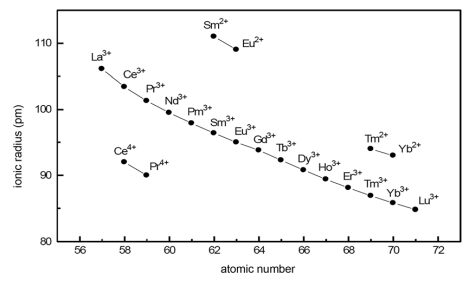
The $f-$block consists of the two series, lanthanoids $($the fourteen elements following lanthanum$)$ and actinoids $($the fourteen elements following actinium$).$ Because lanthanum closely resembles the lanthanoids. The chemistry of the actinoids is much more complicated. The complication arises partly owing to the occurrence of a wide range of oxidation states in these elements and partly because their radioactivity creates special problems in their study. The overall decrease in atomic and ionic radii from lanthanum to lutetium $($the lanthanoid contraction$)$ is a unique feature in the chemistry of the lanthanoids. In the lanthanoids, $La(II)$ and $Ln(III)$ compounds are predominant species.
Image
$i.$ Which metal in the first transition series $(3d$ series$)$ exhibits $+1$ oxidation state most frequently and why?
$ii.$ The transition metals $($with the exception of $Zn, Cd$ and $Hg)$ are hard and have high melting and boiling points. Give reason.
$iii.$ Both $O_2$ and $F_2$ stabilize high oxidation states of transition metals but the ability of oxygen to do so exceeds that of fluorine. Give reason.
$OR$
$iiii.$ The atomic radii of the metals of the third $(5d)$ series of transition elements are virtually the same as those of the corresponding members of the second $(4d)$ series. Give reason.
Which mechanisms helps in the transportation of water in a plant?
Write Raoult's Law for Non-Volatile solute and volatile solvent and derive it's formula.
What is depression of Freezing point ? What is molal depression constant $(K_f)$ ? Derive it's formula of finding molar mass of solute.
Explain geometrical isomerism in octahedral Complex.
Write the reaction of phenol with the following :
(i) With $PCl _5$
(ii) With $NH _3$
(iii) Hinsberg reagent
(iv) Hydrogen.
In order to overcome the scarcity of drinking water in a remote village in Gujarat, Arnav and Aariv two young entrepreneurs still in their high school, have developed a unique water purifier that is capable of converting sea water into drinking water. It works on the principle of concentration difference between two solutions.
i. Name the phenomenon/process based on which this product is made? (1)
ii. How difference in concentration of solutions help in converting sea water into drinking water?
iii. What arrangement they must have created in their product to covert sea water into drinking water?
OR
iii. Equimolar solutions of NaCl and glucose are not isotonic. Why?
Read the following text carefully and answer the questions that follow:
Raoult's law for volatile liquids states that the partial vapour pressure of each component in the solution is directly proportional to its mole fraction, whereas for a non $-$ volatile solute, it states that the vapour pressure of a solution of a non $-$ volatile solute is equal to the vapour pressure of the pure solvent at that temperature multiplied by its mole fraction. Two liquids $A$ and $B$ are mixed with each other to form a solution, the vapour phase consists of both components of the solution. Once the components in the solution have reached equilibrium, the total vapour pressure of the solution can be determined by combining Raoult's law with Dalton's law of partial pressures. If a non $-$ volatile solute $B$ is dissolved into a solvent $A$ to form a solution, the vapour pressure of the solution will be lower than that of the pure solvent. The solutions which obey Raoult's law over the entire range of concentration are ideal solutions, whereas the solutions for which vapour pressure is either higher or lowerthan that predicted by Raoult's law are called non $-$ ideal solutions. Non $-$ ideal solutions are identified by determining the strength of the intermolecular forces between the different molecules in that particular solution.They can either show positive or negative deviation from Raoult's law depending on whether the $A - B$ interactions in solution are stronger or weaker than $A - A$ and $B - B$ interactions.
$i. 20 \ mL$ of a liquid $A$ was mixed with $20 \ mL$ of liquid $B$. The volume of resulting solution was found to be less than $40 \ mL$. What do you conclude from the above data?
$ii$. Which of the following show positive deviation from Raoult's law? Carbon disulphide and Acetone; Phenol and Aniline; Ethanol and Acetone.
$iii$. The vapour pressure of a solution of glucose in water is $750\ mm\ Hg$ at $100^\circ C$. Calculate the mole fraction of solute.
$($Vapour pressure of water at $373 K = 760 \ mm\ Hg)$
OR
$iii$. The boiling point of solution increases when $1$ mol of $\ce{NaCl}$ is added to $1$ litre of water while addition of $1$ mol of methanol to one litre of water decreases its boiling point. Explain the above observations.
Read the following text carefully and answer the questions that follow:
Aariv Sharma is very fond of a special drink made by his grandmother using different fruits available in their hometown. It has an outstanding taste and also provide great health benefits of natural fruits. He thought of utilizing his grandmother recipe to create a new product in the beverage market that provide health benefits and also contain fizziness of various soft drinks available in the market.
$i.$ How he can add fizz to the special drink made by his grandmother? 
$ii.$ What is the law stated in the chapter that can help Aariv to make his drink fizzy?
$iii.$ What precautions he should take while bottling so that his product does not lose fizz during storage and handling across long distances?