Question
Explain primary, secondary and tertiary structure of proteins with diagram.

Answer

self

Need a full question paper?

Generate a complete, print-ready paper with questions like this in minutes — across 16+ boards, with answer keys.

Start Generating Free

Similar questions

  1. What are essential and non-essential amino acids? Give two examples of each.
  2. What are the two types of photosynthesis in green plants? Give the basic equations of photosynthesis.
  3. Mention the two products of glycolysis.
Describe the methods of studying various first order reactions with examples.
Match the items of Column $I$ and Column $II.$
 
Column $I$
 
Column $II$
$i.$
Lead storage battery
$a.$
Maximum efficiency.
$ii.$
Mercury cell
$b.$
Prevented by galvanisation.
$iii.$
Fuel cell
$c.$
Gives steady potential.
$iv.$
Rusting
$d.$
$Pb$ is anode, $PbO_2$​​​​​​​ is cathode.
  1. How do you prepare:
  1. $K_2MnO_4$ from $MnO_2?$
  2. $Na_2Cr_2O_7$ form $Na_2CrO_4?$
  1. Account for the following:
  1. $Mn^{2+}$ is more stable than $Fe^{2+}$ towards oxidation to $+3$ state.
  2. The enthalpy of atomization is lowest for $Zn$ in $3d$ series of the transition elements.
  3. Actinoid elements show wide range of oxidation states.
Match the compounds/elements given in Column I with uses given in Column II.
 
Column I (Compound/element)
 
Column II (Use)
(i)
Lanthanoid oxide
(a)
Production of iron alloy
(ii)
Lanthanoid
(b)
Television screen
(iii)
Misch metal
(c)
Petroleum cracking
(iv)
Magnesium based alloy is constituent of
(d)
Lanthanoid metal + iron
(v)
Mixed oxides of lanthanoids are employed
(e)
Bullets
 
 
(f)
In X-ray screen
 
  1. Explain the following:
  1. Henry's law about dissolution of a gas in a liquid.
  2. Boiling point elevation constant for a solvent.
  1. A solution of glycerol $(C_3H_8O_3)$ in water was prepared by dissolving some glycerol in $500 g$ of water. This solution has a boiling point of $100.42^\circ C.$ What mass of glycerol was dissolved to make this solution? $(K_b$ for water $= 0.512 K \ kg\ mol^{–1}).$
Explain the oxidation of primary, secondary and tertiary alcohols.
Explain the effect of substitutents on the basic strength of aromatic amines.
 Match the compounds given in Column $I$ with the oxidation state of cobalt present in it $($given in Column $II)$ and assign the correct code.
 
Column $I ($Compound$)$
 
Column $II ($Oxidation state of $Co)$
$a.$ $\ce{[Co(NCS)(NH_3)_5](SO_3)}$ $1.$ $+4$
$b.$ $\ce{[Co(NH_3)_4Cl_2]SO_4}$ $2.$ $0$
$c.$ $\ce{Na_4[Co(S_2O_3)_3]}$ $3.$ $+1$
$d.$ $\ce{[Co_2(CO)_8]}$ $4.$ $+2$
    $5.$ $+3$
Code:
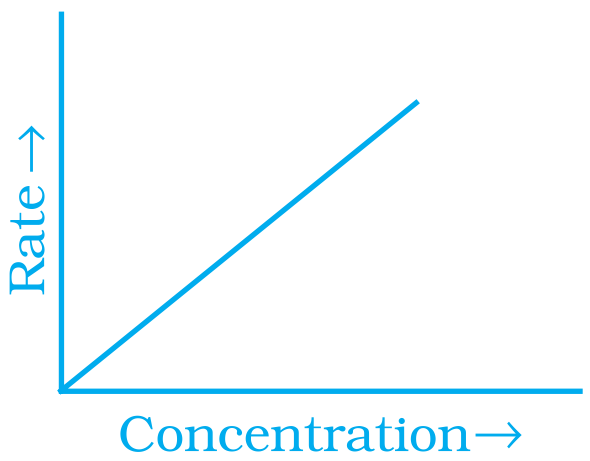
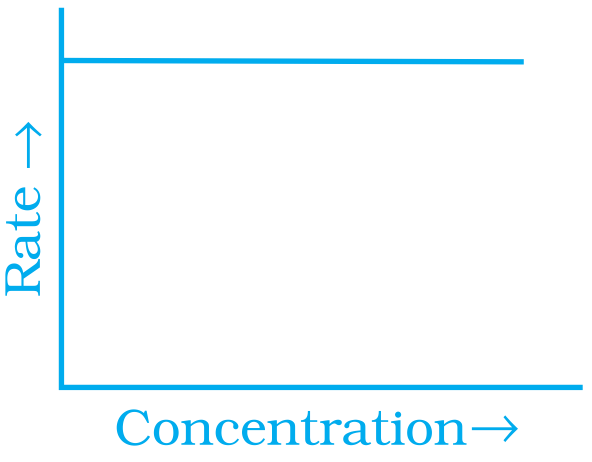
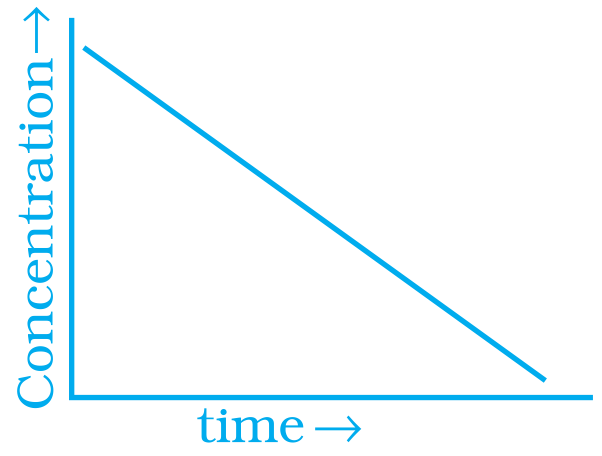
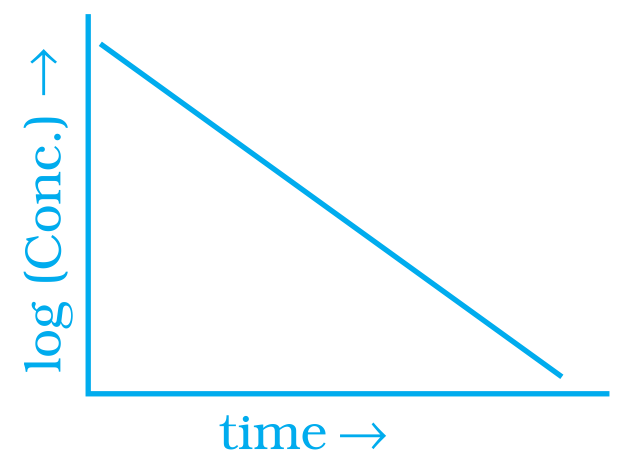
Match the graph given in Column $I$ with the order of reaction given in Column $II.$ More than one item in Column I may link to the same item of Column $II.$
 
Column I
 
Column II
$(i)$
 
 
$(ii)$
$(a)$ $I^{st}$ order
$(iii)$
$(b)$
Zero order
$(iv)$