Question
Explain quantisation of charge.

Answer

►Experimentally it is established that all fret charges are integral multiples of a basic unit of charge denoted by $e$. Thus charge $q$ on a body is always given by $q=n e$.
►where $n$ is any integer. This basic unit of charge is the charge that an electron or proton carries. By convention, the charge on an electron is taken to be negative; therefore charge on an electron is written as $-e$ and that on a proton as $+e$.
►The quantisation of charge was first suggested by the experimental laws of electrolysis discovered by english experimentalist Faraday.

Need a full question paper?

Generate a complete, print-ready paper with questions like this in minutes — across 16+ boards, with answer keys.
Start Generating Free

Similar questions

Write the principle of capacitor.
1 F (farad) is a very large unit for practical purposes. Explain with example.
Three capacitors each of capacitance 9 pF are connected in series.
  1. What is the total capacitance of the combination?
  2. What is the potential difference across each capacitor if the combination is connected to a 120 V supply?
An electric field $\vec{\text{E}}=\vec{\text{i}}\text{Ax}$ exists in the space, where A= 10Vm-2. Take the potential at (10m, 20m) to be zero. Find the potential at the origin.
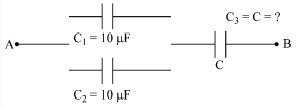
Calculate the capacitance of capacitor C if the equivalent capacitance of the connection between $A$ and $B$ is $15 \mu F$.
Image
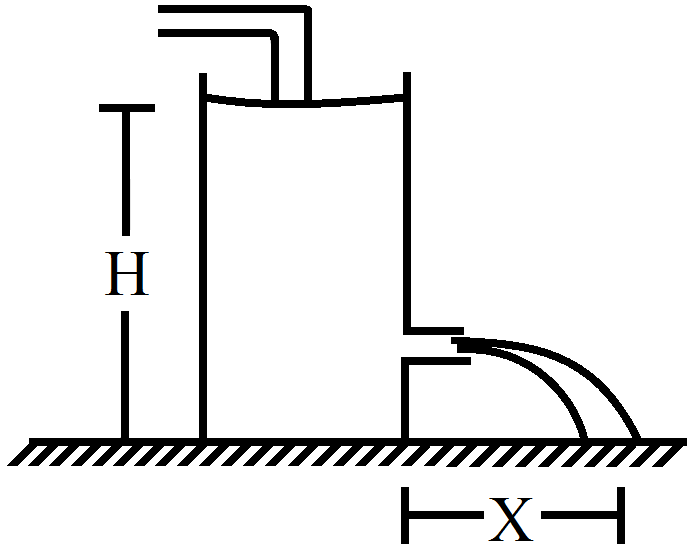
Water level is maintained in a cylindrical vessel upto a fixed height H. The vessel is kept on a horizontal plane. At what height above the bottom should a hole be made in the vessel so that the water stream coming out of the hole strikes the horizontal plane at the greatest distance from the vessel.

A Galilean telescope is 27cm long when focused to form an image at infinity. If the objective has a focal length of 30cm, what is the focal length of the eyepiece?
Suppose, in certain conditions only those transitions are allowed to hydrogen atoms in which the principal quantum number n changes by 2. (a) Find the smallest wavelength emitted by hydrogen. (b) List the wavelength emitted by hydrogen in the visible range (380nm to 780nm).
A particle of mass 0.3kg is subjected to a force F = -kx with k = 15N/m. What will be its initial acceleration if it is released from a point x = 20cm?
Explain the Bohr's Quantum condition of angular momentum. What will be the value of it, for the second orbit of electron?