Question
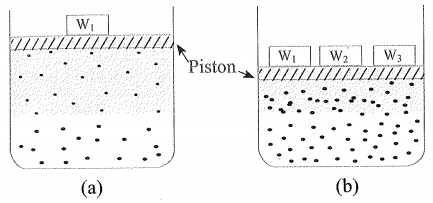
Explain solubility of gas in a liquid solvent.

Need a full question paper?

Generate a complete, print-ready paper with questions like this in minutes — across 16+ boards, with answer keys.
Start Generating Free

Similar questions

Write down the number of 3d electrons in each of the following ions: Ti2+, V2+, Cr3+, Mn2+, Fe2+, Fe3+, Co2+, Ni2+ and Cu2+. Indicate how would you expect the five 3d orbitals to be occupied for these hydrated ions (octahedral).
Will the elevation in boiling point be same if 0.1mol of sodium chloride or 0.1mol of sugar is dissolved in 1L of water? Explain.
Calculate the standard cell potentials of galvanic cell in which the following reactions take place:
Fe2+(aq) + Ag+ (aq) → Fe3+(aq) + Ag(s)
Calculate the $\triangle_\text{r}\text{G}^\ominus$ and equilibrium constant of the reactions.
Explain nitration of phenol in detail.
Aqueous copper sulphate solution and aqueous silver nitrate solution are electrolysed by 1 ampere current for 10 minutes in separate electrolytic cells. Will the mass of copper and silver deposited on the cathode be same or different? Explain your answer.
Give reasons for the following:
  1. Measurement of osmotic pressure method is preferred for the determination of molar masses of macromolecules such as proteins and polymers.
  2. Aquatic animals are more comfortable in cold water than in warm water.
  3. Elevation of boiling point of 1M KCl solution is nearly double than that of 1M sugar solution.
Write down the IUPAC name for the following complex and indicate the oxidation state, electronic configuration and coordination number. Also give stereochemistry and magnetic moment of the complex:
CrCl3(py)3
A 0.1539 molal aqueous solution of cane sugar (mol. mass = 342 g mol-1) has a freezing point of 271 K while the freezing point of pure water is 273.15 K. What will be the freezing point of an aqueous solution containing 5 g of glucose (mol. mass = 180 g mol-1) per 100 g of solution?
Write short note on tetra chloromethane (CCL4) ### Write short note on Carbon tetra chloride.
Answer the following questions.
A non-reducing disaccharide ‘A’ on hydrolysis with dilute acid gives an equimolar mixture of D-(+)-glucose and D-(-)-fructose.
$\text{A}+\text{H}_2\text{O}\xrightarrow{\text{HCl}\ \ \ \ }\ \ \ \ \ \ \text{C}_6\text{H}_{12}\text{O}_6+\ \ \ \ \ \ \text{C}_6\text{H}_{12}\text{O}_6\\ [\alpha]_{\text{D}}=+66.5\hat{\text{O}}\phi\Omega\ \ \ \ \ +52.5\hat{\text{O}}\phi\Omega\ \ \ \ \ -92.4\hat{\text{O}}\phi\Omega$
Identify A. What is the mixture of D-(+)-glucose and D-(-)-fructose known as? Name the linkage that holds the two units in the disaccharide.