Question
Explain the difference between commensalism and mutualism. Give example of each.

Answer

Commensalism : In this interaction only one of two is benefitted but no one suffers any loss. Epiphytes despite being autotrophic, grow on other plants. They absorb water through velamen roots and synthesize their own food by the process of photosynthesis. Examples orchids and benda. Green algae Basicladia grows on the shell of turtles found in freshwater. It is an example of epizoic.
Lianas are woody climbers which grow on the land in soil and climb up with the support of other trees and spread over their tops to get proper sunlight. Examples are tinospora, bignonia, bougainvillea.
Mutualism : In this interaction, both of the species are mutually benefitted and cooperation of both is necessary for their survival. Example—Lichen, symbiotic nitrogen fixing bacteria and mycorrhizal association. There is an association between the roots of higher plants and fungi which is called mycarorhizial association. Example : pinus, oak etc. In this association fungus absorb water and minerals and make them available to the plant and in return roots of plant provide food to fungi. Roots of such plants have lack of root hairs.
Need a full question paper?

Generate a complete, print-ready paper with questions like this in minutes — across 16+ boards, with answer keys.

Start Generating Free

Similar questions

  1. Name the ancestors of progymnosperm.
  2. Name the ancestors of herbaceous and arborescent lycopod.
  3. Name the ancestors of cycads.
State the significance of pollination. List any four differences between wind pollinated and animal pollinated flowers.
Mendel crossed plants that breed true for yellow seeds with plants that breed true for green seeds. All seeds in F-generation were yellow. Work out the inheritance involved in this cross by using symbols for each traits and state which trait was dominant?
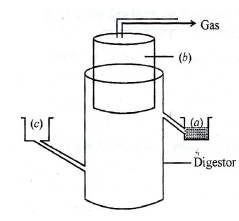
The diagram above is that of a typical biogas plant.Explain the sequence of events occurring in a biogas plant. Identify a, b and c.
Where and how does the primary succession occur? Explain.
Explain human female reproductive system.
Name the source of streptokinase. How does this bioactive molecule function in our body?
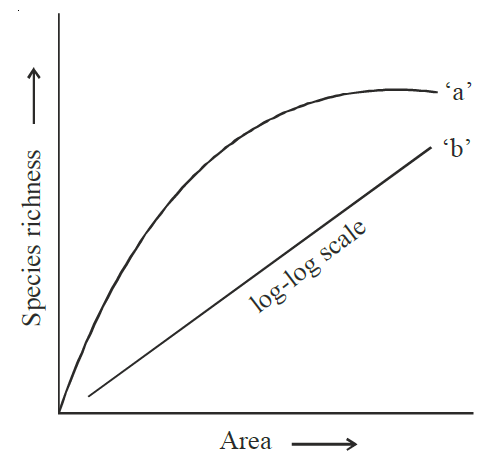
The following graph shows the species-area relationship. Answer the following question as directed.

  1. Name the naturalist who studied the kind of relationship shown in the graph. Write the observation made by him.
  2. Write the situations as discovered by the ecologists when the value of 'Z' (slope of the line) lies.
  1. 0.1 and 0.2
  2. 0.6 and 1.2

What does 'Z' stand for?

  1. When would the slope of the line 'b' become steeper?
"Pollen grains in wheat are shed at 3-celled stage while in peas they are shed at 2-celled stage." Explain. Where are germ pores present in a pollen grain?
A dihybrid heterozygous round, yellow seeded garden pea was crossed with a double recessive plant.
  1. What type of cross is this?
  2. Work out the genotype and phenotype of the progeny.
  3. What principle of Mendel is illustrated through the result of this cross?