Question
Explain the double entry mechanism with an illustrative example.
Answer

Double entry system is based on the dual aspect concept. It means every transaction has two-sided effects, i.e., every debit has its credit.
This system is explained by Luca Pacioli in his book Summade Arithmetica Geometria Proportioni et Proportionalita, 1494. He said if one is receiver, then the other should be the giver.
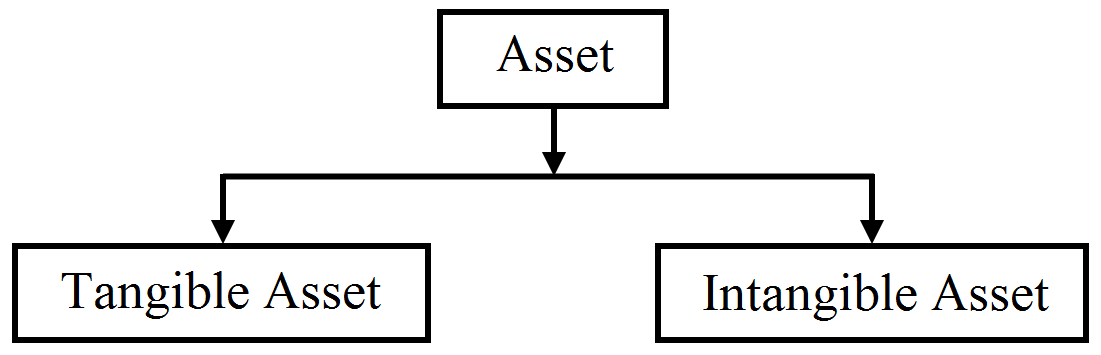
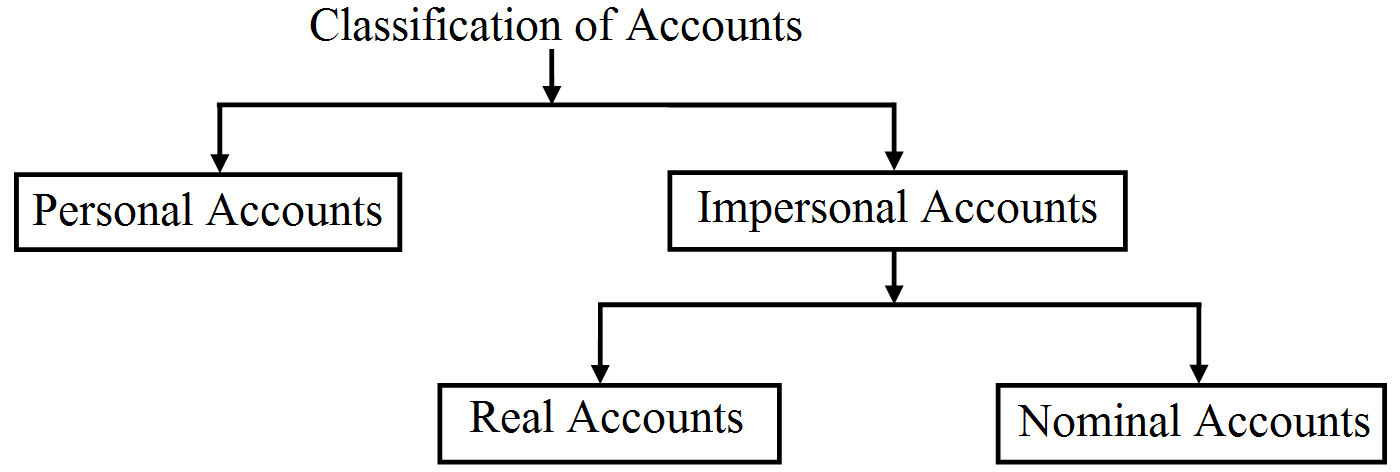
In double entry system, accounts are classified as shown below.

Personal Accounts: It includes individual persons, firms, companies, and other institutions, such as Mr. A, M/s ABC & Co. etc.
Rule of double entry system for personal accounts:
  • Debit the receiver.
  • Credit the giver.
For example:
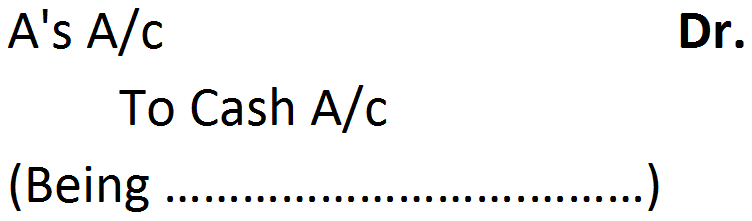
Cash paid to Mr. A.

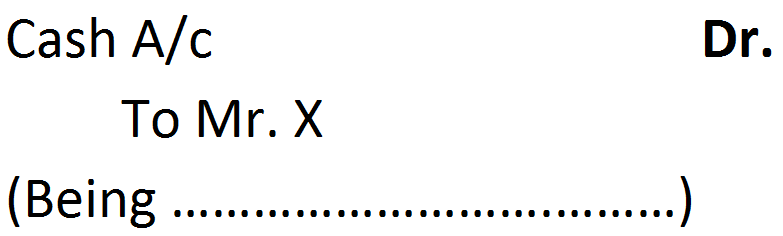
Cash received from Mr. X

Impersonal Accounts: It relates to non living things. Impersonal accounts are further classified as real accounts and nominal accounts.
  1. Real Account: It includes all types of assets.

Tangible assets that can be seen and touched; for example, machinery, building, etc.

Intangible assets that cannot be seen and touched; for example, goodwill, patent, etc.

Rule of double entry system for real accounts:
  • Debit what comes in.
  • Credit what goes out.
For example:

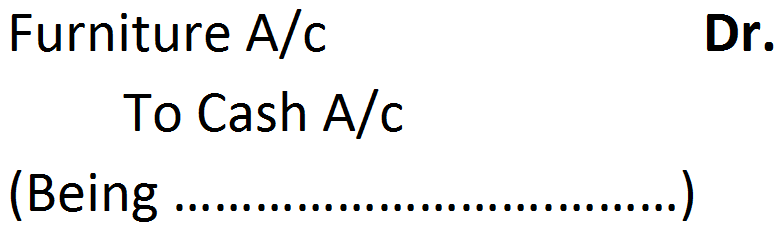
Furniture purchased for cash

  1. Nominal Account: It includes all expenses, losses, incomes and gains.
Rule of double entry system for nominal accounts:
  • Debit all losses and expenses.
  • Credit all gains and incomes.
For example:

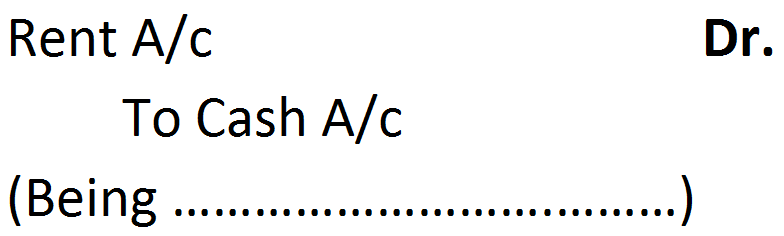
Rent paid


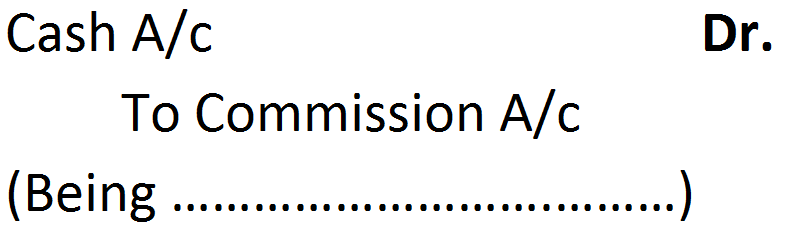
Commission received

Need a full question paper?

Generate a complete, print-ready paper with questions like this in minutes — across 16+ boards, with answer keys.

Start Generating Free

Similar questions

On 30th June, 2014, the bank column of Mohan Kapoor's Cash Book showed a debit balance of ₹ 12,000. On checking the Cash Book with bank statement you find that:-
  1. Cheques paid into Bank ₹ 8,000, but out of these only cheques of ₹ 6,500 were cleared and credited by the Bankers upto 30th June.
  2. Cheques of ₹ 9,200 were issued but out of these only cheques of ₹ 7,000 were presented for payment upto 30th June.
  3. The receipt column of the Cash Book has been undercast by ₹ 200.
  4. The Pass Book shows a credit of ₹ 330 as interest on investments collected by bankers and debit of ₹ 60 for bank charges.
  5. On 29th June a Customer deposited ₹ 3,000 direct in the bank account but it was entered only in the Pass Book.
Prepare a Bank Reconciliation Statement.
Journalise the following:
  1. Received a V.P.P. from Mohan Lal for ₹ 25,000. Sent a peon to collect it who paid ₹ 200 as cartage.
  2. Received ₹ 1,000 from sales of old newspapers and ₹ 5,000 from sales of old chairs.
  3. Goods given away as charity goods costing ₹ 7,000.
  4. Received Cash from a debtor written off as bad-debt last year ₹ 20,000.
  5. Sold goods costing ₹ 50,000 to Ashok on credit at a profit of 20% on cost.
  6. Sold goods costing ₹ 1,00,000 for ₹ 1,40,000.
  7. Provide ₹ 50,000 as interest on Capital.
  8. Paid rent of building ₹ 60,000 by cheque. Half the building is used by the proprietor for residential purpose.
  9. Outstanding salary at the end of the year ₹ 30,000.
Prove that the Accounting Equation is satisfied in all the following transactions of Rajaram. Also prepare a Balance Sheet:
  1. Started business with Cash ₹ 1,20,000.
  2. Purchased a typewriter for Cash for ₹ 8,000 for office use.
  3. Purchased goods for ₹ 50,000 for cash.
  4. Purchased goods for ₹ 40,000 on credit.
  5. Goods costing ₹ 60,000 sold for ₹ 80,000 on credit.
  6. Paid for Rent ₹ 1,500 and for salaries ₹ 2,000.
  7. Received ₹ 800 for Commission.
  8. Withdrew for private use ₹ 5,000 in cash.
On 1st March, 2019, R accepted a Bill of Exchange of ₹ 20,000 from S payable 3 months after date in full settlement of his dues. On the same day S endorsed the Bill of Exchange to T together with a cheque for ₹ 5,000 in settlement of his debt to the latter. On 2nd March, 2019, T discounted the Bill of Exchange @ 6% p.a. with his bank. On maturity the Bill of Exchange was dishonoured.
Journalise the transactions in the books of R and T.
There was a difference of ₹ 430 in a Trial Balance. It was placed on the Debit side of a Suspense A/c. Later on the following errors were discovered. Pass rectifying entries and prepare Suspense A/c.
  1. Purchases book was overcast by ₹ 100.
  2. Sales book was overcast by ₹ 1,000.
  3. Goods for ₹ 800 purchased from Umakant, though entered in the purchase book, has not been posted to his account.
  4. An amount of ₹ 500 has been posted to the credit side of commission account instead of ₹ 570.
  5. Goods sold to Bharti for ₹ 4,400 has been posted to her account as ₹ 4,000.
  6. Goods sold to X for ₹ 750 were recorded in purchase book.
Rectify the following errors assuming that suspense account was opened. Ascertain the difference in trial balance.
  1. Credit sales to Mohan ₹ 7,000 were recorded in Purchase Book. However, Mohan’s account was correctly debited.
  2. Credit purchases from Rohan ₹ 9,000 were recorded in sales book. However, Rohan’s account was correctly credited.
  3. Goods returned to Rakesh ₹ 4,000 were recorded in sales return book. However, Rakesh’s account was correctly debited.
  4. Goods returned from Mahesh ₹ 1,000 were recorded through purchases return book. However, Mahesh’s account was correctly credited.
  5. Goods returned to Naresh ₹ 2,000 were recorded through purchases book. However, Naresh’s account was correctly debited.
On 1st September 2011, Gopal Ltd. purchased a plant for ₹ 10,20,000. On 1st July 2012 another plant was purchased for ₹ 6,00,000. The firm writes off depreciation @ 10% p.a. on original cost and its accounts are closed every year on 31st March. On 1st October 2014, a part of the second plant purchased on 1st July 2012 for ₹ 1,80,000 was sold for ₹ 1,10,000. On 1st December 2014, another plant was purchased for ₹ 3,00,000.
Prepare Plant Account, Provision for Depreciation Account and Plant Disposal Account.
Prepare a Bank Reconciliation Statement on 31 December, 2014 from the following particulars:
  1. A's overdraft as per Pass Book ₹ 20,000 as at 31st Dec.
  2. On 30th December, cheques had been issued for ₹ 80,000, of which cheques worth ₹ 15,000 only had been encashed up to 31st December.
  3. Cheques amounting to ₹ 6,500 had been paid into the bank for collection but of these only ₹ 2,500 had been credited in the Pass Book.
  4. The bank has charged ₹ 700 as interest on overdraft and the intimation of which has been received on 2nd January 2015.
  5. The Bank Pass Book shows credit for ₹ 2,000 representing ₹ 1,400 paid by debtor of A direct into the bank and ₹ 600 collected direct by bank in respect of interest on A,s investment. A had no knowledge of these items.
  6. A cheque for ₹ 3,600 has been debited in bank column of Cash Book by A, but it was not sent to bank at all.
On 21st Sept. 2017, Radhika sold goods for ₹ 2,00,000 to Parvati and drew upon later a bill for the same amount payable after 3 months. The bill was accepted by Parvati, Radhika discounted the bill from bank at a discount of 15% p.a. on 21st Oct., 2017. On maturity, the bill was dishonoured. Parvati agreed to pay ₹ 1,20,000 in cash including ₹ 3,000 interest and accepted a new bill for 3 months. The new bill was endorsed to Gayatri in full settlement of his account ₹ 85,000. It was duly met on maturity. Pass entries in the books of Radhika.
Enter the following transactions in two Column cash book and find out the cash and bank balance:
2017
 
(₹)
Jan. 1
Started business with cash
20,000
Jan. 2
Opened a current account with the S.B.I.
8,000
Jan. 3
Bought goods by cheque
150
Jan. 4
Received cheque from Ram
200
Jan. 5
Sold goods for cash
40
Jan. 7
Paid into bank:
 
(i) Cash ₹ 30
 
(ii) Cheque ₹ 200
230
Jan. 8
Paid Shyam by cheque
345
Jan. 8
Paid carriage by cheque
180
Jan. 10
Drew cash from bank for office use
200
Jan. 30
Paid wages by cheque
60