Question
Explain the effect of substitutents on the basic strength of aromatic amines.
Generate a complete, print-ready paper with questions like this in minutes — across 16+ boards, with answer keys.
Match the graph given in Column I with the order of reaction given in Column II. More than one item in Column I may link to the same item of Column II.
Column I | Column II | ||
(i) | 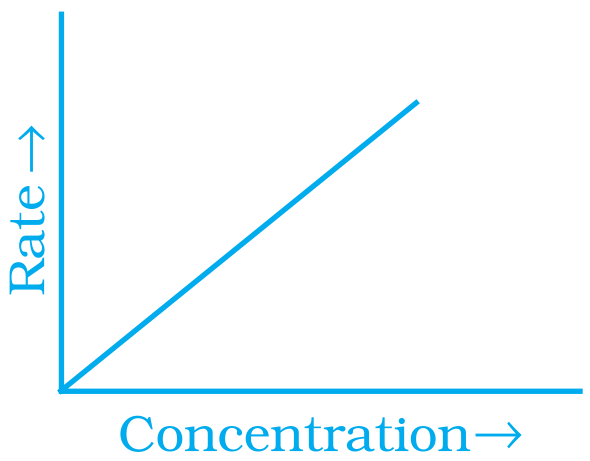 | ||
(ii) | 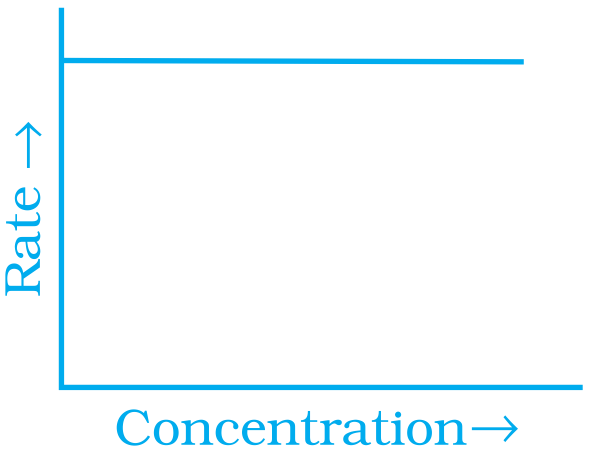 | (a) | Ist order |
(iii) | 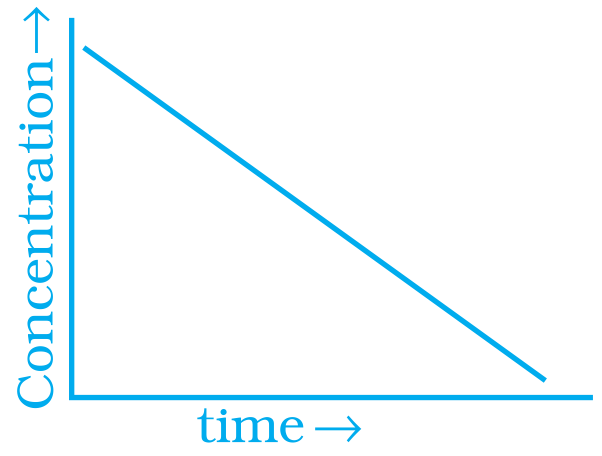 | (b) | Zero order |
(iv) | 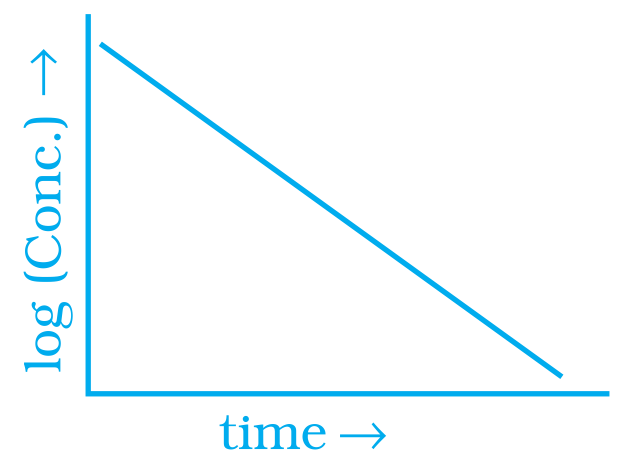 |
$\text{2CrO}_{4}^{2}+\text{2H}^{+}\rightarrow$
$\text{KMnO}_{4}\xrightarrow{heat}$
$\text{k}=(4.5\times10^{11}\text{s}^{-1})\text{e}^{-28000}\text{ K/T}$
Calculate Ea.
| Column I | | Column II | |
| i. | F2 | a. | Metal is the strongest reducing agent. |
| ii. | Li | b. | Metal ion which is the weakest oxidising agent. |
| iii. | Au3+ | c. | Non metal which is the best oxidising agent. |
| iv. | Br- | d. | Unreactive metal. |
| v. | Au | e. | Anion that can be oxidised by Au3+ |
| vi. | Li+ | f. | Anion which is the weakest reducing agent. |
| vii. | F- | g. | Metal ion which is an oxidising agent. |