Question
Explain the following reactions:
  1. Silicon dioxide is treated with hydrogen fluoride.
  2. Carbon is heated with ZnO.
  3. Hydrated Alumina is treated with aqueous NaOH solution.
Answer

  1. $\text{SiO}_2+6\text{HF}\xrightarrow{\ \ \ \ \ }\text{H}_2\text{SiF}_6+2\text{H}_2\text{O}\\ \ \ \ \ \ \ \ \ \ \ \ \ \ \ \ \ \ \ \ \ \ \ \ \ \ \ \ \ \ ^\text{Fluosilicic}\\ \ \ \ \ \ \ \ \ \ \ \ \ \ \ \ \ \ \ \ \ \ \ \ \ \ \ \ \ \ \ \ \ ^\text{acid}$
  2. $\text{ZnO}+\text{C}\xrightarrow{\ \ \ \ \ \ \ }\text{Zn}+\text{CO}$
  3. $\text{Al}_2\text{O}_3.2\text{H}_2\text{O}+2\text{NaOH}+\text{H}_2\text{O}\xrightarrow{\ \ \ \ \ \ \ }\\2\text{Na[Al(OH})_4]$

Need a full question paper?

Generate a complete, print-ready paper with questions like this in minutes — across 16+ boards, with answer keys.

Start Generating Free

Similar questions

Arrange the elements N, P, O and S in the order of:
  1. Increasing first ionisation enthalpy.
  2. Increasing non metallic character. Give reason for the arrangement assigned.
Calculate the pH of a solution containing 0.1 M acetic acid and 0.1 M benzoic acid, $\mathrm{K}_{\mathrm{a}}$ for $\mathrm{CH}_3 \mathrm{COOH}$ and $\mathrm{C}_6 \mathrm{H}_5 \mathrm{COOH}$ are $1.8 \times 10^{-5}$ and $6.5 \times 10^{-5}$ respectively.
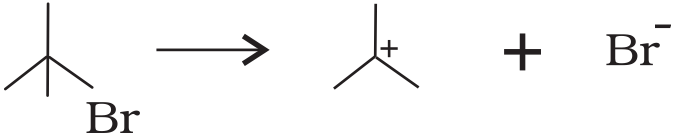
For the following bond cleavages, use curved-arrows to show the electron flow and classify each as homolysis or heterolysis. Identify reactive intermediate produced as free radical, carbocation and carbanion.
Discuss the hybridisation of Be in gaseous state and solid state.
Show that the circumference of the Bohr orbit for the hydrogen atom is an integral multiple of the de Broglie wavelength associated with the electron revolving around the orbit.
When electromagnetic radiation of wavelength 300 nm falls on the surface of sodium, electrons are emitted with a kinetic energy of $1.68 \times 10^5 \mathrm{~J} \mathrm{~mol}^{-1}$. What is the minimum energy needed to remove an electron from sodium? What is the maximum wavelength that will cause a photo-electron to be emitted?
$\left(\mathrm{h}=6.626 \times 10^{-34} \mathrm{~J} \mathrm{~s}\right)$
A box contains some identical red coloured balls, labelled as A, each weighing 2 grams. Another box contains identical blue coloured balls, labelled as B, each weighing 5 grams. Consider the combinations $AB, AB_{2,} A_2B$ and $A_2B_3$ and show that law of multiple proportions is applicable.
If $6.022 \times 10^{23}$ molecules of $\mathrm{N}_2$, react completely with $\mathrm{H}_2$ according to the equation:
$\mathrm{N}_2(\mathrm{~g})+3 \mathrm{H}_2(\mathrm{~g}) \rightarrow 2 \mathrm{NH}_3(\mathrm{~g})$
then calculate the number of molecules of $\mathrm{NH}_3$ formed.
  1. How many gram atoms are there in $8.0g$ of S?
  2. The molarity of Solution of sulphuric acid is $1.35M$. Calculate its molality.
(The density of solution is $1.02g cm^{-3})$
Urine has a pH of 6.0. If a patient eliminates 1300mL of urine per day, how many gram equivalents of the acid he eliminates per day?