Question
Explain the following terms with examples:
  1. Capital Expenditure
  2. Non-Current Assets

Answer

  1. Capital Expenditure: Any expenditure which is incurred in acquiring or increasing the value of a fixed asset is termed as capital expenditure. As such, the amount spent on the purchase or erection of Building, Plant, Furniture etc. is capital expenditure. Such expenditure yields benefit over a long period and hence written in Assets.
  2. Non-Current Assets: Non-Current Assets refer to those assets which are held for continued use in the business for the purpose of producing goods or services and are not meant for sale. Examples of non-current assets are long-term investments and fixed assets such as Land and Building, Plant and Machinery, Computer, Motor Vehicles, Furniture etc.

Need a full question paper?

Generate a complete, print-ready paper with questions like this in minutes — across 16+ boards, with answer keys.
Start Generating Free

Similar questions

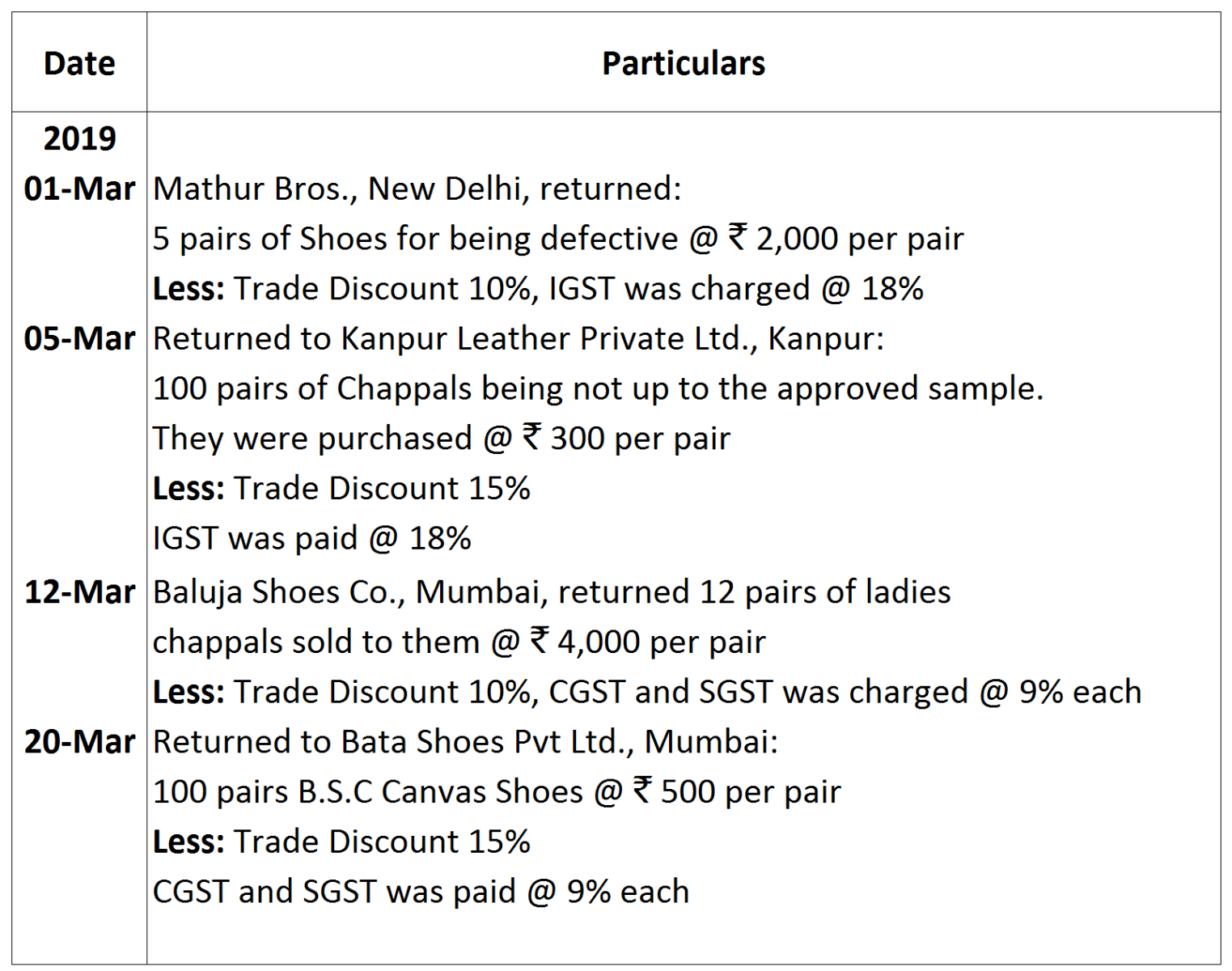
Prepare Returns Inward and Return Outward Books of Manoj, Mumbai from the following transactions and post them into Ledger Accounts:
Pass journal entries for the following:
2019
 
Jan. 6
Purchased goods from Henry for ₹ 50,000 on 10% trade discount and 4% cash discount and paid 60% amount by cheque.
Jan. 15
Bought goods from Amit for ₹ 2,00,000 at terms 5% cash discount and 20% trade discount. Paid $\frac{3}{4}\text{th}$ of the amount in cash at the time of purchase.
Jan. 18 Sold goods to Sherpa at the list price of ₹ 50,000 less 20% trade discount and 4% cash discount if the payment is made within 7 days. 75% payment is received by cheque on Jan. 23rd.
Jan. 25 Sold goods to Garima for ₹ 1,00,000, allowed her 20% trade discount and 5% cash discount if the payment is made within 15 days. She paid $\frac{1}{4}\text{th}$ of the amount by cheque on Feb. 5th and 60% of the remainder on Feb. 15th in cash.
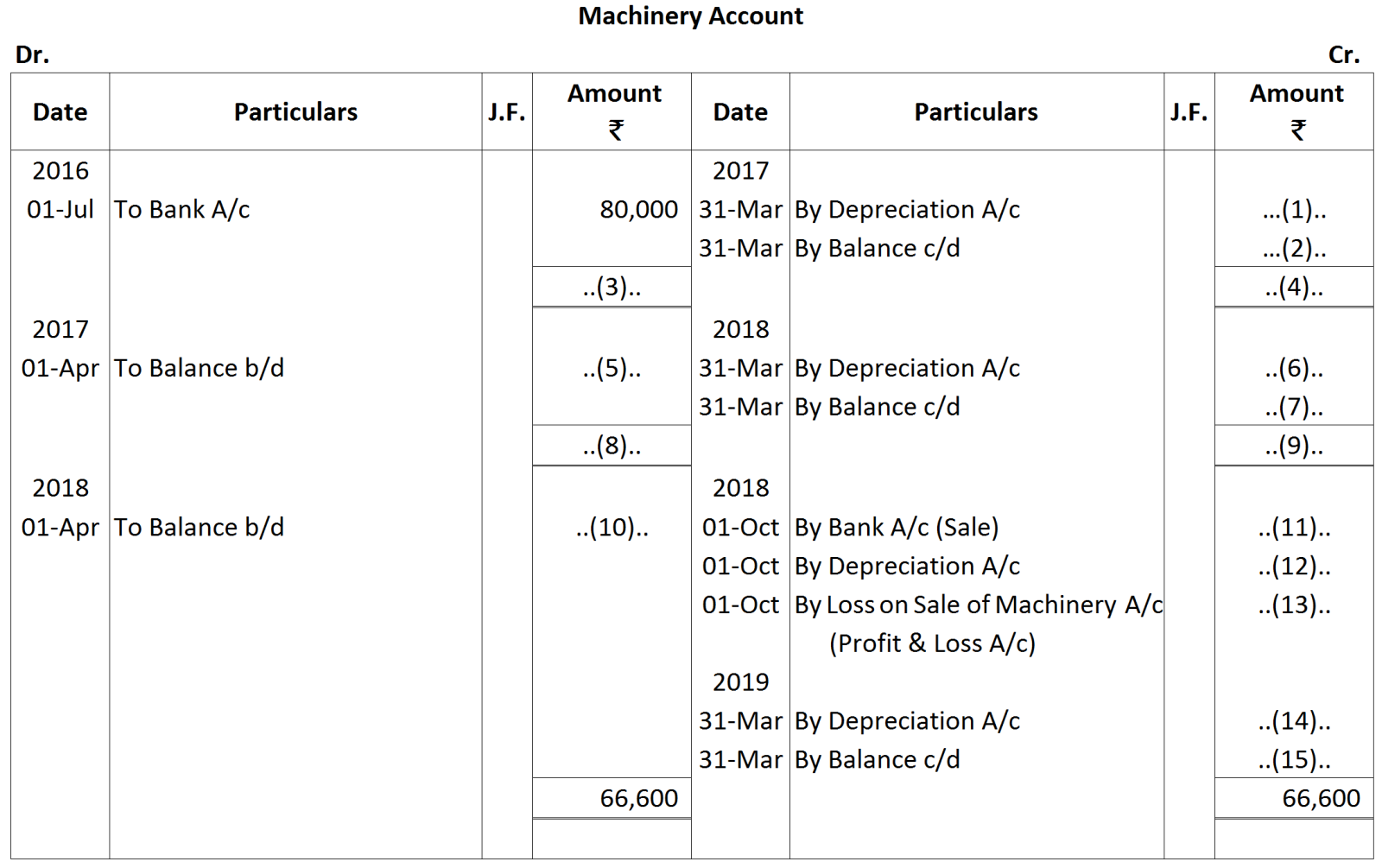
In the following Machinery Account, determine the missing values, if depreciation is to be charged @ 10% p.a. per Diminishing Balance Method. On 1st October, 2018, a part of the machinery valued in the books of the firm at ₹ 16,000 on 1st July, 2016 was sold for ₹ 10,000.
Distinguish between Cash Book and Cash A/c.
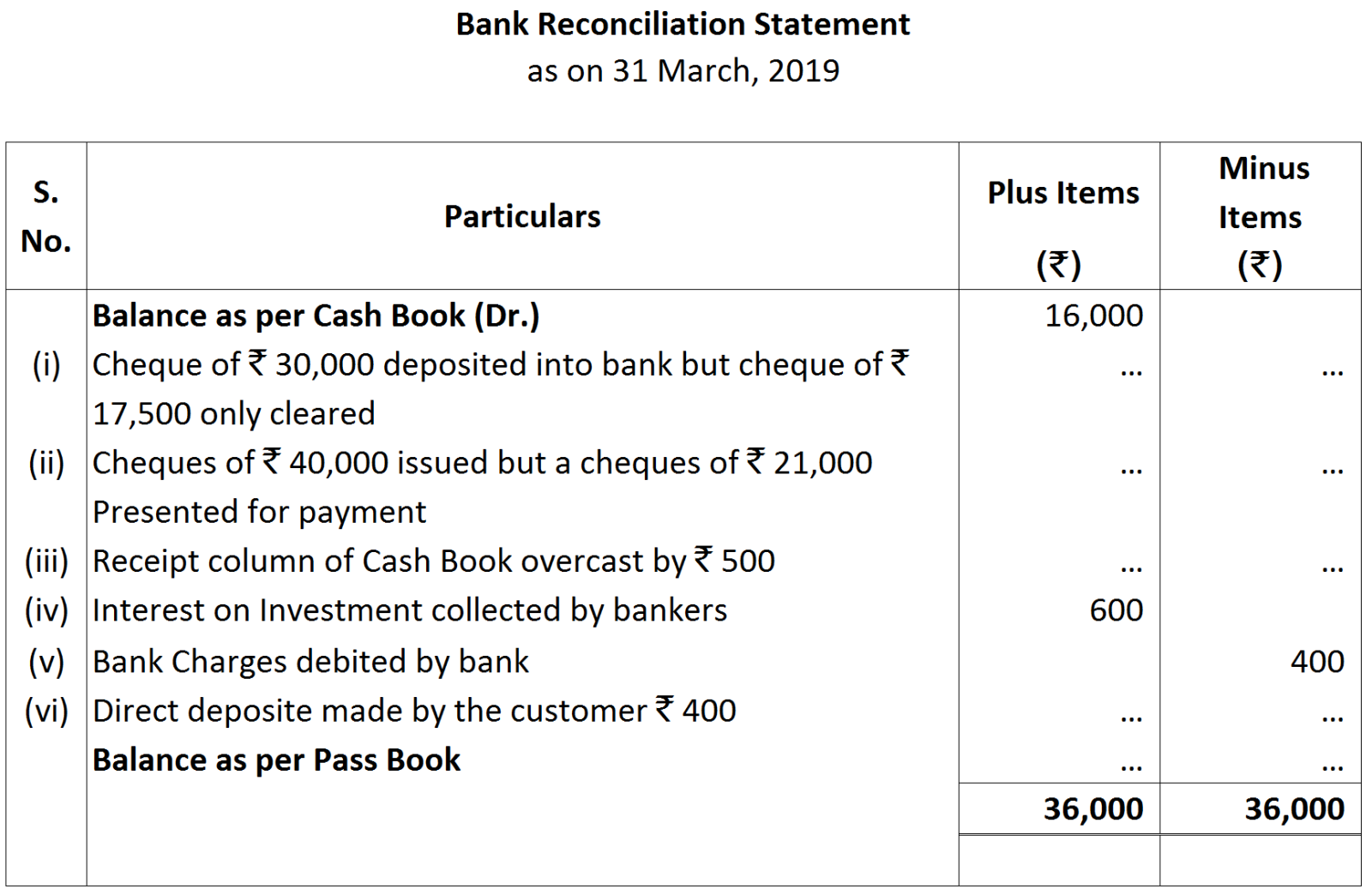
In the following Bank Reconciliation Statement. determine the missing amount:
Explain the following terms with examples:
  1. Capital Expenditure
  2. Non-Current Assets
On checking the Bank Pass Book it was found that it showed an overdraft of ₹ 5,220 as on 31.12.2014, while as per Ledger it was different to Bank Debit. The following differences were noted:
  1. Cheques deposited but not yet credited by bank ₹ 6,000.
  2. Cheques dishonoured and debited by bank but not given effect to it in the Ledger ₹ 800.
  3. Bank charges debited by bank but Debit Memo not received from bank ₹ 50.
  4. Interest on overdraft excess credited in the Ledger ₹ 200.
  5. Wrongly credited by bank to account, deposit of some other party ₹ 900.
  6. Cheques issued but not presented for payment ₹ 400.
Explain the following briefly with appropriate example:
Money Measurement Concept.
On which side of the Trial Balance, the following Ledger balances will appear:-
  1. Purchases Return
  2. Furniture
  3. Bank Loan
  4. Discount allowed
  5. Capital
  6. Drawings
  7. Return Inwards
  8. Bills Receivable
Explain any three of the following:
  1. Retiring of a bill of exchange.
  2. Discounting of a bill of exchange.
  3. Bill sent to bank for collection.
  4. Noting Charges.