Question
Explain the Hardy-Weinberg equilibrium principle.

Answer

→ In a given population one can find out the frequency of occurrence of alleles of a gene or a locus.
→ This frequency is supposed to remain fixed and even remain the same through generations.
→ Hardy-Weinberg principle stated it using algebraic equations.
→ This principle says that allele frequencies in a population are stable and is constant from generation to generation.
→ The gene pool (total genes and their alleles in a population) remains a constant. This is called genetic equilibrium.
→ Sum total of all the allelic frequencies is 1. Individual frequencies, for example, can be named p, q etc.
→ In a diploid, p and q represent the frequency of allele A and allele a.
→ p² + 2pq + q2 =1. This is a binomial
expansion of (p + q)2.Where : p2 - Frequency of individuals with Where: p genotype AA.
q² - Frequency of individuals with genotype aa. 2pq - Frequency of individuals with genotype Aa.
→ When frequency measured, differs from expected values, the difference (direction). indicates the extent of evolutionary change.
→ Disturbance in genetic equilibrium, or Hardy-Weinberg equilibrium, i.e. change of frequency of alleles in a population would then be interpreted as resulting in evolution.
Need a full question paper?

Generate a complete, print-ready paper with questions like this in minutes — across 16+ boards, with answer keys.

Start Generating Free

Similar questions

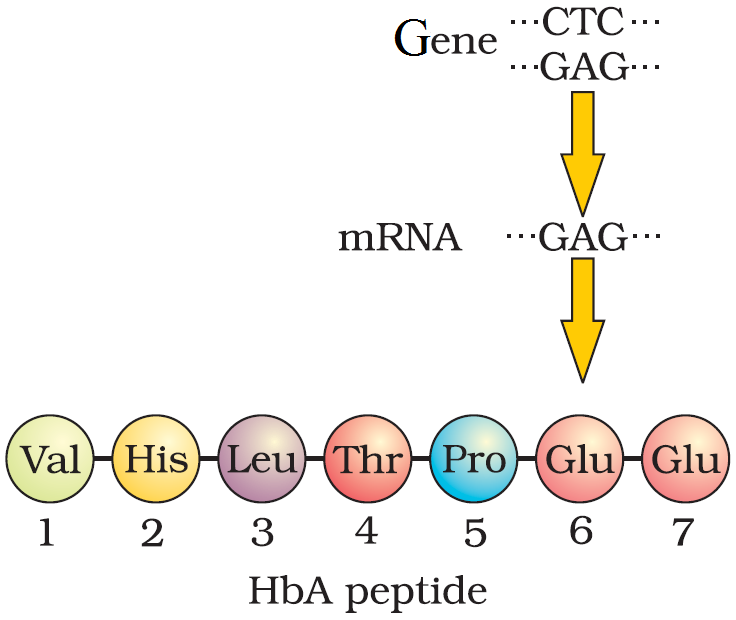
Given below is the representation of amino acid composition of the relevant translated portion of B-chain of haemoglobin, related to the shape of human red blood cells.

  1. Is this representation indicating a normal human or a sufferer from certain related genetic disease? Give reason in support of your answer.
  2. What difference would be noticed in the phenotype of the normal and the sufferer related to this gene?
  3. Who are likely to suffer more from the defect related to the gene representedthe males, the females or both males and females equally? And why?
At what stage is the mammalian embryo implanted in the uterus?
What are fossils? Mention any two ways in which the study of fossils support biological evolution of an organism.
What are the possible types of pollinations in chasmogamous flowers. Give reasons.
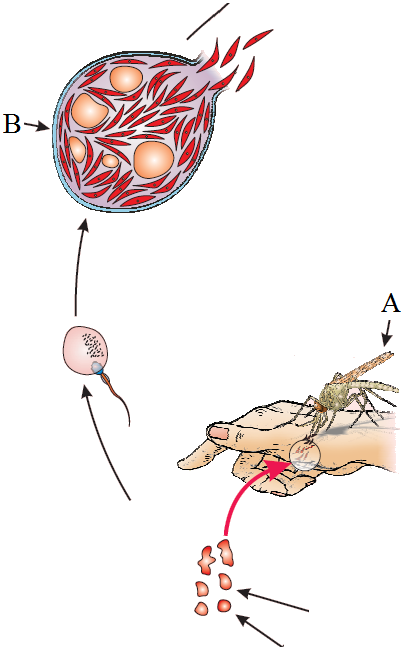
Study a part of the life cycle of malarial parasite given below. Answer the questions that follow:

  1. Mention the roles of 'A' in the life cycle of the malarial parasite.
  2. Name the event 'C' and the organ where this event occurs.
  3. Identify the organ 'B' and name the cells being released from it.
Given below is a schematic representation of a lac operon. Answer the following questions:
Image
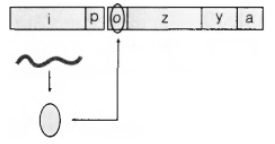
i. Identify i and p.
ii. Name the inducer for this operon.
iii. Explain the function of inducer for this operon.
Name the process of release of spermatozoa from Sertoli cells into cavity of seminiferous tubule.
  1. Write the two limitations of traditional breeding technique that led to promotion of micro propagation.
  2. Mention two advantages of micro propagation.
  3. Give two examples where it is commercially adopted.
What is high altitude sickness? Write its symptoms.
Who put forward the theory of natural selection? Explain the concept of differential reproduction as a major component of the theory of natural selection.