Question
Explain the nomenclature of organic compounds by common name system with examples.

Answer

self

Need a full question paper?

Generate a complete, print-ready paper with questions like this in minutes — across 16+ boards, with answer keys.

Start Generating Free

Similar questions

Classify the following species into Lewis acids and Lewis bases and show how these act as Lewis acid/base:
  1. $OH^–$
  2. $F^–$
  3. $H^+$
  4. $BCl_3$
Attempt any five of the following:
(a) What happens when benzene is treated with acetyl chloride in presence of $AlCl _3$ ?
Image
(c) Classify the hydrocarbons according to the carbon-carbon bond.
(d) Arrange the following: $HCl , HBr , Hl , HF$ in order of decreasing reactivity towards alkenes.
(e) Why is $CH _2= CH - CH _2- Cl$ more easily hydrolysed than $CH _3- CH _2- CH _2- Cl$ ?
(f) Which of the two trans-but-2-ene or trans-pent-2-ene is non-polar?
(g) What are benzenoids?
Using the equation of state pV = nRT; show that at a given temperature density of a gas is proportional to gas pressure p.
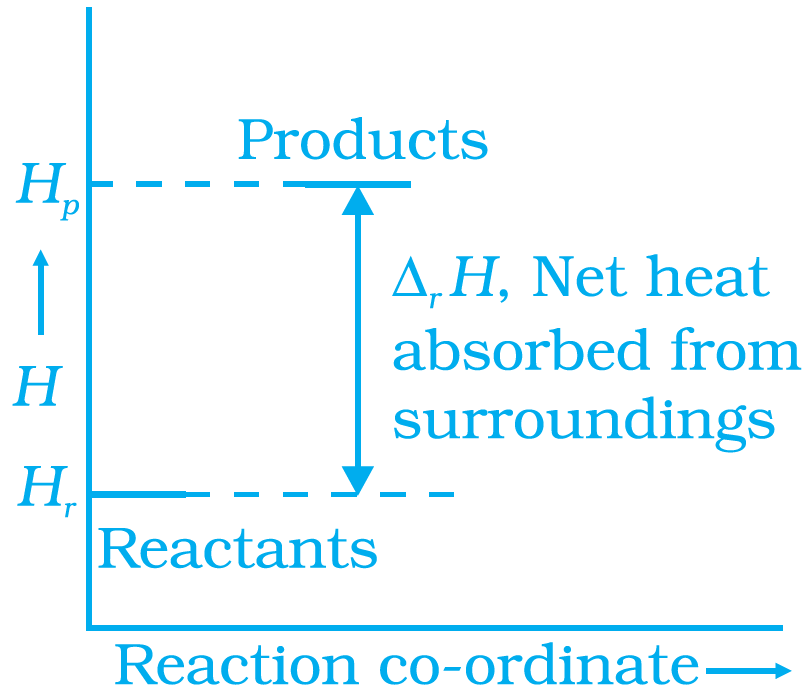
Enthalpy diagram for a particular reaction is given in Fig. Is it possible to decide spontaneity of a reaction from given diagram. Explain.
Justify the position of hydrogen in the periodic table on the basis of its electronic configuration.
Although both $\mathrm{CO}_2$ and $\mathrm{H}_2 \mathrm{O}$ are triatomic molecules, the shape of $\mathrm{H}_2 \mathrm{O}$ molecule is bent while that of $\mathrm{CO}_2$ is linear. Explain this on the basis of dipole moment.
Explain briefly about the electrochemical series and give its main uses.
Derive the formula required to find the energy of the electron in Bohr orbital.
Explain the effect of pressure, temperature, addition of catalyst and inert gas on the equilibrium of reversible reaction.
What is the type of hybridisation of carbon atoms marked with star.
  1. $\text{CH}_{3}=\text{CH}-\text{C}-\text{O}-\text{H}$
  2. $\text{CH}_{3}-\text{CH}_{2}-\text{OH}$
  3. $\text{CH}_{3}-\text{CH}_{2}-\text{C}-\text{H}$
  4. $\text{CH}_{3}-\text{CH}=\text{CH}-\text{CH}_{3}$
  5. $\text{CH}_{3}-\text{C}\equiv\text{CH}$
Comprehension given below is followed by some multiple choice questions. Each question has one correct option. Choose the correct option.
Molecular orbitals are formed by the overlap of atomic orbitals. Two atomic orbitals combine to form two molecular orbitals called bonding molecular orbital (BMO) and anti bonding molecular orbital (ABMO). Energy of anti bonding orbital is raised above the parent atomic orbitals that have combined and the energy of the bonding orbital is lowered than the parent atomic orbitals. Energies of various molecular orbitals for elements hydrogen to nitrogen increase in the order.
Different atomic orbitals of one atom combine with those atomic orbitals of the second atom which have comparable energies and proper orientation. Further, if the overlapping is head on, the molecular orbital is called ‘Sigma’, and if the overlap is lateral, the molecular orbital is called ‘pi’. The molecular orbitals are filled with electrons according to the same rules as followed for filling of atomic orbitals. However, the order for filling is not the same for all molecules or their ions. Bond order is one of the most important parameters to compare the strength of bonds.