Question
Explain with example why matter particle acquires electric charge.

Answer

►All matter is made up of atoms and/or molecules. Although the materials are electrically neutral, they do contain charges; but their charges are exactly balanced.
►To electrify a neutral body, we need to add or remove one kind of charge. When we say that a body is charged, we always refer to this excess charge or deficit of charge.
►In solids, some of the electrons, being less tightly bound in the atom, are the charges which are transferred from one body to the other. A body can thus be charged positively by losing some of its electrons.
►Similarly, a body can be charged negatively by gaining electrons.
►When we rub a glass rod with silk, some of the electrons from the rod are transferred to the silk cloth. Thus the rod gets positively charged and the silk gets negatively charged.
Need a full question paper?

Generate a complete, print-ready paper with questions like this in minutes — across 16+ boards, with answer keys.

Start Generating Free

Similar questions

Explain paramagnetism and paramagnetic substances.
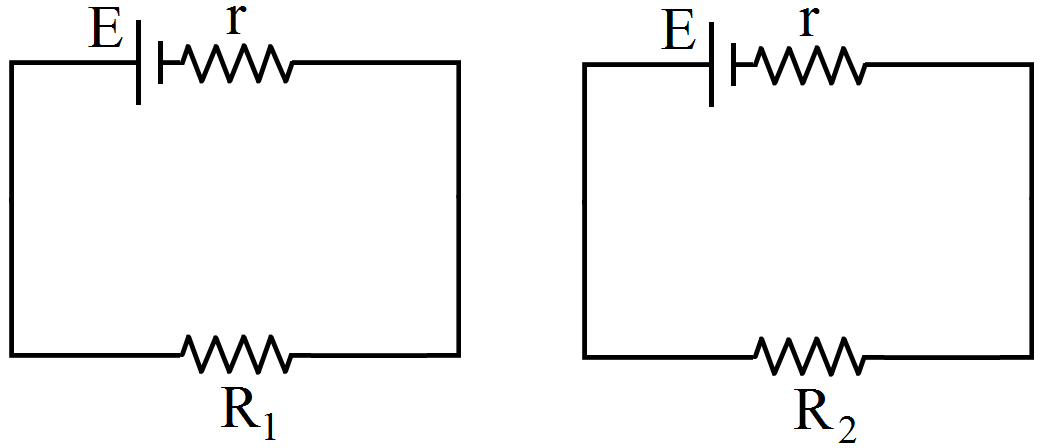
Two unequal resistances R1 and R2 are connected across two identical batteries of emf $\varepsilon$ and internal resistance r. Can the thermal energies developed in R1 and Rbe equal in a given time. If yes, what will be the condition?

A convex lens of diameter 8.0cm is used to focus a parallel beam of light of wavelength 620nm. If the light be focused at a distance of 20cm from the lens, what would be the radius of the central bright spot formed?
Define the distance of closest approach. An α-particle of kinetic energy 'K' is bombarded on a thin gold foil. The distance of the closest approach is 'r'. What will be the distance of closest approach for an α-particle of double the kinetic energy?
An electron enters with a velocity v = v0i into a cubical region (faces parallel to coordinate planes) in which there are uniform electric and magnetic fields. The orbit of the electron is found to spiral down inside the cube in plane parallel to the x-y plane. Suggest a configuration of fields E and B that can lead to it.
Use the mirror equation to show that an object placed between f and 2f of a concave mirror forms an image beyond 2f.
Derive an expression for the work done in rotating a dipole from the angle $\theta_{0}$ to $\theta_{1}$ in a uniform electric field E.
A point charge is taken from a point A to a point B in an electric field. Does the work done by the electric field depend on the path of the charge?
Explain why the spectrum of hydrogen atom has many lines, although a hydrogen atom contains only one electron.
If an electron has a wavelength, does it also have a colour?