Question
Explain with examples: Antiseptics

Answer

i. Antiseptics are used to sterilise surfaces of living tissue when the risk of infection is very high, such as during surgery or on wounds.
ii. Commonly used antiseptics include inorganics like iodine and boric acid or organics like iodoform and some phenolic compounds.

e.g.

  • Tincture of iodine (2-3% solution of iodine in alcohol-water mixture) and iodoform serve as powerful antiseptics and is used to apply on wounds.
  • A dilute aqueous solution of boric acid is a weak antiseptic used for eyes.
  • Various phenols are used as antiseptics. A dilute aqueous solution of phenol (carbolic acid) is used as antiseptic; however, phenol is found to be corrosive in nature. Many chloro derivatives of phenols are more potent antiseptics than the phenol itself. They can be used with much lower concentrations, which reduce their corrosive effects.
  • Two of the most common phenol derivatives in use are trichlorophenol (TCP) and chloroxylenol (which is an active ingredient of antiseptic dettol).
  • Thymol obtained from oil of thyme (a spice plant) has excellent non-toxic antiseptic properties.

Need a full question paper?

Generate a complete, print-ready paper with questions like this in minutes — across 16+ boards, with answer keys.

Start Generating Free

Similar questions

Point out the difference between 12 g of carbon and 12 u of carbon.
Discuss the nature of bonding in compounds of group 13, 14 and 15 elements.
How is acetylene prepared from the following compounds?
i. Methane
ii. Calcium carbide
How does hydrogen bonding influence boiling points of compounds?
Write the statement for :
(a) Boyle’s law
(b) Charles’ law
Assign oxidation number to the underlined species and write Stock notation of compound
Compound Oxidation number Stock notation
$AuCl_3$ …………….. ……………..
$SnCl_2$ …………….. ……………..
$V––2O4−7$ …………….. ……………..
$Pt–––Cl2−6$ …………….. ……………..
$H_3AsO_3$​​​​​​​ …………….. ……………..
Complete the following chemical reactions:
i. $\quad CO _{( g )}+ H _2 O _{( g )} \xrightarrow[\text { Iron chromate }]{673 K }$
ii. $\quad Zn _{( s )}+ NaOH \xrightarrow{\text { heat }}$
iii. $\quad CH _{4( g )}+ H _2 O \xrightarrow[ Ni ]{1270 K }$

Convert: 1-Bromobutane to hex-1-yne
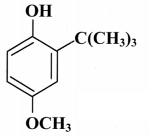
Compound $“X”$ having the following structure is used as synthetic antioxidant to increase the shelf life of packed foods.
Image
$i.$ What is the molecular formula of compound $“X”$?
$ii.$ Identify the structural unit responsible for antioxidant activity of $“X”.$
$iii.$ Give one example of a compound with structure, similar to compound $“X”,$ which is commonly used as synthetic antioxidant.
$iv.$ Give the $\text{IUPAC}$ name of compound $“X”.$
NaCl is an ionic compound but $LiCl$ has some covalent character, explain.