Question
Fe decomposes steam while Cu does not, why?

Answer

Fe is more reactive than hydrogen, it has lower reduction potential than hydrogen whereas Cu has higher reduction potential than hydrogen, copper cannot displace hydrogen from steam because it is less reactive than hydrogen.

Need a full question paper?

Generate a complete, print-ready paper with questions like this in minutes — across 16+ boards, with answer keys.
Start Generating Free

Similar questions

Write the favourable factors for the formation of ionic bond.
In a reaction
A + B2 → AB2
Identify the limiting reagent, if any, in the following reaction mixtures.
300 atoms of A + 200 molecules of B.
Benzylic free radical is more stable than allylic free radical. Explain with resonance.
Calculate the number of $k J$ of heat necessary to raise the temperature of 60.0 g of aluminium from $35^{\circ} C$ to $55^{\circ} C$. Molar heat capacity of Al is $24 J mol ^{-1} K^{-1}$.
What is Huckel's rule of aromaticity?
Calculate the energy per photon associated with the following radiations:
  1. Radiation of frequency = 3 × 10¹⁵ s-1
  2. Radiation of wavelength = 40nm.
(h = 6.62 × 140-34Js; c = 3 × 108ms-1)
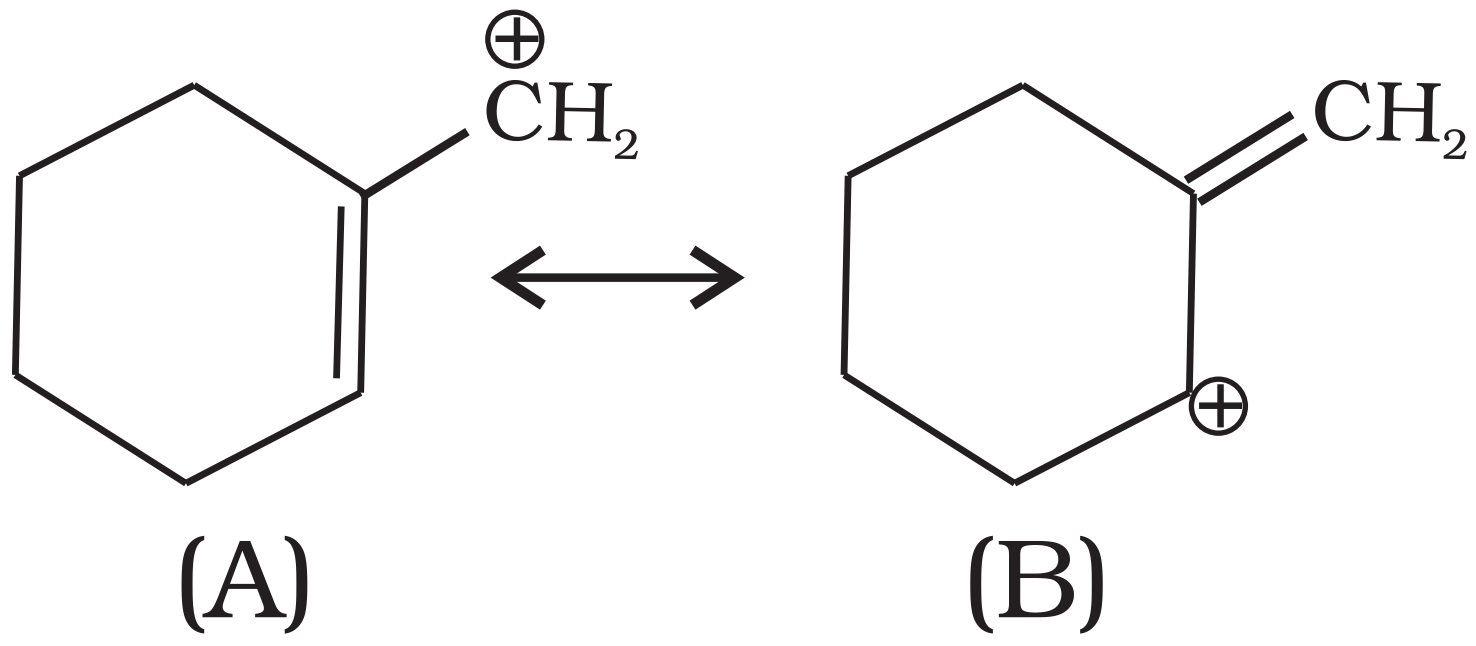
“Stability of carbocations depends upon the electron releasing inductive effect of groups adjacent to positively charged carbon atom involvement of neighbouring groups in hyperconjugation and resonance.”
Which of the following ions is more stable? Use resonance to explain your answer.

In a container of 5 L volume, in a vessel at 1250 K temperature following reaction takes place :
$
CO(g)+H_2 O(g) \rightleftharpoons CO_2(g)+H_2(g)
$
Initially one-one mole of CO and $H _2 O$ is taken and at equilibrium 0.4 mole $H _2 O$ remains then calculate equilibrium constant.
Depict the galvanic cell in which the reaction Zn(s) + 2Ag+(aq) → Zn2+(aq) + 2Ag(s) takes place, Further show:
Which of the electrode is negatively charged.
Write formula for the following compound:

Nickel(II) sulphate.