Question
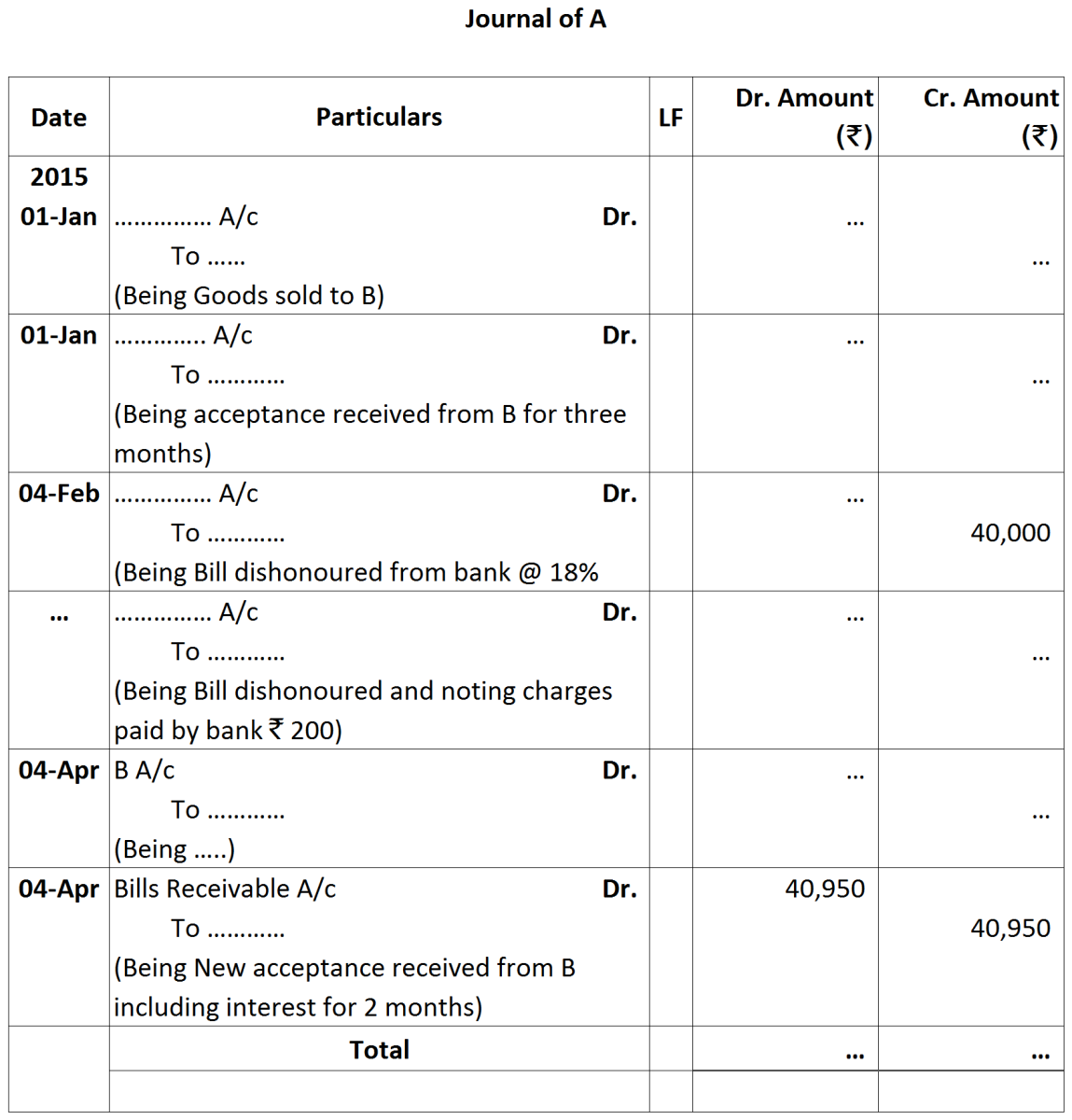
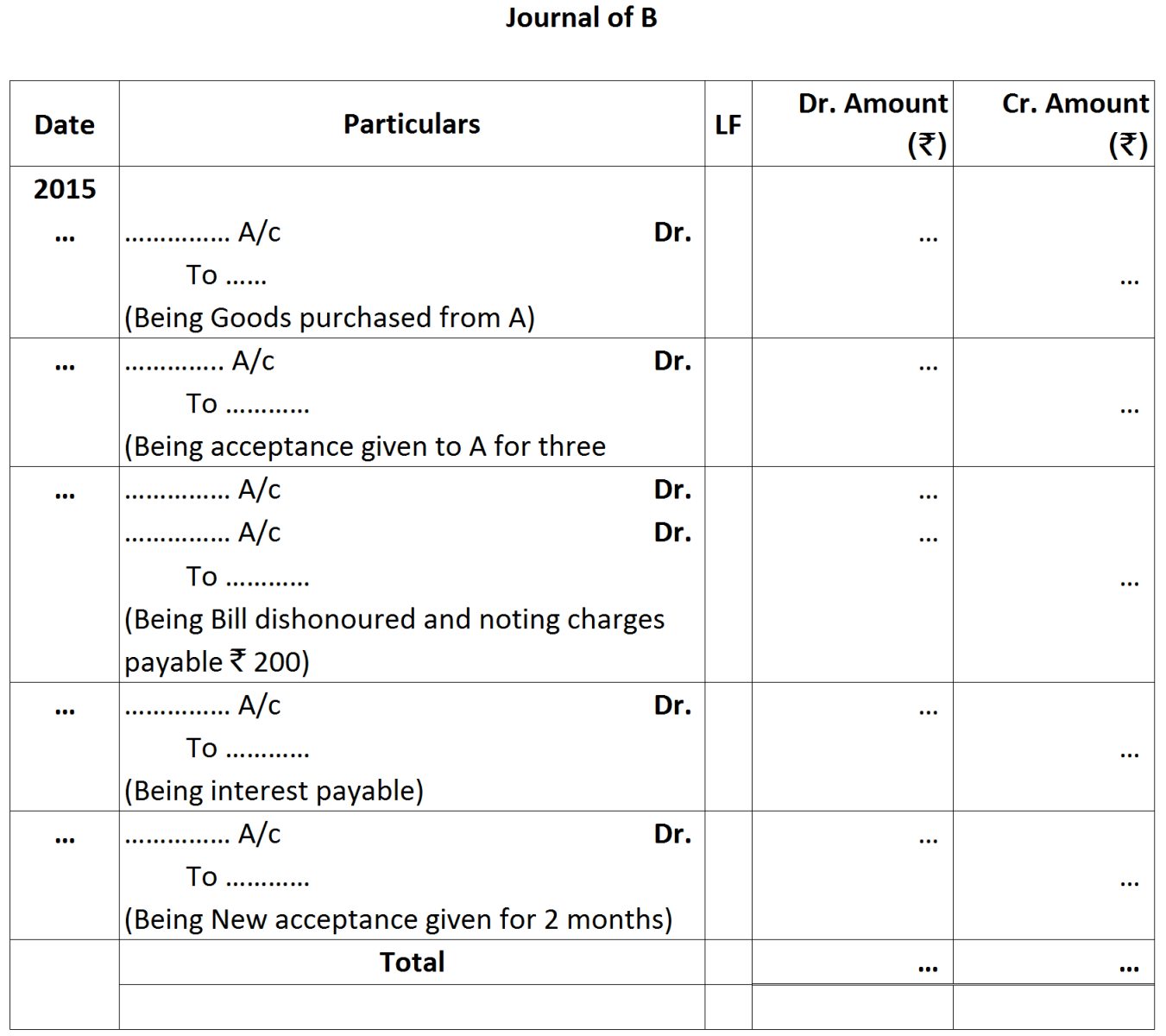
Fill up the missing information in the following journal entries:
Answer

Get the step-by-step solution for this question inside the Vidyadip app.

Get the answer in the app

Need a full question paper?

Generate a complete, print-ready paper with questions like this in minutes — across 16+ boards, with answer keys.

Start Generating Free

Similar questions

Pass Journal Entries for the following transactions:
  1. Provide depreciation on Furniture ₹ 500 and on Machinery ₹ 2,000.
  2. Received cash ₹ 1,000 for bad-debts written off last year.
  3. Ajay Singh was declared bankrupt. He owed ₹ 2,500 to us. Nothing could be recovered from his estate.
  4. ₹ 20,000 for wages and ₹ 4,000 for salaries are outstanding.
  5. Purchased furniture for ₹ 6,000 for the proprietor and paid the amount by cheque.
  6. Provide 9% interest on capital amounting to ₹ 2,00,000.
  7. Charge interest on drawings ₹ 1,000.
Rectify the following errors:
  1. Total of one page of the Sales Book was carried forward to the next page as ₹ 2,785 instead of ₹ 2,587.
  2. A cheque of ₹ 400 received from Mohan was dishonoured and had been posted to the debit side of the ‘Allowance Account’.
  3. Return of goods worth ₹ 5,000 by a customer was entered in the Purchases Return Book.
  4. Sum of ₹ 200 owed by ‘X’ has been included in the list of Sundry Creditors.
  5. Sale of old furniture worth ₹ 430 was credited to the Sales Account as ₹ 340.
On 31st March, 2019, Cash Book of Mahesh showed debit bank balance of ₹ 75,000. When compared with the Bank Statement, following facts were discovered. On 30th March, two cheques of ₹ 5,000 and ₹ 7,000 were deposited in the bank but were not realised till date. On 28th March, three cheques of ₹ 6,000, ₹ 8,000 and ₹ 12,000 were issued but none of these were presented to the bank for payment. On 31st March, bank credited ₹ 1,250 as interest but this was not recorded in the Cash Book. Similarly, the bank had charged ₹ 150 as bank charges but this was not recorded in the Cash Book.
Bank paid insurance premium of ₹ 5,000 but it was recorded as ₹ 500 in Cash Book. Prepare Bank Reconcilation Statement on 31st March, 2019.
Explain the meaning of any three of the following terms:
Conservatism.
Enter the following transactions in the Returns Inward Book of Anand Cloth House, Ajmal Khan Road, Mathura (U.P.) assuming CGST @ 2.5% and SGST @ 2.5%.
October 3
Chakravarti & Co. Jaipur (Rajasthan), returned to us being not according to sample
50 Metre Cotton Cloth @ ₹ 200 per Metre
30 Metre Silk Cloth @ ₹ 500 per Metre
Trade Discount 20%
October 12
Narain Rai & Co. Indore (M.P.), returned being not up to the approved sample
25 Metre woollen cloth @ ₹ 400 per Metre
October 20
Goods sold to Janaki Das Sita Ram, Agra (U.P.) now returned by them, being defective valued at ₹ 8,000.
October 28
Allowance allowed to Kesari Lal & Sons, Sadar Bazar, Prayagraj (U.P.) on account of a mistake in the invoice ₹ 3,000.
Journalise the following in the books of Amit Saini, Gurugram (Haryana):
  1. Goods of ₹ 5,000 were taken by him for personal use.
  2. ₹ 2,000 due from Sohan were bad debts.
  3. Goods of ₹ 6,000 were destroyed by fire and were not insured.
  4. Paid ₹ 4,000 in cash as wages on installation of machine. (GST is not to be levied).
  5. Sold goods to Arjun of Delhi of list price ₹ 20,000. Trade discount @ 10% and cash discount of 5% was allowed. He paid the amount on the same day and availed the cash discount.
  6. Received ₹ 2,000 from Ramesh, whose account was written off as bad debts.
  7. Goods costing ₹ 1,000 given as charity.
  8. Received ₹ 9,750 from Ramesh in full settlement of his account of ₹ 10,000.
  9. Paid rent in advance ₹ 4,000.
​CGST and SGST is to be levied on intra-state sale @ 6% each and IGST @ 12% on inter-state sale.
“Every transaction has debit and credit aspects.” Explain.
Rectify the following errors which are detected before preparation of the Trial Balance:
i. Sale to Prakash ₹ 50,000 posted to his account as ₹ 5,000 .
ii. Sale to Prakash ₹ 30,000 debited to his account as ₹ 3,000 .
iii. Sale to Prakash ₹ 20,000 credited to his account as ₹ 2,000 .
iv. Sale to Ravi ₹ 5,600 posted to his account as ₹ 6,500 .
v. Purchases of ₹ 8,755 from Nitin posted to his account as ₹ 5,578 .
vi. Purchases of ₹ 6,580 from Nitin posted to his account as ₹ 8,560 .
vii. Cash sale to Abhi of ₹ 30,000 posted as ₹ 3,000 .
fiii. Debit balance of ₹ 5,000 was carried forward as a credit balance in Ritesh's Account.
ix. Credit purchase of furniture ₹ 30,000 from Rohit was posted as ₹ 3,000 .
What is meant by Accrual Basis of Accounting? Give two advantages of Accrual Basis of Accounting.
Give the meaning of rebate.