Question
Find the angle between the lines whose direction ratios are a, b, c and b - c, c - a, a - b.

Answer

Direction ratios of one line are a, b, c
⇒ A vector along this line is $\vec{\text{b}_1}=\text{a}\hat{\text{i}}+\text{b}\hat{\text{j}}+\text{c}\hat{\text{k}}$
Direction ratios of second line are b - c, c - a, a - b
⇒ A vector along second line is $\vec{\text{b}_2}=(\text{b - c})\hat{\text{i}}+(\text{c - a})\hat{\text{j}}+(\text{a - b})\hat{\text{k}}$
Let $\theta$ be the angle between the two lines, then
$\cos\theta=\frac{\big|\vec{\text{b}_1}.\vec{\text{b}_2}\big|}{\big|\vec{\text{b}_1}\big|.\big|\vec{\text{b}_2}\big|}=\frac{\text{a}(\text{b - c})+\text{b}(\text{c - a})+\text{c}(\text{a - b})}{\sqrt{\text{a}^2+\text{b}^2+\text{c}^2}\sqrt{(\text{b - c})^2+(\text{c - a})^2+(\text{a - b})^2}}$
$=\frac{\text{ab - ac}+\text{bc - ab}+\text{ac - bc}}{\sqrt{\text{a}^2+\text{b}^2+\text{c}^2}\sqrt{(\text{b - c})^2+(\text{c - a})^2+(\text{a - b})^2}}=0=\cos90^{\circ}$
$\Rightarrow\ \ \theta=90^{\circ}$

Need a full question paper?

Generate a complete, print-ready paper with questions like this in minutes — across 16+ boards, with answer keys.
Start Generating Free

Similar questions

If $\text{y}=\cos^{-1}\text{x},$ Find $\frac{\text{d}^2\text{y}}{\text{dx}^2}$ in terms of y alone.
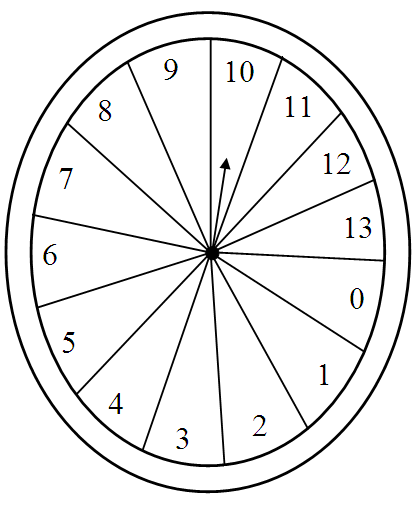
In roulette, Figure, the wheel has 13 numbers 0, 1, 2,...., 12 maked on equally spaced slots. A player sets Rs 10 on a given number. He recieves Rs 100 from the organiser of the game if the ball comes to rest in this slot; otherwise he gets nothing. If X denotes the players net gain/loss, Find E(X).
Reduce the equation 2x - 3y - 6z = 14 to the normal form and, hence, find the length of the perpendicular from the origin to the plane. Also, find the direction cosines of the normal to the plane.
A laboratory blood test is $99\%$ effective in detecting a certain disease when its infection is present. However, the test also yields a false positive result for $0.5\%$ of the healthy person tested $($i.e. if a healthy person is tested, then, with probability $0.005,$ the test will imply he has the disease$).$ If $0.1\%$ of the population actually has the disease, what is the probability that a person has the disease given that his test result is positive?
Prove that the given vectors are coplanar:
$2\hat{\text{i}}-\hat{\text{j}}+\hat{\text{k}},\ \hat{\text{i}}-3\hat{\text{j}}-5\hat{\text{k}}$ and $3\hat{\text{i}}-4\hat{\text{j}}-4\hat{\text{k}}$
Find the angle between the plane:
x - y + z = 5 and x + 2y + z = 9
Given the funcation $\text{f(x)}=\frac{1}{\text{x}+2}.$ Find the points of discontinuity of the function f(f(x)).
Solve: $\cos\Big\{2\sin^{-1}\{-\text{x}\}\Big\}=0$
In $\left[\begin{array}{cc}x+y & 2 \\ 5+z & x y\end{array}\right]=\left[\begin{array}{ll}6 & 2 \\ 5 & 8\end{array}\right]$ find the value of $x, y, z$ ?
Assume that the chances of a patient having heart attack is $40\%.$ It is also assumed that meditation and yoga course reduces the risk of heart attack by $30\%$ and prescription of certain drug reduces its chances by $25\%.$  At a time a patient can choose any one of the two options with equal probabilities. It is given that after going through one of the two options and patient selected at random suffers a heart attack. Find the probability that the patient followed a course of meditation and yoga?