Question
Find the sum:
$\frac{\text{a}-\text{b}}{\text{a}+\text{b}}+\frac{3\text{a}-2\text{b}}{\text{a}+\text{b}}+\frac{5\text{a}-3\text{b}}{\text{a}+\text{b}}+......\text{to 11 terms.}$
Answer

Here, first term $\big(\text{A}\big)=\frac{\text{a}-\text{b}}{\text{a}+\text{b}}$
and common difference,
$\text{D}=\frac{3\text{a}-2\text{b}}{\text{a}+\text{b}}-\frac{\text{a}-\text{b}}{\text{a}+\text{b}}=\frac{\text{2a}-\text{b}}{\text{2a}+\text{b}}$
$\because$ Sum of n terms of an AP,
$\Rightarrow\text{S}_{\text{n}}=\frac{\text{n}}{2}\left\{2\frac{\big(\text{a}-\text{b}\big)}{\big(\text{a}+\text{b}\big)}+\big(\text{n}-1\big)\frac{2\text{a}-\text{b}}{\big(\text{a}+\text{b}\big)}\right\}$
$\text{S}_{\text{n}}=\frac{\text{n}}{2}\left\{\frac{2\text{a}-2\text{b}+2\text{an}-2\text{a}-\text{bn}+\text{b}}{\text{a}+\text{b}}\right\}$
$\text{S}_{\text{n}}=\frac{\text{n}}{2}\left\{\frac{2\text{an}-\text{bn}-\text{b}}{\text{a}+\text{b}}\right\}$
$\therefore$ $\text{S}_{\text{11}}=\frac{\text{11}}{2}\left\{\frac{2\text{a}\big(11\big)-\text{b}\big(11\big)-\text{b}}{\text{a}+\text{b}}\right\}$
$\text{S}_{\text{11}}=\frac{11\big(11\text{a}-6\text{b}\big)}{\text{a}+\text{b}}$
$\text{S}_{\text{11}}=\frac{11}{2}\bigg(\frac{22\text{a}-12\text{b}}{\text{a}+\text{b}}\bigg)$

Need a full question paper?

Generate a complete, print-ready paper with questions like this in minutes — across 16+ boards, with answer keys.

Start Generating Free

Similar questions

??The following frequency distribution gives the monthly consumption of electricity of 64 consumers of locality.
Monthly consumption (in units)
65-85
85-105
105-125
125-145
145-165
165-185
Number of consumers
4
5
13
20
14
8
Form a 'more than type' cumulative frequency distribution.
Solve the following quadratic equations by factorization:
$x^2 + 2ab = (2a + b)x$
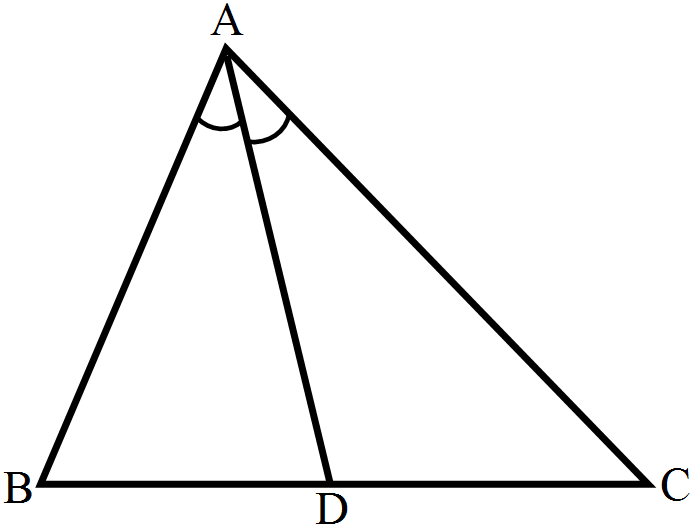
In a $\triangle\text{ABC},\text{AD}$ is the bisector of $\angle\text{A}.$
If AB = 5.6cm, AC = 4cm and DC = 3cm, find BC.
In $\triangle\text{ABC},\text{D}$ is the midpoint of BC and $\text{AE}\perp\text{BC}.$ If $\text{AC}>\text{AB},$ show that.
$\text{AB}^2=\text{AD}^2-\text{BC}.\text{DE}+\frac{1}{4}\text{BC}^2.$
Solve the following equations by using the method of completing the square:
$4x^2 + 4bx - (a^2 - b^2) = 0$
If 3 is a root of the quadratic equation $x^2-x+k=0$, find the value of $p$ so that the roots of the equation $x^2+k(2 x+k+2)+p=0$ are equal.
Find the ratio in which the line segment joining the points $A (3,-3)$ and $B (-2,7)$ is divided by $x-$axis. Also find the coordinates of the point of division.
A right circular cone and a right circular cylinder have equal base and equal height. If the radius of the base and height are in the ratio 5 : 12, write the ratio of the total surface area of the cylinder to that of the cone.
The sum of digits of a two number is 15. The number obtained by reversing the order of digits of the given number exceeds the given number by 9. Find the given number.
If $\sec\theta=\frac{17}{8},$ verify that $\frac{\big(3-4\sin^2\theta\big)}{\big(4\cos^2\theta-3\big)}=\frac{\big(3-\tan^2\theta\big)}{\big(1-3\tan^2\theta\big)}.$