MCQ
Fluorine forms chemical compounds with
  • A
    $He$
  • B
    $Ne$
  • C
    $Ar$
  • $Xe$

Answer

Correct option: D.
$Xe$
d
It’s Obvious.

Need a full question paper?

Generate a complete, print-ready paper with questions like this in minutes — across 16+ boards, with answer keys.

Start Generating Free

Similar questions

The conductivity of centimolar solution of $KCl$ at $25^{\circ}\,C$ is $0.0210\,ohm ^{-1}\,cm ^{-1}$ and the resistance of the cell containing the solution at $25^{\circ}\,C$ is $60\,ohm$. The value of cell constant is $.........\,cm ^{-1}$
Simplified absorption spectra of three complexes $((i),$$( ii)$ and $( iii ))$ of $M ^{ n +}$ ion are provided below; their $\lambda_{\max }$ values are marked as $A, B$ and $C$ respectively. The correct match between the complexes and their $\lambda_{\max }$ values is

$(i)$ $\left[ M ( NCS )_{6}\right]^{(-6+ n )}$

$(ii)$ $\left[ MF _{6}\right]^{(-6+ n )}$

$(iii)$ $\left[ M \left( NH _{3}\right)_{6}\right]^{ n ^{+}}$

Reaction of tert.butyl alcohol with hot Cu at $350\,^oC$ produce
Given below are two statements:

Statement $I$ : Sulphanilic acid gives esterification test for carboxyl group.

Statement $II$ : Sulphanilic acid gives red colour in Lassigne's test for extra element detection.

In the light of the above statements, choose the most appropriate answer from the options given below :

The reactions of $Cl _2$ gas with cold-dilute and hot-concentrated $NaOH$ in water give sodium salts to two (different) oxoacids of chlorine, $P$ and $Q$, respectively. The $Cl _2$ gas reacts with $SO _2$ gas, in presence of charcoal, to give a product $R$. $R$ reacts with white phosphours to give a compound $S$. On hydrolysis, $S$ gives an oxoacid of phosphours $T$

$1.$ $P$ and $Q$, respectively, are the sodium salts of

$(A)$ hypochlorus and chloric acids

$(B)$ hypochlorus and chlorus acids

$(C)$ chloric and perchloric acids

$(D)$ chloric and hypochlorus acids

$2.$ $R , S$ and $T$, respectively, are

$(A)$ $SO _2 Cl _2, PCl _5$ and $H _3 PO _4$

$(B)$ $SO _2 Cl _2, PCl _3$ and $H _3 PO _3$

$(C)$ $SOCl _2, PCl _3$ and $H _3 PO _2$

$(D)$ $SOCl _2, PCl _5$ and $H _3 PO _4$

Give the answer question $1$ and $2.$

$Ni^{2+}$ ion can be estimated by using dimethyl glyoxime and forms a cherry-red  precipitate. The complex is stabilized by
Which is the most suitable reagent for the following transformation ?

$\begin{array}{*{20}{c}}
  {\,\,\,\,\,\,\,\,\,\,\,\,\,\,\,\,\,\,\,\,\,\,\,\,\,\,\,\,\,\,\,\,\,\,\,\,\,\,\,\,\,\,\,\,\,\,\,\,\,\,\,\,OH} \\ 
  {\,\,\,\,\,\,\,\,\,\,\,\,\,\,\,\,\,\,\,\,\,\,\,\,\,\,\,\,\,\,\,\,\,\,\,\,\,\,\,\,\,\,\,\,\,\,\,\,\,\,|\,\,} \\ 
  {C{H_3} - CH = CH - C{H_2} - CH - C{H_3}} 
\end{array}$  $\longrightarrow $    $C{H_3} - CH = CH - C{H_2}C{O_2}H$
An alternation in the base sequence of nucleic acid molecule is called
Which will give chiral molecule
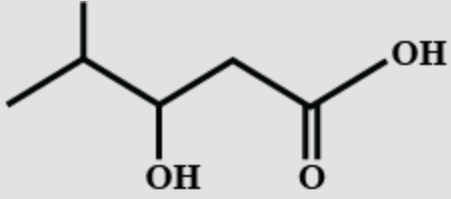
Write $\text{IUPAC}$ name of the following compound.