MCQ
For Carnot engine, which process should be chosen to take the working substance from T1 to T2 or vice-versa?
  • A
    Isochoric.
  • B
    Isothermal.
  • C
    Adiabatic.
  • D
    Isobaric.

Answer

  1. Adiabatic.

Need a full question paper?

Generate a complete, print-ready paper with questions like this in minutes — across 16+ boards, with answer keys.
Start Generating Free

Similar questions

Durring Searle's experiment, zero of the Vernier scale lies between $3.20 \times 10^{-2} m$ and $3.25 \times 10^{-2} m$ of the main scale. The $20^{\text {th }}$ division of the Vernier scale exactly coincides with one of the main scale divisions. When an additional load of $2 \ kg$ is applied to the wire, the zero of the Vernier scale still lies between $3.20 \times 10^{-2} m$ and $3.25 \times 10^{-2} m$ of the main scale but now the $45^{\text {th }}$ division of Vernier scale coincides with one of the main scale divisions. The length of the thin metallic wire is $2 m$. and its cross-sectional area is $8 \times 10^{-7} m ^2$. The least count of the Vernier scale is $1.0 \times 10^{-5} m$. The maximum percentage error in the Young's modulus of the wire is
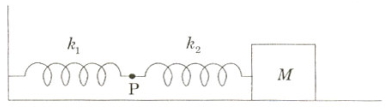
The mass $M$ shown in the figure oscillates in simple harmonic motion with amplitude $A$. The amplitude of the point $P$ is
The efficiency of an ideal heat engine working between the freezing point and boiling point of water, is ........ $\%$
A particle of mass $m$ is projected with speed $u$ at angle $\theta$ with horizontal from ground. The work done by gravity on it during its upward motion is ..........
A particle of mass $m$ is moving in a circular path of constant radius $I$ such that its centripetal acceleration $(a)$ is varying with time $t$ as $a=k^{2} rt^{2}$. where $k$ is a constant. The power delivered to the particle by the force acting on it is given as
The velocities of $A$ and $B$ are $\vec{v}_A=2 \hat{i}+4 \hat{j}$ and $\vec{v}_B=3 \hat{i}-7 \hat{j}$ Velocity of $B$ as observed by $A$ is ..........
The position vector of a particle related to time $t$ is given by $\overrightarrow{ r }=\left(10 t \hat{ i }+15 t ^2 \hat{ j }+7 \hat{ k }\right) m$ The direction of net force experienced by the particle is
If $\rho $ is the density of the material of a wire and $\sigma  $ is breaking stress, the greatest length of the wire that can hang freely without breaking is
A disc of mass $1\,kg$ and radius $R$ is free of rotate about a horizontal axis passing through its centre and perpendicular to the plane of disc. A body of same mass as that of disc is fixed at the highest point of the disc. Now the system is released, when the body comes to the lowest position, its angular speed will be $4 \sqrt{\frac{x}{3 R}}$ rad s$^{-1}$ where $x=$

$\left( g =10\,ms ^{-2}\right)$

The temperature of a gas at pressure $P$ and volume $V$ is $27°C.$ Keeping its volume constant if its temperature is raised to $927°C,$ then its pressure will be