MCQ
For the reaction at $25\,^oC$ ${N_2}{O_{4(g)}}\,\, \rightleftharpoons \,\,2N{O_{2(g)}},$ if $\Delta {G^o}_f$ for $N_2O_4$ and $NO_2$ are $23.49$ and $12.39\,kcal$, then $K_p$ for the reaction is
  • A
    $113332$
  • B
    $11.33$
  • C
    $1.133$
  • $0.113$

Answer

Correct option: D.
$0.113$
d
$\Delta \mathrm{G}^{o}$ for change $=2 \times \Delta \mathrm{G}_{\mathrm{NO}_{2}}^{o}-\Delta \mathrm{G}_{\mathrm{N}_{2} \mathrm{O}_{4}}^{o}$

$=2 \times 12.39-23.49=1.29 \,\mathrm{kcal}$

$\because $ $\Delta G^o= -2.303\, RT\, log \,K$

$\therefore 1.29 \times 10^{3}=-2.303 \times 1.987 \times 298 \times \log \mathrm{K}_{\mathrm{p}}$

$\mathrm{K}_{\mathrm{p}}=0.1132\, \mathrm{atm}$

Need a full question paper?

Generate a complete, print-ready paper with questions like this in minutes — across 16+ boards, with answer keys.
Start Generating Free

Similar questions

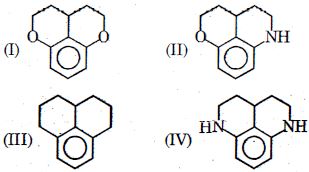
In above compounds, decreasing order of rate of electrophilic aromatic substitution will be ?
Chlorinaton of toluene in the presence of light and heat followed by treatment with aqueous $NaOH$ gives :
Which of the following has largest ionic radius
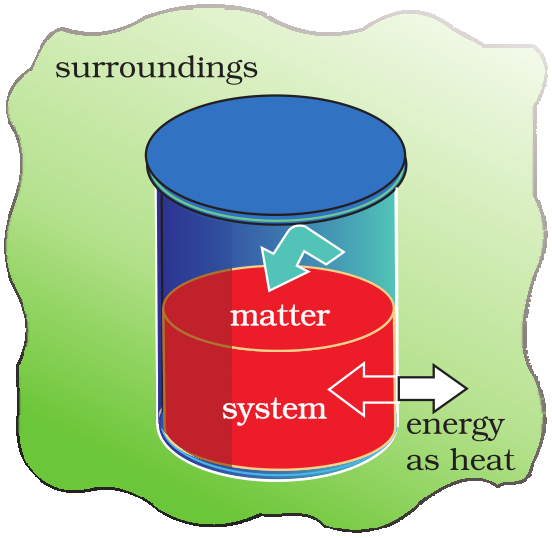
Name the type of wall used in the above figure.
For the reaction $2Al + 3MnO\xrightarrow{\Delta }A{l_2}{O_3} + Mn;$ If $108\,g$ of $Al$ and $213\,g$ of $MnO$ are heated then which of the following is incorrect?
A substance which gives brick red flame and breaks down on heating to give oxygen and brown gas is :
Given below are two statements: one is labelled as Assertion $A$ and the other is labelled as Reason $R$

Assertion $A:$ In equation $\Delta_r G =- nFE _{\text {cell }}$ value of $\Delta_r G$ depends on $n$.

Reasons $R$ : $E_{\text {cell }}$ is an intensive property and $\Delta_{ r } G$ is an extensive property.

In the light of the above statements, choose the correct answer from the options given below

Consider the following statements for $\overset{\centerdot \,\,\,\,\,\,\,\,\,\,}{\mathop{C{{H}_{3}}}}\,=X$ and $\overset{\centerdot \,\,\,\,\,\,\,\,\,\,}{\mathop{C{{F}_{3}}}}\,=Y$ .
$(I)$ When $X$ dimerises bond angle decreases
$(II)$ When $X$ dimerises bond angle increases
$(III)$ In $X-Y$ molecule $C-C$ bond length is less than that in $Y-Y$ molecule
$(IV)$ Bond angle in $X$ is greater than that in $Y$
Identify wrong statement

$R - C \equiv C - R\xrightarrow{{Pd/BaS{O_4}}}A$

$R - C \equiv C - R\xrightarrow{{Na/Liq.\,NH_3}}B$

When two atomic orbitals combine they form