Question
For two statements are given-one labelled Assertion (A) and the other labelled Reason (R). Select the correct answer to these questions from the codes (a), (b), (c) and (d) as given below:
  1. Both A and R are true, and R is correct explanation of the assertion.
  2. Both A and R are true, but R is not the correct explanation of the assertion.
  3. A is true, but R is false.
  4. A is false, but R is true.
Assertion: Heater wire must have high resistance and high melting point.
Reason: If resistance is high, the electric conductivity will be less.
Answer

  1. Both A and R are true, but R is not the correct explanation of the assertion.

Explanation:

Heater wire must have high resistance and high melting point, because in series current remains same, therefore according to Joule's law $\text{H}=\frac{\text{i}^2\text{Rt}}{4.2,}$ heat produced is high if R is high. Melting point must be high, so that wire may not melt with increase in temperature.

Need a full question paper?

Generate a complete, print-ready paper with questions like this in minutes — across 16+ boards, with answer keys.

Start Generating Free

Similar questions

For two statements are given-one labelled Assertion (A) and the other labelled Reason (R). Select the correct answer to these questions from the codes (a), (b), (c) and (d) as given below:
  1. Both A and R are true, and R is correct explanation of the assertion.
  2. Both A and R are true, but R is not the correct explanation of the assertion.
  3. A is true, but R is false.
  4. A is false, but R is true.
Assertion: In a chain of bulbs, 50 bulbs are joined in series. One bulb is removed now and circuit is completed again. If the remaining 49 bulbs are again connected in series across the same supply, then light gets decreased in the room.
Reason: Net resistance of 49 bulbs will be less than 50 bulbs.
In the following questions, a statement of Assertion is given by the corresponding statement of Reason. Of the statements, mark the correct answer as:
  1. If both Assertion and Reason are true and Reason is the correct explanation of Assertion.
  2. If both Assertion and Reason are true, but Reason is not the correct explanation of Assertion.
  3. If Assertion is true, but Reason is false.
  4. Assertion is false, but Reason is true.
  5. If Assertion and Reason both are false.
Assertion: Electric current will not flow between two charged bodies when connected, if their charges are same.
Reason: Current is the rate of flow of charge.
For two statements are given-one labelled Assertion (A) and the other labelled Reason (R). Select the correct answer to these questions from the codes (a), (b), (c) and (d) as given below:
  1. Both A and R are true, and R is correct explanation of the assertion.
  2. Both A and R are true, but R is not the correct explanation of the assertion.
  3. A is true, but R is false.
  4. A is false, but R is true.
Assertion: The rainbow is seen when the sun is behind the observer.
Reason: Rainbow is produced due to dispersion of white light by small rain drops hanging in the air after the rain.
For two statements are given-one labelled Assertion (A) and the other labelled Reason (R). Select the correct answer to these questions from the codes (a), (b), (c) and (d) as given below:
  1. Both A and R are true, and R is correct explanation of the assertion.
  2. Both A and R are true, but R is not the correct explanation of the assertion.
  3. A is true, but R is false.
  4. A is false, but R is true.
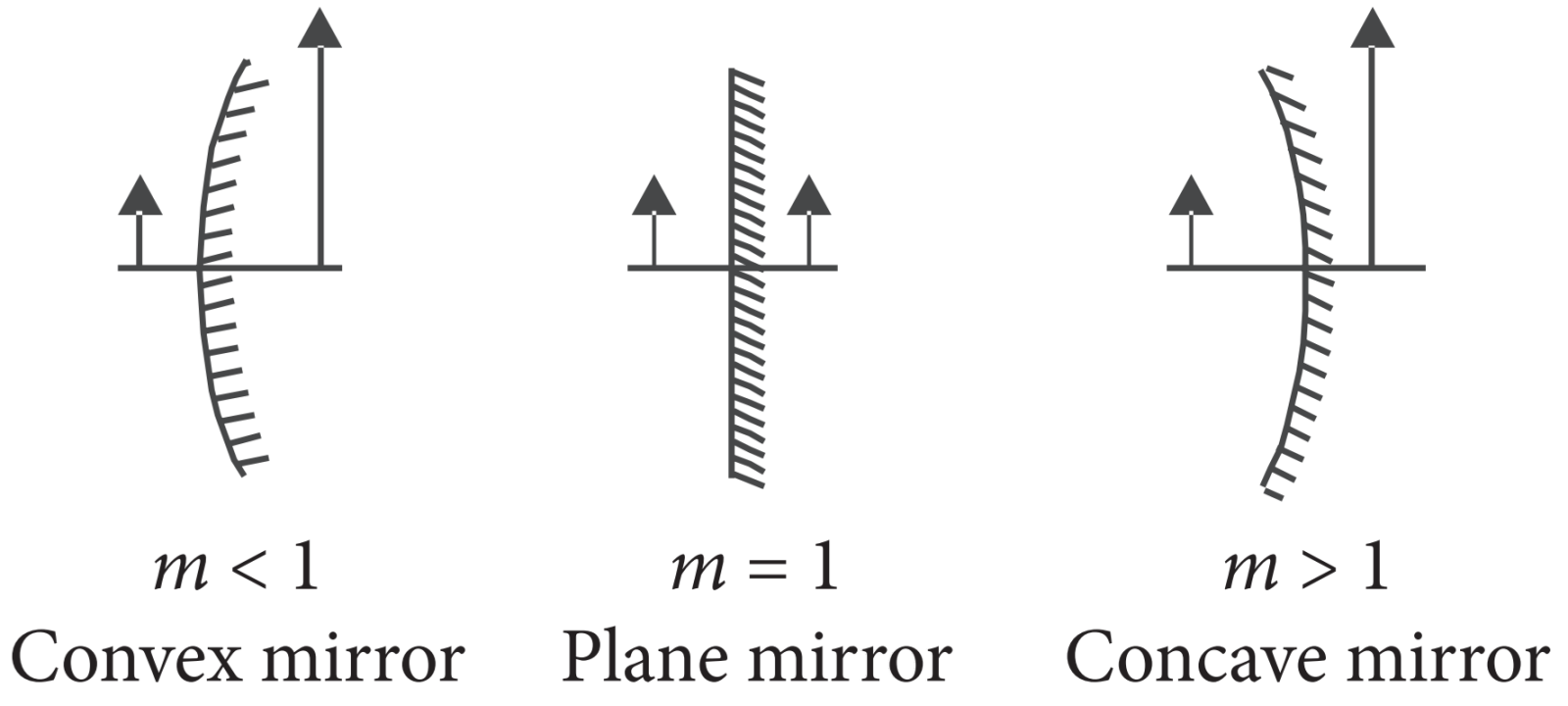
Assertion: The size of the mirror affect the nature of the image.
Reason: Small mirrors always form virtual images.
For two statements are given-one labelled Assertion (A) and the other labelled Reason (R). Select the correct answer to these questions from the codes (a), (b), (c) and (d) as given below:
  1. Both A and R are true, and R is correct explanation of the assertion.
  2. Both A and R are true, but R is not the correct explanation of the assertion.
  3. A is true, but R is false.
  4. A is false, but R is true.
Assertion: In electric circuits, wires carrying currents in opposite directions are often twisted together.
Reason: If the wire are not twisted together, the combination of the wires forms a current loop. The magnetic field generated by the loop might affect adjacent circuits or components.
For two statements are given-one labelled Assertion (A) and the other labelled Reason (R). Select the correct answer to these questions from the codes (a), (b), (c) and (d) as given below:
  1. Both A and R are true, and R is correct explanation of the assertion.
  2. Both A and R are true, but R is not the correct explanation of the assertion.
  3. A is true, but R is false.
  4. A is false, but R is true.
Assertion: Fuse wire must have high resistance and low melting point.
Reason: Fuse is used for small current flow only.
Assertion (A): As the temperature of a medium increases the refractive index decreases.
Reason (R): When a ray travels from a vacuum to a medium, then $\mu$ is known as the absolute refractive index of the medium. ( $\mu_{\text {vacuum }}=1$ ).
For two statements are given-one labelled Assertion (A) and the other labelled Reason (R). Select the correct answer to these questions from the codes (a), (b), (c) and (d) as given below:
  1. Both A and R are true, and R is correct explanation of the assertion.
  2. Both A and R are true, but R is not the correct explanation of the assertion.
  3. A is true, but R is false.
  4. A is false, but R is true.
Assertion: It is advantageous to transmit electric power at high voltage.
Reason: High voltage implies high current.
For two statements are given-one labelled Assertion (A) and the other labelled Reason (R). Select the correct answer to these questions from the codes (a), (b), (c) and (d) as given below:
  1. Both A and R are true, and R is correct explanation of the assertion.
  2. Both A and R are true, but R is not the correct explanation of the assertion.
  3. A is true, but R is false.
  4. A is false, but R is true.
Assertion: A solenoid tends to expand, when a current passes through it.
Reason: Two straight parallel metallic wires carrying current in same direction attract each other.
For two statements are given-one labelled Assertion (A) and the other labelled Reason (R). Select the correct answer to these questions from the codes (a), (b), (c) and (d) as given below:

  1. Both A and R are true, and R is correct explanation of the assertion.
  2. Both A and R are true, but R is not the correct explanation of the assertion.
  3. A is true, but R is false.
  4. A is false, but R is true.
Assertion: We can decide the nature of a mirror by observing the size of erect image in the mirror.

Reason: The minimum distance between a real object and its real image in a concave mirror is non zero.