Question
For two statements are given-one labelled Assertion (A) and the other labelled Reason (R). Select the correct answer to these questions from the codes (a), (b), (c) and (d) as given below:
  1. Both A and R are true, and R is correct explanation of the assertion.
  2. Both A and R are true, but R is not the correct explanation of the assertion.
  3. A is true, but R is false.
  4. A is false, but R is true.
Assertion: Electron has a negative charge.
Reason: Electrons move always from a region of higher potential to a region of lower potential.
Answer

  1. A is true, but R is false.

Explanation:


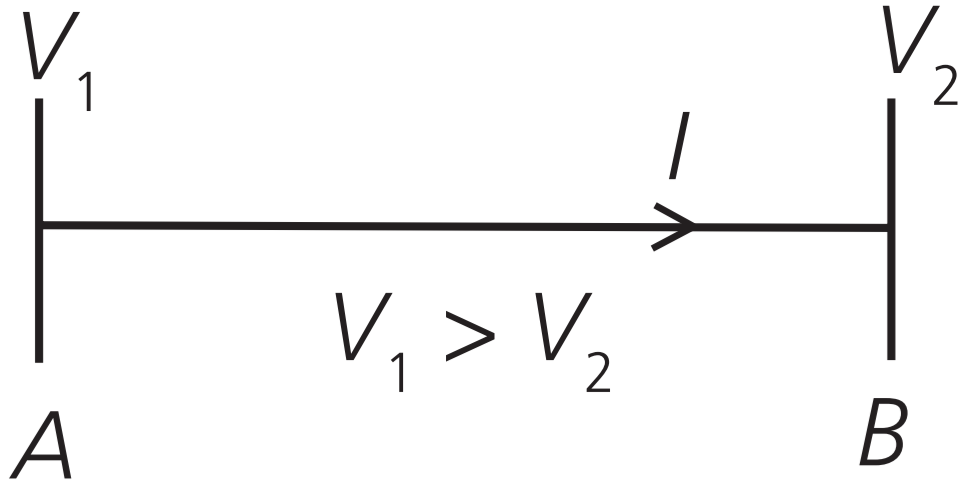
Suppose A and B are two regions having potentials V1 and V2 such that V1 > V2 So the electric current will flow from A to B (i.e., from higher potential to lower potential). Since electrons move opposite to the direction of current, hence, the electrons move from a region of lower potential to a region of higher potential.

Need a full question paper?

Generate a complete, print-ready paper with questions like this in minutes — across 16+ boards, with answer keys.

Start Generating Free

Similar questions

Assertion (A) : A direction current flows through a metallic rod, produced a magnetic field only outside the rod.
Reason (R) : There is no flow of charge carriers inside the rod.
Assertion (A): Large concave mirrors are used to concentrate sunlight to produce heat in solar cookers.
Reason (R): Concave mirror converges the light rays falling on it to a point.
In the following questions, a statement of Assertion is given by the corresponding statement of Reason. Of the statements, mark the correct answer as:
  1. If both Assertion and Reason are true and Reason is the correct explanation of Assertion.
  2. If both Assertion and Reason are true, but Reason is not the correct explanation of Assertion.
  3. If Assertion is true, but Reason is false.
  4. If Assertion is false, but Reason is true.
  5. If Assertion and Reason both are false.
Assertion: Rainbow is an example of the dispersion of sunlight by the water droplets.
Reason: Light of shorter wavelength is scattered much more than light of larger wavelength.
For two statements are given-one labelled Assertion (A) and the other labelled Reason (R). Select the correct answer to these questions from the codes (a), (b), (c) and (d) as given below:
  1. Both A and R are true, and R is correct explanation of the assertion.
  2. Both A and R are true, but R is not the correct explanation of the assertion.
  3. A is true, but R is false.
  4. A is false, but R is true.
Assertion: A solenoid tends to expand, when a current passes through it.
Reason: Two straight parallel metallic wires carrying current in same direction attract each other.
For two statements are given-one labelled Assertion (A) and the other labelled Reason (R). Select the correct answer to these questions from the codes (a), (b), (c) and (d) as given below:
  1. Both A and R are true, and R is correct explanation of the assertion.
  2. Both A and R are true, but R is not the correct explanation of the assertion.
  3. A is true, but R is false.
  4. A is false, but R is true.
Assertion: Rainbow is an example of the dispersion of sunlight by the water droplets.
Reason: Light of shorter wavelength is scattered much more than light of larger wavelength.
For two statements are given-one labelled Assertion (A) and the other labelled Reason (R). Select the correct answer to these questions from the codes (a), (b), (c) and (d) as given below:
  1. Both A and R are true, and R is correct explanation of the assertion.
  2. Both A and R are true, but R is not the correct explanation of the assertion.
  3. A is true, but R is false.
  4. A is false, but R is true.
Assertion: The connecting wires are made of copper.
Reason: The electrical conductivity of copper is high.
For two statements are given-one labelled Assertion (A) and the other labelled Reason (R). Select the correct answer to these questions from the codes (a), (b), (c) and (d) as given below:

  1. Both A and R are true, and R is correct explanation of the assertion.
  2. Both A and R are true, but R is not the correct explanation of the assertion.
  3. A is true, but R is false.
  4. A is false, but R is true.

Assertion: There is no dispersion of light refracted through a rectangular glass slab.

Reason: Dispersion of light is the phenomenon of splitting of a beam of white light into its constituents colours.

Assertion (A): Two bar magnets attract when they are brought near to each other with the same pole.
Reason (R): Unlike poles will attract each other.
For two statements are given-one labelled Assertion (A) and the other labelled Reason (R). Select the correct answer to these questions from the codes (a), (b), (c) and (d) as given below:
  1. Both A and R are true, and R is correct explanation of the assertion.
  2. Both A and R are true, but R is not the correct explanation of the assertion.
  3. A is true, but R is false.
  4. A is false, but R is true.
Assertion: Keeping a point object fixed, if a plane mirror is moved, the image will also move.
Reason: In case of a plane mirror, distance of object and its image is equal from any point on the mirror.
In the following questions, a statement of Assertion is given by the corresponding statement of Reason. Of the statements, mark the correct answer as:
  1. If both Assertion and Reason are true and Reason is the correct explanation of Assertion.
  2. If both Assertion and Reason are true, but Reason is not the correct explanation of Assertion.
  3. If Assertion is true, but Reason is false.
  4. If Assertion is false, but Reason is true.
  5. If Assertion and Reason both are false.
Assertion: Red light has the maximum wavelength and violet light has the minimum wavelength.
Reason: Red light deviates least, while violet light deviates maximum.