MCQ
For which frequency of light, the human eye is most sensitive?
- A55.405 × 1014 Hz
- B95.405 × 1014 Hz
- C5.405 × 1014 Hz
- D79.405 × 1014 Hz
Explanation:
Human eye is sensitive to light of wavelength ➔ $\lambda$ = 5550 angstrom.
So its frequency is $\text{v}=\frac{\text{c}}{\lambda}$
$\text{v} =\frac{5550}{3 × 10^8} × 10^{-10}$
v = 5.405 × 10¹⁴ Hz
Generate a complete, print-ready paper with questions like this in minutes — across 16+ boards, with answer keys.
X-rays are known to be electromagnetic radiations. Therefore the X-ray photon has
| (a) Electric charge |
| (b) Magnetic moment |
| (c) Both electric charge and magnetic moment |
| (d) Neither electric charge nor magnetic moment |
The angle of dip at a place on the earth gives
|
(a) The horizontal component of the earth's magnetic field |
| (b) The location of the geographic meridian |
|
(c) The vertical component of the earth's field |
|
(d) The direction of the earth's magnetic field |
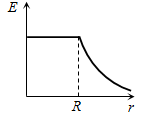
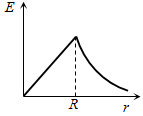
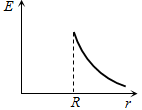
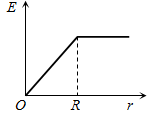
The electric field due to a uniformly charged sphere of radius R as a function of the distance from its centre is represented graphically by
|
(a)
|
(b)
|
(c)
|
(d)
|
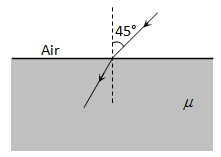
In the figure shown, for an angle of incidence 45°, at the top surface, what is the minimum refractive index needed for total internal reflection at vertical face
|
(a) |
(b) |
(c) |
(d) |
A person wears glasses of power – 2.0 D. The defect of the eye and the far point of the person without the glasses will be
|
(a) Nearsighted, 50 cm |
(b) Farsighted, 50 cm |
(c) Nearsighted, 250 cm |
(d) Astigmatism, 50 cm |
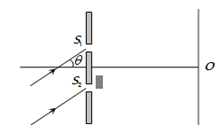
A monochromatic beam of light falls on YDSE apparatus at some angle (say q) as shown in figure. A thin sheet of glass is inserted in front of the lower slit S2. The central bright fringe (path difference = 0) will be obtained
|
(a) At O |
|
(b) Above O |
|
(c) Below O |
|
(d) Anywhere depending on angle q, thickness of plate t and refractive index of glass m |
A non-conducting solid sphere of radius R is uniformly charged. The magnitude of the electric field due to the sphere at a distance r from its centre
|
(a) Increases as r increases for r < R |
(b) Decreases as r increases for 0 < r < ∞ |
|
(c) Decreases as r increases for R < r < ∞ |
(d) a, c |