Question

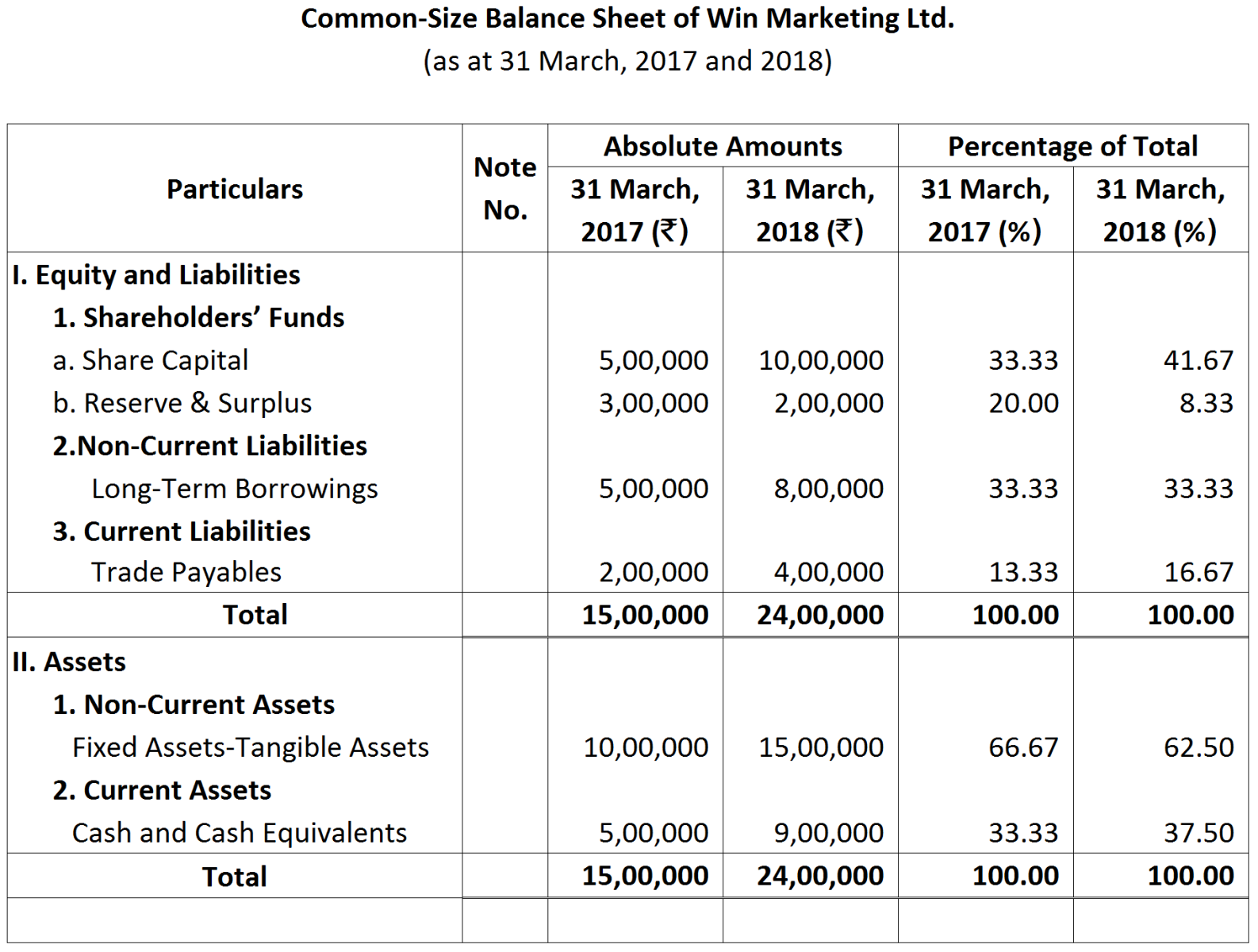
From the above Common-size Balance Sheet as at 31st March, 2018, compute current Ratio, Quick Ratio, Total Assets to Debt Ratio, and Dept to Equity Ratio.

Answer

Current Ratio 31st March, 2017 31st march,2018
$\frac{\text{Current Assets}}{\text{Current Liabilities}}$ $=\frac{₹\ 5,00,000}{₹\ 2,00,000}=2.5:1$ $=\frac{₹\ 9,00,000}{₹\ 4,00,000}=2.25:1$
Quick Ratio    
$\frac{\text{Current Assets}}{\text{Current Liabilities}}$ $=\frac{₹\ 5,00,000}{₹\ 2,00,000}=2.5:1$ $=\frac{₹\ 9,00,000}{₹\ 4,00,000}=2.25:1$
Total Assets to Debt Ratio    
$\frac{\text{Total Assets}}{\text{Debt}}$ $=\frac{₹\ 15,00,000}{₹\ 5,00,000}=3:1$ $=\frac{₹\ 24,00,000}{₹\ 8,00,000}=3:1$
Debt to Equity Ratio    
$\frac{\text{Debt}}{\text{Equity (Shareholders' Finds)}}$ $=\frac{₹\ 5,00,000}{₹\ 8,00,000}=0.63:1$ $=\frac{₹\ 8,00,000}{₹\ 12,00,000}=0.67:1$

Need a full question paper?

Generate a complete, print-ready paper with questions like this in minutes — across 16+ boards, with answer keys.

Start Generating Free

Similar questions

'Ananya Ltd.' had an authorised capital of ₹ 10,00,00,000 divided into 10,00,000 equity shares of ₹ 100 each. The company had already issued 2,00,000 shares. The dividend paid per share for the year ended 31st March, 2007 was ₹ 30. The management decided to export its products to African countries. To meet the requirements of additional funds, the finance manager put up the following three alternate proposals before the Board of Directors:
  1. Issue 47,500 equity shares at a premium of ₹ 100 per share.
  2. Obtain a long-term loan from bank which was available at 12% per annum.
  3. Issue 9% Debentures at a discount of 5%.
After evaluating these alternatives, the company decided to issue 1,00,000, 9% Debentures on 1st April, 2008. The face value of each debentures was ₹ 100. These debentures were redeemable in four instalments starting from the end of third year, which were as follows:
Year
III
IV
V
VI
Amount (₹)
10,00,000
20,00,000
30,00,000
40,00,000
Prepare 9% Debenture Account form 1st April, 2008 till all the debentures were redeemed.
Paliwal Exports Ltd. with a share capital of ₹ 10,00,000 divided into 20,000 shares of ₹ 50 each offers the shares to the public as under:
₹ 15 per share payable on application; ₹ 15 per share payable on allotment; ₹ 10 per share payable on Ist call; and ₹ 10 per share payable on second call.
Shareholder 'A' who holds 200 shares has paid only the application money.
Shareholder 'B' who holds 300 shares has paid only the application and allotment money.
Shareholder 'C' who holds 400 shares has paid application, allotment and first call money.
The company forfeits the shares of the above shareholders who have not paid the arrears and re-issued 600 of these shares at a discount of 20%.
Journalise the above transactions including entries relating to Bank in the books of Paliwal Exports Ltd.
Tata Power Ltd. issued 90,000, 9% Debentures of ₹ 100 each on July 1, 2011 redeemable at a premium of 5% as under:
On March 31, 2015 30,000 Debentures
On March 31, 2016 25,000 Debentures
On March 31, 2017 35,000 Debentures
It was decided to transfer to Debenture Redemption Reserve ₹ 10,00,000 on March 31, 2012; ₹ 4,00,000 on March 31, 2013 and the balance on March 31, 2014. Record necessary journal entries ignoring for interest.
Following figures have been obtained from the books of Pawan Roadways Ltd:

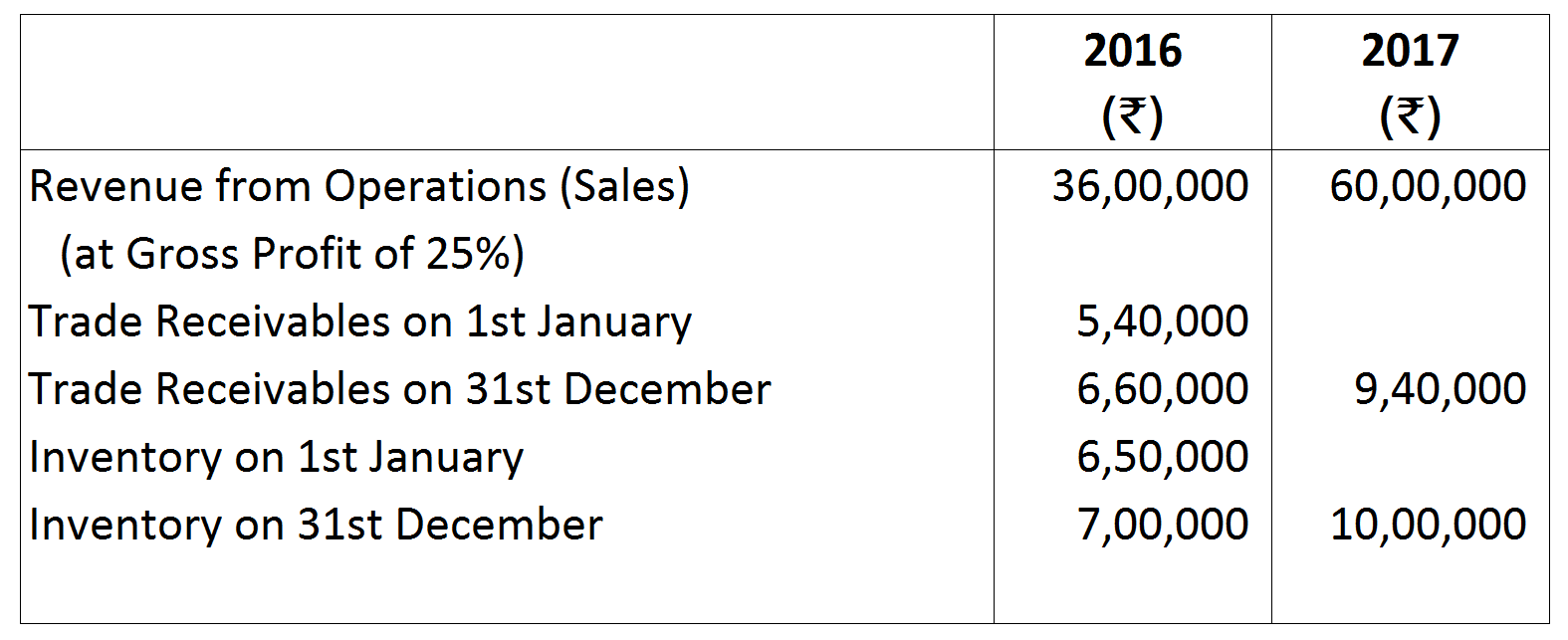
Calculate the Trade Receivables Turnover Ratio. Also Calculate Inventory Turnover Ratio. Give necessary Comments
New Industries Limited issued a prospectus, inviting applications for 1,00,000 shares of ₹ 10 each at a premium of ₹ 5 per share, payable as follows: On Application ₹ 4.50; On Allotment ₹ 7.50 (including Premium); On 1st Call ₹ 2.00 and. On Final Call ₹ 1.00.
Applications were received for 1,25,000 shares and allotment was made pro-rata to the applicants of 1,20,000 shares, the remaining applications being refused. Money received in excess on the application was adjusted towards the amount due on allotment.
D, to whom 2,000 shares were allotted, failed to pay allotment money and on his failure to pay the first call, his shares were forfeited, M, the holder of 3,000 shares, failed to pay the two calls, and so his shares were also forfeited. All these shares were sold to R, credited as fully paid for ₹ 8 per share.
Pass Cash Book and journal entries (with narrations) to record the above issue of shares by the company.
Calculate Operating Profit Ratio and Operating Ratio from the following:
Net Revenue from Operations ₹ 3,00,000; Gross Profit ₹ 1,20,000; Operating Expenses ₹ 45,000.
X Ltd. took a loan of ₹ 3,00,000 from IDBI Bank. The company issued 4,000; 9% Debentures of ₹ 100 each as a collateral security for the same. Show how these items will be presented in the Balance Sheet of the company.
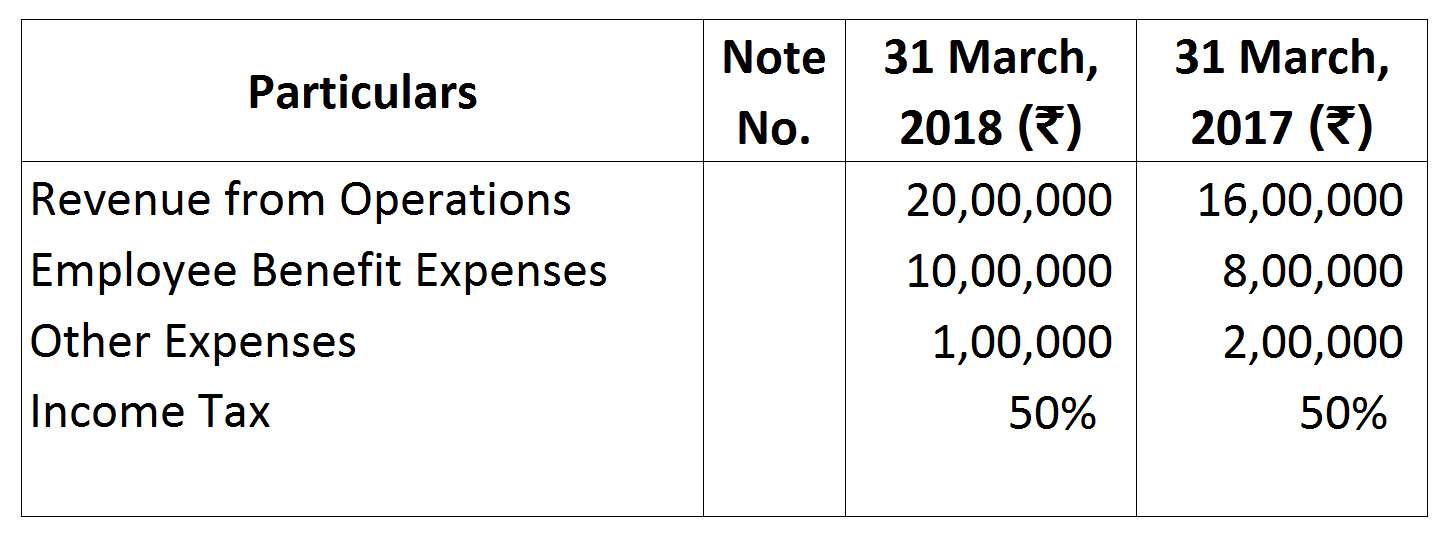
From the following Statement of Profit and Loss of Star Ltd. for the years ended 31st March 2018 and 2017 prepare a comparative statement of Profit & Loss:
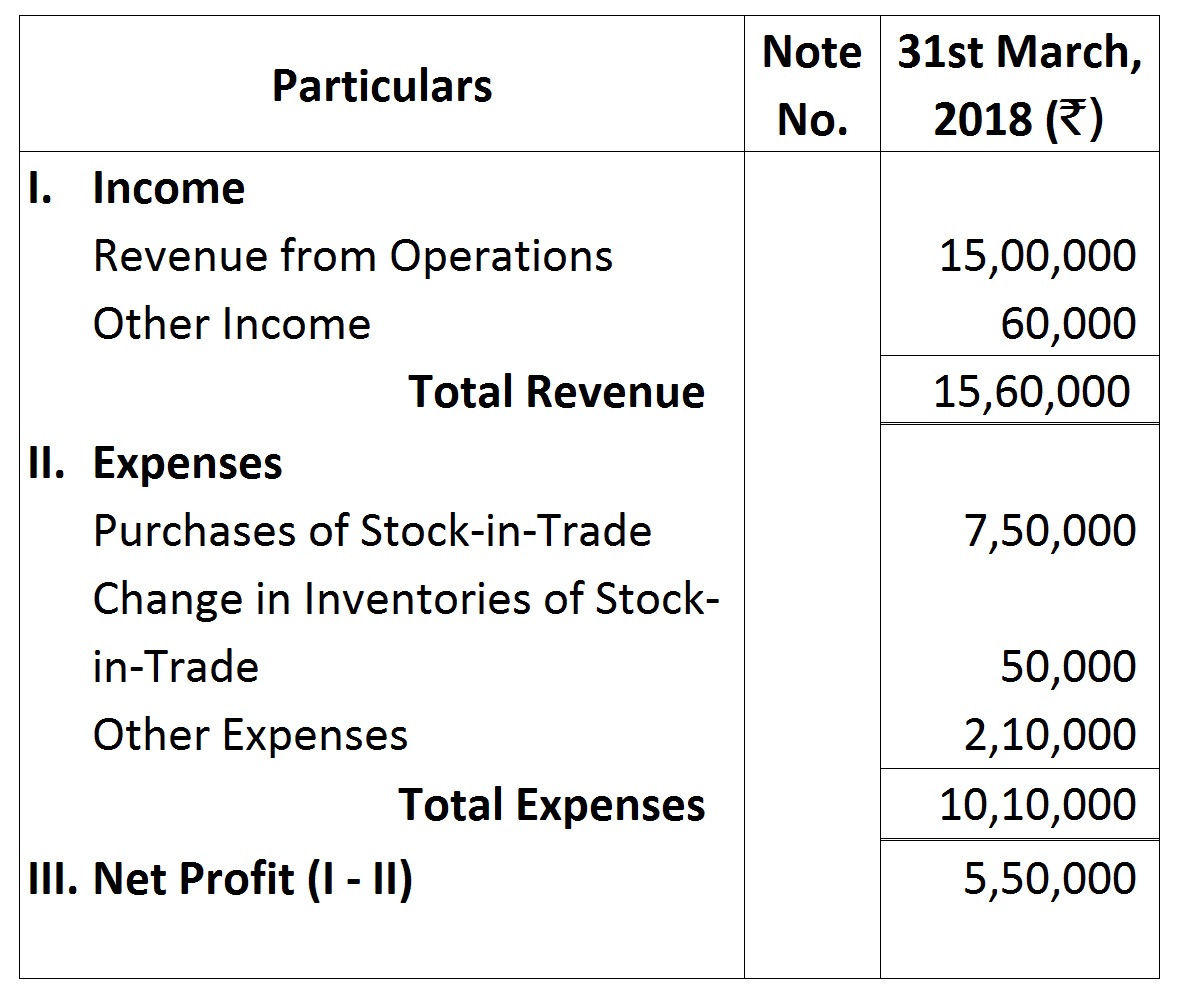
Prepare commom size statement of profit and loss from the following statement of profit and loss:
SRCC Ltd. has issued on 1st April, 2016, 20,000, 12% Debentures of ₹ 100 each redeemable by draw of lots as under:
During the year ended on 31st March, 2017
:
15%
During the year ended on 31st March, 2018
:
25%
During the year ended on 31st March, 2019
:
15%
During the year ended on 31st March, 2020
:
25%
During the year ended on 31st March, 2021
:
20%
How much minimum investment or deposit should be made by SRCC Ltd. as per Companies Act, 2013 before redemption of debentures? When should it be made?