Question
  1. From the following information compute 'Debt-Equity Ratio'.
 
Long term Borrowings 8,00,000
Long term Provisions 4,00,000
Current Liabilities 2,00,000
Non-current Assets 14,40,000
Current Assets 3,60,000
  1. The Quick Ratio of Z Ltd. is 1 : 1. State with reason which of the following transactions would (i) increase; (ii) decrease or (iii) not change the ratio:
  1. Included in the trade payables was a Bills payable of ₹ 3,000 which was met on maturity.
  2. Debentures of ₹ 50,000 were converted into Equity shares.
Answer

  1. $\text{Debt Equity ratio}=\frac{\text{Debt}}{\text{ Equity}}$
Debt = Long term borrowings + Long term provisions = ₹ 8,00,000 + 4,00,000 = 12,00,000

Equity = Current Assets + Non Current Assets – Debt – Current Liabilities

= 3,60,000 + 14,40,000 – 12,00,000 – 2,00,000 = ₹ 4,00,000

$\text{Debt Equity ratio} =\frac{12,00,000}{4,00,000}=3:1$
  1.  
  CHANGE   REASON
1 No Change : Both Current Assets and Current Liabilities are decreasing with same amount.
2 No Change : Neither Current Assets nor Current Liabilities are changing.

Need a full question paper?

Generate a complete, print-ready paper with questions like this in minutes — across 16+ boards, with answer keys.

Start Generating Free

Similar questions

Feeble Ltd. issued 10% Debentures at 94% for ₹ 20,00,000 on 1st July, 2013 repayable by five equal annual installments of ₹ 4,00,000 each starting from 30th June, 2014.
Calculate the amount of discount to be written off in every accounting year assuming that the company decides to write off the debentures discount during the life of the debentures.
Citizen Watches Ltd. invited applications for 50,000 shares of ₹ 10 each payable ₹ 3 on application, ₹ 4 on allotment and balance on first and final call. Applications were received for 60,000 shares. Applications were accepted for 50,000 shares and remaining applications were rejected. All calls were made and received except First and Final call on 500 shares.
Pass the journal entries in the books of Citizen Watches Ltd.
Nipa Limited issued ₹ 10,00,000 Debentures of ₹ 100 each at a premium of 10%, payable 25% on application (including premium) and the balance on allotment. The debentures were applied for and the amount was duly received.
You are required to give Journal entries and prepare Cash Book.
Calculate Cash Flow from Operating Activities from the following:
  1. Profit for the year is ₹ 7,00,000 after considering the following items:
Particulars
Depreciation on Fixed Assets
Goodwill Amortised
Gain onSale of Land
Appropriation of Profit towards General Reserve
40,000
20,000
90,000
60,000
  1. Following is the position of Current Assets and Current Liabilities:
Particulars
Closing Balance (₹)
Opening Balance (₹)
Trade Payables
Trade Receivables
Prepaid Expenses
50,000
75,000
10,000
75,000
60,000
18,000
Alka Ltd. issued 5,000, 10% Debentures of ​₹ 1,000 each at a discount of 10% redeemable at a premium of 5% after 5 years. According to the terms of issue ​₹ 500 was payable on application and the balance amount on allotment of debentures. Record necessary entries regarding issue of 10% Debentures.
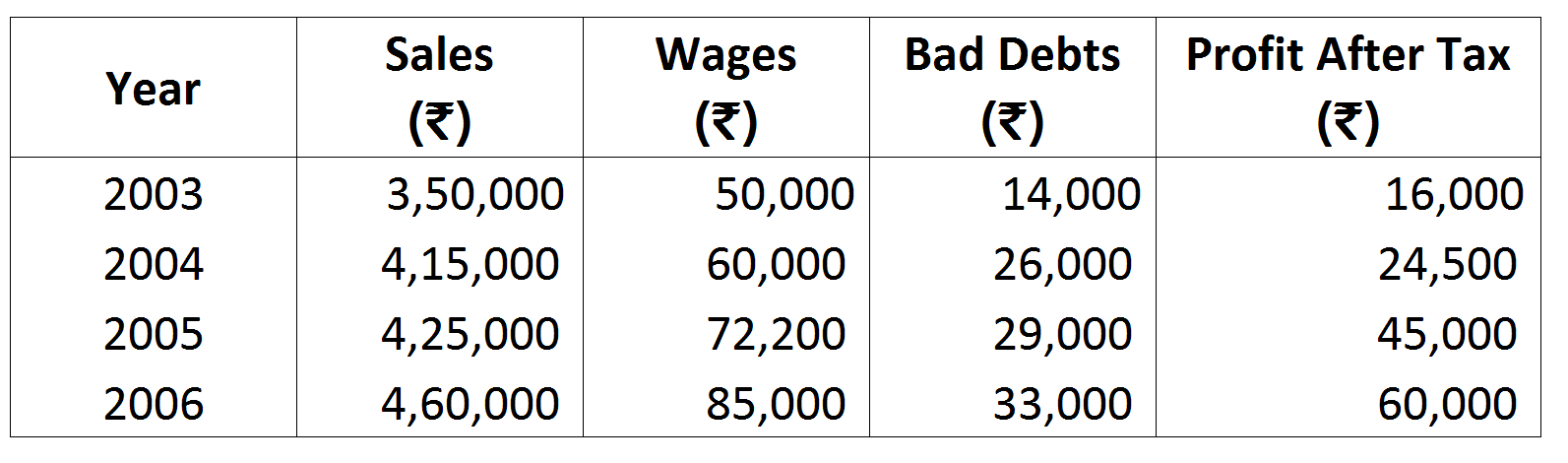
From the following particulars extracted from P&L A/c of Prashanth Ltd., you are required to calculate trend percentages
Madhav Ltd. issued fully paid equity shares of ₹ 80 each at a discount of ₹ 5 per share for the purchase of a running business from Gupta Bros. for a sum of ₹ 15,00,000. The assets and liabilities consisted of the following:
Plant ₹ 5,00,000; Trucks ₹ 7,00,000; Stock ₹ 3,00,000; Machinery ₹ 6,00,000 and Sundry Creditors ₹ 5,00,000.
You are required to pass necessary journal entries for the above transactions in the books of Madhav Ltd.
Following information is related to ABC Ltd.: Notes to Account:
Other Informatiom:
Balance as on 31st march, 2018 (₹)
Balance as on 31st march, 2017 (₹)
Trade paybles
2,78,000
2,50,000
Trade receivables
4,52,000
4,15,000
inventories
3,00,000
2,84,000
Office expenses Outstanding.
-
5,000
Selling expenses Outstanding.
25,000
22,000
A company earns a gross profit of 20% on cost. Its credit revenue from operations are twice its cash revenue from operations. If the credit revenue from operations are ₹ 4,00,000, calculate the gross profit ratio of the company.
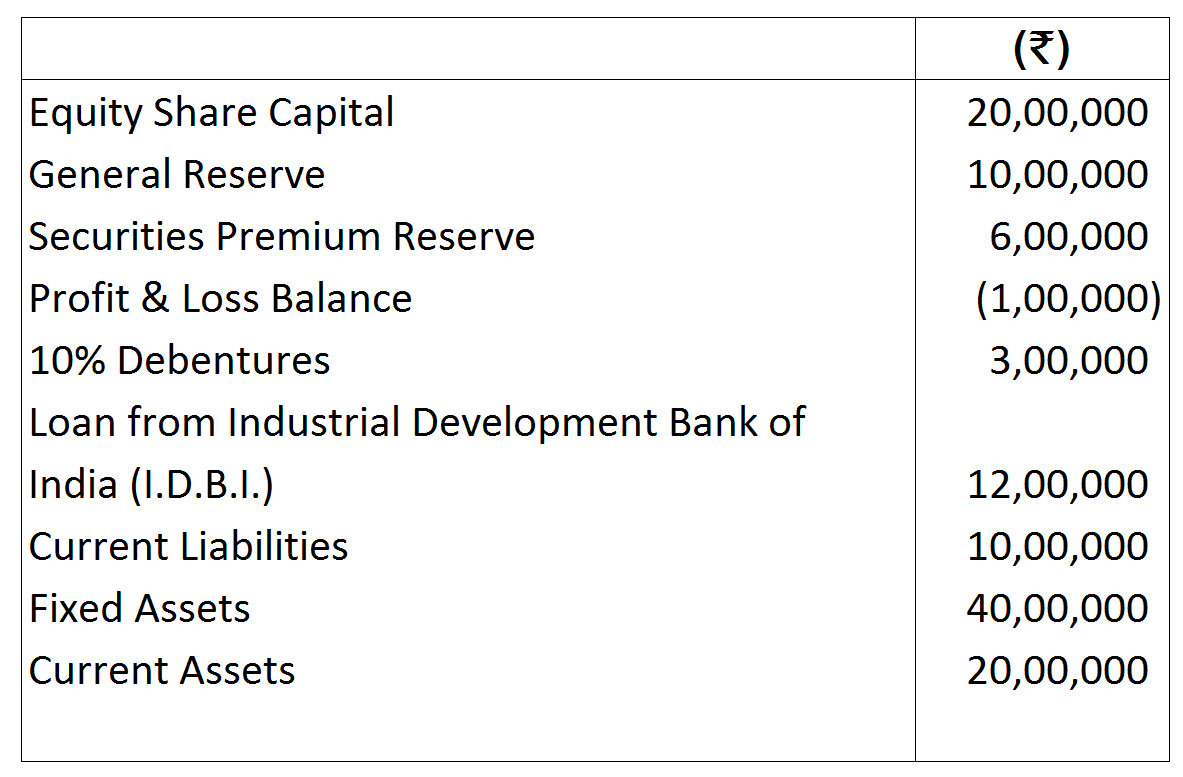
From the following, ascertain Debt-Equity Ratio and Proprietary Ratio: