Question
Give any five points of difference between a Balance Sheet and a Trial Balance.

Answer

Distinction between Trial Balance and Balance Sheet
 
Basis of Difference
Trial Balance
Balance Sheet
1.
Object
It is prepared to check the arithmetical accuracy of the books of accounts.
It is prepared to know the true financial position of the firm.
2.
Information about profit or loss
It is not possible to have information about net profit or net loss from a trial balance.
Since net profit or loss is recorded in the Capital shown in Balance Sheet, it is possible to have the information about net profit or net loss from a Balance Sheet.
3.
Necessity
Though desirable, its preparation is not necessary.
It is necessary to prepare a Balance Sheet.
4.
Headings
The headings of its two columns are debit and credit.
The headings of its two sides are assets and liabilities.
5.
Period
It is normally prepared every month or whenever needed.
It is normally prepared half-yearly or yearly at the end of the accounting period.

Need a full question paper?

Generate a complete, print-ready paper with questions like this in minutes — across 16+ boards, with answer keys.
Start Generating Free

Similar questions

Give Journal entries for the following adjustments in final accounts:
  1. Salaries ₹ 5,000 are outstanding.
  2. Insurance amounting to ₹ 2,000 is paid in advance.
  3. ₹ 4,000 for rent have been received in advance.
  4. Cornmission earned but not received ₹ 1,000.
  5. Interest on Capital ₹ 1,500.
  6. Interest on Drawings ₹ 300.
  7. Write off ₹ 2,000 as further debts.
  8. Closing Stock ₹ 3,000.
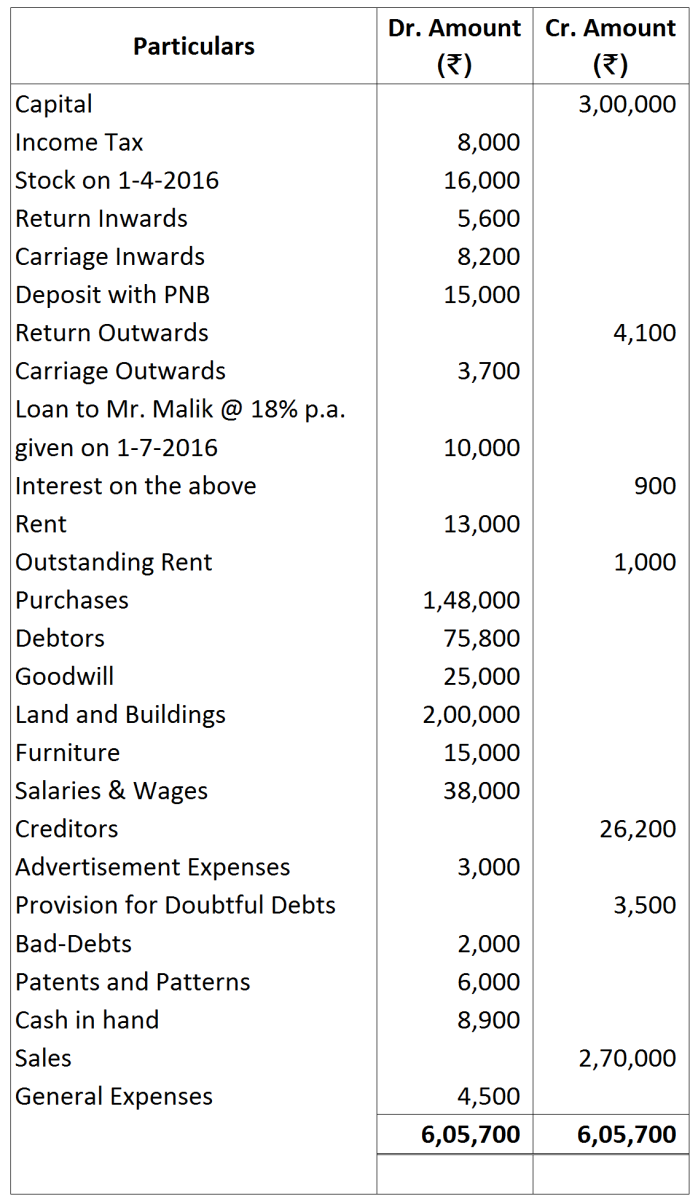
On 31st March, 2017 the following Trial Balance of Sh. Ajay Oswal was taken out. Prepare Trading and Profit & Loss Account for the year and Balance Sheet at that date after making the following adjustments:
  1. Stock on 31st March, 2017 was valued ₹ 26,000.
  2. General Manager is entitled to a Commission of 5% on Net Profits after charging such Commission.
  3. ₹ 2,000 paid for Salary & Wages have been included in Sundry Debtors.
  4. Increase Bad-debts by ₹ 800 and create provision for Doubtful Debts at 10%.
  5. General Expenses include insurance premium paid up to 30th June, 2017 @ ₹ 3,000 per annum.
  6. ₹ 600 out of the Advertisement Expenses are to be carried forward to the next year.
  7. Charge one-fourth of 'Salaries and Wages' to Trading A/c.
  8. Accrued Income ₹ 2,500.
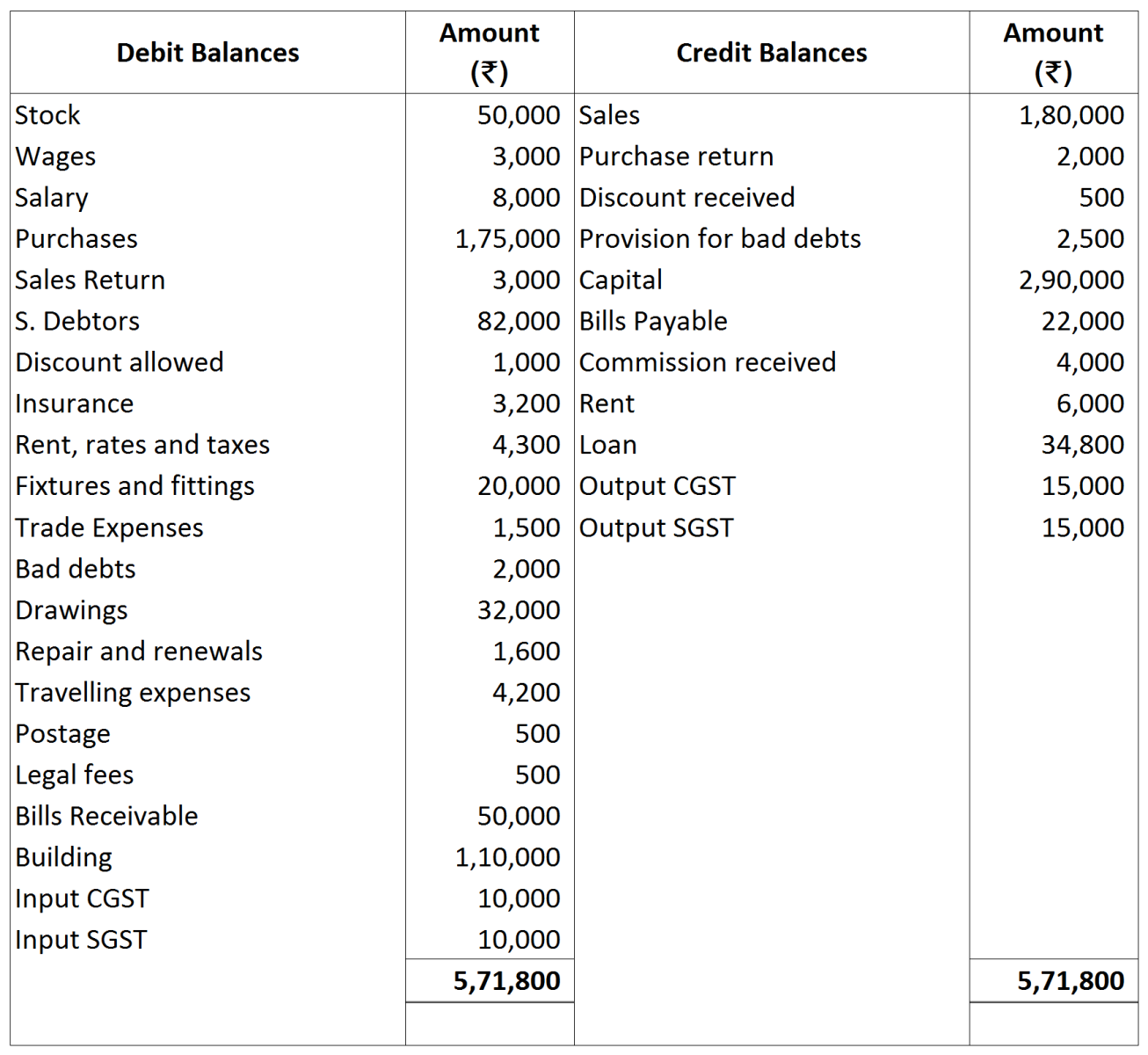
Prepare a Trading and Profit & Loss account for the year ending March 31, 2018, from the balances extracted of M/s Rahul Sons. Also prepare a balance sheet as at that date.

Adjustments:
  1. Commission received in advance ₹ 1,000.
  2. Rent receivable ₹ 2,000, subject to levy of CGST and SGST @ 9% each.
  3. Salary outstanding ₹ 1,000 and insurance prepaid ₹ 800.
  4. Further Bad-debts ₹ 1,000 and provision for Bad-debts @ 5% on debtors and provision for discount on debtors @ 2%.
  5. Closing Stock ₹ 32,000.
  6. Depreciation on Building @ 6% p.a.
From the following information, prepare Balance Sheet of a trader as at $31^{st}$​​​​​​​ March,$ 2019:$ arranging the assets and liabilities:
  1. In order of permanence.
  2. In order of liquidity.
On checking the Bank Pass Book it was found that it showed an overdraft of ₹ 5,220 as on 31st March, 2019, while as per Ledger it was different. The following differences were noted:
  1. Cheques deposited but not yet credited by the bank ₹ 6,000.
  2. Cheques dishonoured and debited by the bank but not given effect to it in the Ledger ₹ 800.
  3. Bank charges debited by the bank but Debit Memo not received from the bank ₹ 50.
  4. Interest on overdraft excess credited in the Ledger ₹ 200.
  5. Wrongly credited by the bank to account, deposit of some other party ₹ 900.
  6. Cheques issued but not presented for payment ₹ 400.
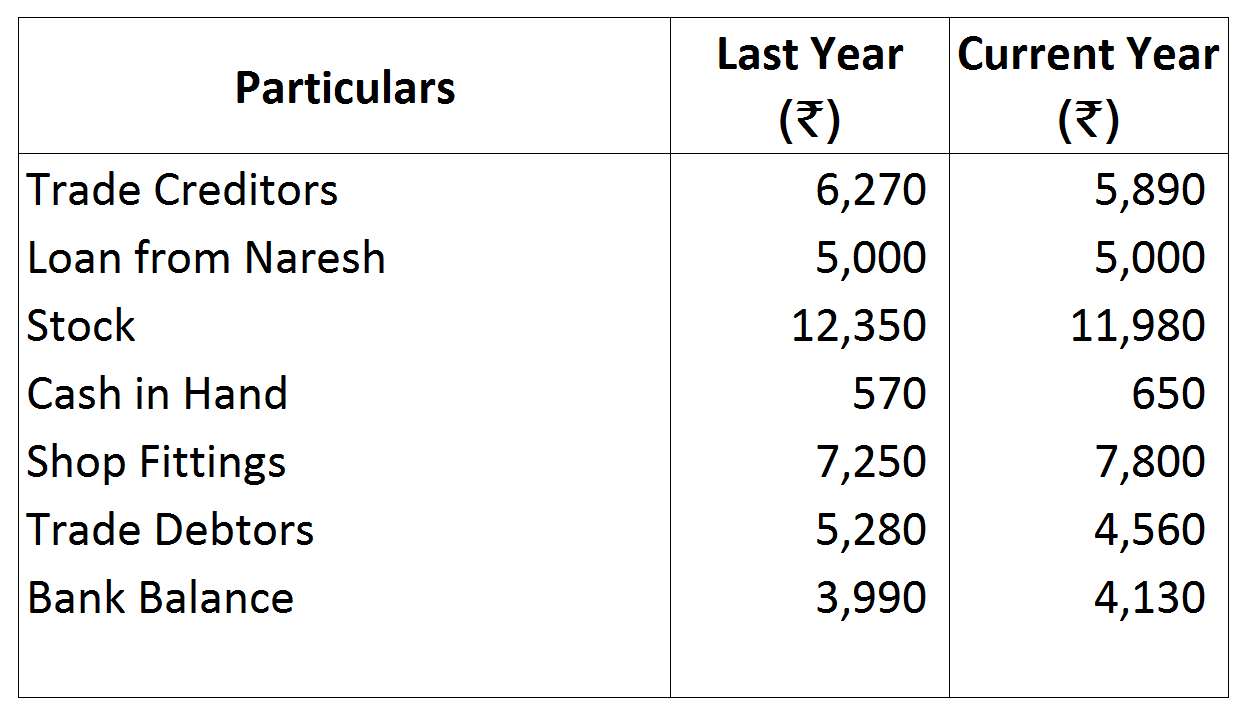
Aditya a retailer, has not maintained proper books of account but it has been possible to obtain the following details:
Calculate the net profit for this year and draft the Statement of Affairs at the end of the year after noting that:
  1. Shop Fittings are to be depreciated by ₹ 780.
  2. Aditya has drawn ₹ 100 per week for his own use.
  3. Included in the Trade Debtors is an irrecoverable balance of ₹ 270.
  4. Interest at 5% p.a. is due on the loan from Naresh but has not been paid for the year.
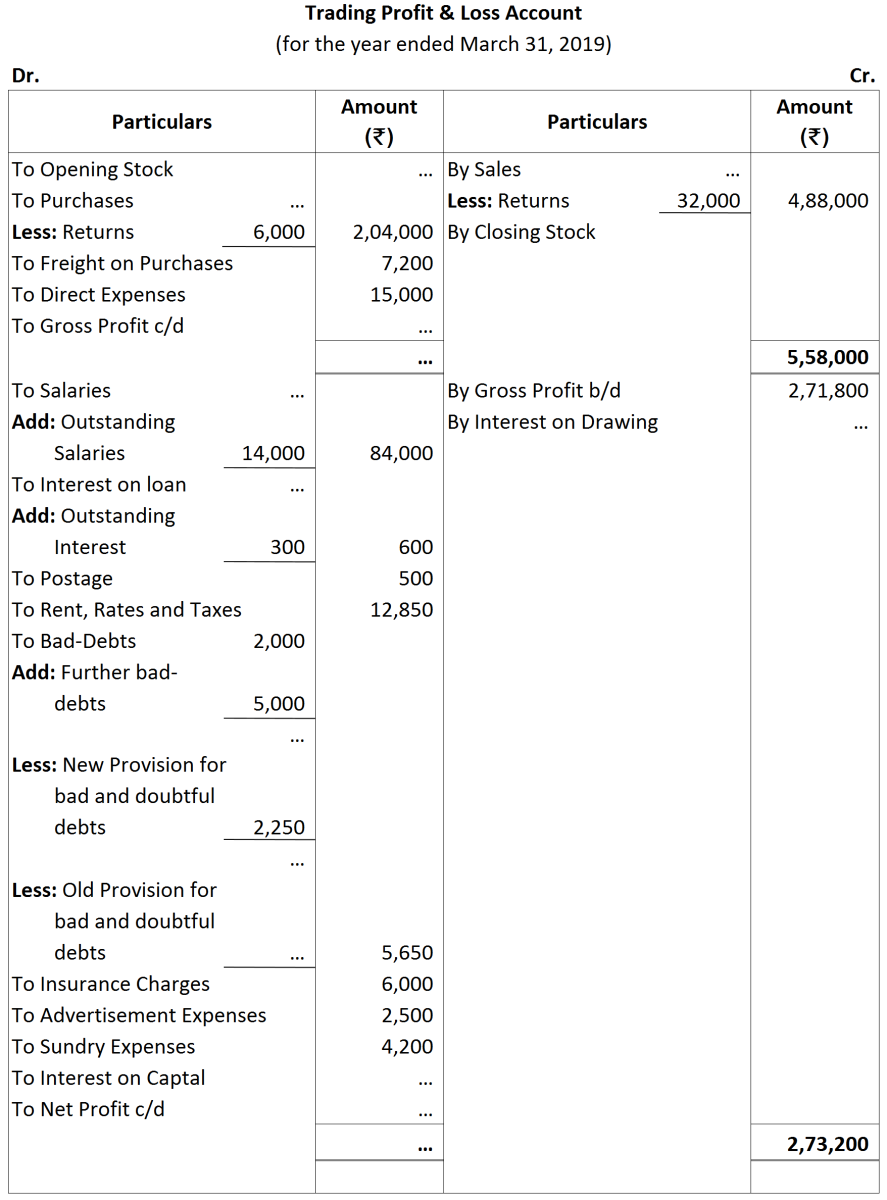
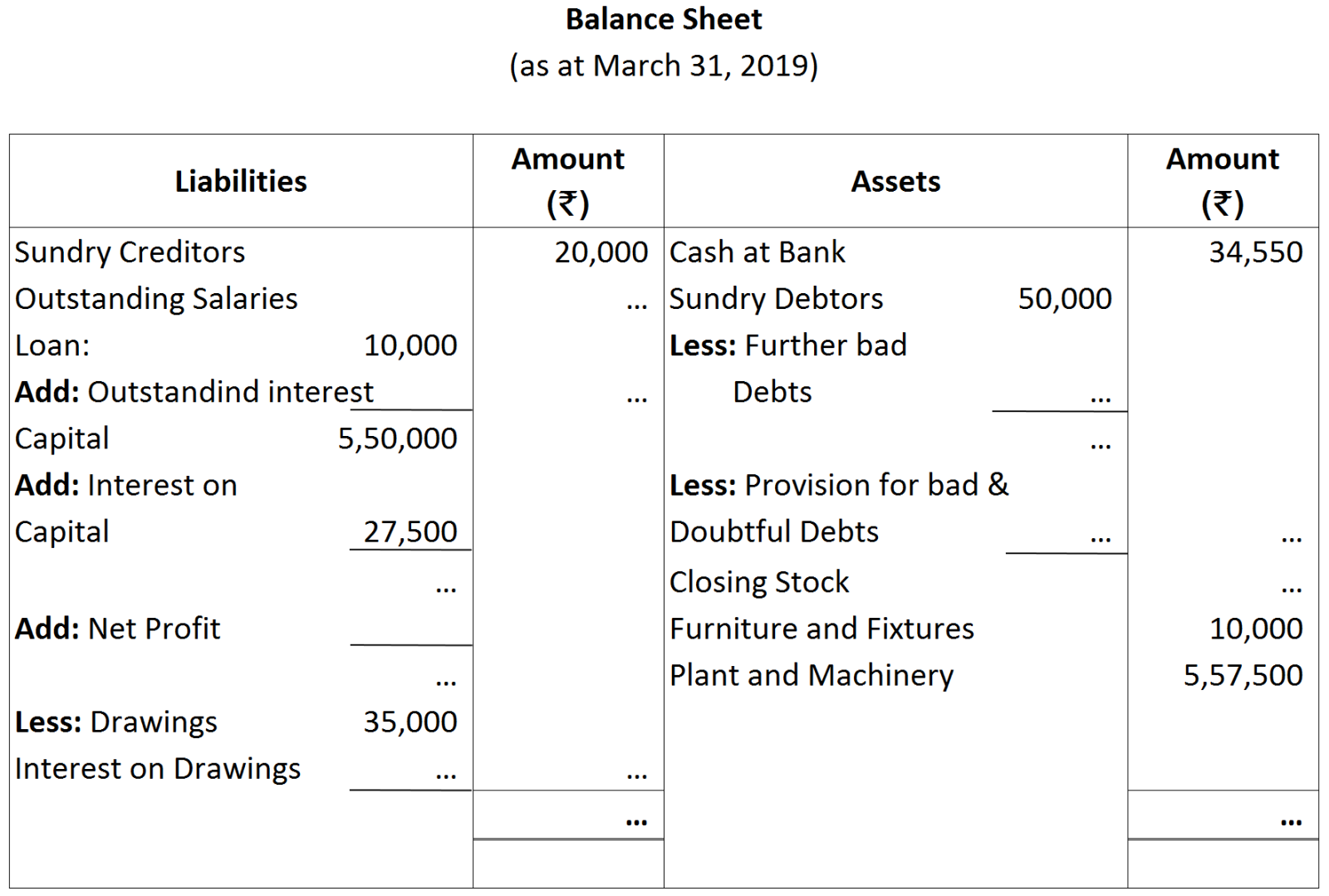
Fill in the missing figures in the following:

What do you understand by the concept of weak entity used in data modelling? Explain the relevance of owner entity type, partial key and identifying relationship in the context of such modelling.
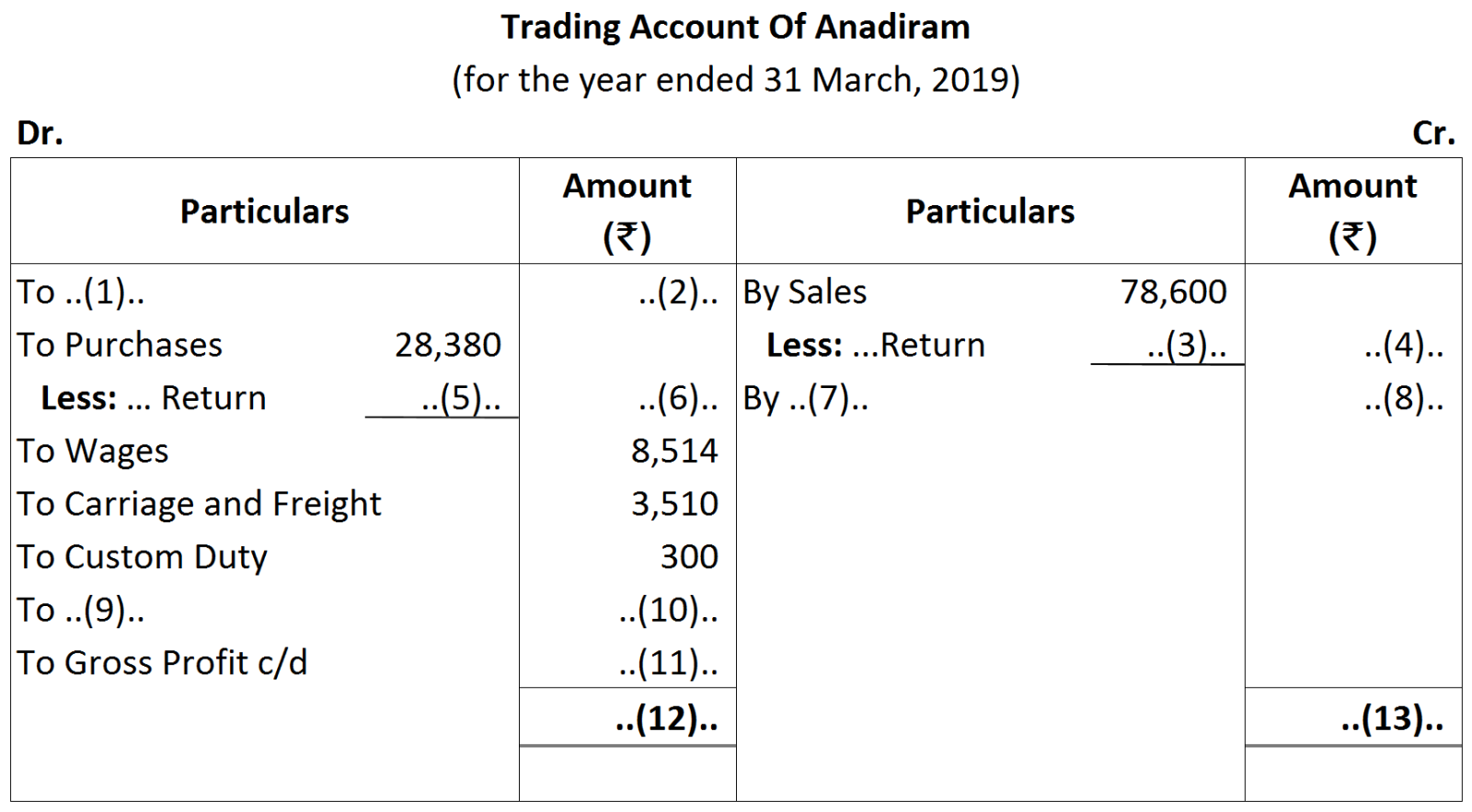
From the following information, complete the missing figures of Trading Account of Anadiram for the financial year ended on $31^{st}$​​​​​​​ March,$ 2019:$​​​​​​​
 
 
Wages
8,514
Opening Stock
19,380
Purchases
28,380
Office Rent
5,400
Carriage and Freight on Goods Purchased
3,510
Sales
78,600
Returns Inward
8,600
Returns Outword
6,000
Closing Stock
18,000
Custom Duty
300
Power and Fuel
2,600
Trade Expenses
4,200