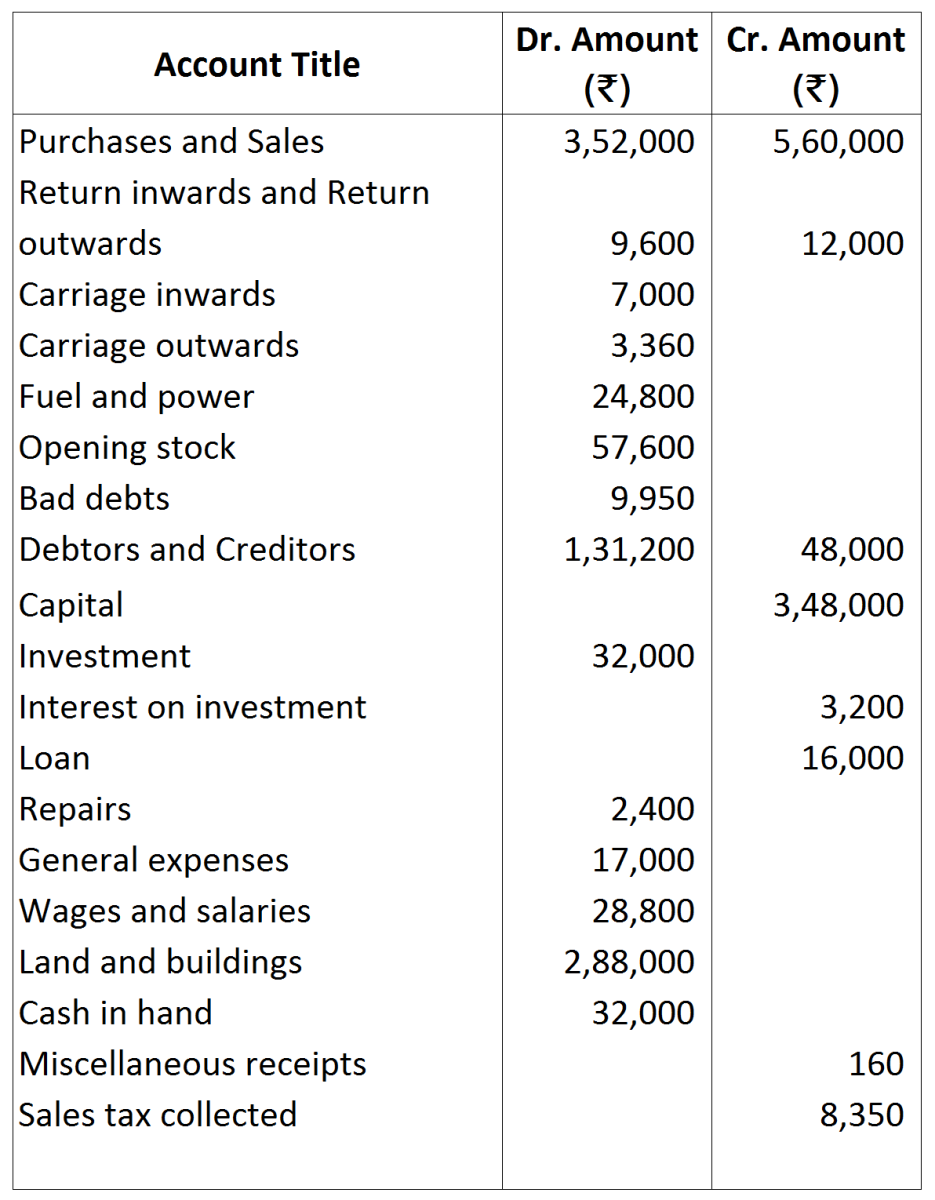
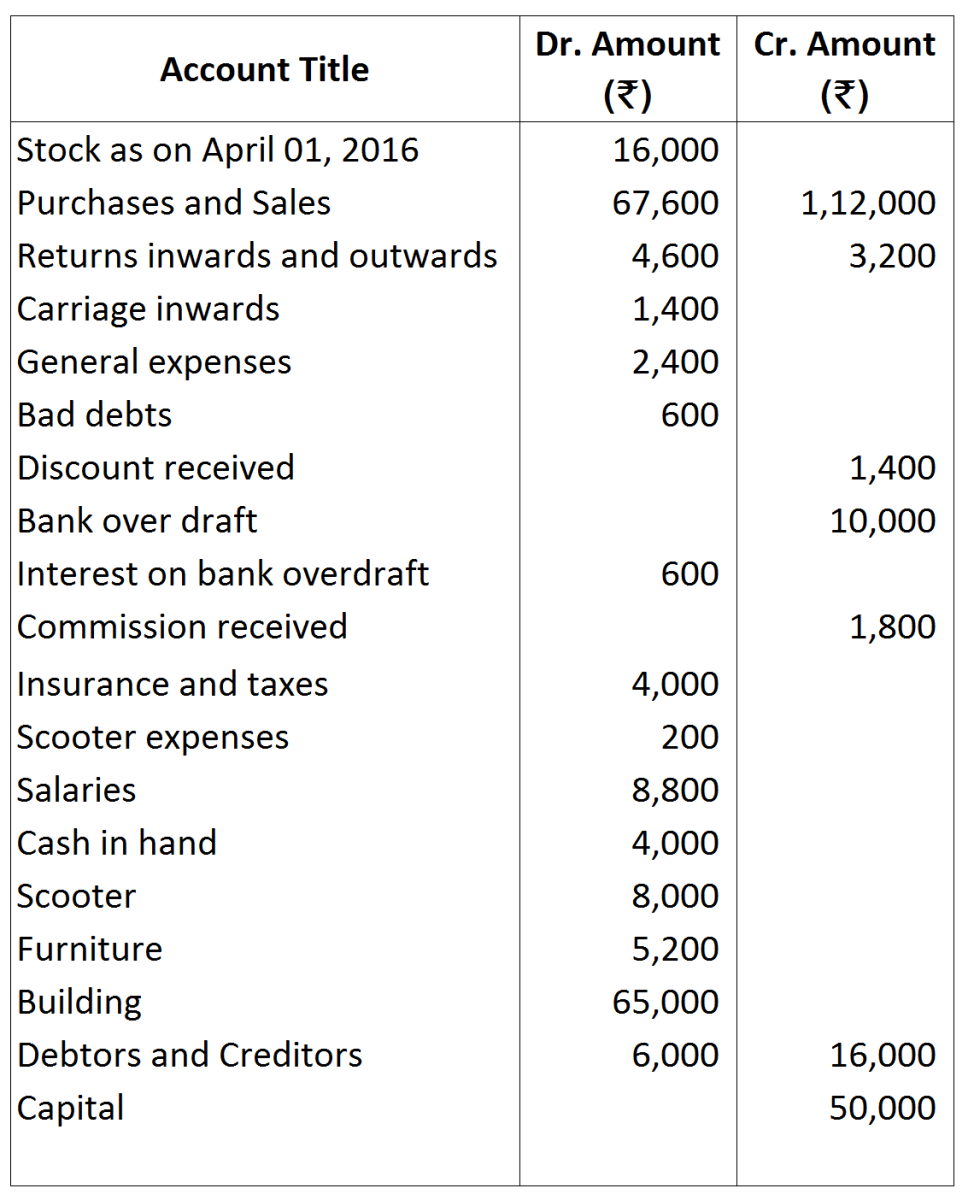
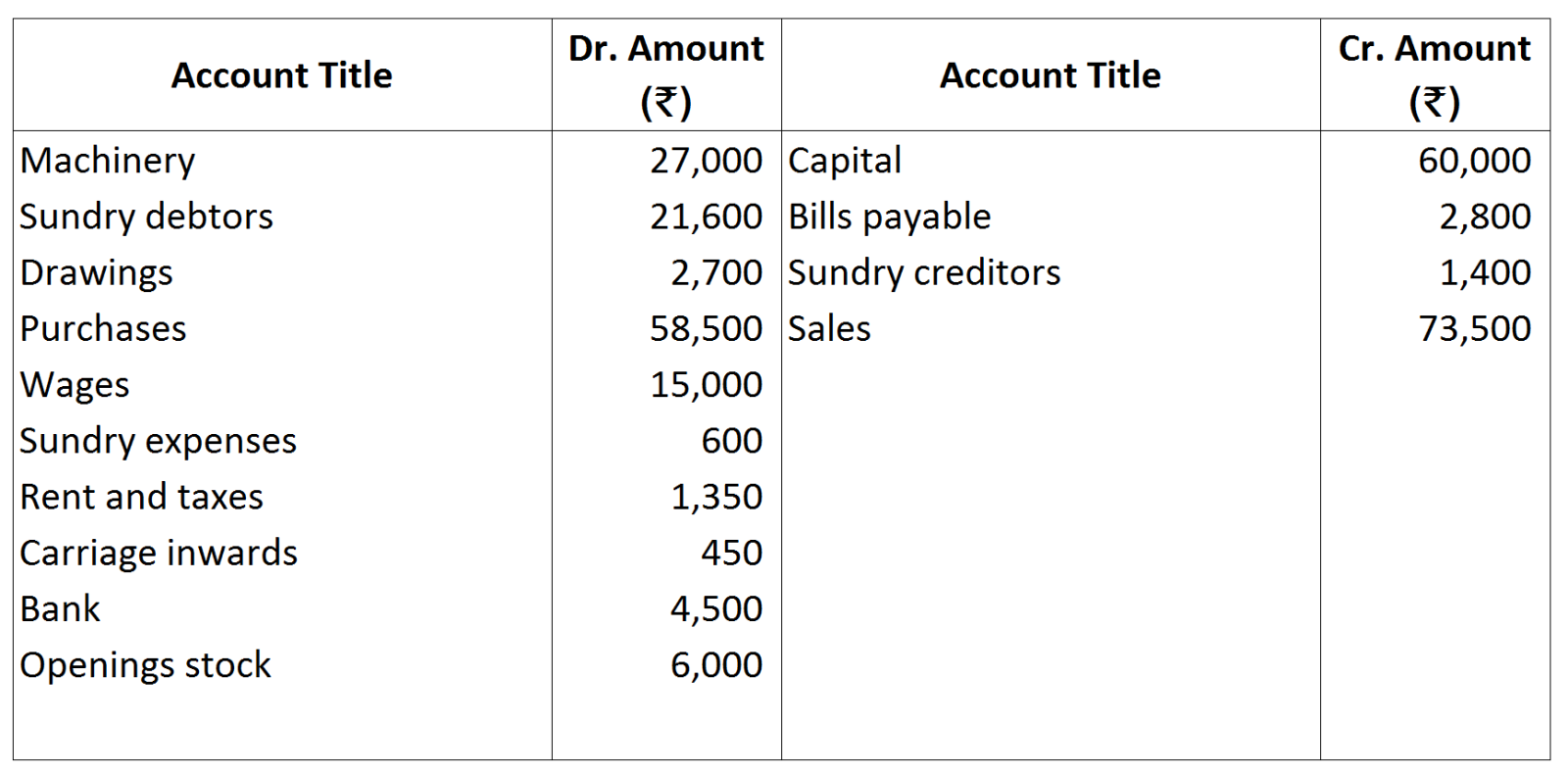
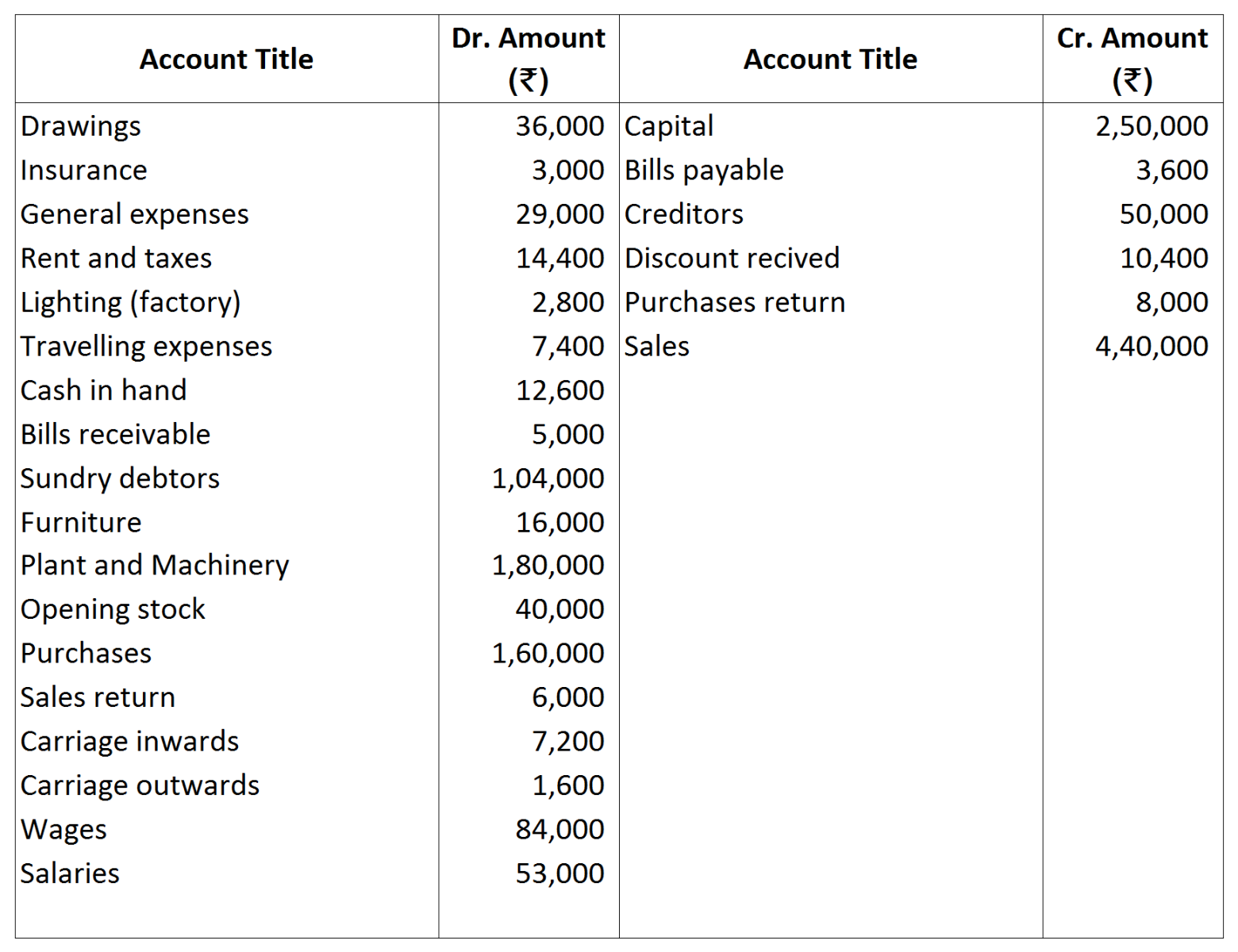
Questions

6 Marks Question

🎯

Test yourself on this topic

47 questions · timed · auto-graded

Question 16 Marks
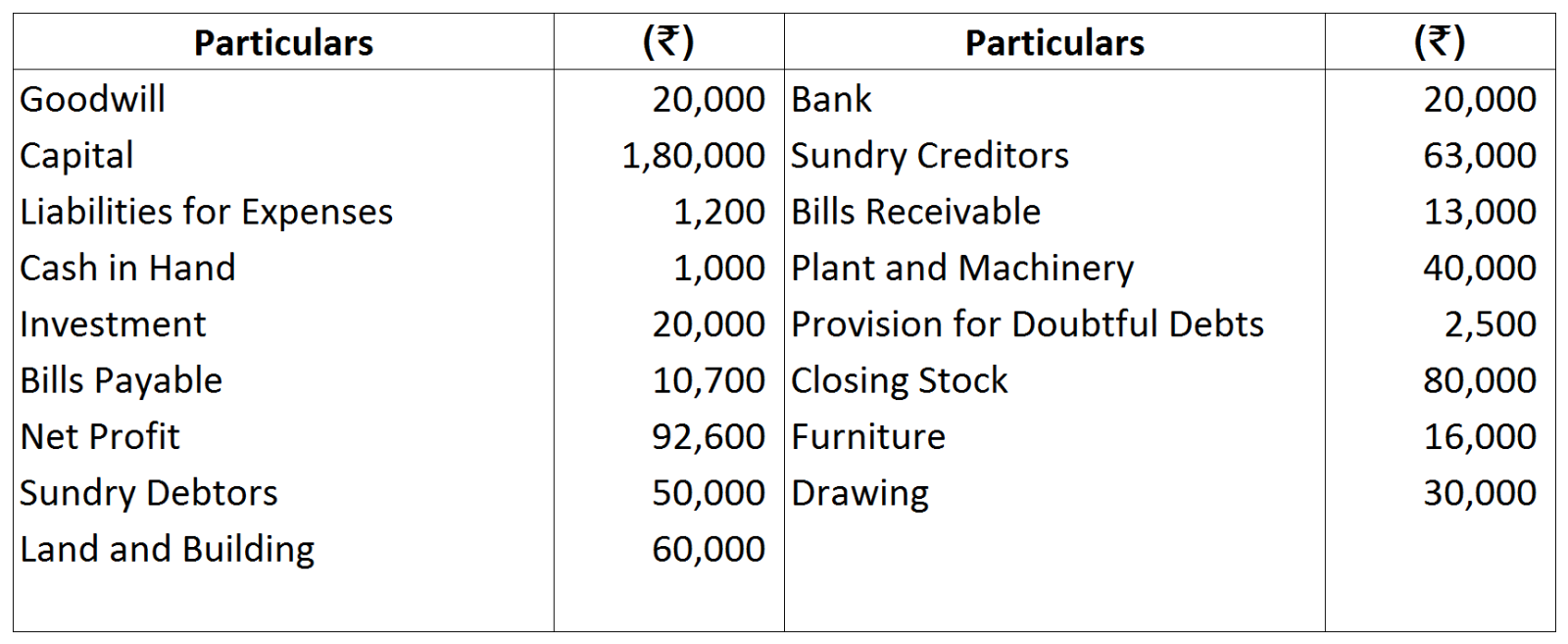
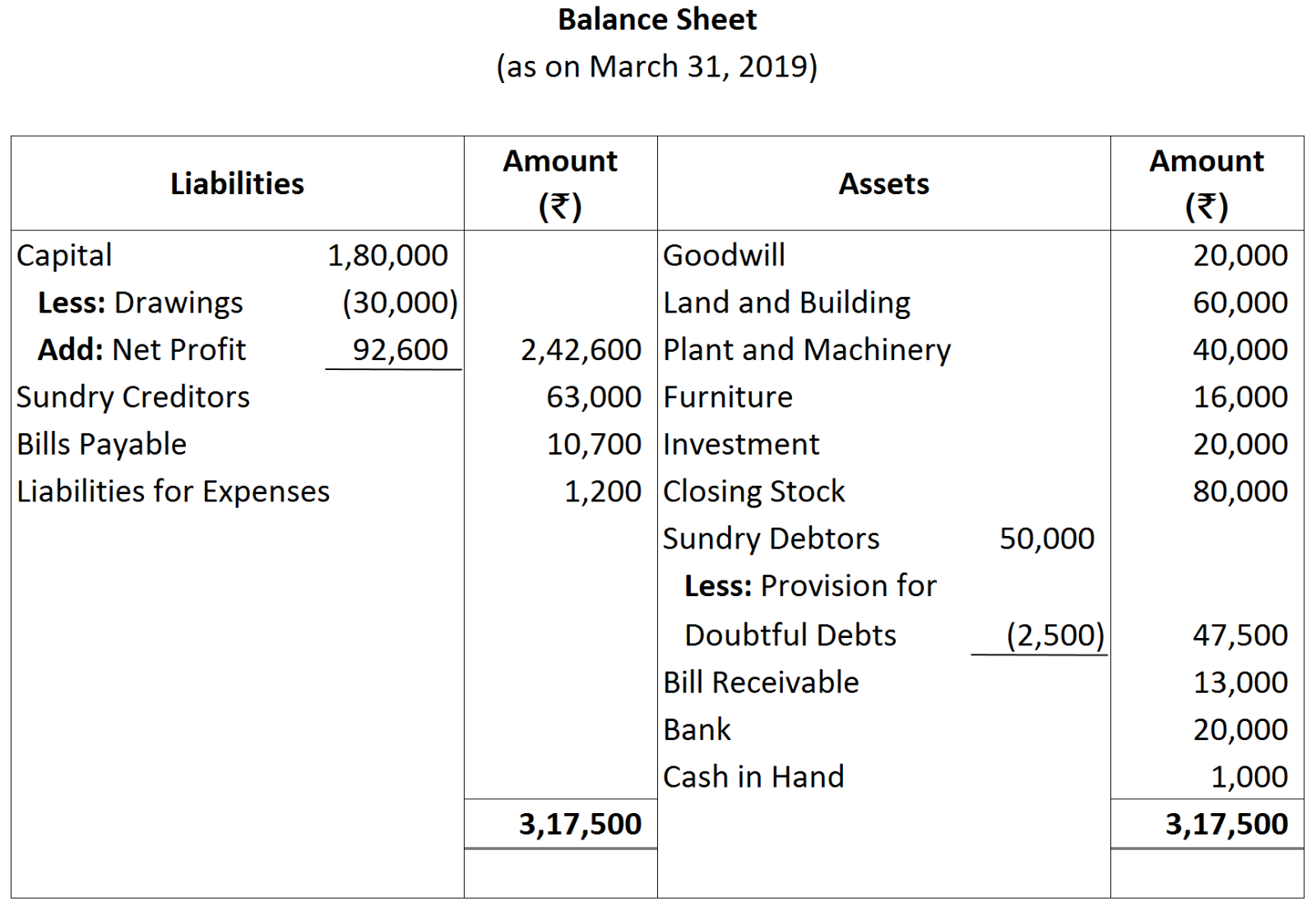
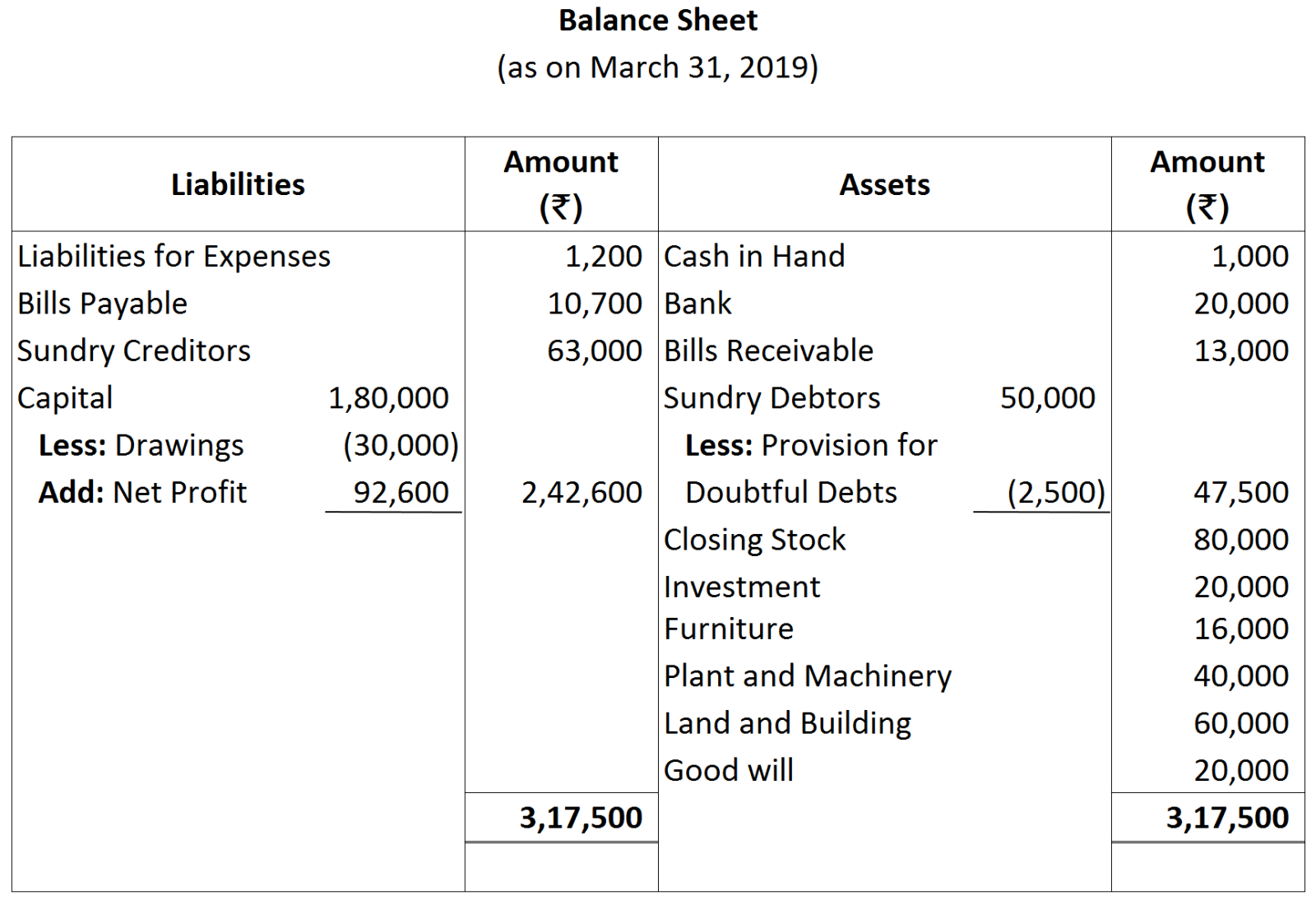
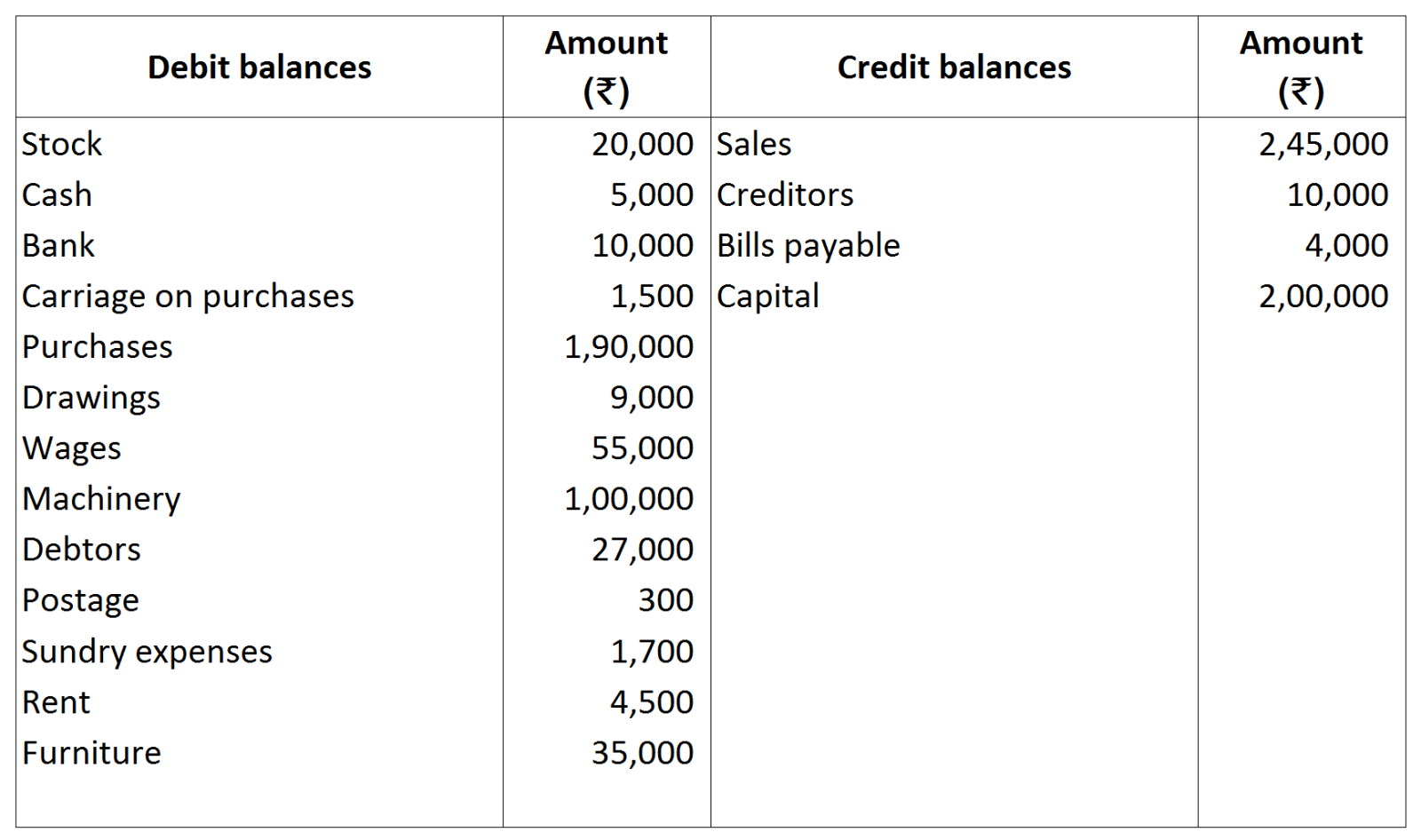
From the following information, prepare Balance Sheet of a trader as at $31^{st}$​​​​​​​ March,$ 2019:$ arranging the assets and liabilities:
  1. In order of permanence.
  2. In order of liquidity.
Answer
  1. Balance Sheet in Order of Permanence.
  1. Balance Sheet in Order of Liquidity.
View full question & answer
Question 26 Marks
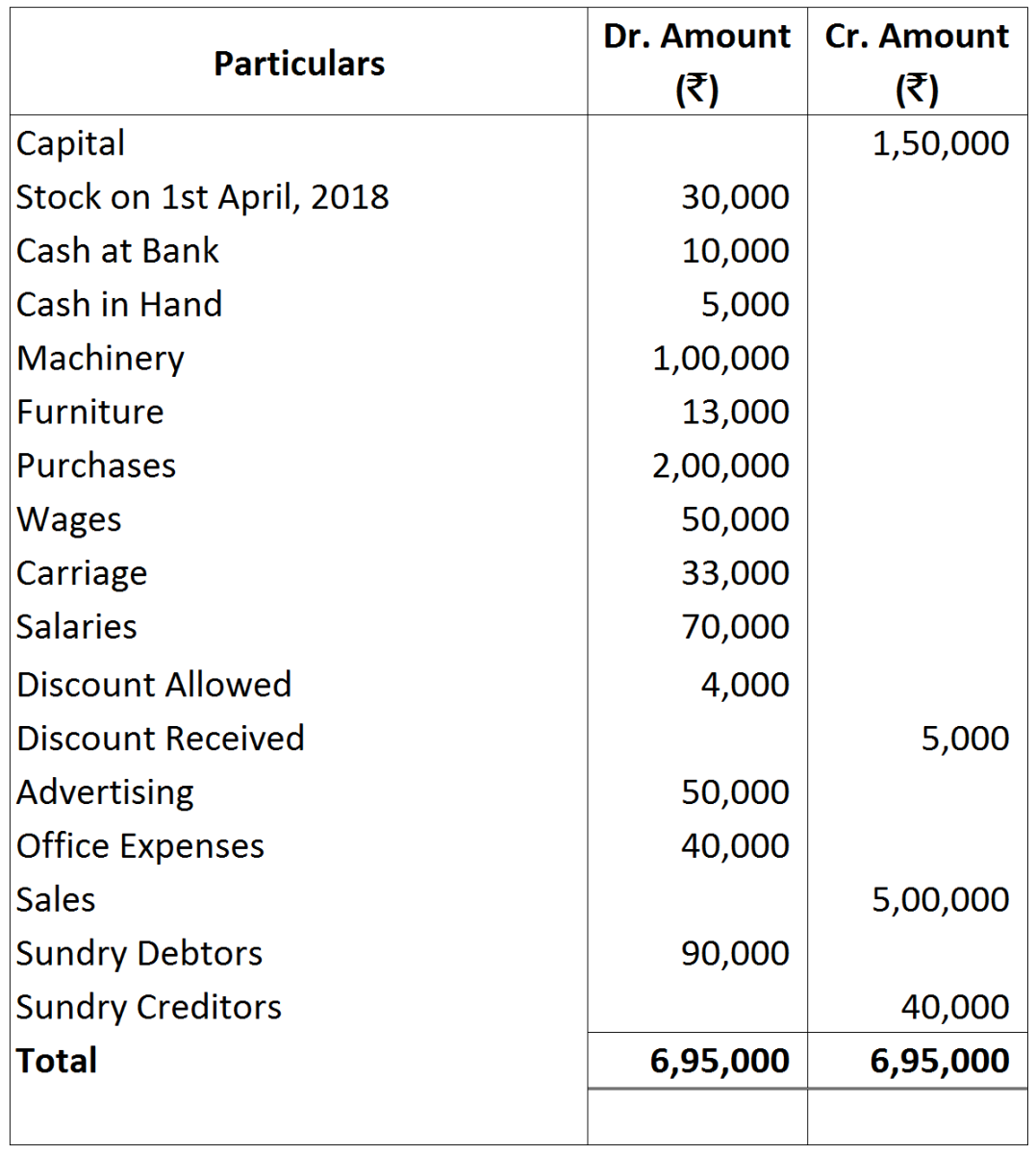
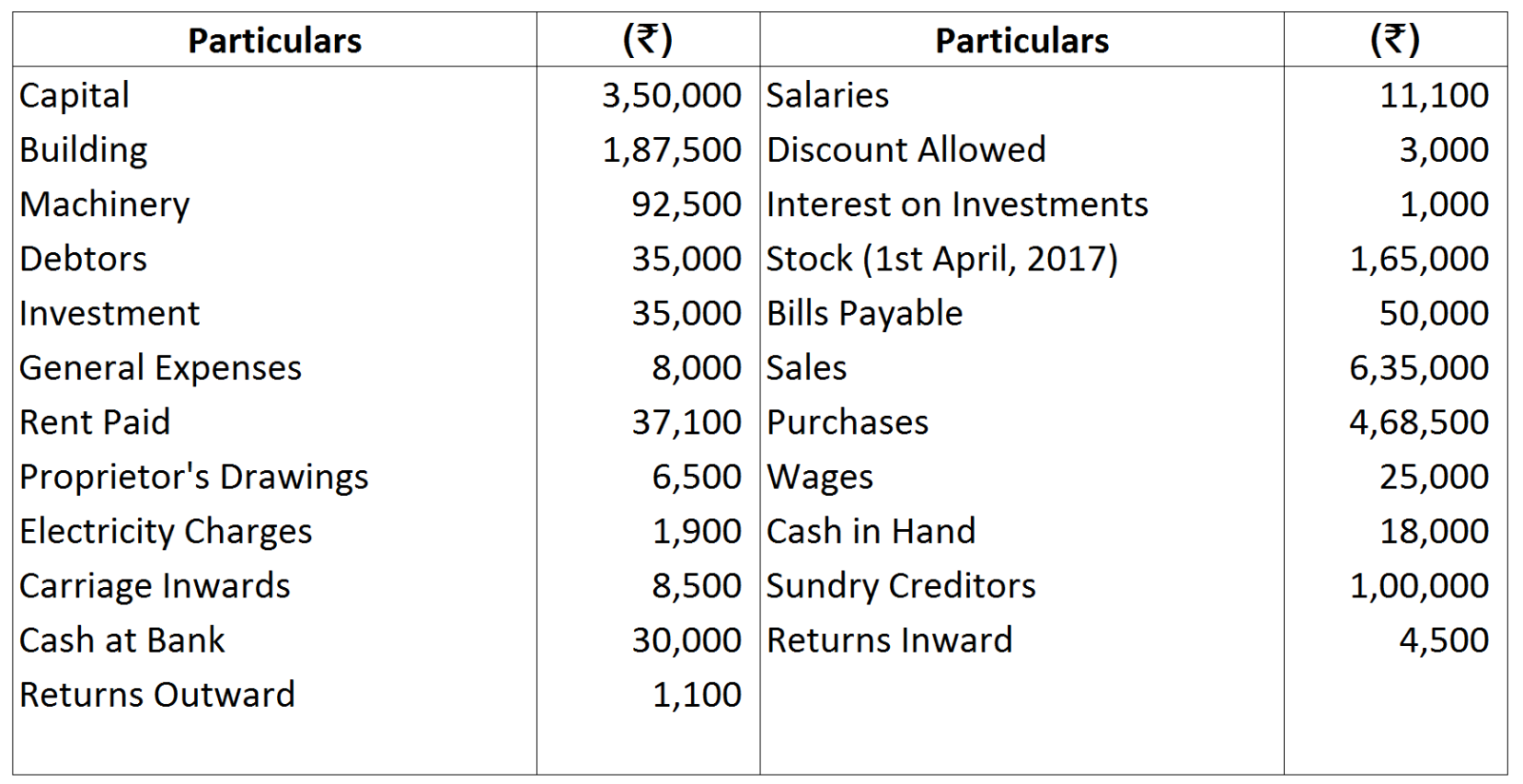
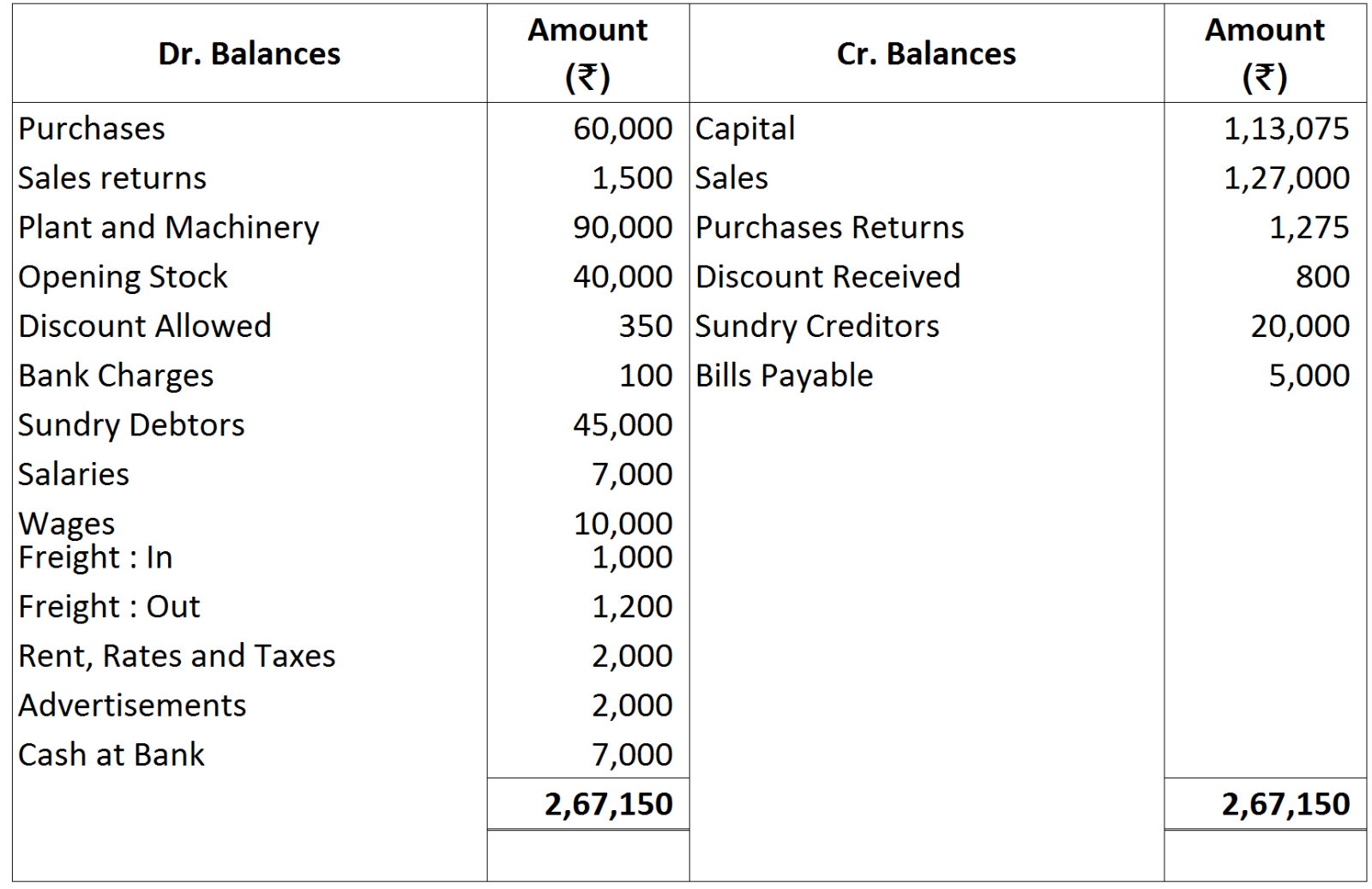
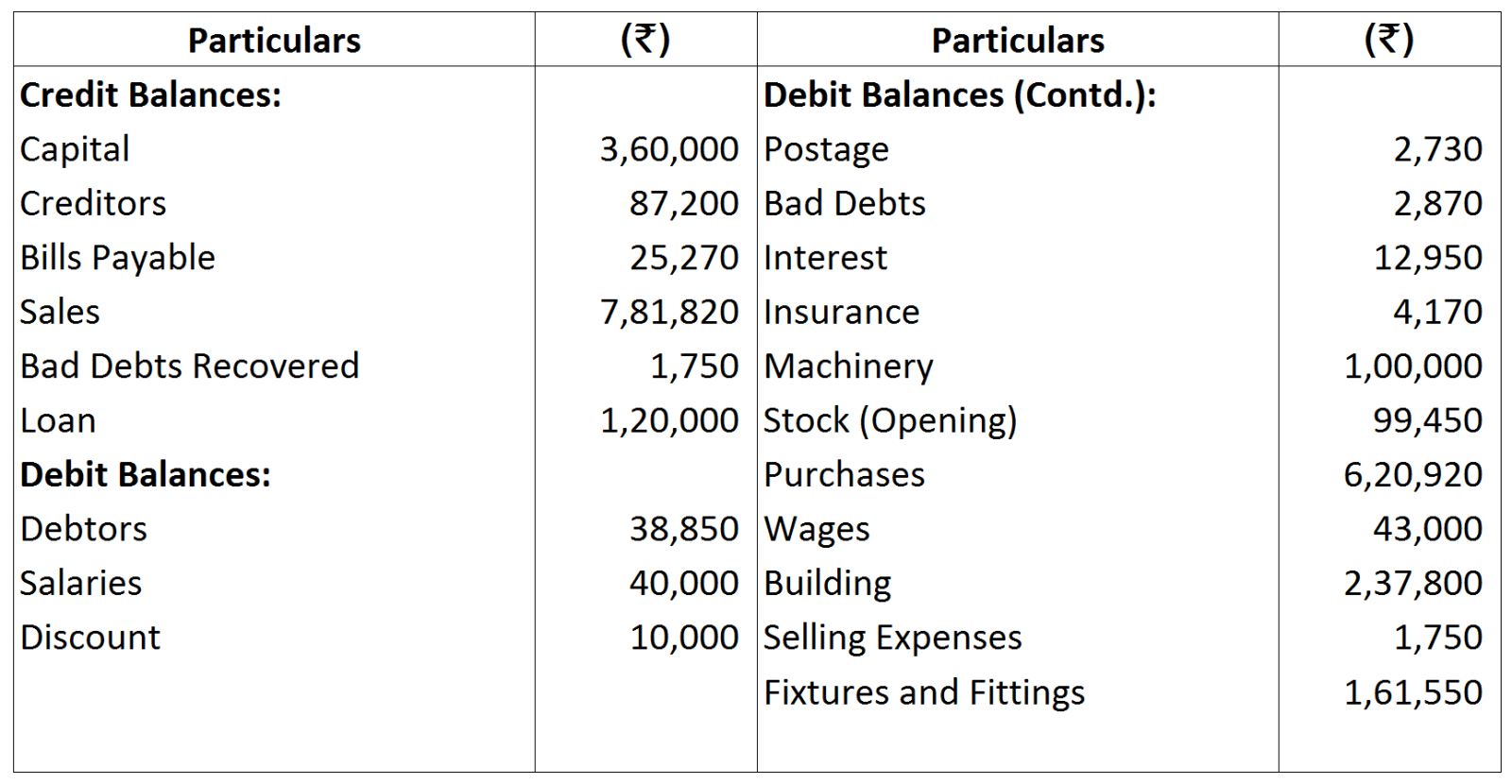
Trial Balance of Mr. Joe shows the following balance as on $31^{st}$ March,$ 2019:$
Value of Closing Stock on $31^{st}​​​​​​​$​​​​​​​ March,$ 2019:$ was ₹ 50,000.
View full question & answer
Question 36 Marks
What are financial statements? What information do they provide.
Answer
Every business firm wants to know its financial position at the end of an accounting period. In order to assess its financial position, profit earned or loss incurred during an accounting period, the book value of its assets and liabilities is to be ascertained. In order to serve this purpose, financial statements are prepared. Financial statements are the statements showing profitability and financial position of a business at the end of the year. It includes:
  1. Income statements, viz., Trading and Profit and Loss Account, which represents direct and indirect expenses incurred to generate revenues. On one hand, trading account discloses either gross profit or gross loss, on the other hand, profit and loss account discloses either net profit or net loss.
  2. Statement of financial position, viz., Balance Sheet, which enlists the book value of all the assets and liabilities of the firm. Balance Sheet discloses the true financial position, solvency and credit worthiness of the business. The information provided by the financial statements is in the form of gross profit or gross loss, net profit or net loss and book value of the assets and their liabilities. The value and relevance of the information provided by the financial statements varies from one user of accounting information to another.
Various users of accounting information can be explained as below:
  1. Internal: Internal users are those persons who are directly related to the business. For example, owners, management, employees, workers, etc.
  1. Owners: The information required by owners about profit earned or loss incurred during an accounting period. This information is provided by the financial statements in form of gross (net) profit or gross (net) loss.
  2. Management: Financial statements provide vital information to the management for decision making, designing policies and future plans. There are various parameters such as ratio of direct (indirect) expenses to gross (net) profit, by the help of which management can check the adequacy, control and relevance of various expenses incurred and plans and policies implemented.
  3. Employees and workers: They expect bonus at the year end, which is directly related to the profit of that particular period. The net profit as disclosed by the profit and loss account forms the basis of this expectation.
  1. External: External users are those persons and institutions that are indirectly related to the business. For example, government, tax authorities, investors, etc.
  1. Government: Government needs information in order to ascertain various macroeconomic variables, such as national income, GDP, employment opportunities generated, etc.
  2. ax authorities: Tax department is interested in knowing the actual sales, production, turnovers and exports and imports by the business. Tax department levies various taxes, such as income tax, VAT, excise tax, etc. The information disclosed by the financial statements form the basis of estimation of the tax dues of the business.
  3. Investors: Financial statements help to know about the earning capacity, scope and potential to grow and to assess financial position of the business. It also helps in knowing various investments made by the business and also investments made by the organisations and individuals in the business. This information helps the investors to assess and determine whether investments by them will be fruitful or not.
  4. Bank and other financial institutions: Financial statements provide information to banks and other financial institutions, such as LIC, GIC, etc., about the credit worthiness, solvency and repaying capacity of the business.
  5. Creditors: Financial statements provide information to the creditors about the goodwill of the business and its credit worthiness and repaying capacity.
View full question & answer
Question 46 Marks
What is Capital Expenditure? Give six examples of Capital Expenditure.
Answer
Capital Expenditure: Any expenditure which is incurred in acquiring or increasing the value of a fixed asset is termed as capital expenditure. As such, the amount spent on the purchase of Land and Building, Plant and Machinery, Furniture etc. is capital expenditure. Such expenditure yields benefit over a long period and hence is written in Assets. Following are the examples of capital expenditure.
  1. Expenditure which results in the acquisition of a fixed asset such as land, building, plant, motor vehicles, trade marks, etc. Such asset would be used in the business for a number of years.
  2. Expenditure in connection with the purchase or erection of a fixed asset such as wages paid to workers for erecting machines, cartage paid on acquiring plant and machinery, over-hauling of second-hand machines etc.
  3. Expenditure which results in the extension or improvement of fixed assets and which increases the earning capacity of such assets such as amount spent on increasing the seating capacity of a cinema hall.
  4. All amount spent upto the point an asset is put to use is treated as capital expenditure. Thus, legal fees and brokerage paid to acquire a property and interest paid on loans taken to acquire the asset for the period before the asset is put to use is capital expenditure and is added to the cost of such asset. But interest on loan for the period after the asset is put to use is treated as revenue expenditure.
  5. Expenditure incurred for establishing the business, e.g., the cost of a patent, preliminary expenses, goodwill etc.
  6. VI.Interest on capital upto the point production is ready to commence or during the period of formation of company.
  7. VII.Expenditure incurred on the purchase of second-hand asset and on putting such asset into working condition.
View full question & answer
Question 56 Marks
What is a balance sheet. What are its characteristics?
Answer
A Balance Sheet refers to the position statement, which lists out the balances of the assets, liabilities and owner’s equity, i.e. capital, of an enterprise at a specified date. While the assets show the resources owned by the company, liabilities and capital exhibits the funding of resources.
Characteristics of Balance Sheet:
  • The preparation of Balance Sheet is not for a period, but at a particular date.
  • The preparation of the balance sheet is possible only when profit and loss account for the period is prepared because it reflects the financial position of the company adequately. That is why the Profit & Loss Account, Balance Sheet and Cash flow Statement are collectively called as Final Accounts.
  • The totals of the two sides, i.e. assets and liabilities of the balance sheet must tally as Assets = Liabilities + Capital. If not so, then there must be an error.
  • The balance sheet reflects the nature and value of assets and liabilities and the position of capital on a given date.
View full question & answer
Question 66 Marks
Explain Revenue Expenditure with examples.
Answer
Revenue Expenditure: Any expenditure, the benefit of which is received during the current year itself is termed as revenue expenditure. As such, all the revenue expenditures are debited to Trading and Profit & Loss Account. Such expenditure does not result in an increase in the earning capacity of the business but only helps in maintaining the existing earning capacity. Examples are:
  1. Expenses incurred for the purpose of day to day running of business such as manufacturing expenses, office expenses, selling expenses etc.
  2. Expenses incurred on the ordinary repairs and maintenance of fixed assets, white-washing of building etc.
  3. Payment for goods purchased for resale.
  4. Depreciation on fixed assets.
  5. Purchase of raw materials for converting it into finished goods.
  6. Interest on loan and interest on capital for the period after the asset is put to use.
  7. Replacement of worn-out part of an existing machine.
  8. Loss from sale of fixed assets.
View full question & answer
Question 76 Marks
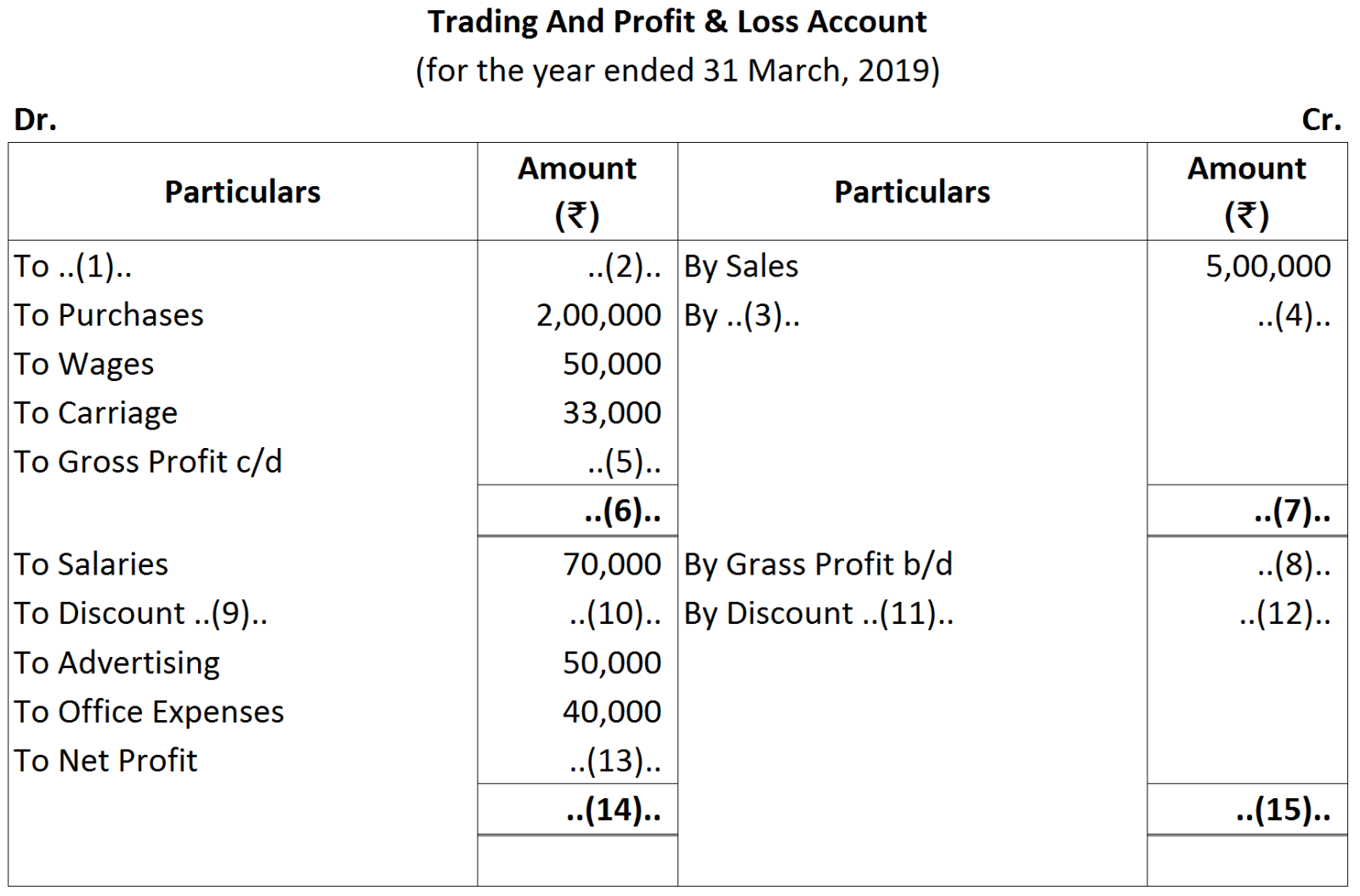
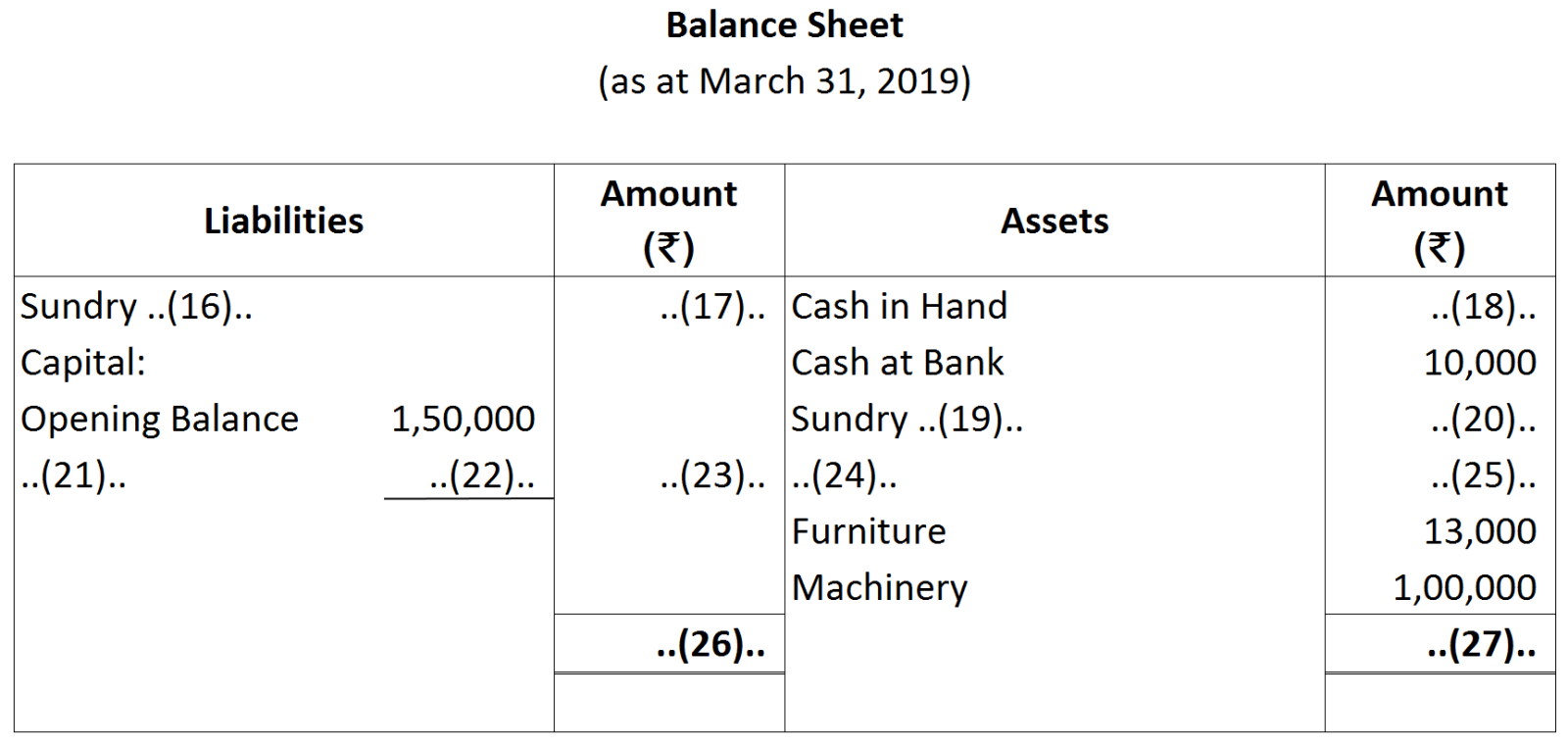
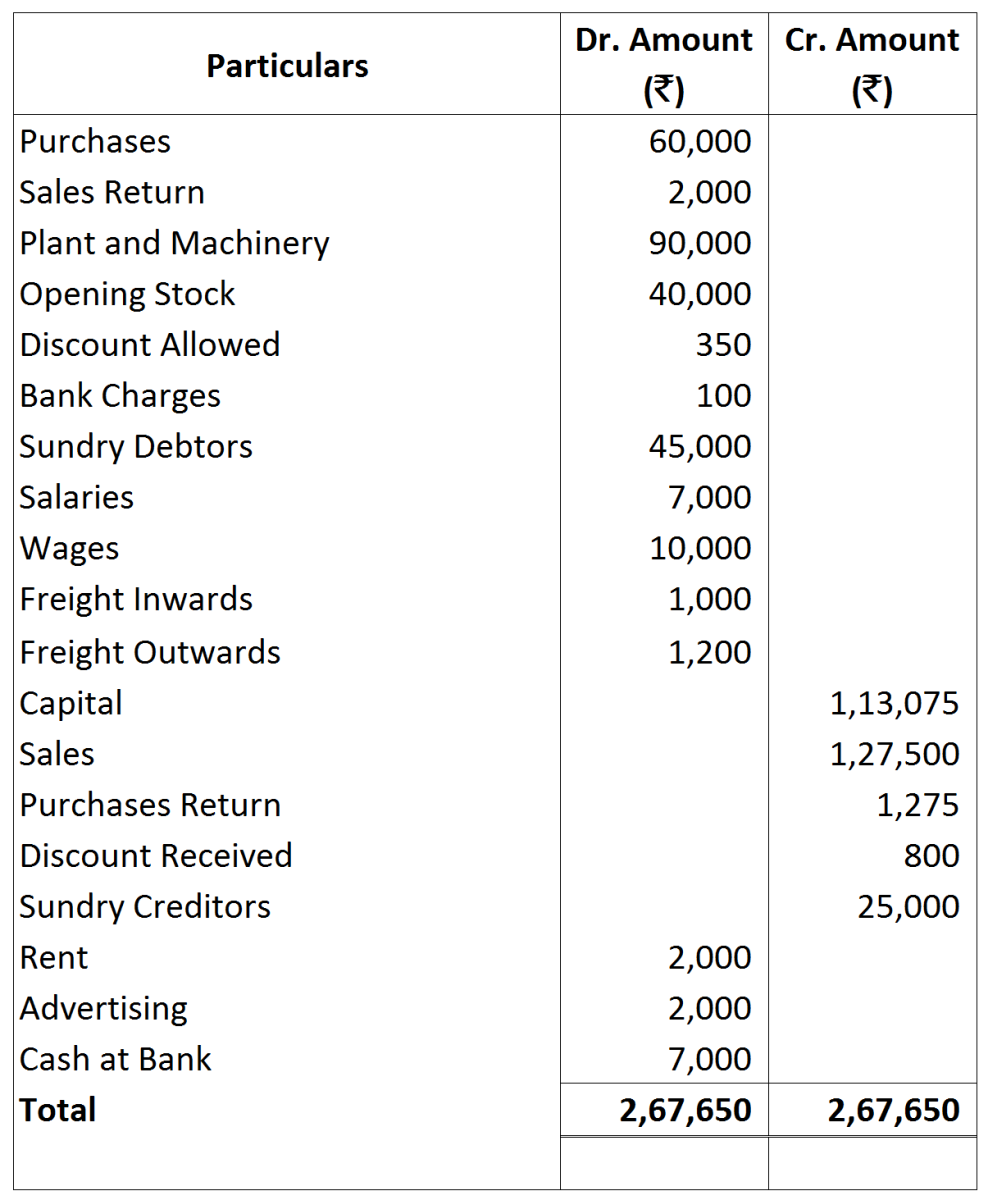
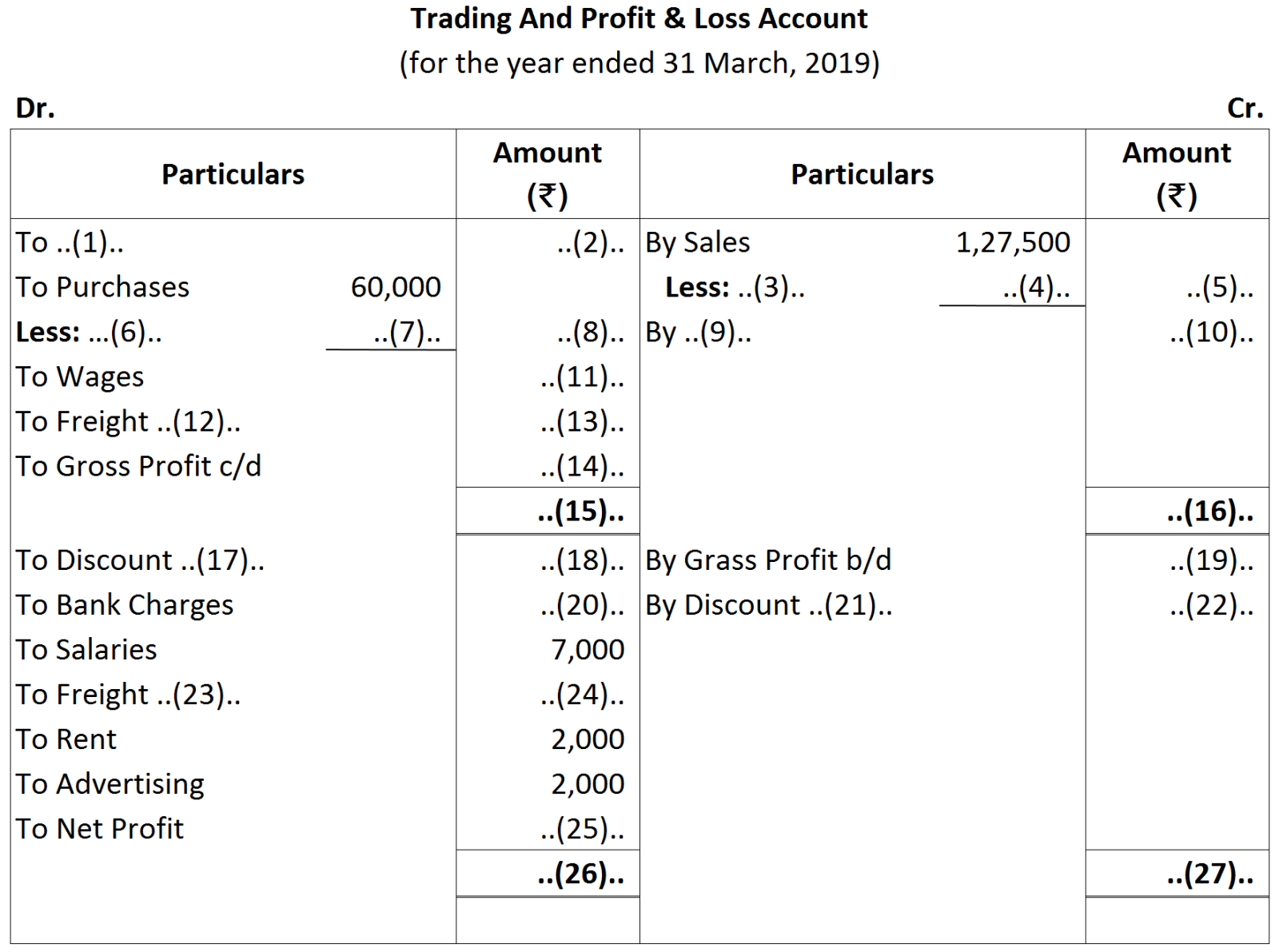
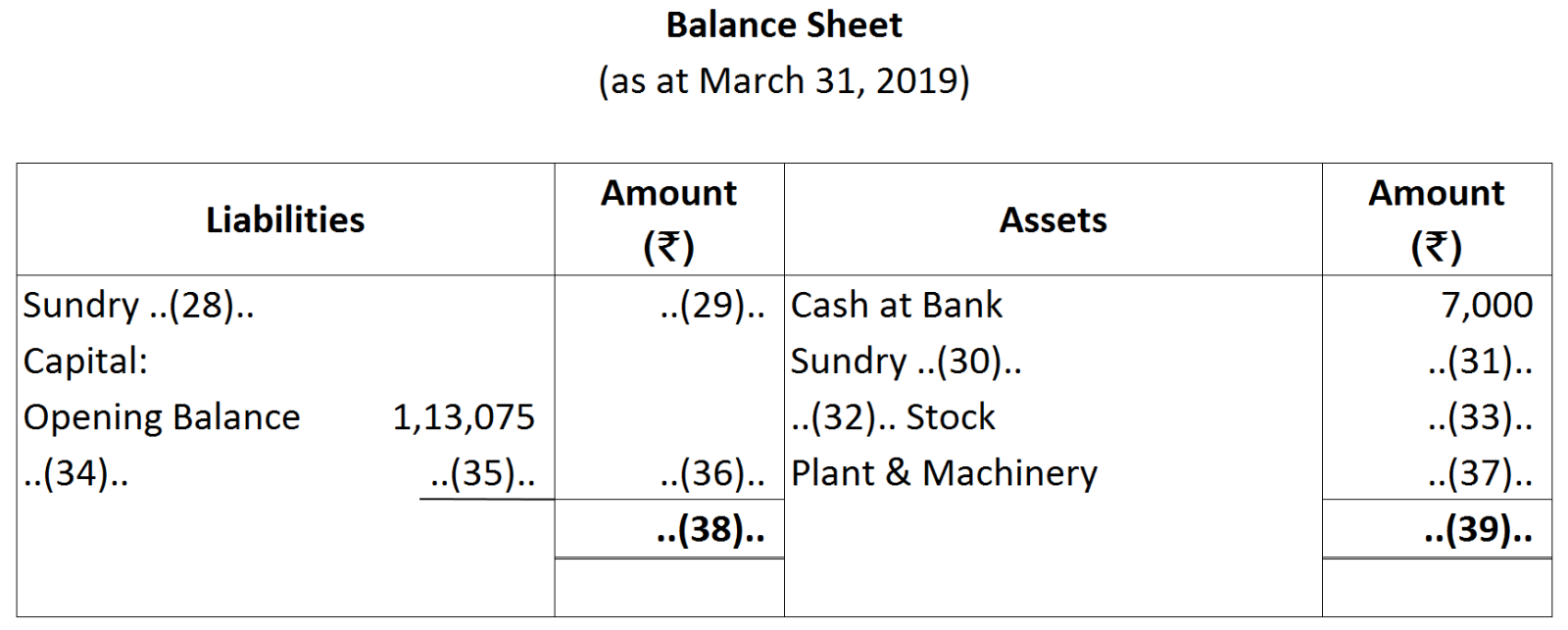
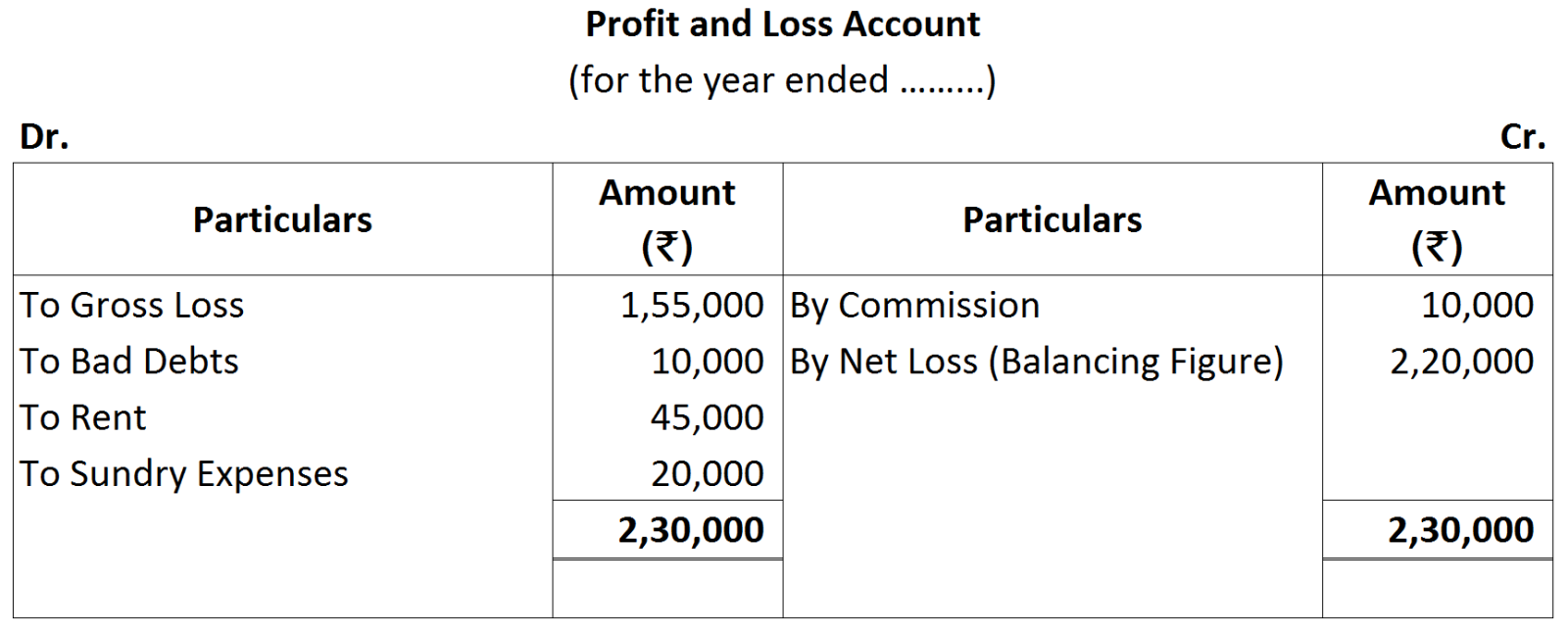
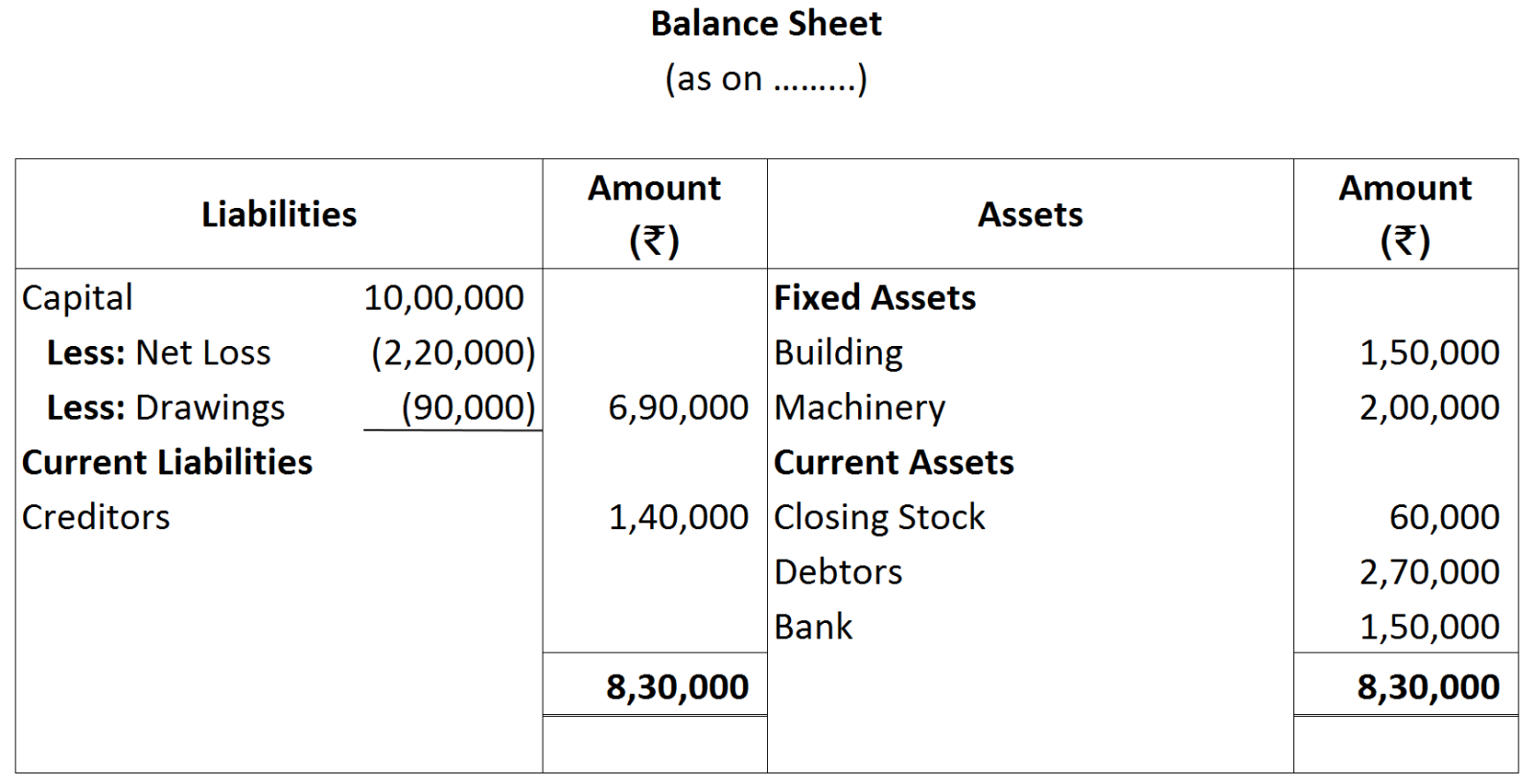
In the following Trading and profit and Loss Account for the year ended $31^{st}$​​​​​​​ March,$ 2019:$ and Balance Sheet as on that date, determine the missing information:
View full question & answer
Question 86 Marks
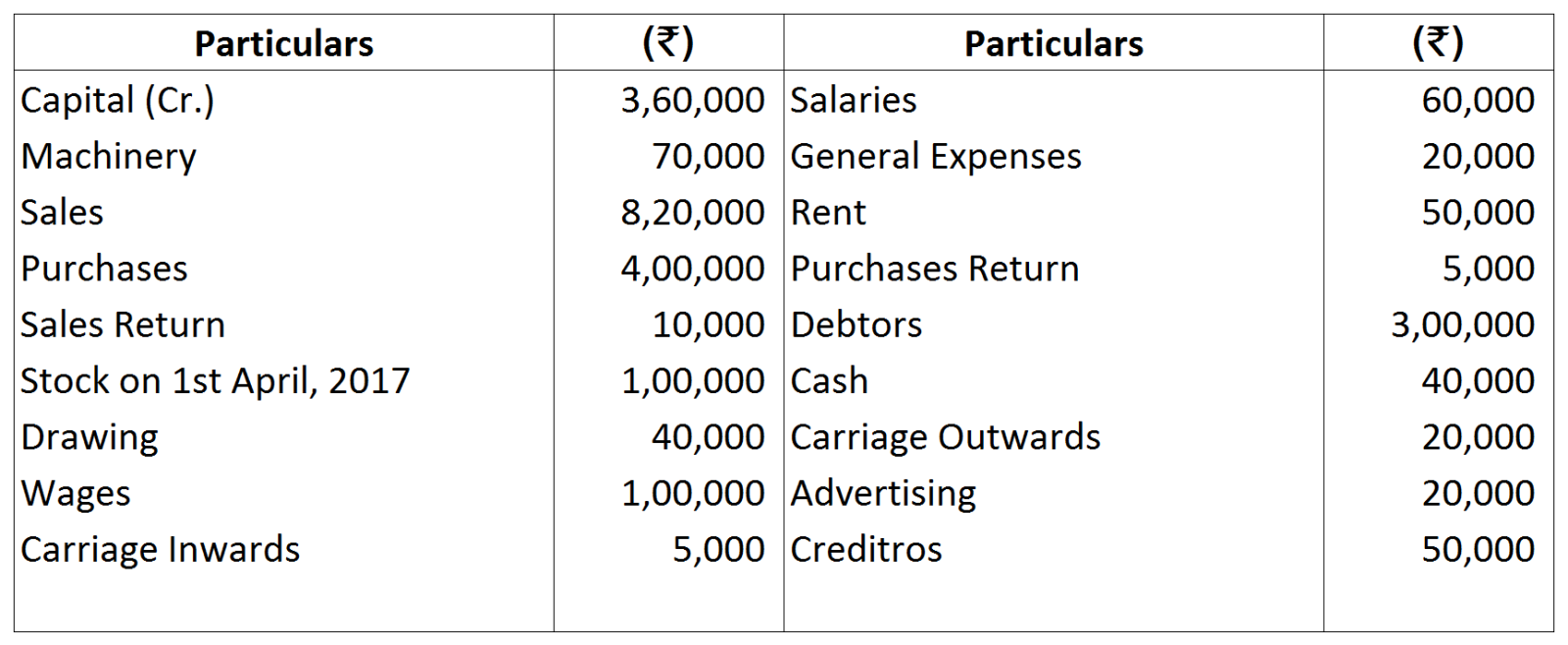
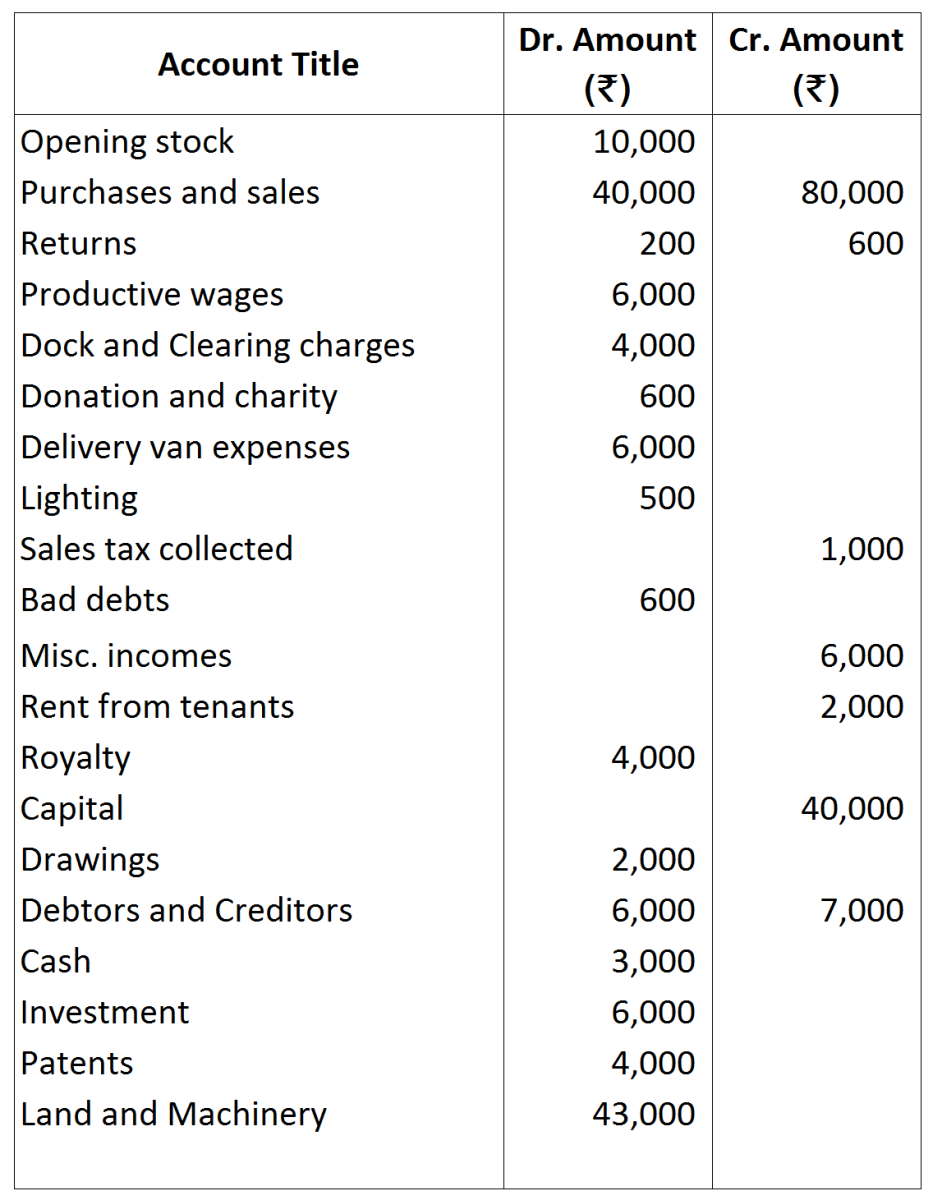
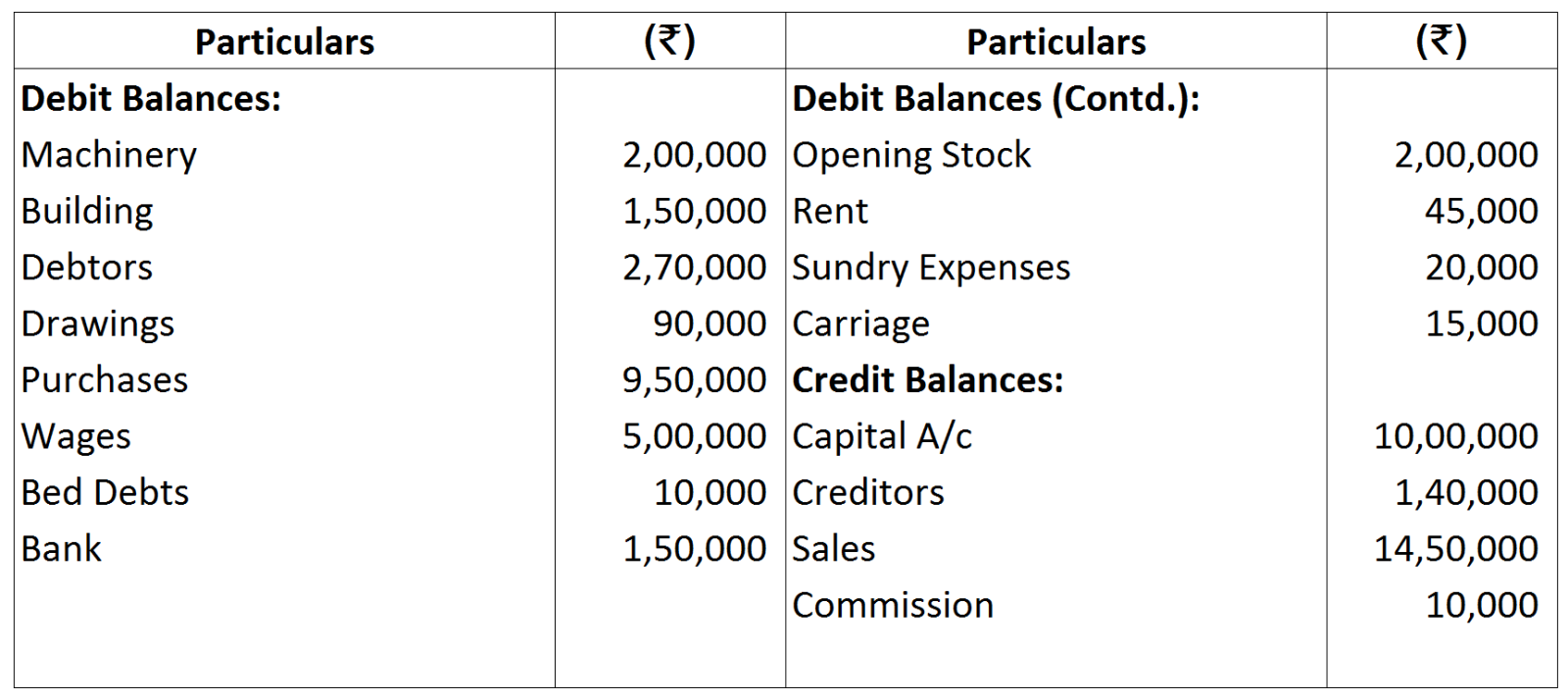
The Trial Balance shows the following balance as at $31^{st}$​​​​​​​ March,$ 2019:$​​​​​​​

Closing Stock was valued at ₹ 35,000.
Required: Complete the missing values of Trading Account, Profit and Loss Account and Balance Sheet.

View full question & answer
Question 96 Marks
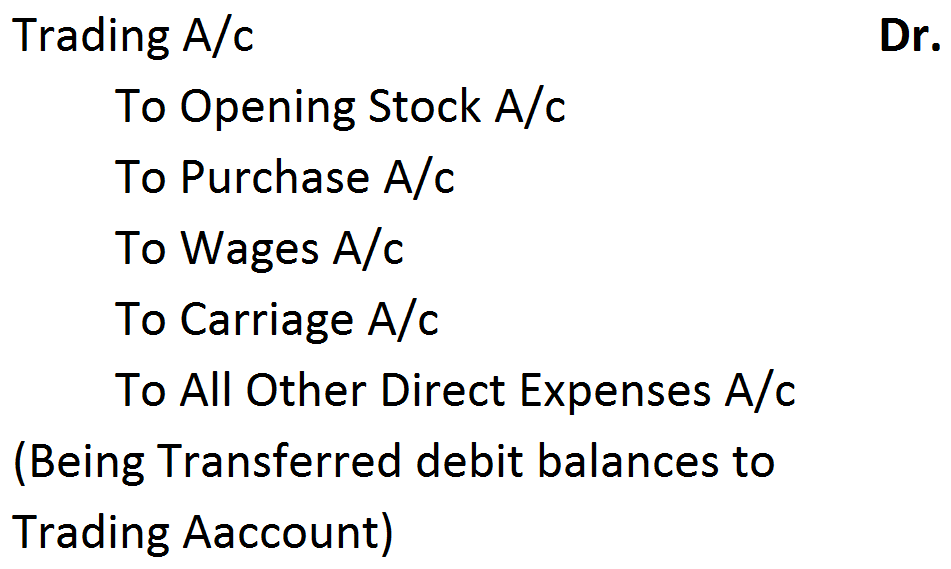
What are closing entries? Give four examples of closing entries.
Answer
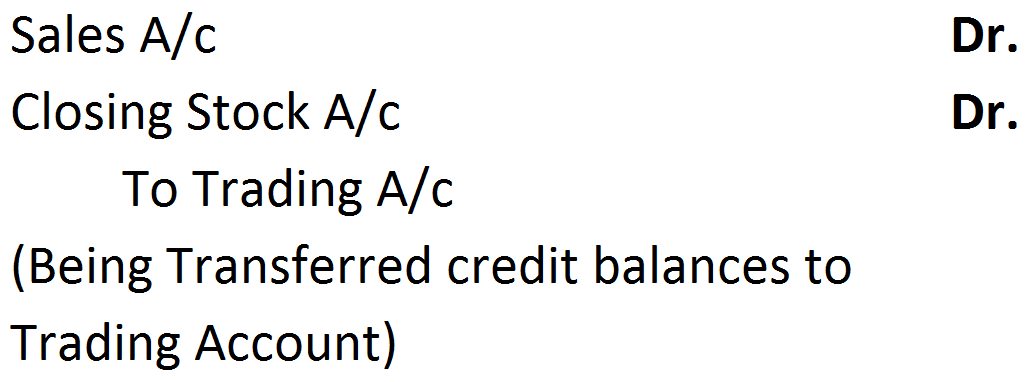
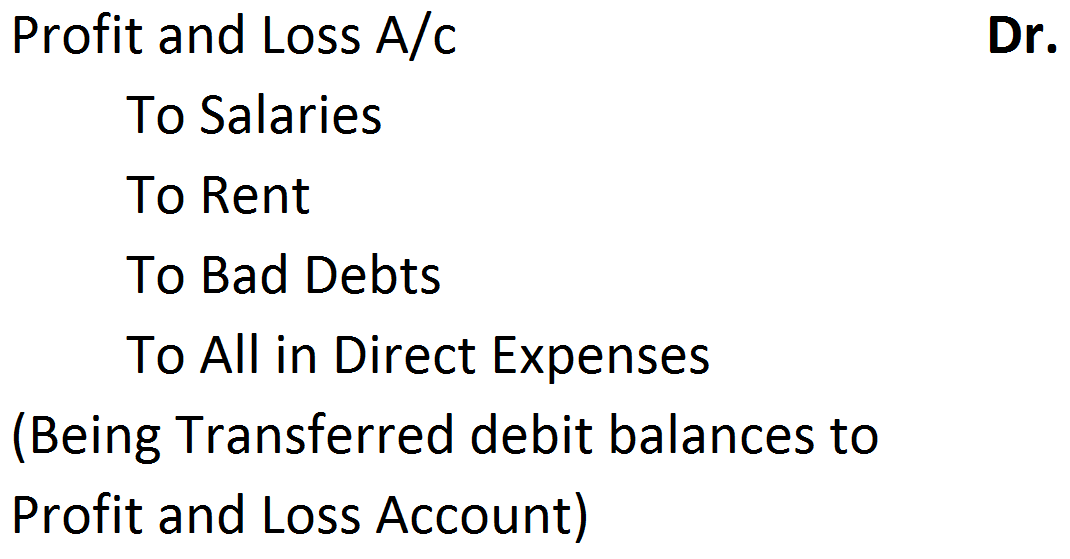
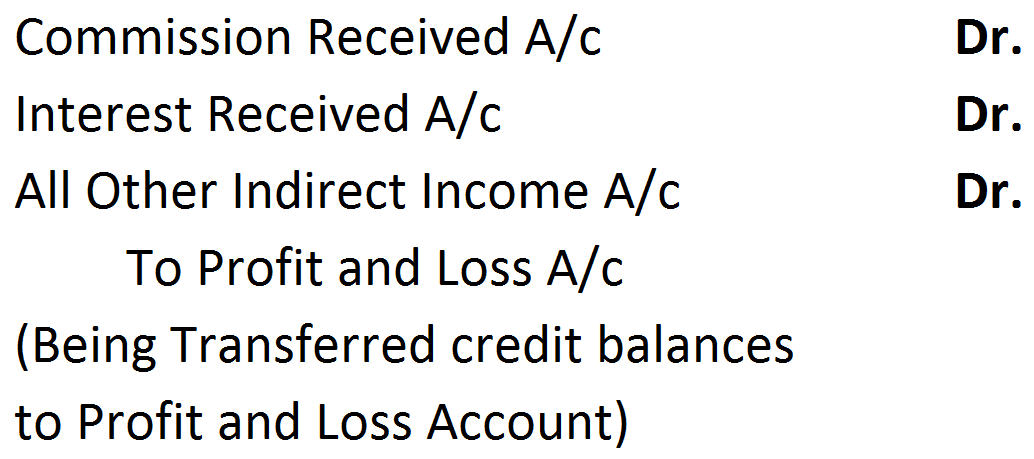
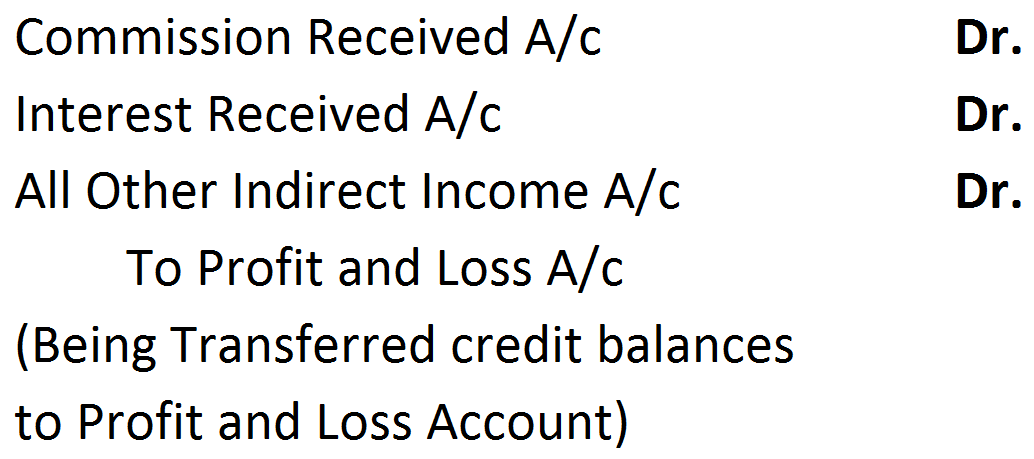
The balances of all nominal accounts are transferred to the Trading and Profit and Loss Account. The entries required for such transfers are termed as closing entries.
The examples of closing entries are given below.
  1. Closing entries to transfer the following items to the debit side of trading account from Trial Balance:
  1. Closing entries to transfer the following items to the credit side of trading account from Trial Balance:
  1. Closing entries to transfer the following items to the debit side of Profit and Loss Account from Trial Balance:
  1. Closing entries to transfer the following items to the credit side of Profit and Loss Account from Trial Balance:
View full question & answer
Question 106 Marks
Write short notes on any two:
  1. Contingent liability.
  2. Capital expenditure.
  3. Operating profit.
Answer
  1. Contingent Liabilities: Contingent Liability is a liability that becomes payable on the happening of an event. In case, the event does not happen, no amount is payable. Such liabilities are not accounted and are not shown in the Balance Sheet; they are disclosed by way of a note.
  2. Capital Expenditure: is the expenditure that gives benefit of enduring nature, i.e., the benefit from the expenditure will be for period or periods beyond the accounting period. Capital expenditure increases the earning capacity or reduces the operating expenses of a business.
Capital Expenditure is the amount incurred by an enterprise normally on purchase of fixed assets. Fixed assets are used in the business to earn income and are not intended for resale. Fixed assets purchased may be tangible or intangible.
  1. Operating Profit: is the profit earned through normal operating activities of the business. It is calculated by deducting the Operating Expenses from the Gross Profit.
Operating Profit = Gross Profit - Operating Expenses
View full question & answer
Question 116 Marks
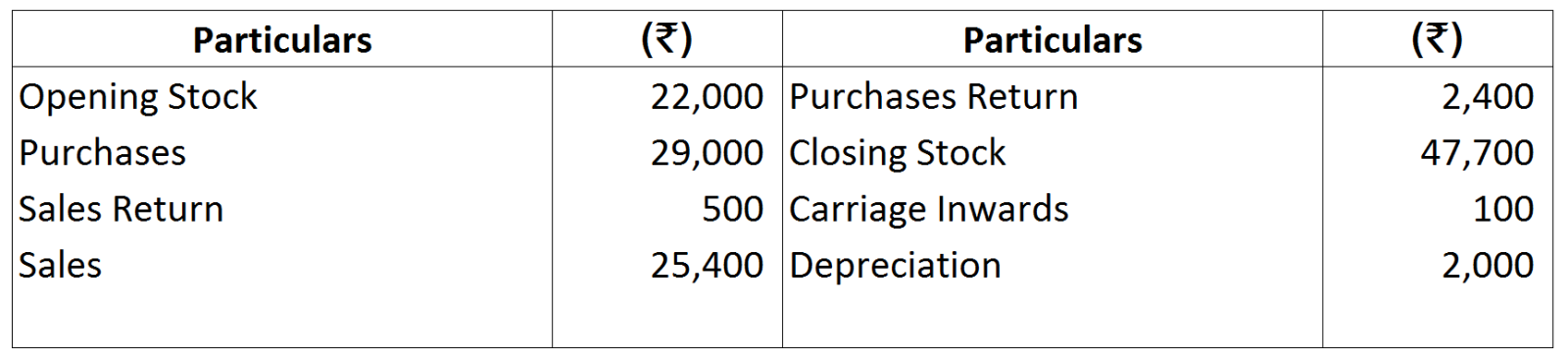
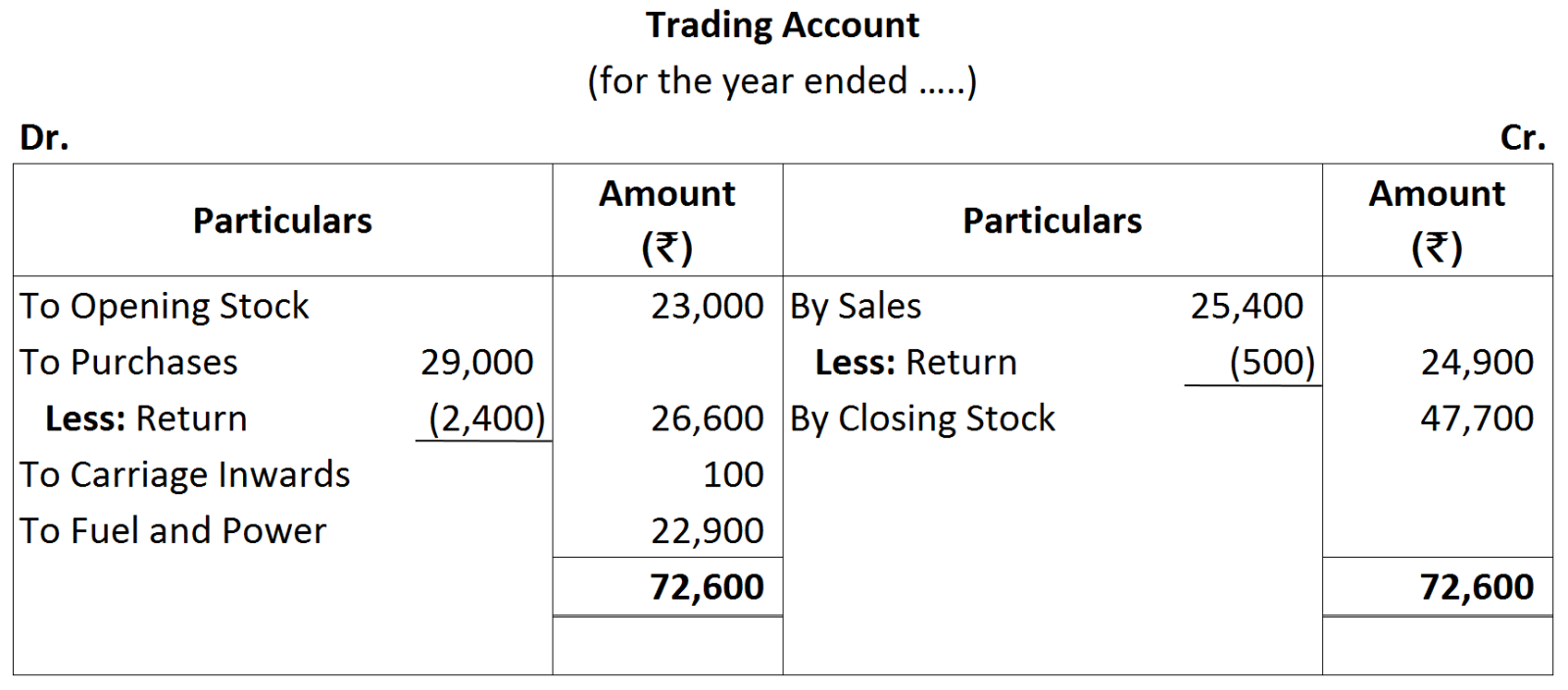
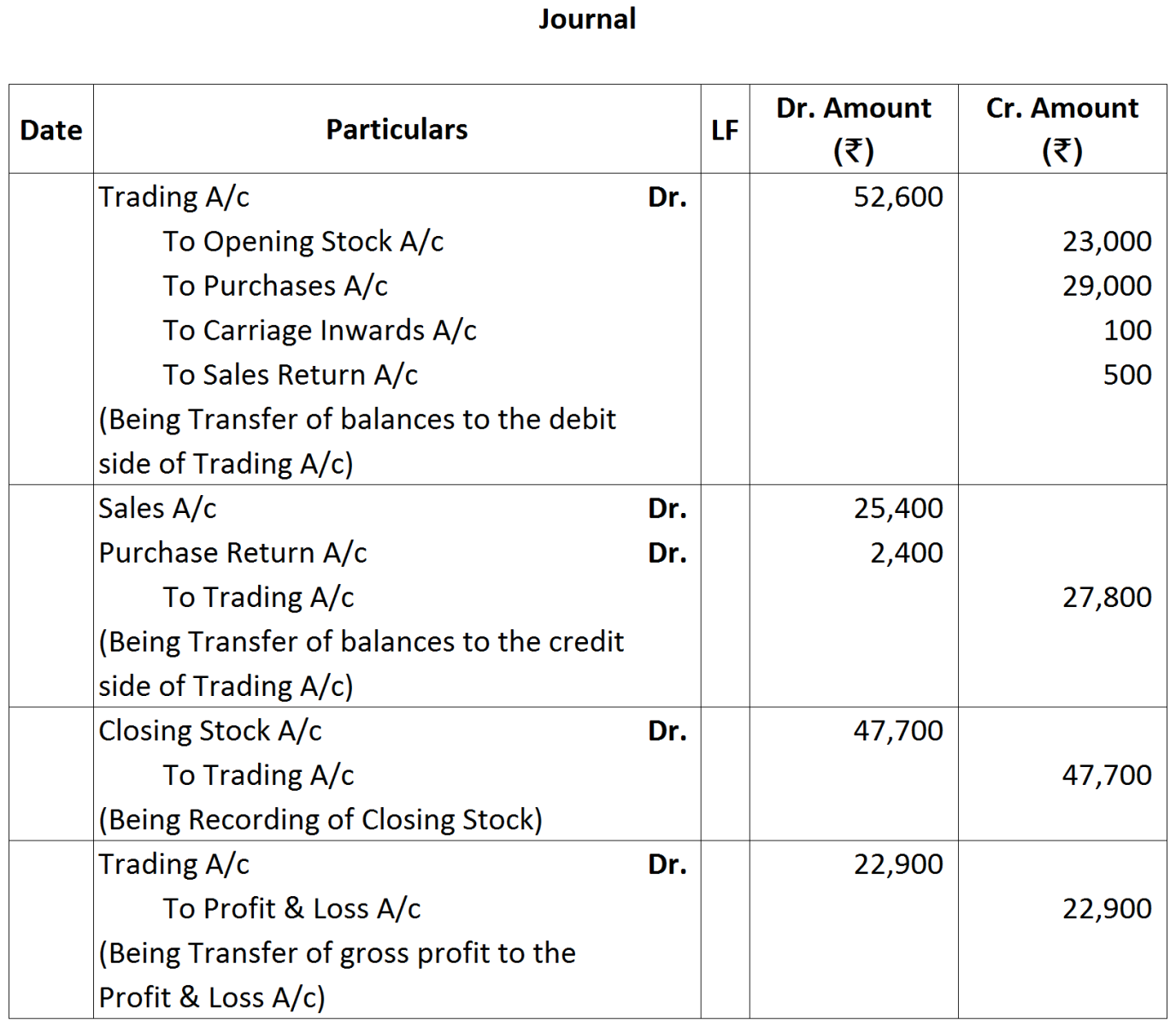
Prepare Trading Account from the transactions givne below:
Also pass the Journal entries.
[Hint: Depreciation is not accounted in the Trading Account.]
Answer

Note: Depreciation is an Indirect Expense, therefore it is not shown in the Trading Account.
View full question & answer
Question 126 Marks
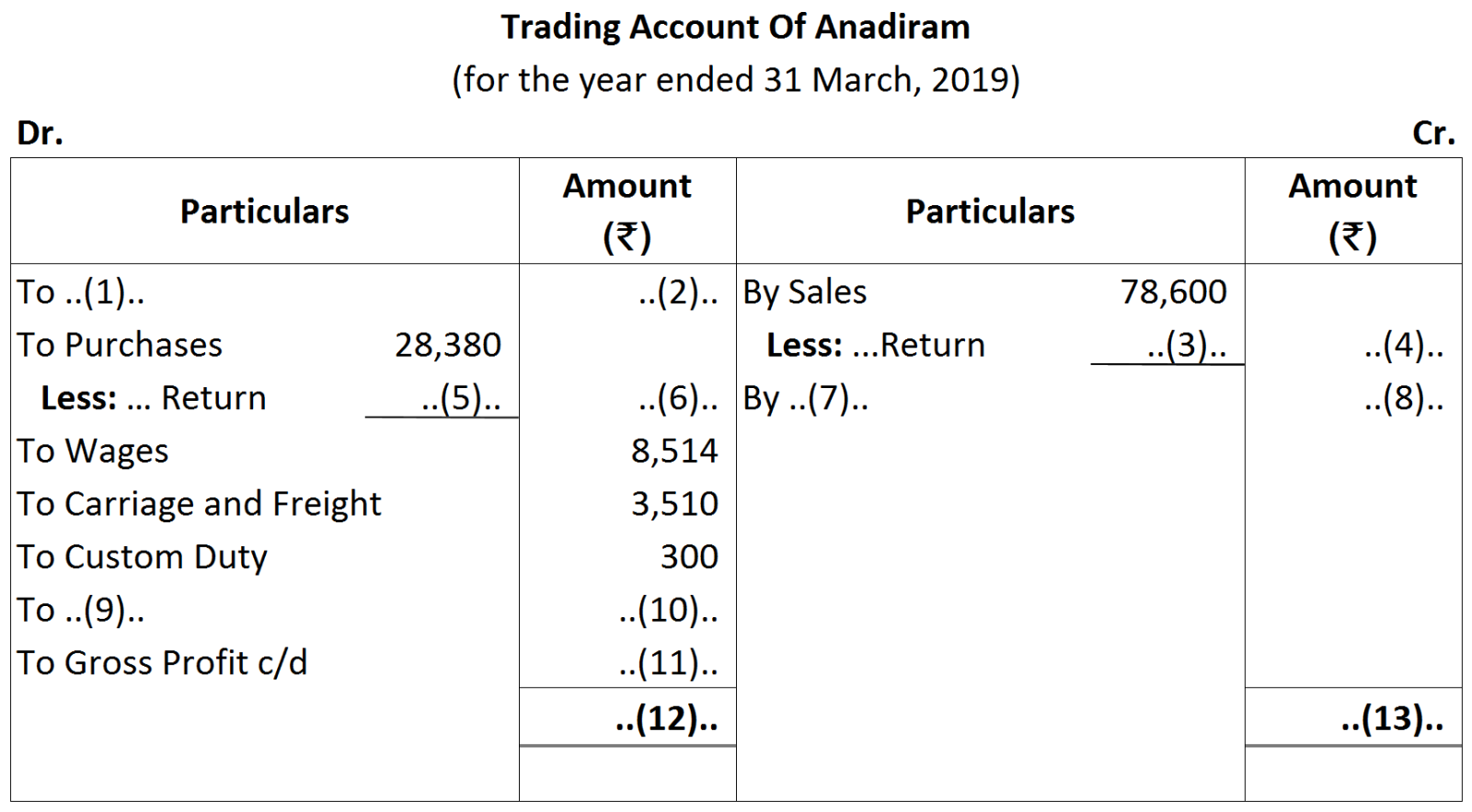
From the following information, complete the missing figures of Trading Account of Anadiram for the financial year ended on $31^{st}$​​​​​​​ March,$ 2019:$​​​​​​​
 
 
Wages
8,514
Opening Stock
19,380
Purchases
28,380
Office Rent
5,400
Carriage and Freight on Goods Purchased
3,510
Sales
78,600
Returns Inward
8,600
Returns Outword
6,000
Closing Stock
18,000
Custom Duty
300
Power and Fuel
2,600
Trade Expenses
4,200
View full question & answer
Question 136 Marks
Give any five points of difference between a Balance Sheet and a Trial Balance.
Answer
Distinction between Trial Balance and Balance Sheet
 
Basis of Difference
Trial Balance
Balance Sheet
1.
Object
It is prepared to check the arithmetical accuracy of the books of accounts.
It is prepared to know the true financial position of the firm.
2.
Information about profit or loss
It is not possible to have information about net profit or net loss from a trial balance.
Since net profit or loss is recorded in the Capital shown in Balance Sheet, it is possible to have the information about net profit or net loss from a Balance Sheet.
3.
Necessity
Though desirable, its preparation is not necessary.
It is necessary to prepare a Balance Sheet.
4.
Headings
The headings of its two columns are debit and credit.
The headings of its two sides are assets and liabilities.
5.
Period
It is normally prepared every month or whenever needed.
It is normally prepared half-yearly or yearly at the end of the accounting period.
View full question & answer
Question 146 Marks
Give any three points of distinction between Capital Expenditure and Revenue Expenditure.
Answer
Difference between Trading Account and Profit and Loss Account-
 
Basis
Capital Expenditure
Revenue Expenditure
1.
Purpose
It is incurred for acquisition of fixed assets for use in business.
It is incurred for running of business.
2.
Capacity
It increases earning capacity of the business.
It is incurred for earning profits.
3.
Period
Its benefit extends to more than one year
Its benefit is exhausted withing the year
4.
Recording
It is dibited to related Asset Account.
It is debited to related Expense Account
5.
Nature of Account
It is an Asset Account
It is an Expense Account.
6.
Depiction
It is shown in the Balance Sheet.
It is shown in the Trading or Profit and Loss Account
7.
Examples
(a). Cost of Plant and Machinery
(b). Cost of Land and Building
(c). Cost of Funiture and Fixtures
(a). Dereciation on Plant and Machinery
(b). Rent
(c). Repairs and Insurance.
View full question & answer
Question 156 Marks
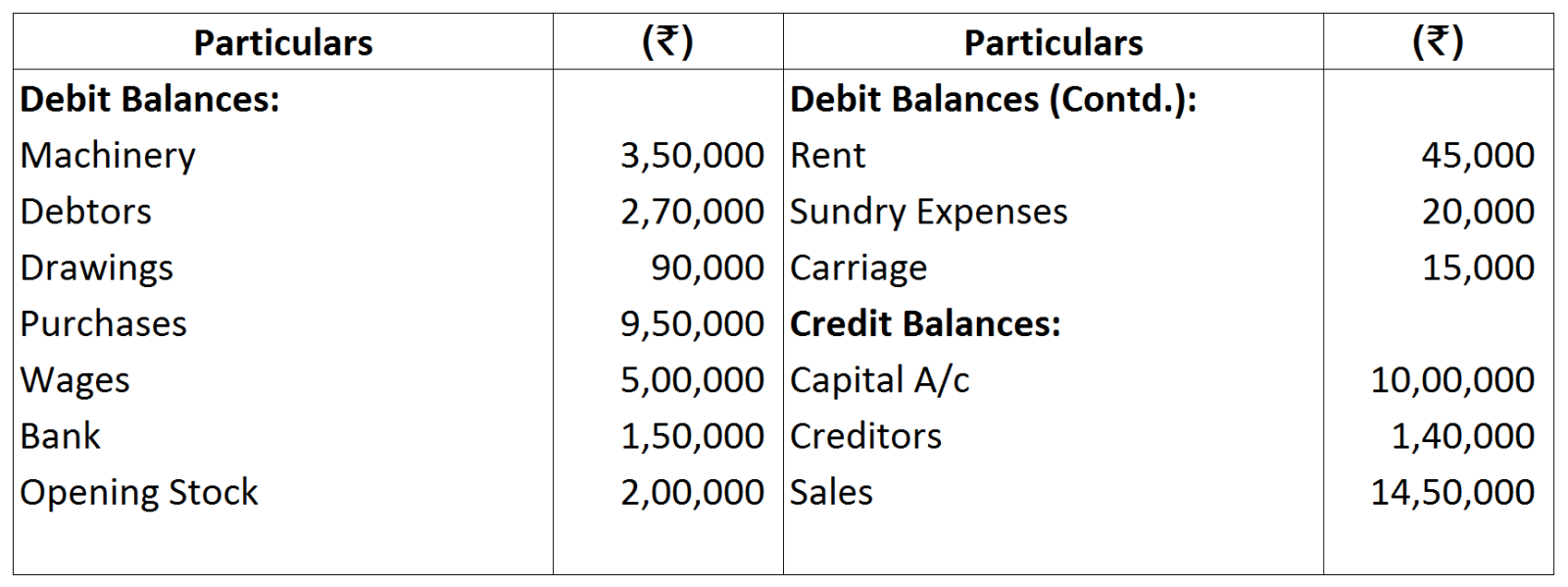
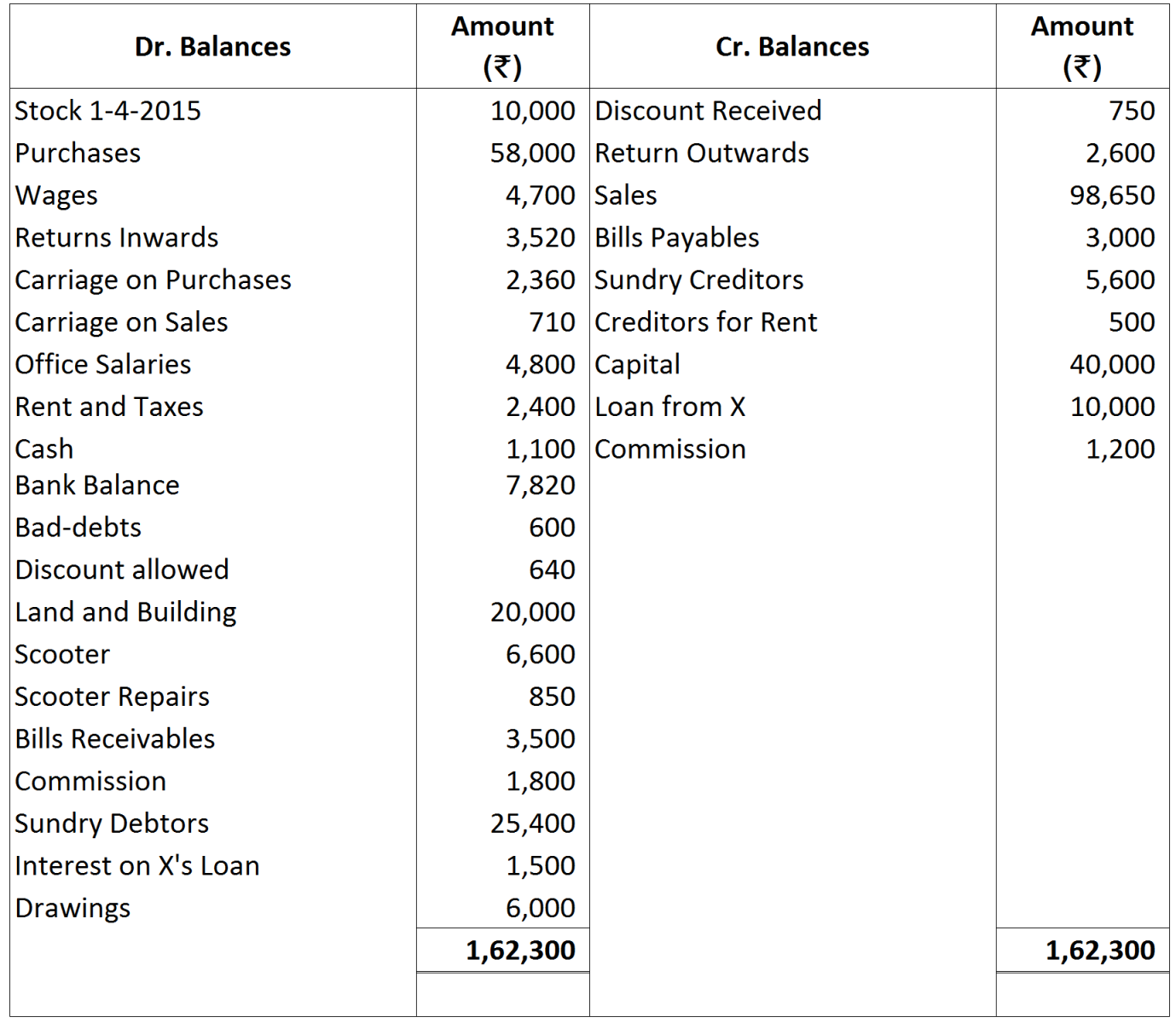
From the following balances taken from the books of Hari & Co., prepare Trading and Profit and Loss Account for the year ended $31^{st}$​​​​​​​ March,$ 2019:$ and Balance Sheet as at that date:

Closing Stock was valued at ₹ 1,82,100.
View full question & answer
Question 166 Marks
From the following balances, prepare Final Accounts of M/s Raja & Sons for the year ended $31^{st} $March, $2019:$
Salary ₹ $5,400$ Insurance ₹ $2,500$ Cash ₹ $400$ Purchases ₹ $84,170$ Rent Received ₹ $3,150$ Drawings ₹$ 2,100$ Bills Payable ₹ $3,900$ Debtors ₹ $38,080$ Stock ($1^{st} $April, $2018) ₹ 29,500$ Bank Overdraft ₹ $9,700$ Carriage ₹ $2,200$ Creditors ₹ $4,200$ Trade Expenses ₹ $4,900$ Sales Return ₹ $4,700$ Machinery ₹ $12,000$ Wages ₹ $45,000$ Sales ₹ $1,47,200$ Purchases Return ₹ $3,900$ Capital ₹ $58,900$ Closing Stock ($31^{st}$ March, $2019) ₹ 36,200.$
View full question & answer
Question 176 Marks
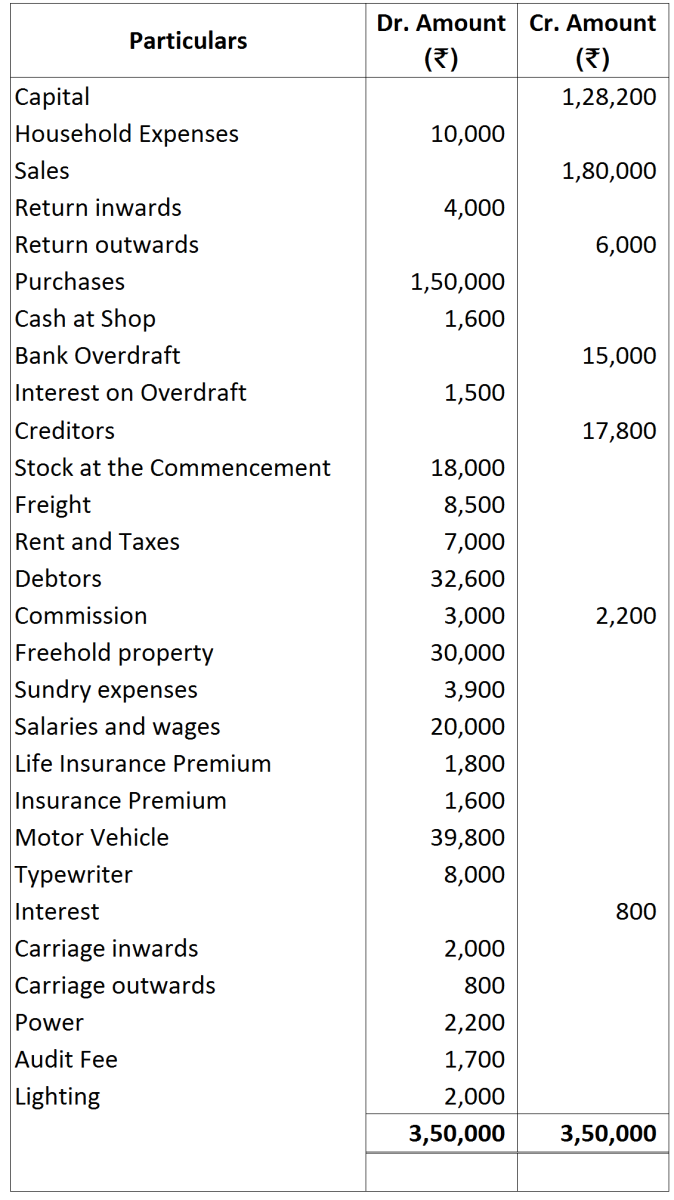
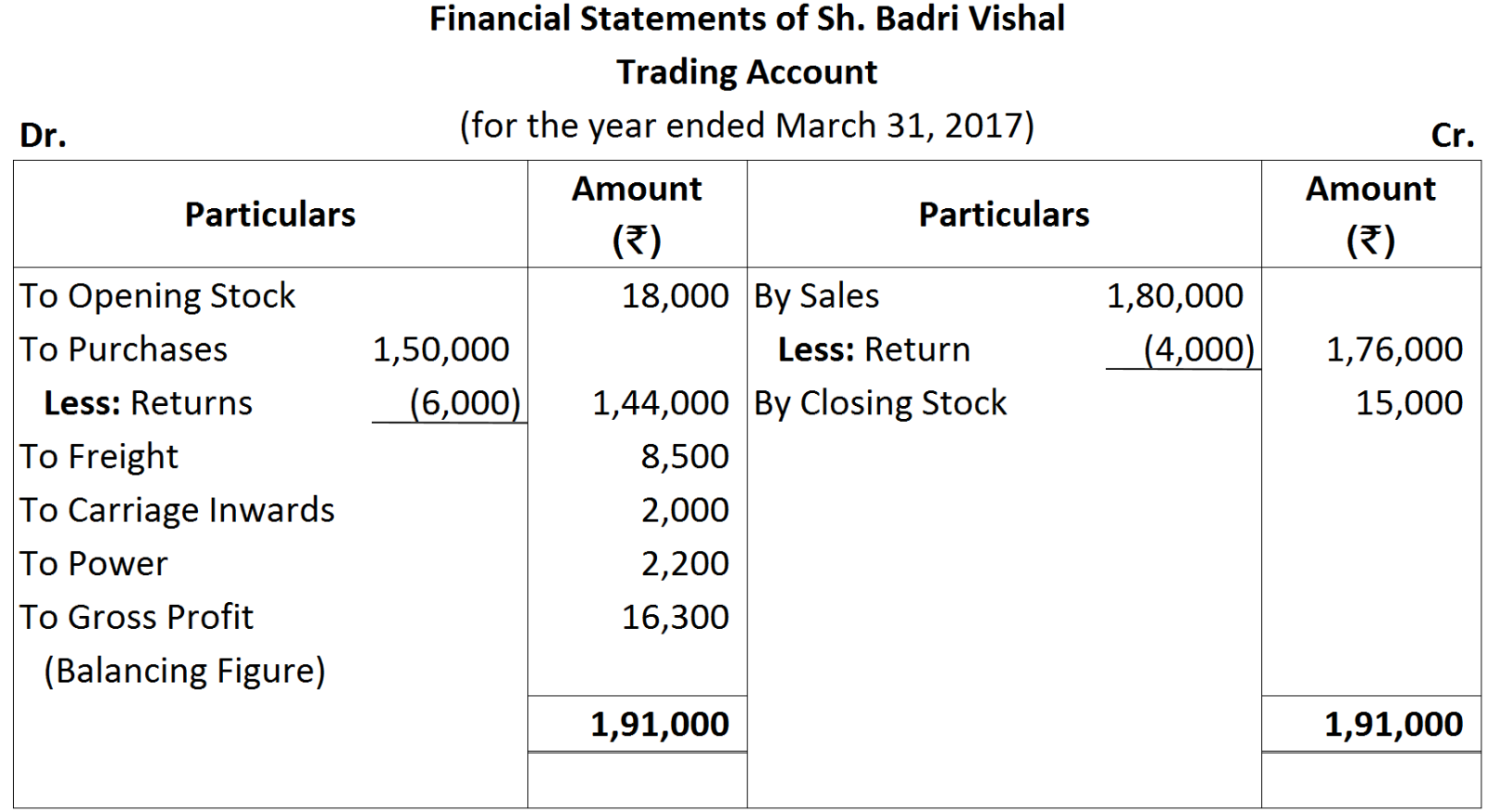
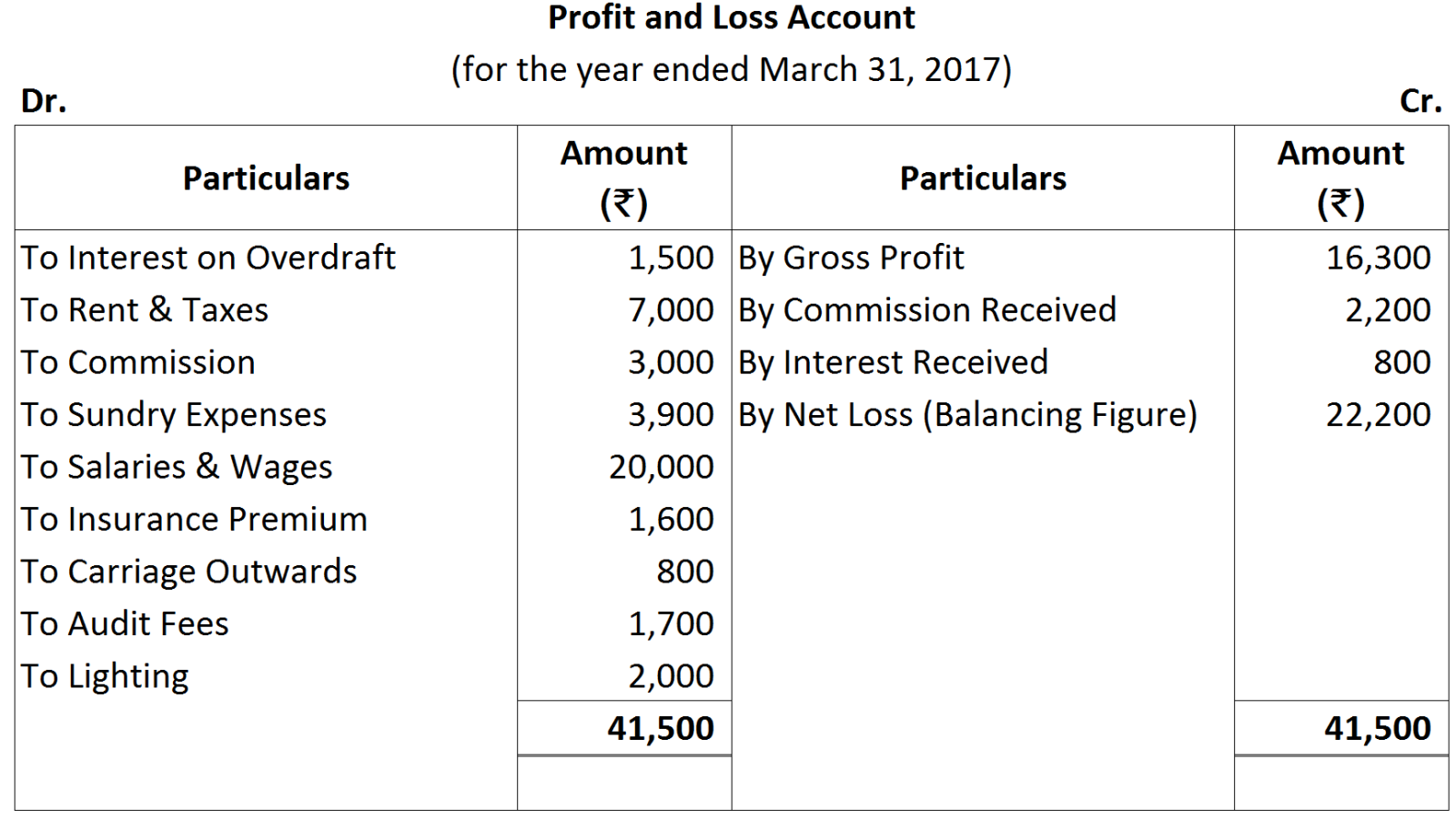
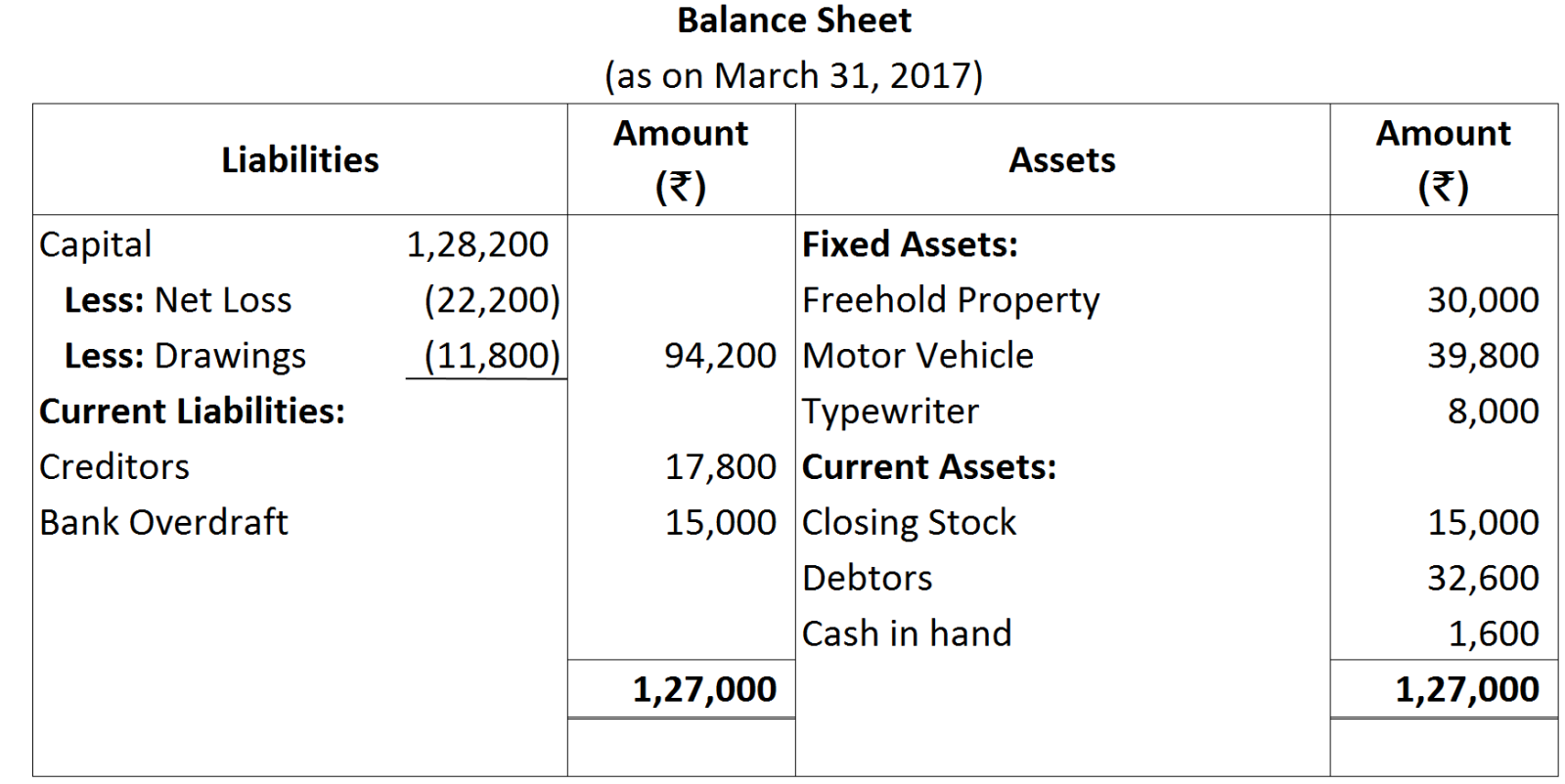
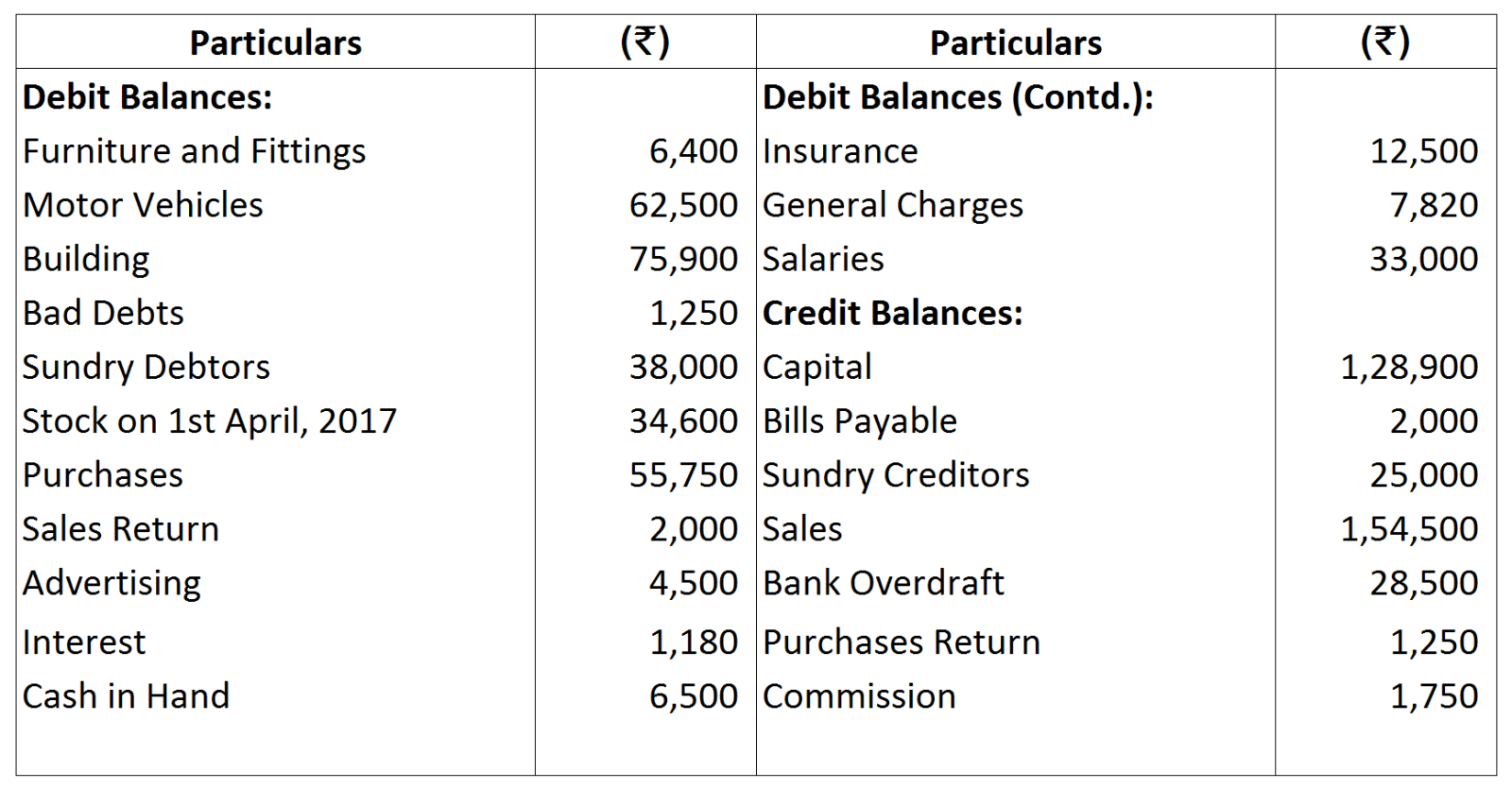
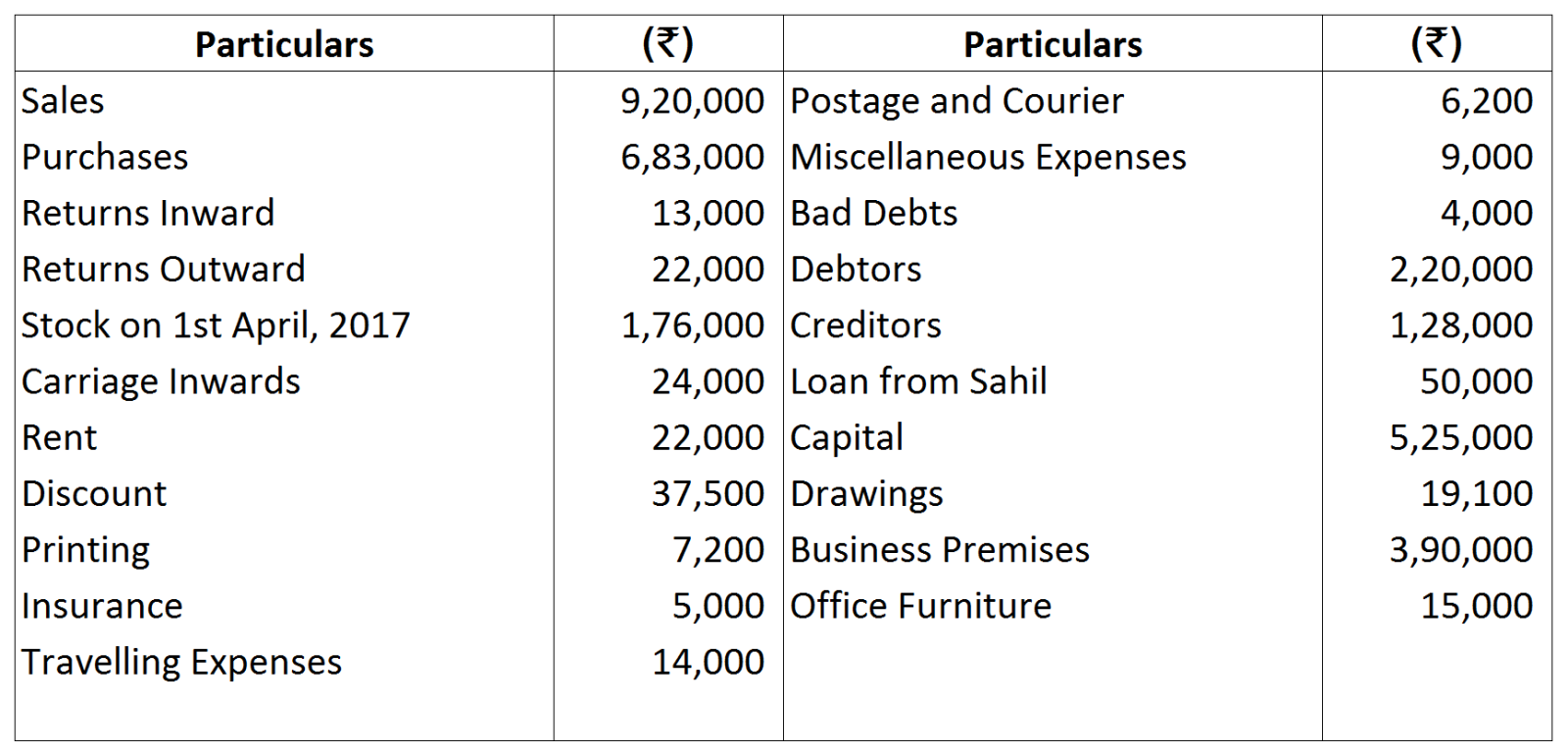
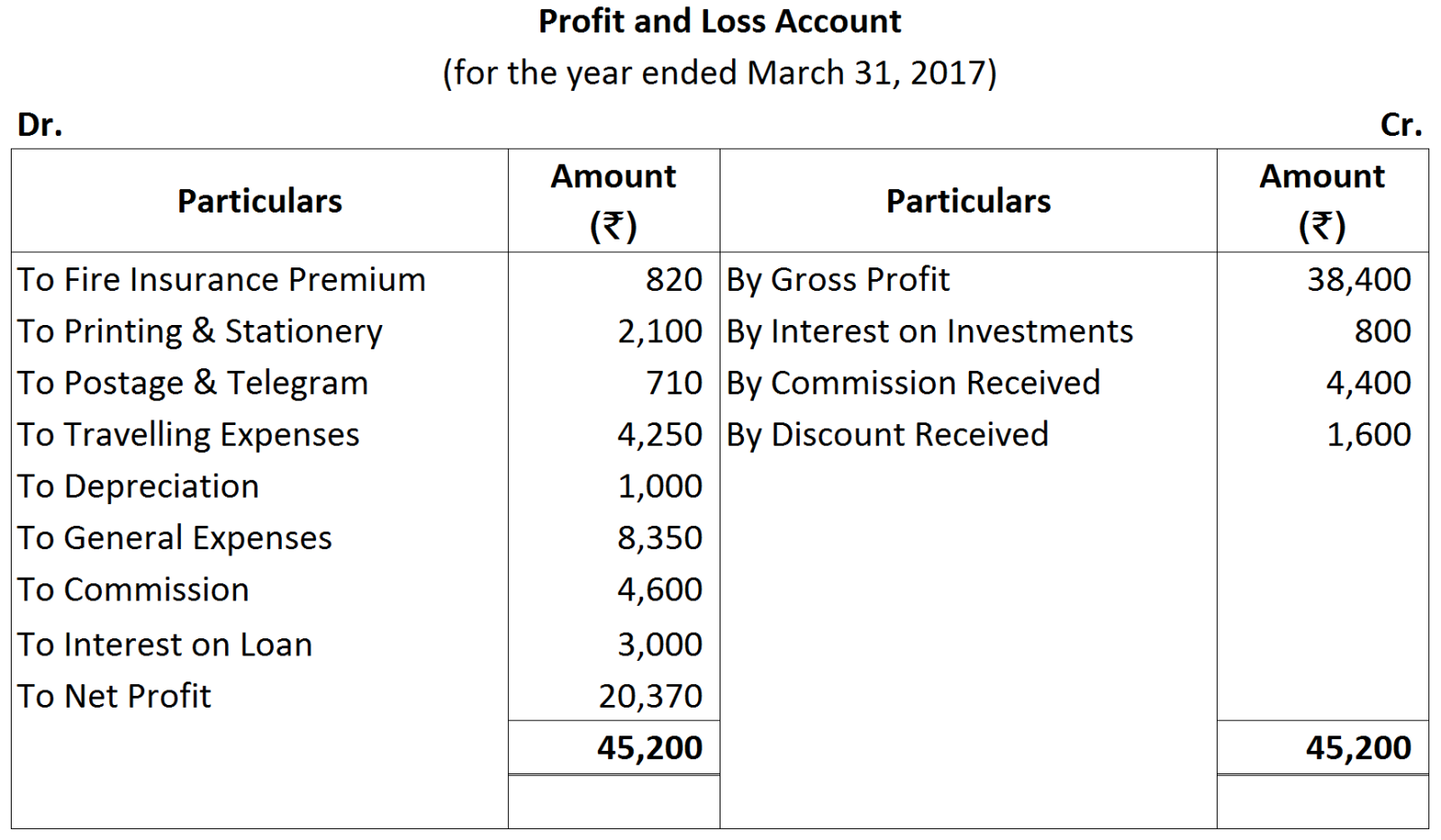
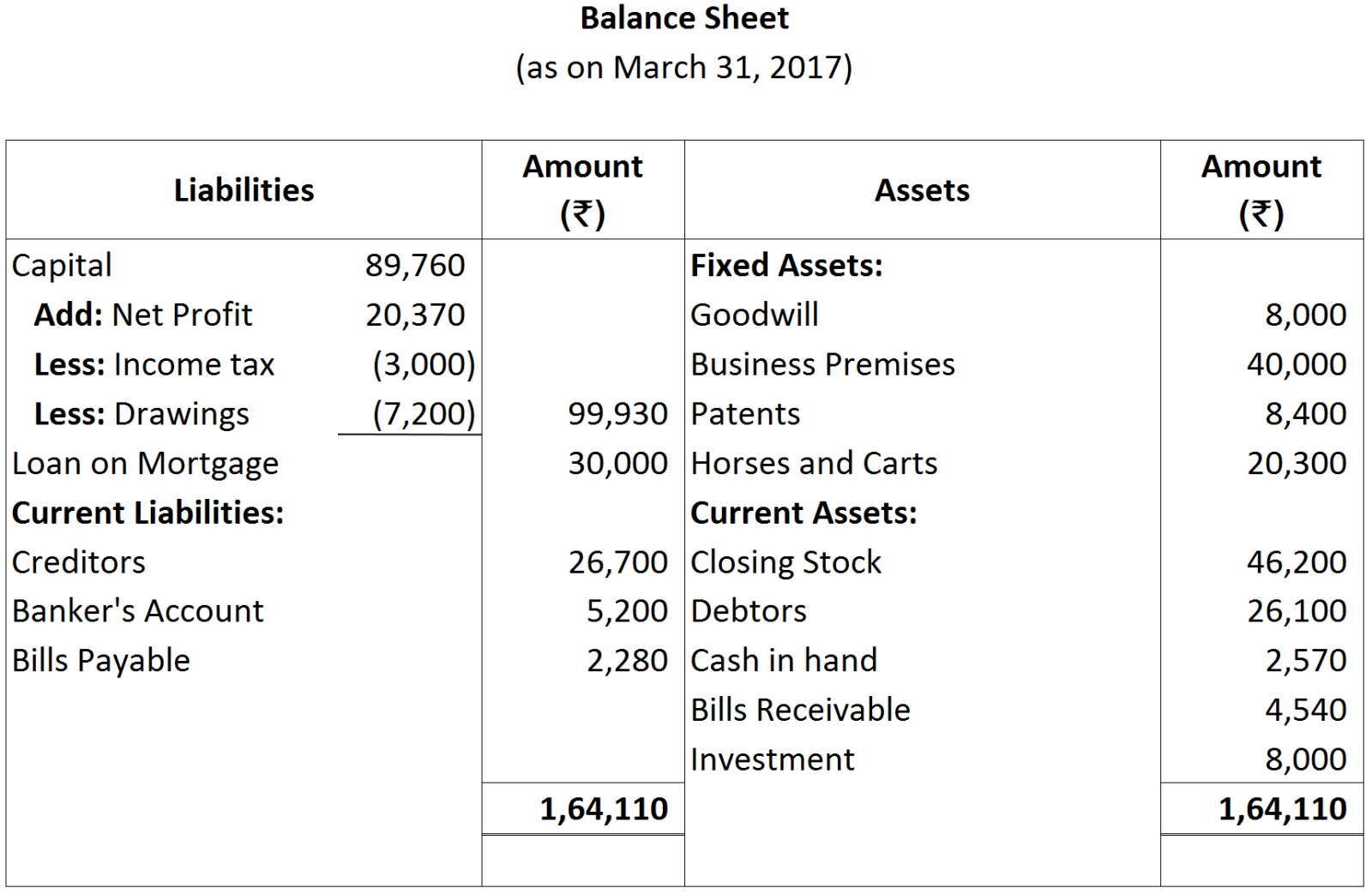
From the following balances extracted from the books of Sh. Badri Vishal on 31st March, 2017, prepare a Trading Account, P & L A/c and a Balance Sheet. Closing Stock valued on that date was ₹ 15,000.
Answer


*Drawings = Household Expenses + Life Insurance Premium = 10,000 + 1,800 = ₹ 11,800.
View full question & answer
Question 186 Marks
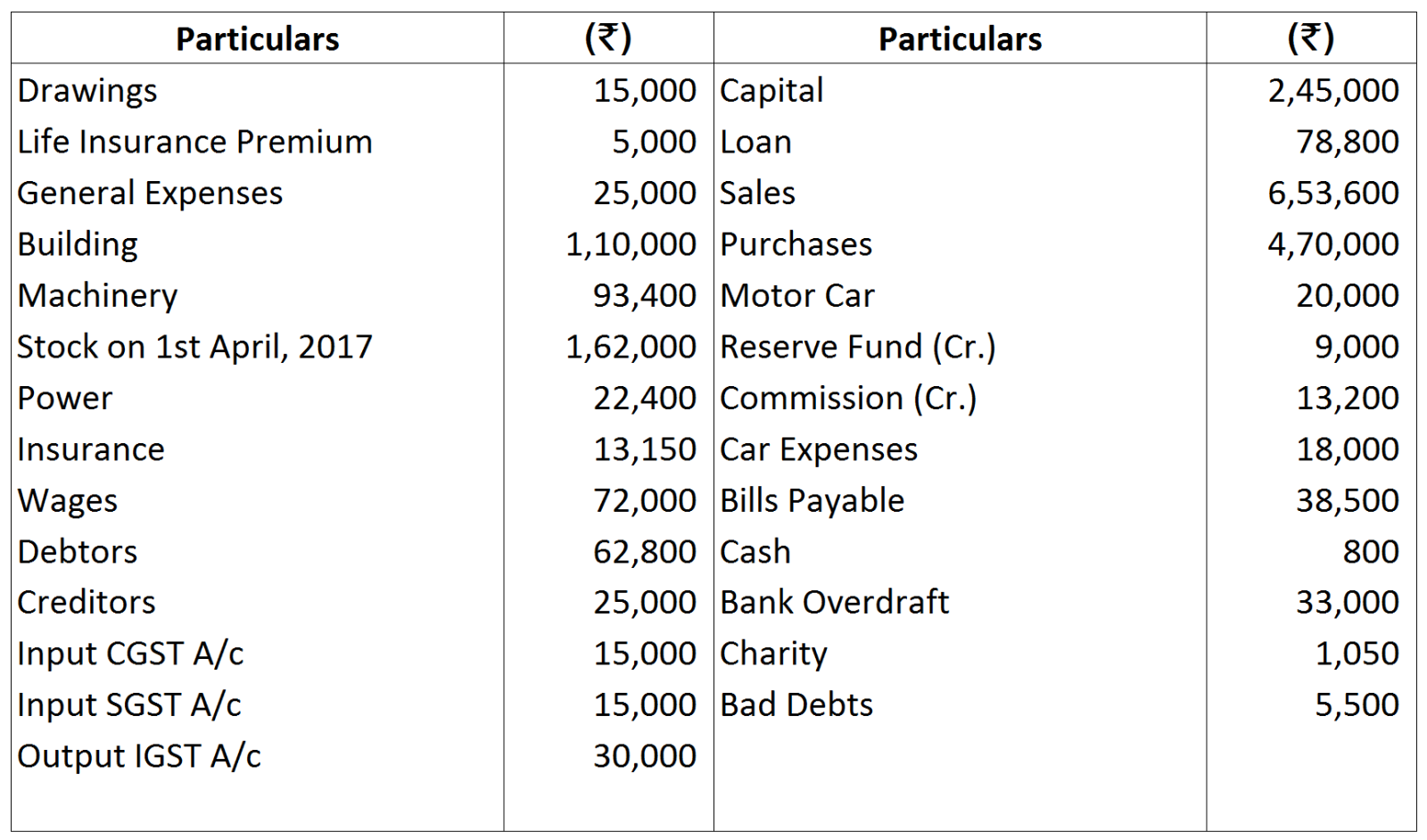
The following balances were extracted from the books of Harish Chandra on$31^{st}$ March,$ 2019:$​​​​​​​

Stock on$31^{st}​​​​​​​$​​​​​​​ March,$ 2019:$ was valued at ₹ 2,35,000.
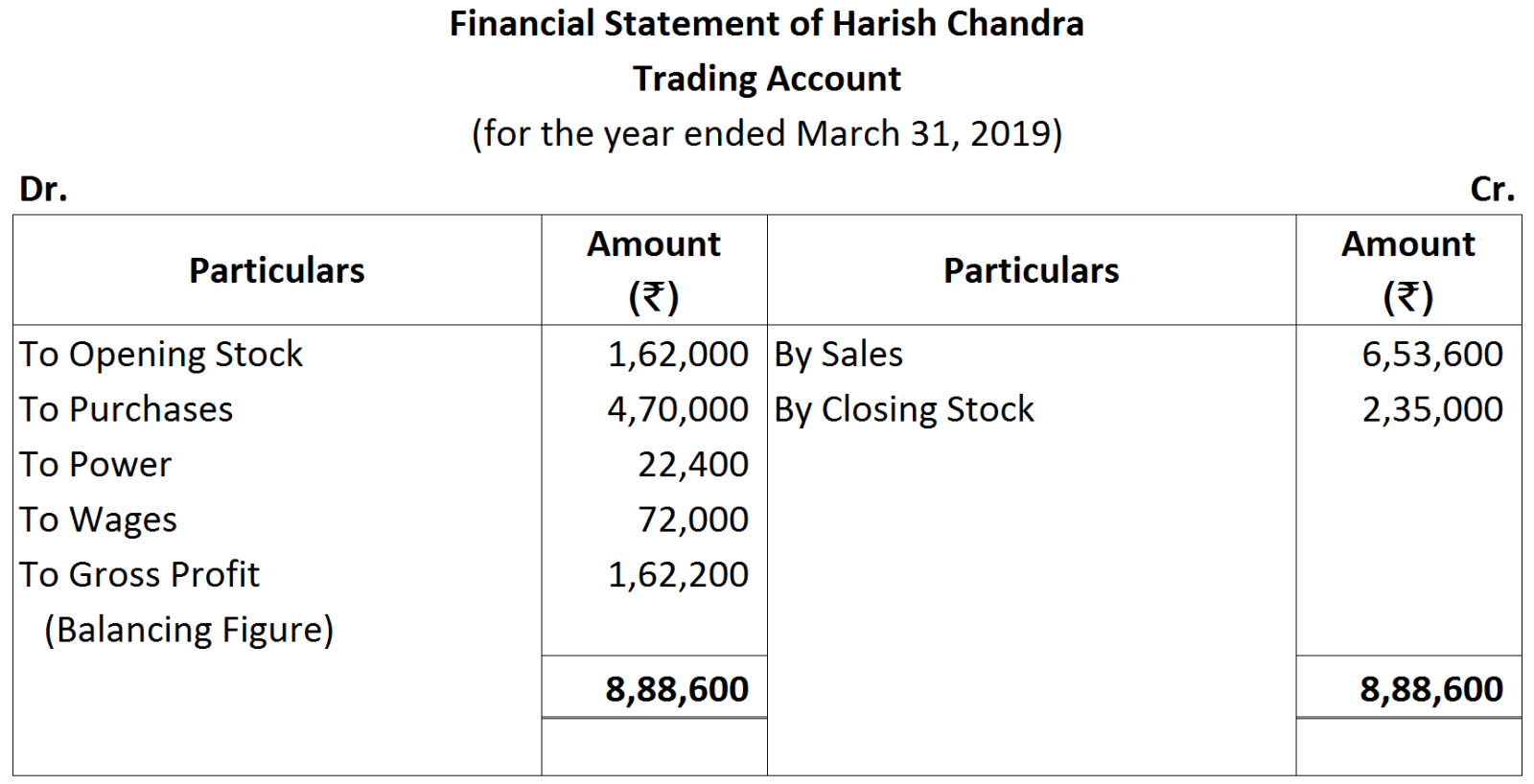
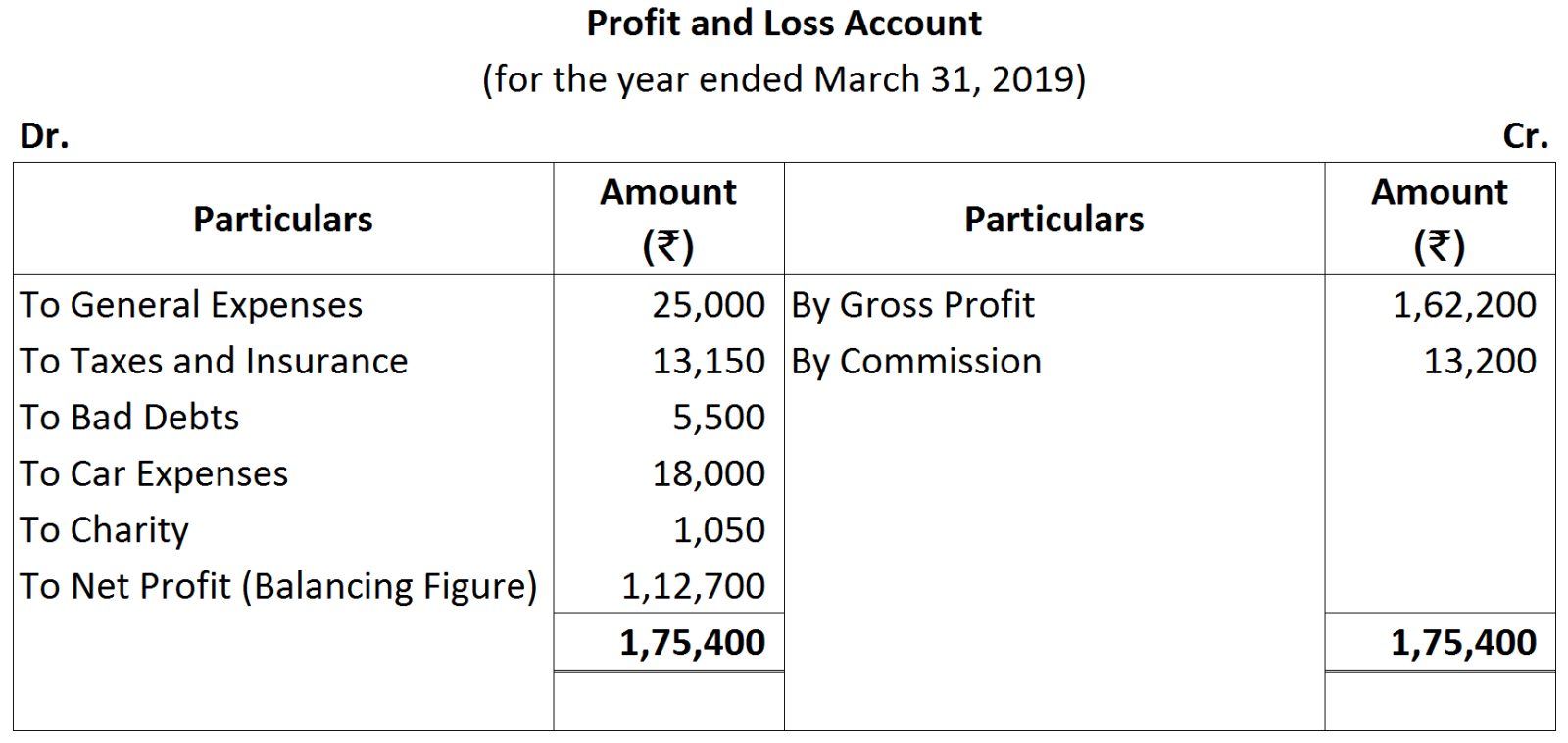
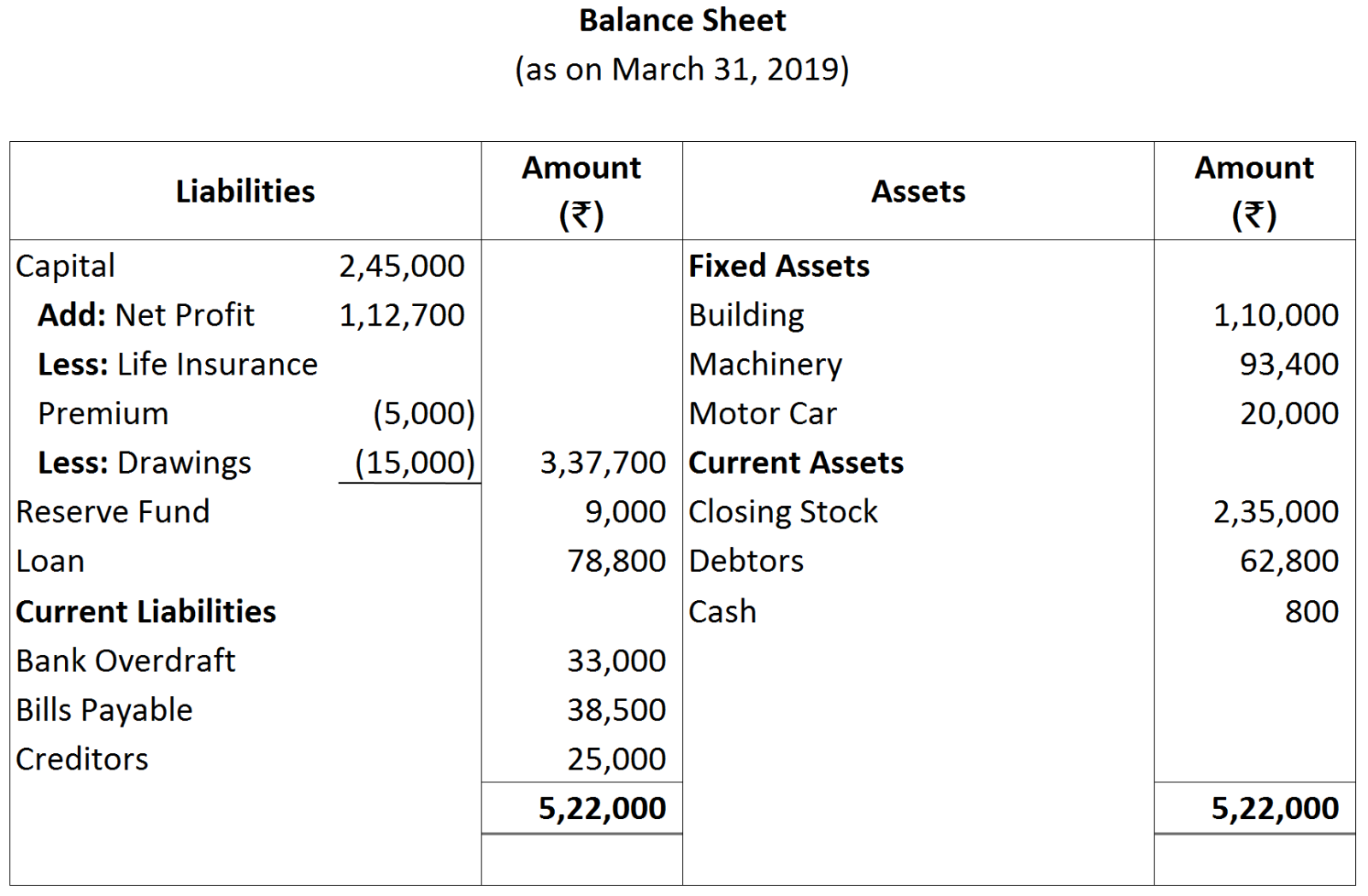
Prepare final accounts for the year ended$31^{st}​​​​​​​$​​​​​​​ March,$ 2019:$
Answer


Working Note:
GST Set off-
Output IGST - Input CGST - Input SGST = ₹ 30,000 - ₹ 15,000 - ₹ 15,000 = Nil
GST Payable/ Receivable = Nil
Hence, Computation of GST won't affect the Balance Sheet.
View full question & answer
Question 196 Marks
From the following balances, prepare Final Accounts of M/s Mangal & Sons for the year ended $31^{st} $March, $2019:$
Opening Stock ₹ $12,500$ Bills Receivable ₹ $2,000$ Sales ₹ $70,000$ Purchases ₹ $37,500$ Creditors ₹ $20,000$ Salaries ₹ $3,850$ Insurance ₹ $200$ Debtors ₹ $32,500$ Carriage ₹ $1,450$ Commission ₹ $750$ Interest ₹ $900$ Printing ₹ $250$ Bills Payable ₹ $3,150$: Returns In ₹ $1,300$ Returns Out ₹ $500$ Bank ₹ $5,250$ Rent and Taxes ₹ $1,300$ Furniture ₹ $1,000$ Capital ₹ $7,100$ Stock on $31^{st} $March, $2019 ₹ 15,000.$
View full question & answer
Question 206 Marks
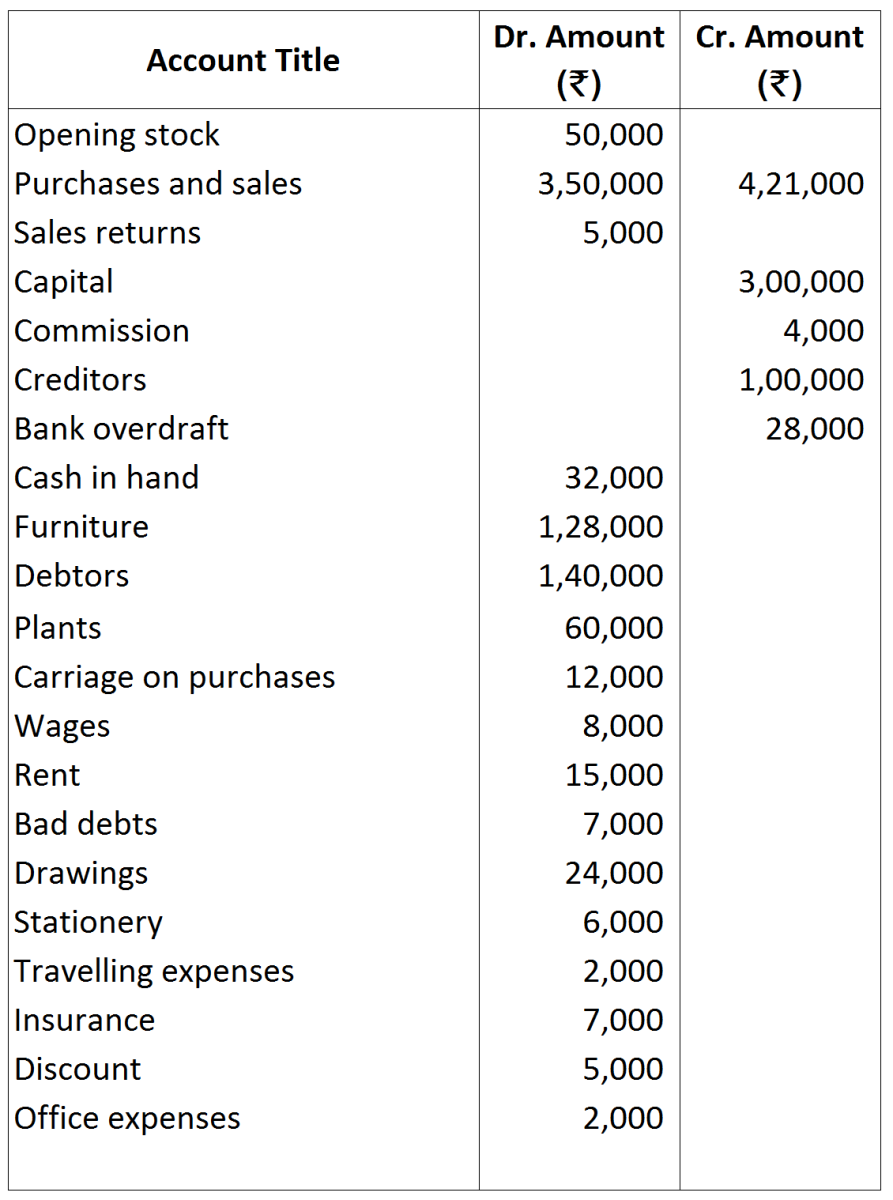
The Trial Balance shows the following balances as at 31st March, 2017:-
Closing Stock was valued at ₹ 35,000. Prepare Trading and Profit and Loss Account for the year ended 31st March, 2017 and Balance Sheet as at that date.
View full question & answer
Question 216 Marks
Prepare Trading and Profit and Loss Account and Balance Sheet of Jagat Shah as at $31^{st}$​​​​​​​ March,$ 2019:$ from the following balances:
The Closing Stock was valued at ₹$ 2,00,000.$
View full question & answer
Question 226 Marks
From the following balances, prepare Trading and Profit and Loss Account and Balance Sheet:
Closing Stock was valued at ₹ 30,000.
View full question & answer
Question 236 Marks
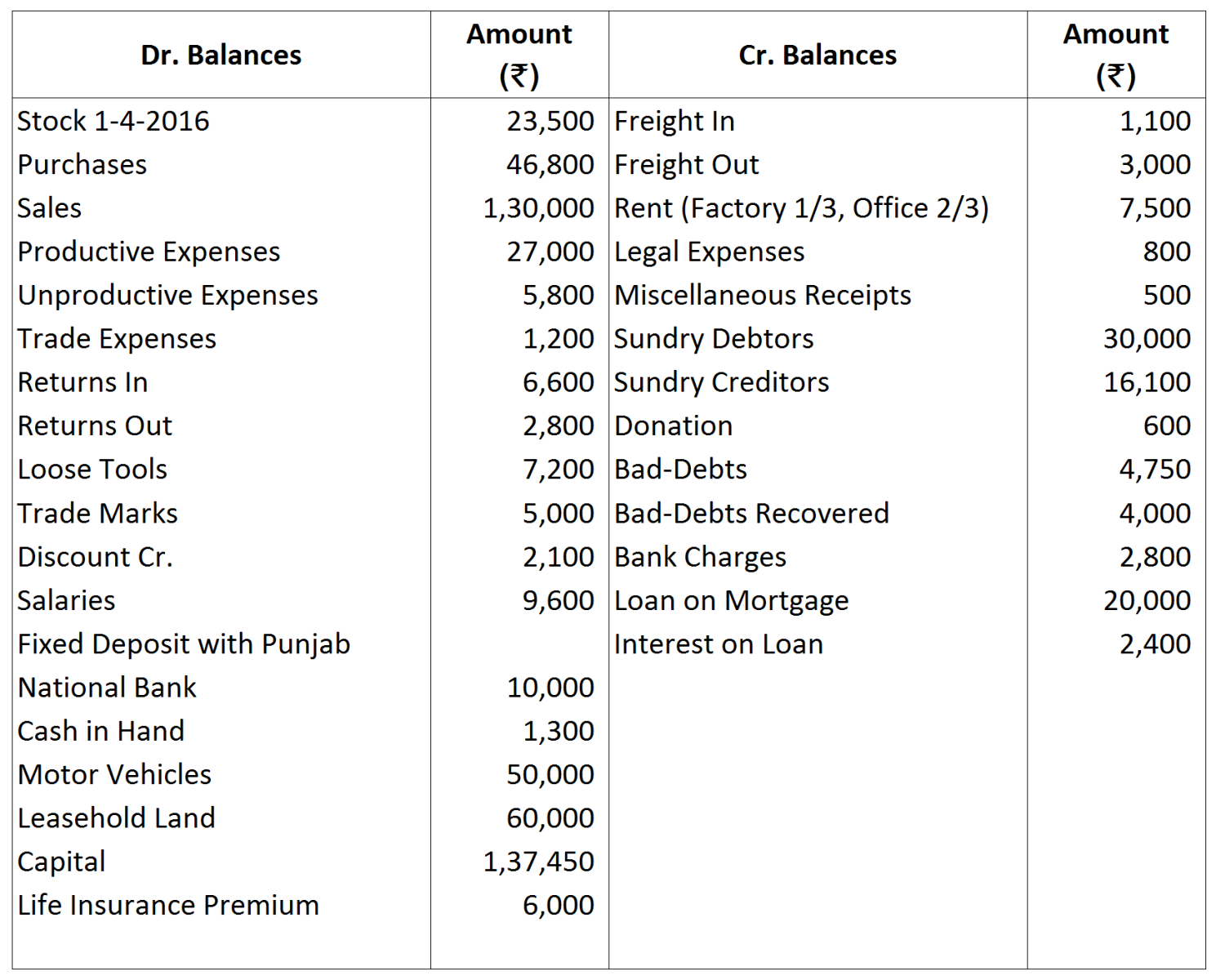
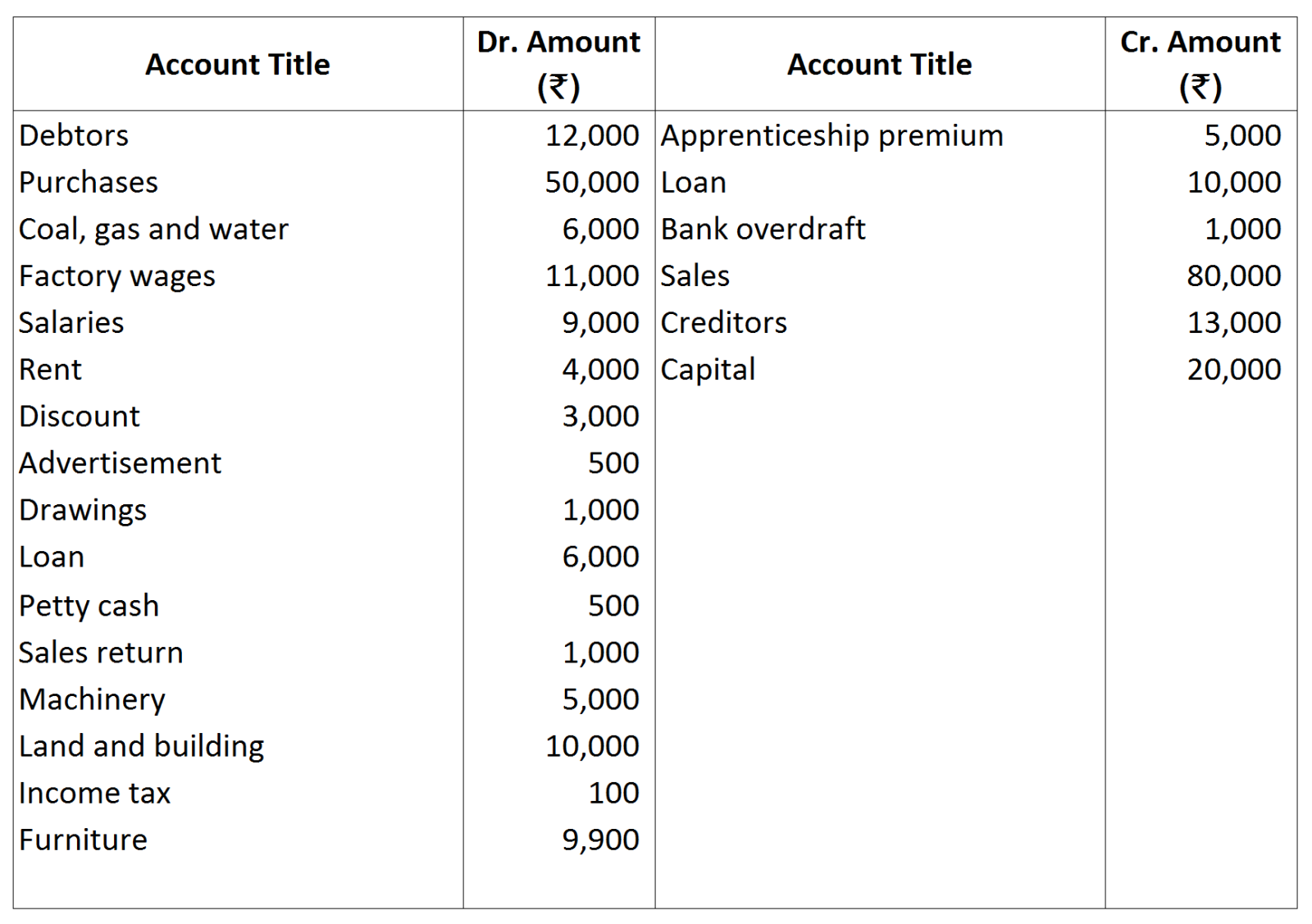
Prepare trading and profit and loss account of M/s Sports Equipments for the year ended March 31, 2017 and balance sheet as on that date:
View full question & answer
Question 246 Marks
The following is the trial balance of Manju Chawla on March 31, 2017. You are required to prepare trading and profit and loss account and a balance sheet as on date:

Closing stock ₹ 2,000.
View full question & answer
Question 256 Marks
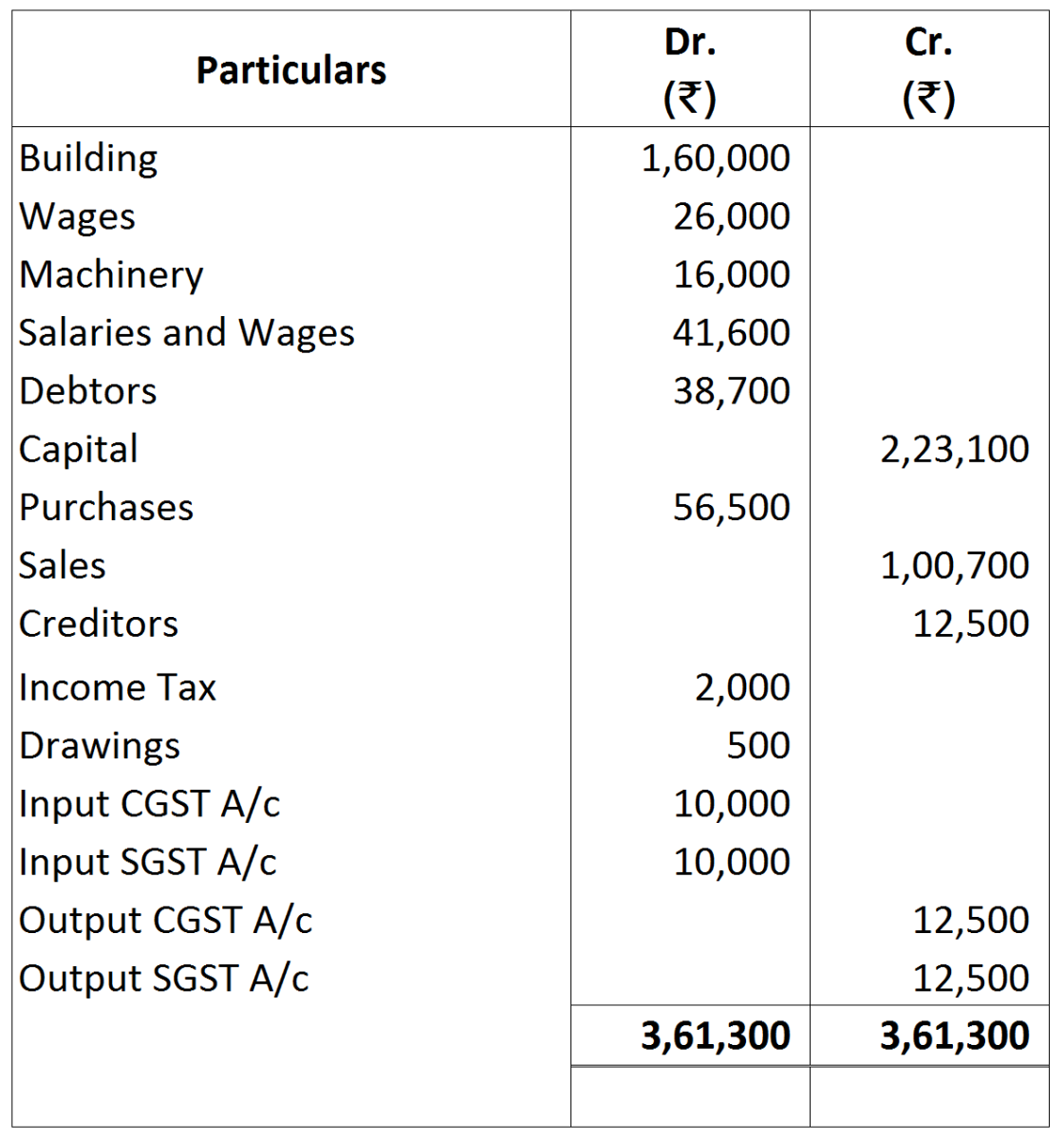
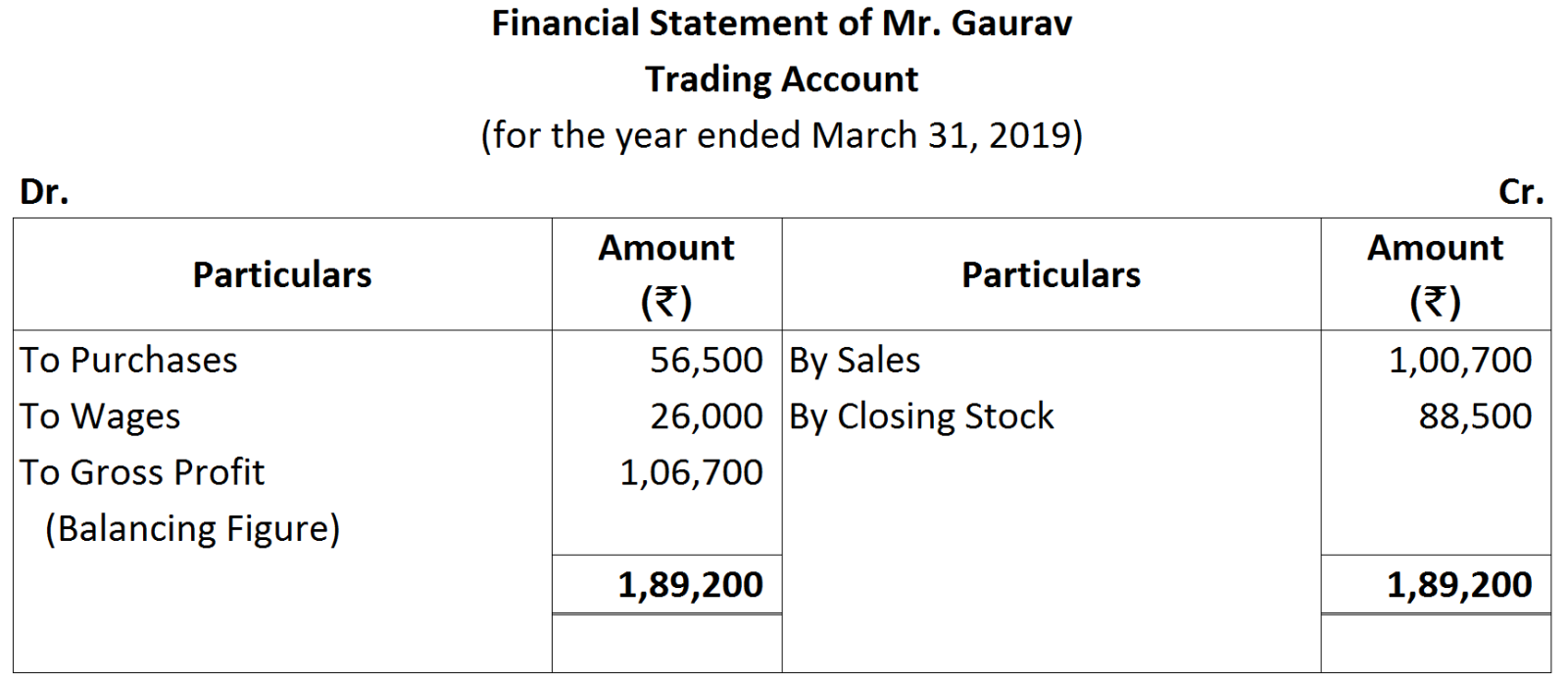
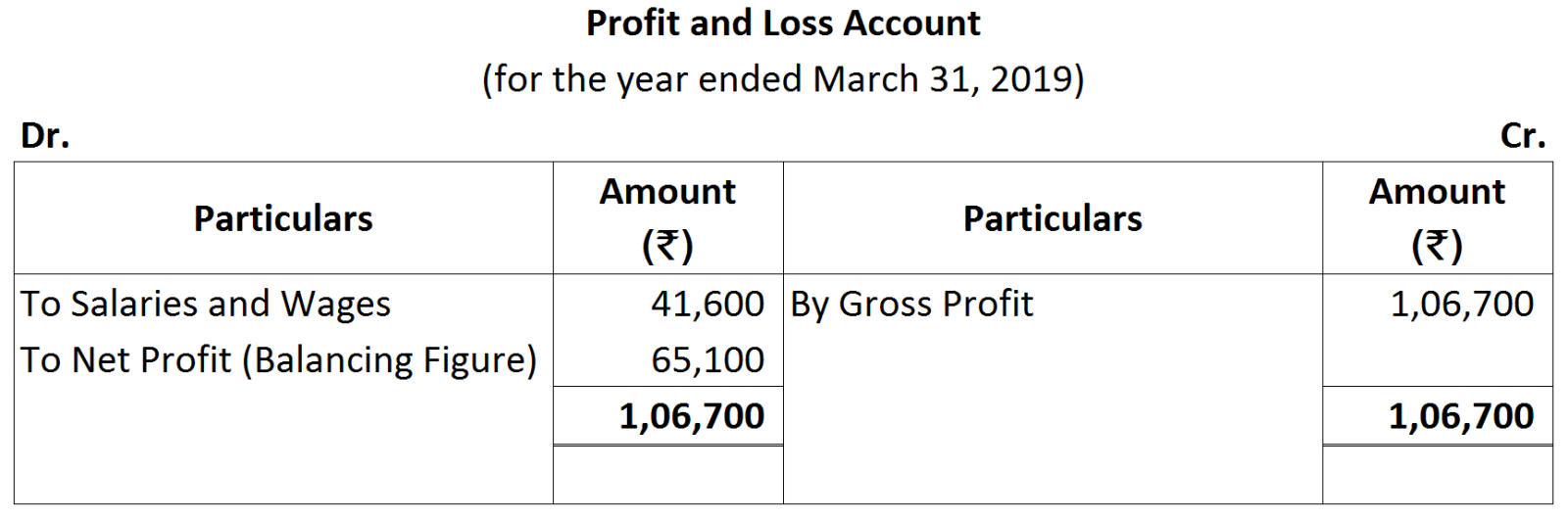
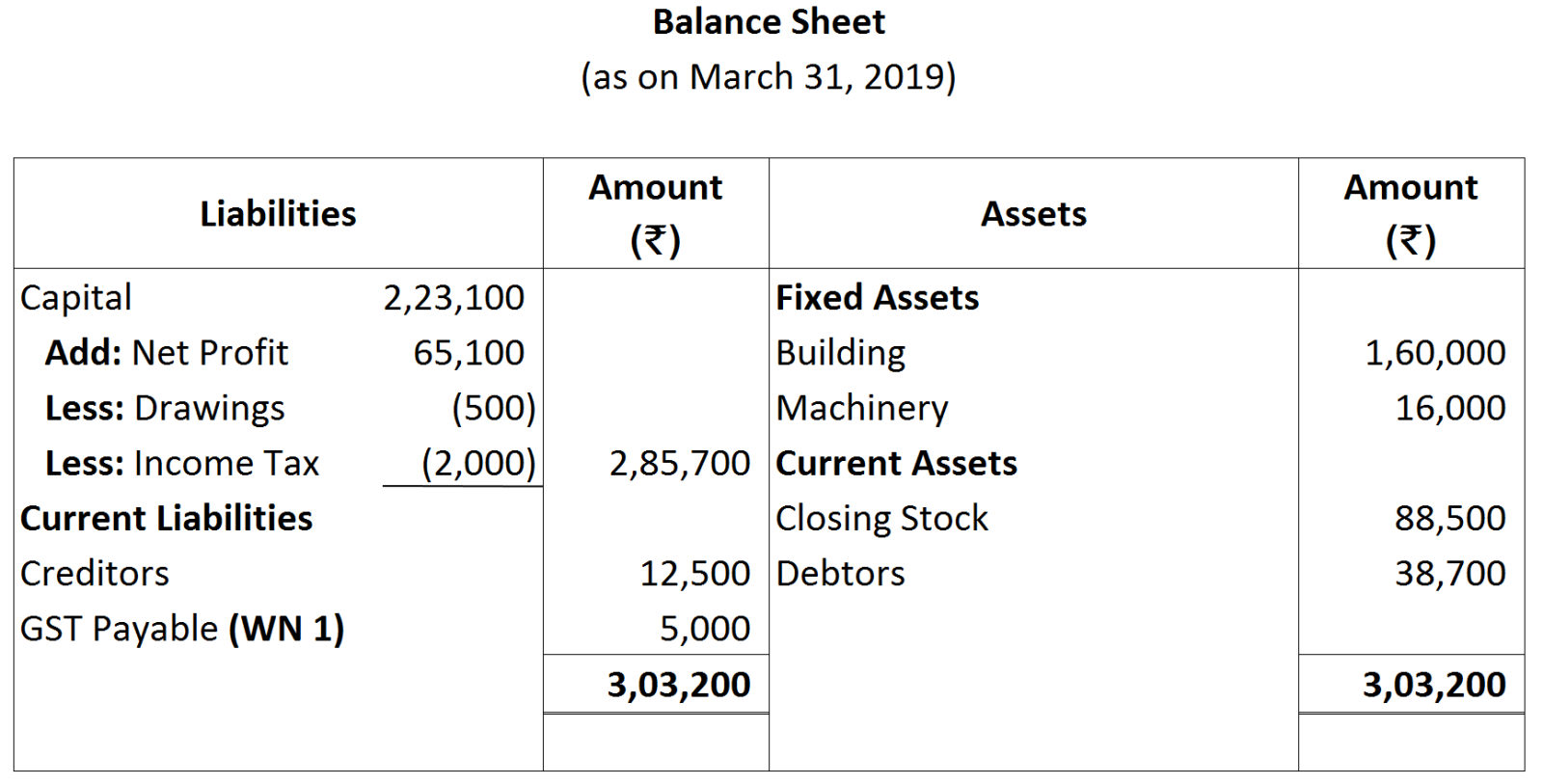
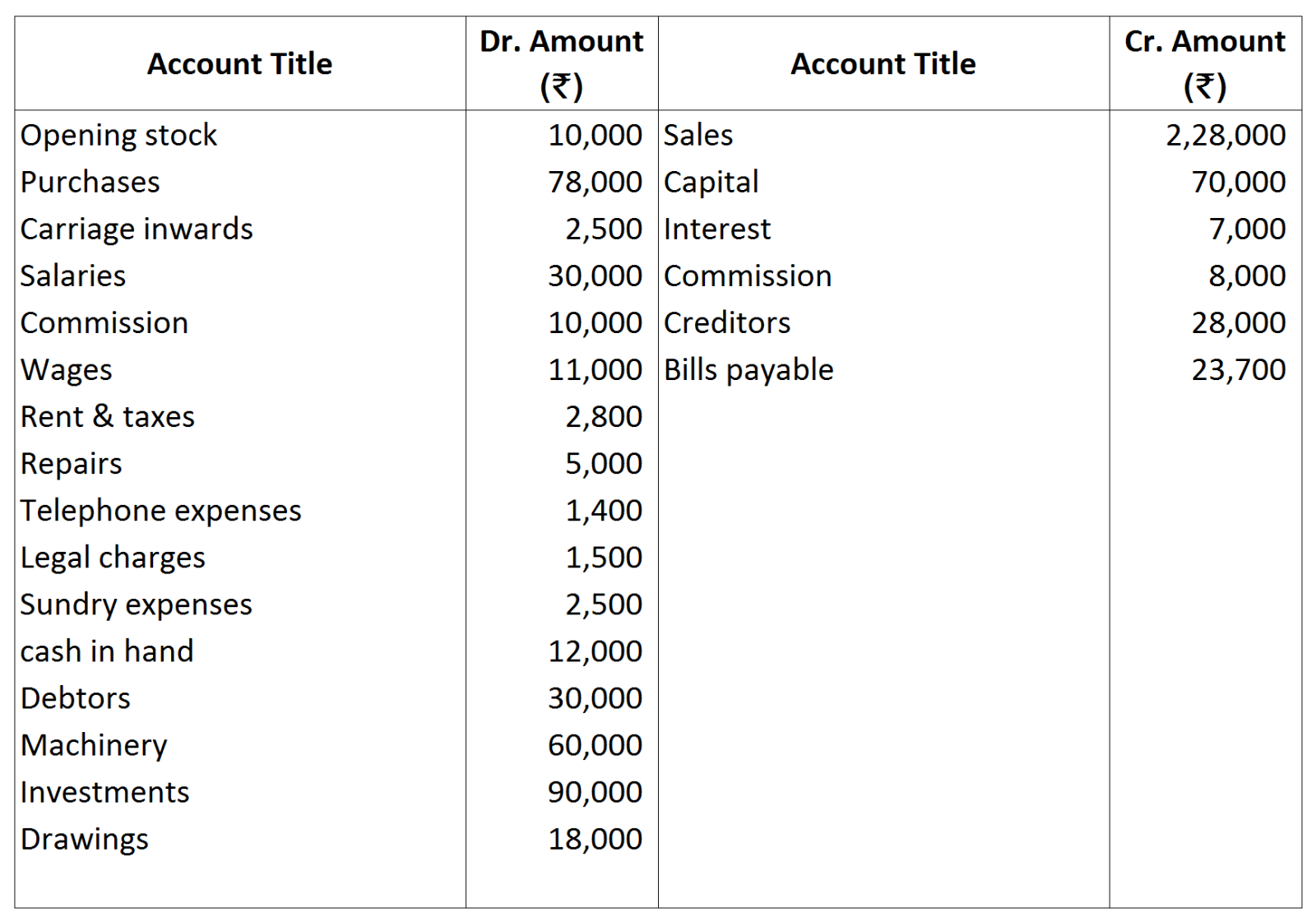
From the following Trial Balance and additional information of Mr. Gaurav, a proprietor, prepare Trading and Profit and Loss Account for the year ended $31^{st}$​​​​​​​ March,$ 2019:$ and Balance Sheet as at that date:

Closing Stock at cost ₹ $1,00,000$ but its market value is ₹ $88,500.$
Answer


Working Notes:
  1. GST Set off
  1. Output CGST-Input CGST= ₹ 12,500 - ₹ 10,000 = ₹ 2,500
  2. Output SGST - Input SGST= ₹ 12,500 - ₹ 10,000 = ₹ 2,500
GST Payable = Output CGST + Output SGST = ₹ 2,500 + ₹ 2,500 = ₹ 5,000
  1. Closing Stock has been taken at its Market Price (i.e. ₹ 88,500) and not on its Cost. This is because, as per the Principle of Conservatism, Closing Stock is taken at Cost or Market Price whichever is less.
View full question & answer
Question 266 Marks
Distinguish between a Balance Sheet and Trial Balance. (Any five points)
Answer
Difference between Fixed Assets and Current Assets:
 
Basis
Balance Sheet
Trial Balance
1.
Purpose
The purpose is protray finacial position.
The purpose is to establish arithmetical accuracy of the books of account.
2.
Information about Profit
It provides information as to prolitablity and finacial position of the firm.
No such information is possible from Trial Balance.
3.
Necessity
It is essential to prepare Balance Sheet to complete the accounting process.
Though desirable, it may be possible to dipense with its preparation.
4.
Headlings
The two sides are headed as assets and liabilities.
The two columns are headed as debit and credit.
5.
Coverage
Only personal and real accounts appear in the Balance Sheet.
In the Trial Balance all accounts must be written, no account can be left out.
6.
Closing Stock
This account appears in the Balance Sheet.
Normally, a closing stock does not appear in the Trial Balance.
7.
Period
Normally, it is prepared only at the end of the accounting period.
A Trial Balance can be prepared at any time, even monthly or whenever required.
8.
Adjustment
A Balance Sheet cannot be prepared without making adjustments for outstanding and prepaid items and without taking into account all events and transaction for the year.
A Trial Balance can be prepared at any stage, without even making adjustments.
9.
Accounts
Only Asset, Liability and Capital Account are shown.
All account i.e., Asset, Liability, Capital, Income and Expense Account are shown.
View full question & answer
Question 276 Marks
From the following balances of M/s Nilu Sarees as on March 31, 2017. Prepare trading and profit and loss account and balance sheet as on date.

Closing stock as on March 31, 2017 Rs. 22,000.
View full question & answer
Question 286 Marks
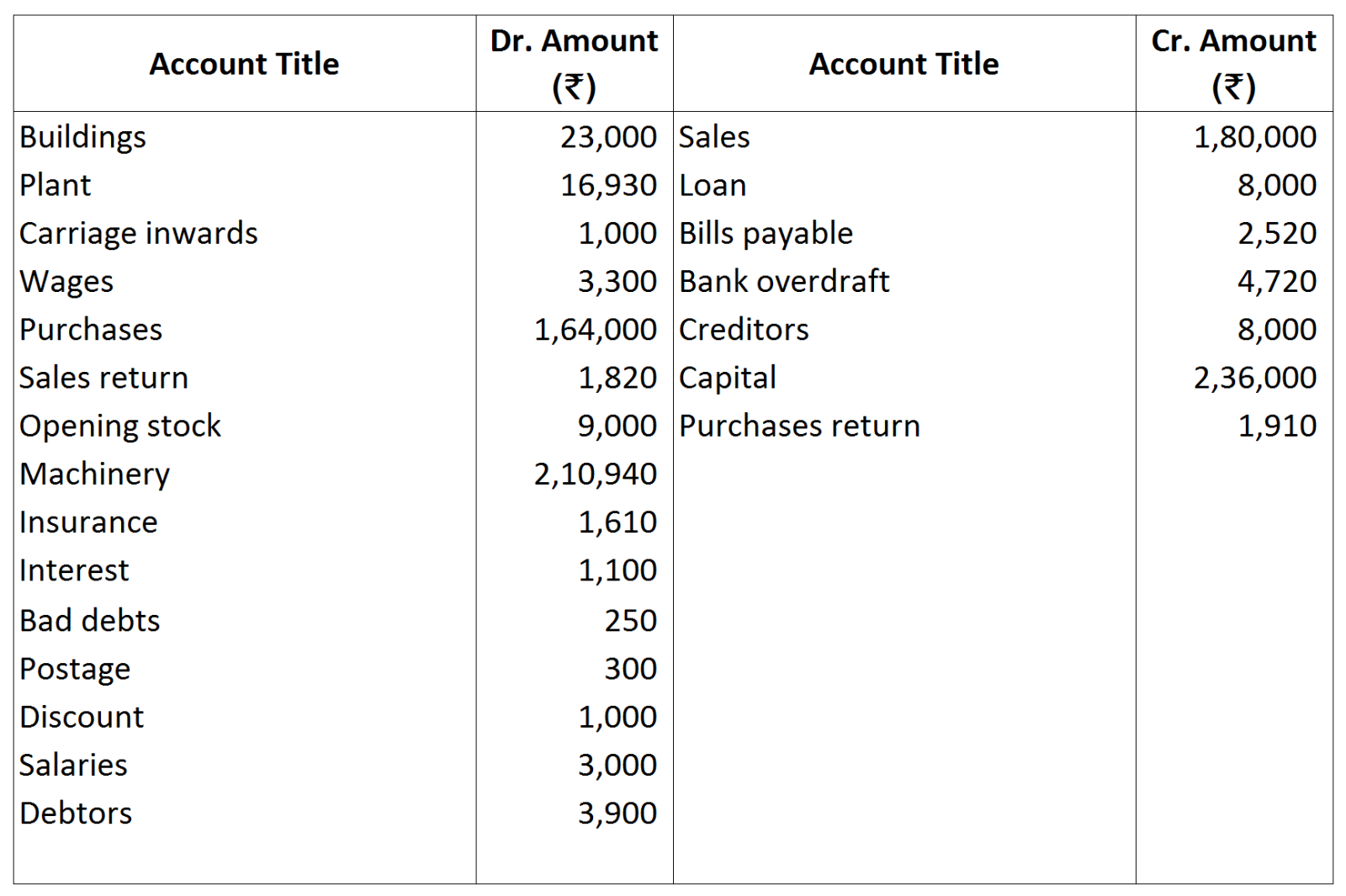
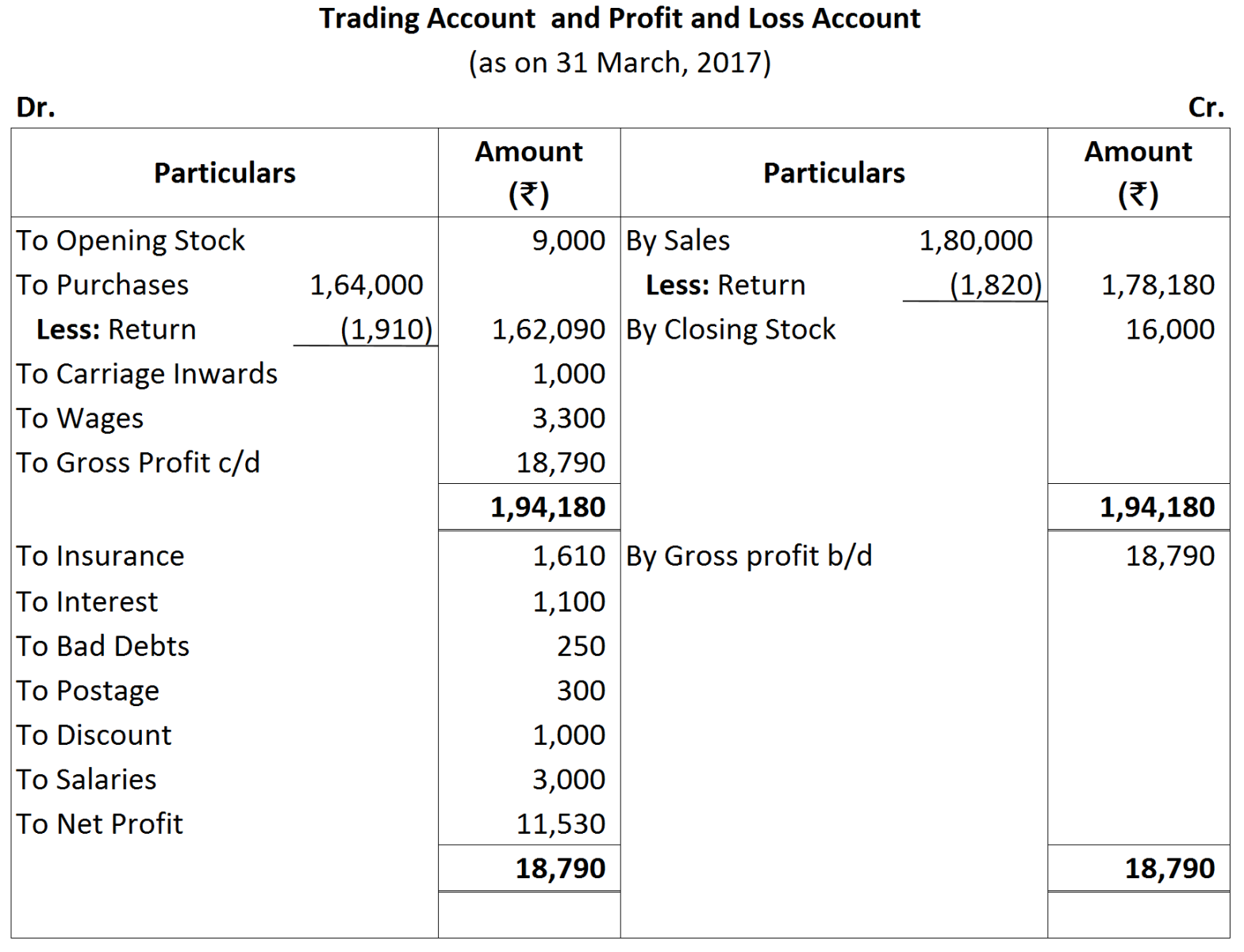
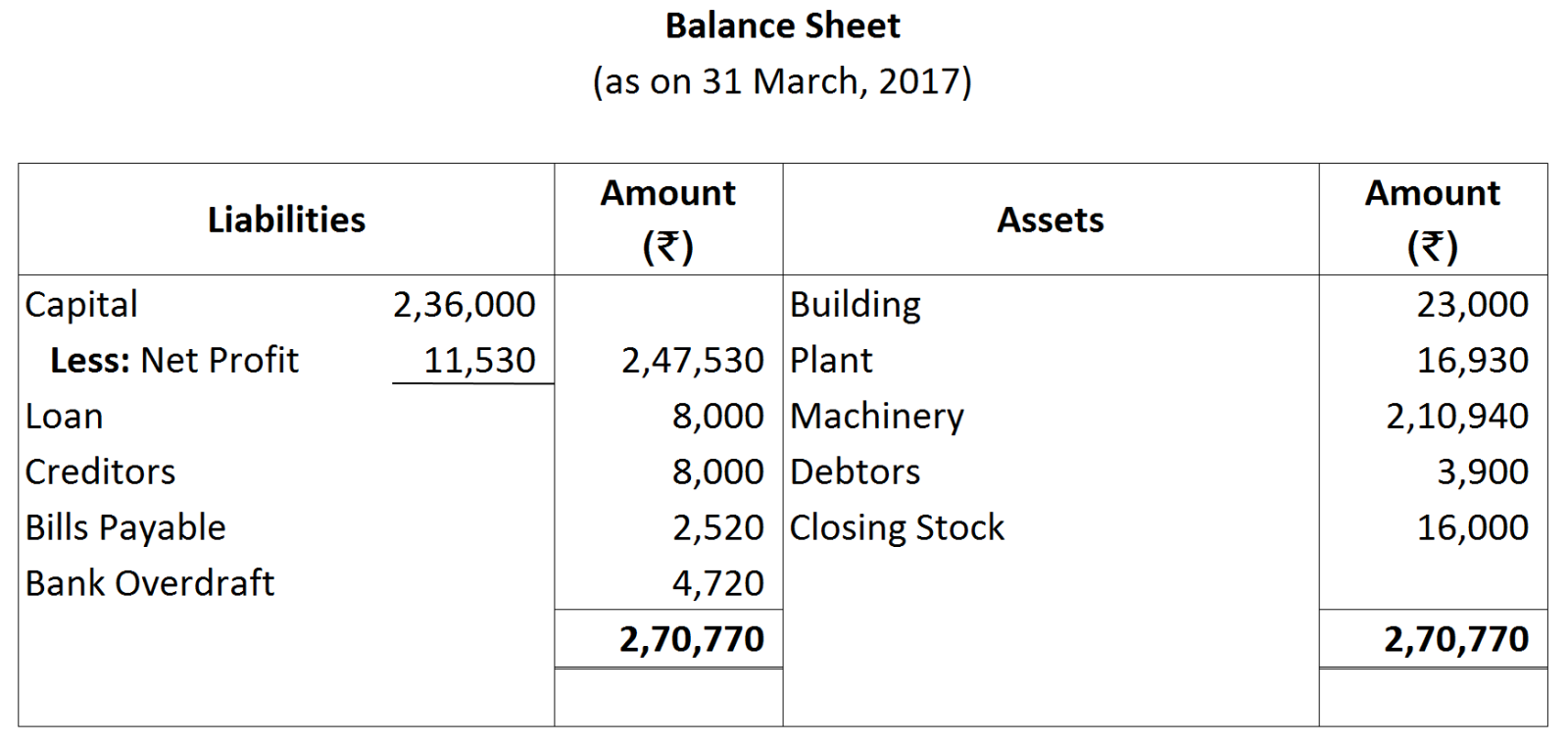
Prepare trading and profit and loss account from the following particulars of M/s Neema Traders as on March 31, 2017.

Stock on March 31, 2017 ₹ 16,000.
Answer


Note: As per the solution, the gross profit, net profit and the total of balance sheet are ₹ 18,790, ₹ 11,530 and ₹ 2,70,770 respectively; whereas, as per the answer given in the book, these are ₹ 17,850, ₹ 10,590 and ₹ 2,69,830.
View full question & answer
Question 296 Marks
Distinguish between capital and revenue expenditure and state whether the following statements are items of capital or revenue expenditure:
  1. Expenditure incurred on repairs and whitewashing at the time of purchase of an old building in order to make it usable.
  2. Expenditure incurred to provide one more exit in a cinema hall in compliance with a government order.
  3. Registration fees paid at the time of purchase of a building.
  4. Expenditure incurred in the maintenance of a tea garden which will produce tea after four years.
  5. Depreciation charged on a plant.
  6. The expenditure incurred in erecting a platform on which a machine will be fixed.
  7. Advertising expenditure, the benefits of which will last for four years.
Answer
Basis of Difference
Capital Expenditure
Revenue Expenditure
Meaning
It is incurred to increase the earning capacity of a business.
It is incurred to maintain the earning capacity of a business.
Purpose
It is incurred to acquire fixed assets to carry out operations.
It is incurred to conduct day to day activities.
Benefits
The benefits of such expenditures can be availed for more than one year.
The benefits of such expenditures can only be availed for one year.
Nature
It is non-recurring by nature.
It is generally recurring in nature.
Shown
Capital expenditure is shown in the assets side of the Balance Sheet.
Revenue expenditure is shown in the debit side of the trading and Profit and Loss Account.
  1. Capital expenditure.
  2. Revenue expenditure.
  3. Capital expenditure.
  4. Capital expenditure.
  5. Revenue expenditure.
  6. Capital expenditure.
  7. Deferred revenue expenditure.
View full question & answer
Question 306 Marks
Following Trial Balance is extracted from the books of a merchant on $31^{st}$​​​​​​​ March,$ 2019:$​​​​​​​

Stock in Hand on $31^{st}​​​​​​​$​​​​​​​ March,$ 2019:$ was valued at ₹ $32,500.$
From the above, prepare Trading and Profit and Loss Account for the year ended $31^{st}​​​​​​​$​​​​​​​ March,$ 2019:$ and Balance Sheet as at that date.
View full question & answer
Question 316 Marks
From the following balances prepare Final Accounts as at 31st March 2017:-
Value of Closing Stock was ₹ 36,500 on 31st March, 2017.
View full question & answer
Question 326 Marks
Trial Balance of Chatter Sen on $31^{st}$ March,$ 2019:$ revealed the following balances:

Stock on $31^{st}​​​​​​​$​​​​​​​ March,$ 2019:$was valued at ₹ 35,000.
Prepare Trading and Profit and Loss Account for the year ended $31^{st}​​​​​​​$​​​​​​​ March,$ 2019:$ and Balance Sheet as at the date.
View full question & answer
Question 336 Marks
Prepare trading and profit and loss account and balance sheet from the following particulars as on March 31, 2017.

Closing stock ₹ 30,000.
View full question & answer
Question 346 Marks
From the following trial balance of Mr. A. Lal, prepare trading, profit and loss account and balance sheet as on March 31, 2017.

Closing stock ₹ 15,000.
View full question & answer
Question 356 Marks
Prepare trading and profit and loss account and balance sheet as on March 31, 2017:

Closing stock as on March 31, 2017 ₹ 22,400.
View full question & answer
Question 366 Marks
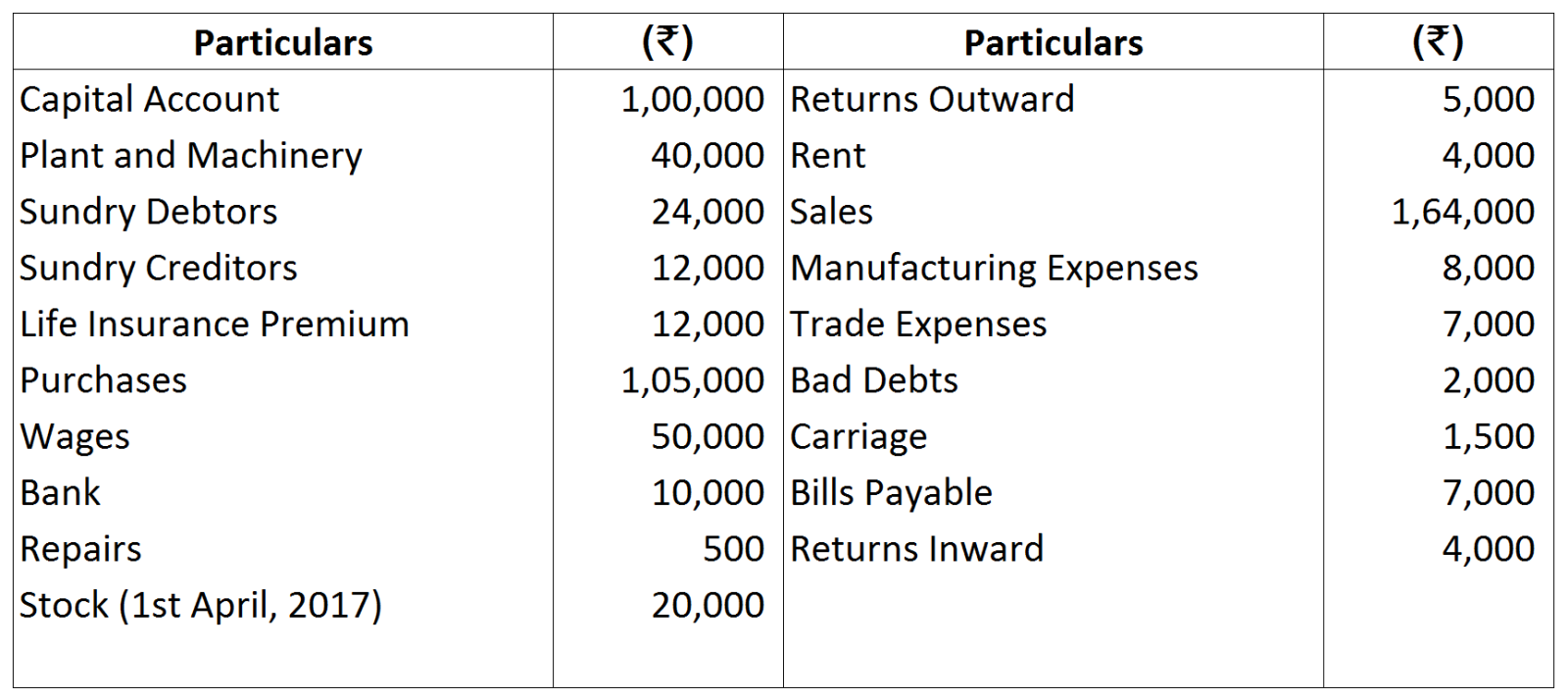
The following is the trial balance of Mr. Deepak as on March 31, 2017. You are required to prepare trading account, profit and loss account and a balance sheet as on date:
View full question & answer
Question 376 Marks
Following is the Trial Balance of Sh. Damodar Parshad as at 31st March, 2016:-
Prepare a Trading and Profit and Loss Account for the year ended on 31-3-2016 and the Balance Sheet as at that date. The Stock on 31st March, 2016 was ₹ 22,000.
View full question & answer
Question 386 Marks
The following are the balances as on $31^{st}$​​​​​​​ March,$ 2019:$ extracted from the books of Dass:

The stock on $31^{st}​​​​​​​$​​​​​​​ March,$ 2019:$ was valued at ₹ $2,40,000.$
You are required to prepare Trading Account, Profit and Loss Account and Balance Sheet as at $31^{st}​​​​​​​$​​​​​​​ March,$ 2019:$
View full question & answer
Question 396 Marks
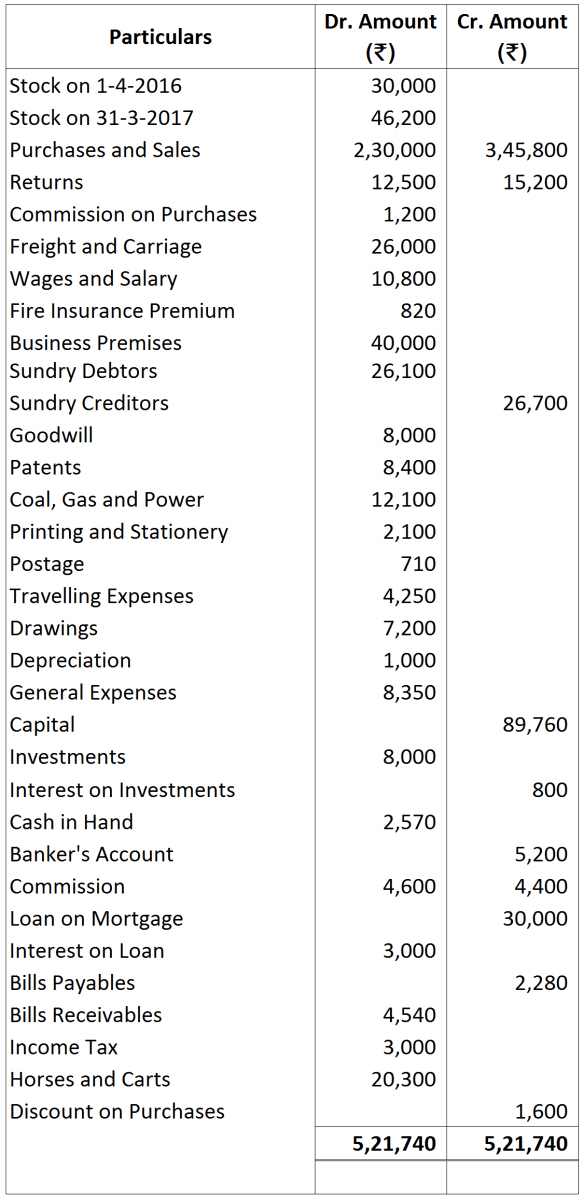
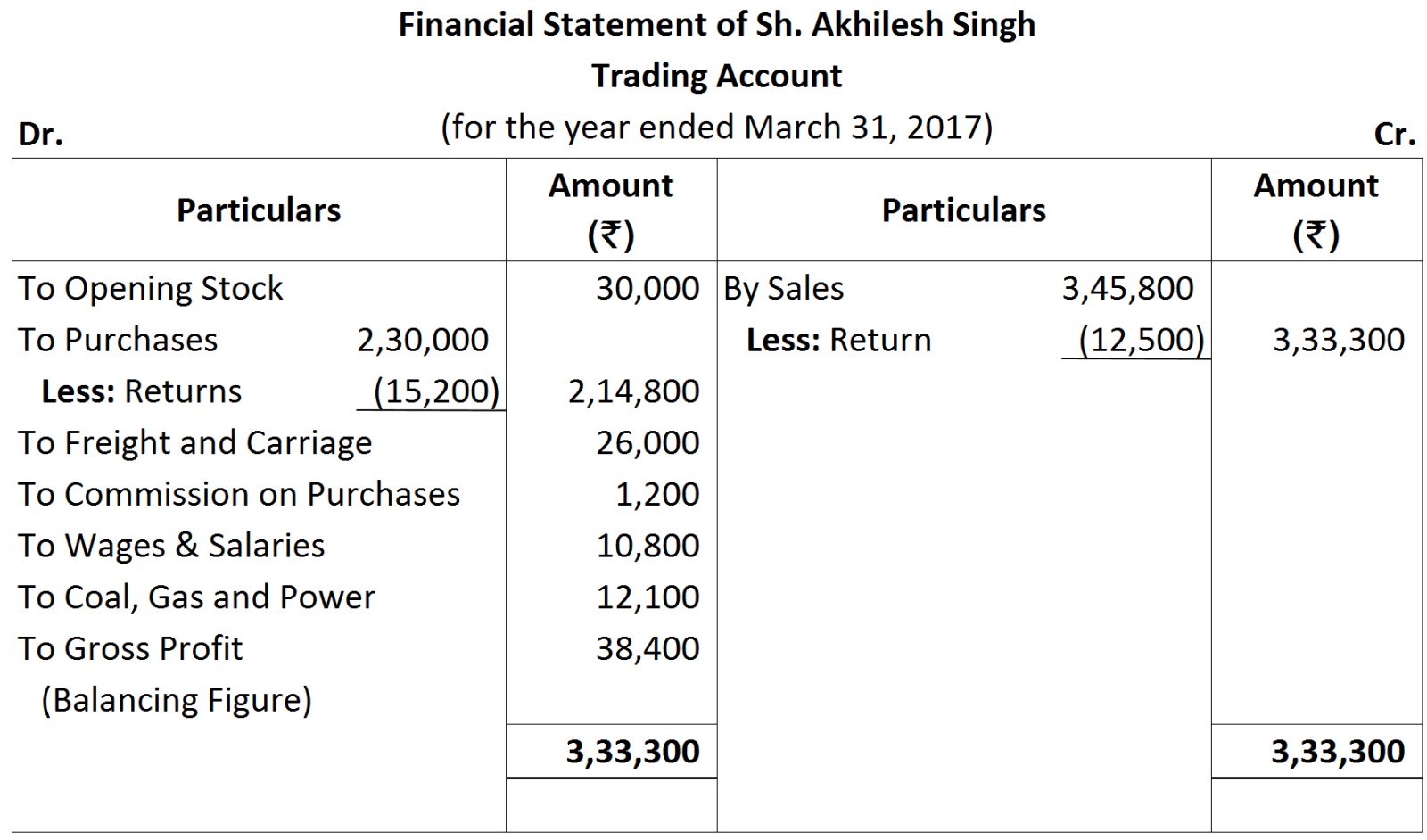
From the following balances of the Ledger of Sh. Akhileshwar Singh, prepare Trading and Profit & Loss Account and Balance Sheet :-
Answer
Solution is as follows.


View full question & answer
Question 406 Marks
The following trial balance is extracted from the books of M/s Ram on March 31, 2017. You are required to prepare trading and profit and loss account and the balance sheet as on date:
View full question & answer
Question 416 Marks
From the following balances, as on $31^{st}$​​​​​​​ March,$ 2019:$, prepare Trading and Profit and Loss Account and Balance Sheet:

Closing Stock on $31^{st}​​​​​​​$​​​​​​​ March,$ 2019:$ was valued at ₹$ 14,500.$
View full question & answer
Question 426 Marks
What is meant by Grouping and Marshalling of assets and liabilities. Explain the ways in which a balance sheet may be marshalled.
Answer
The rationale behind preparing financial statements is to present a summarised version of all financial activities in such a manner that all users can interpret and understand the information easily, appropriately and also take decisions accordingly.
Grouping of assets and liabilities: Grouping means showing similar assets and liabilities under a single head. For example, all assets that can be used for more than a year are clubbed together under the heading ‘fixed assets’, for example, building, furniture, machinery, etc.
Marshalling of asset and liabilities: When assets and liabilities are shown in a particular order of liquidity or permanence, they are said to be marshalled.
  1. In order of liquidity: Liquidity means convertibility into cash. Assets that can be converted into cash in least possible time, i.e., more liquid assets are recorded first, followed by the lesser liquid assets. In a balance sheet, cash in hand is recorded at first and goodwill at last. In the same way, liabilities that are to be paid first, i.e., high priority liabilities are recorded first, followed by the lower priority ones. In a balance sheet, current liabilities are recorded first and then the long term liabilities and capital at the last.
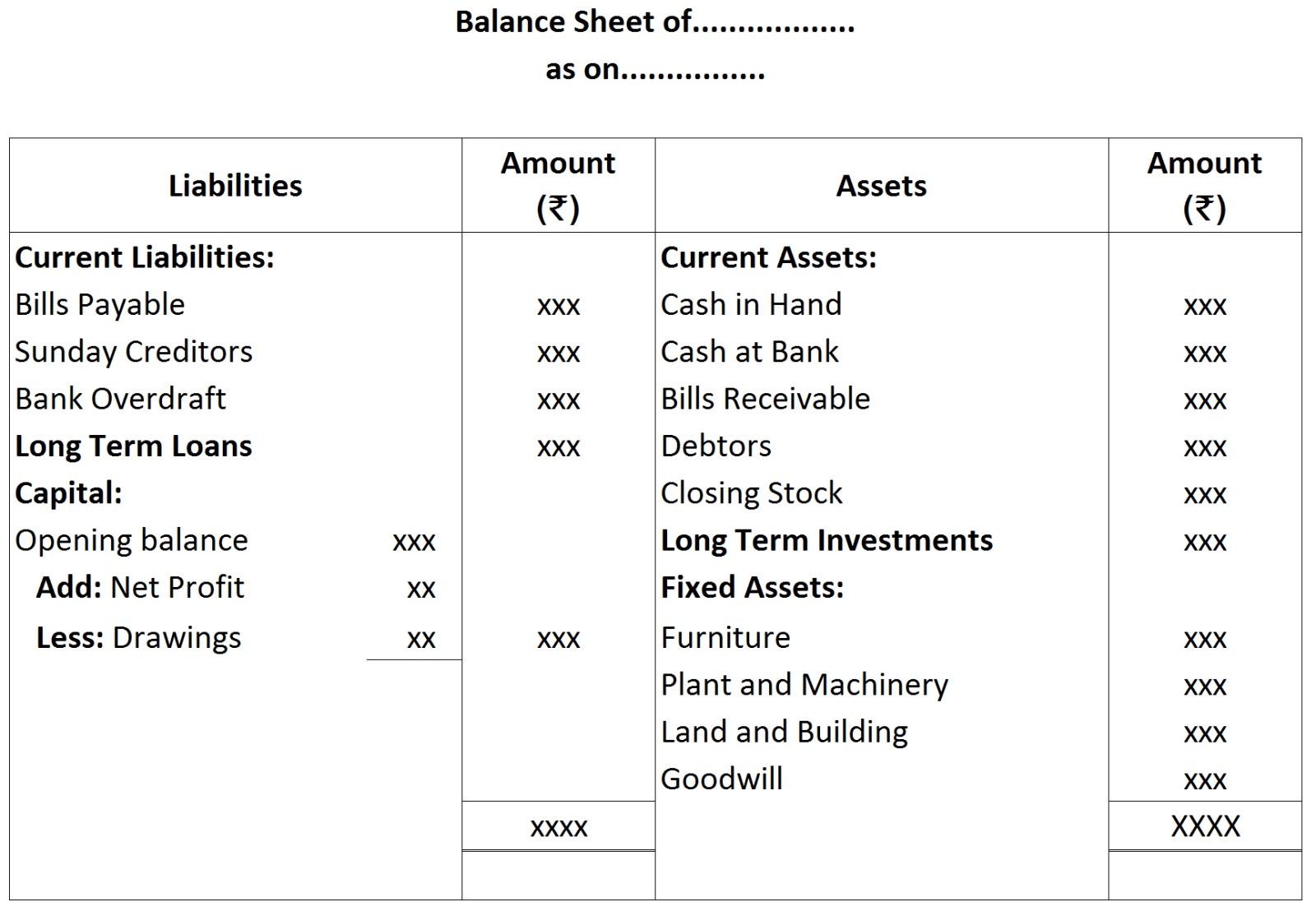
  1. In order of permanence: It is just the reverse of the above method. In this, assets and liabilities are arranged in their reducing level of permanence. The assets with higher degree of permanence are recorded first, followed by the assets with lower degree of permanence. For example, goodwill, land and building have the highest degree of permanence and hence are recorded at the top, whereas, cash at bank and cash in hand are recorded at the bottom. In the same way, liabilities are shown according to their life in the business. Liabilities with higher level of permanence like, capital is recorded at the top and other liabilities with lower permanence are recorded at the bottom.
View full question & answer
Question 436 Marks
Distinguish between Profit and Loss Account and Balance Sheet on any six basis.
Answer
Difference between profit and Loss Account and Balance Sheet-
 
Basis
Profit and Loss Account
Balance Sheet
1.
Nature
It is an account.
It is a statement.
2.
Period
It is prepared for an accounting period.
It is prepared for the last day of the accounting period.
3.
Recording
It records only income and expenses.
It shows the finacial position of the business.
4.
Profit/ Financial Position
Ir shows Performance of the business, i.e., profit earned or loss incurred by the business.
It shows the finacial position of business.
5,
Accounts
Accunts that are transferred to the Profit and Loss Account are closed.
Accounts that are transferred to Balance sheet are not closed.
6.
Balance
Balance of this account is transferred to the Capital Account in the Balance Sheet.
Balance of this statement become the opening balance for the next period.
View full question & answer
Question 446 Marks
From the following balances of Anand, prepare Trading Account, Profit and Loss Account, and Balance Sheet as at $31^{st}$​​​​​​​ March,$ 2019:$​​​​​​​

Value of goods on hand ($31^{st}​​​​​​​$​​​​​​​ March,$ 2019:$) was ₹ $1,43,000.$
View full question & answer
Question 456 Marks
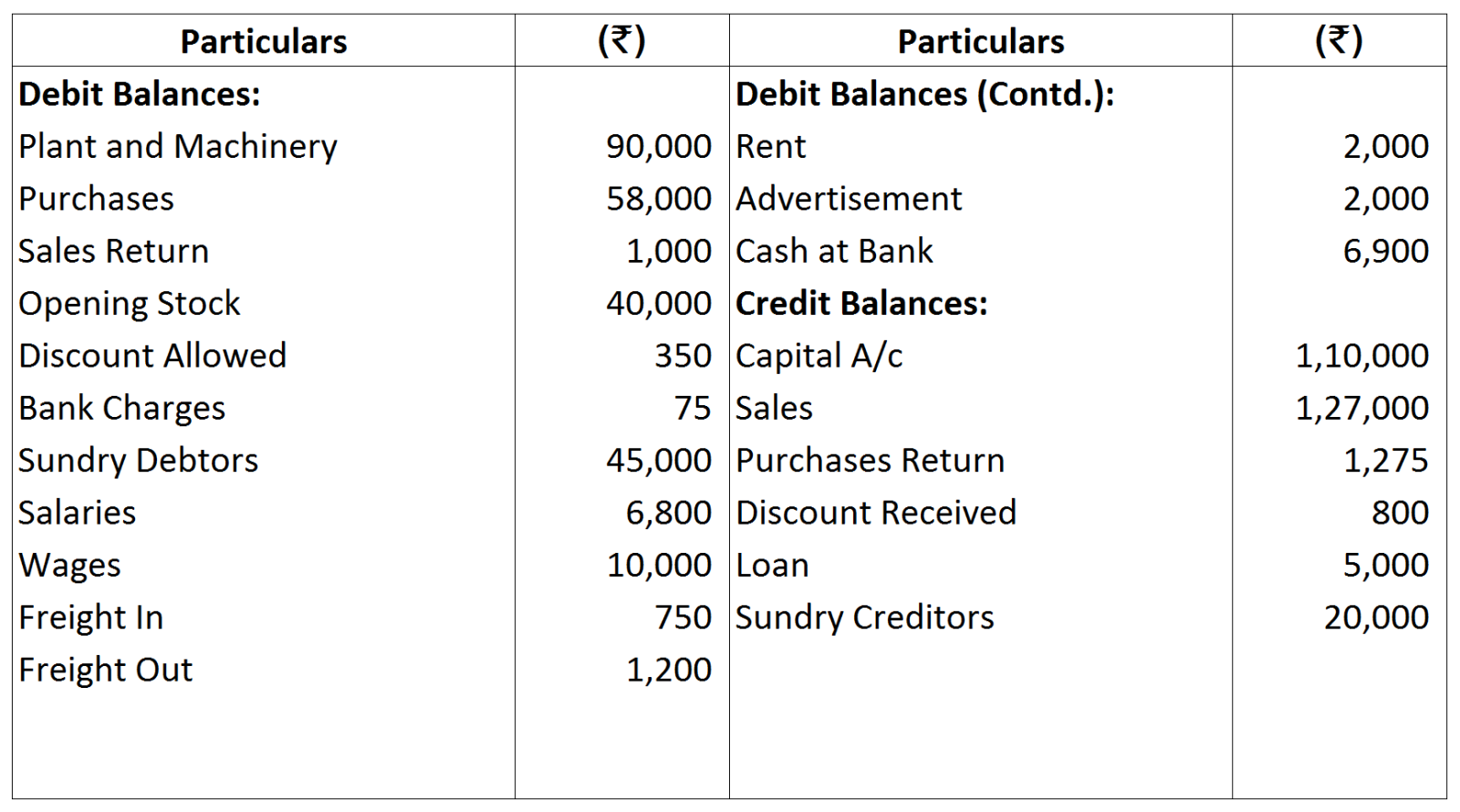
Prepare trading and profit and loss account and balance sheet of M/s Royal Traders from the following balances as on March 31, 2017.

Closing stock ₹ 8,000
View full question & answer
Question 466 Marks
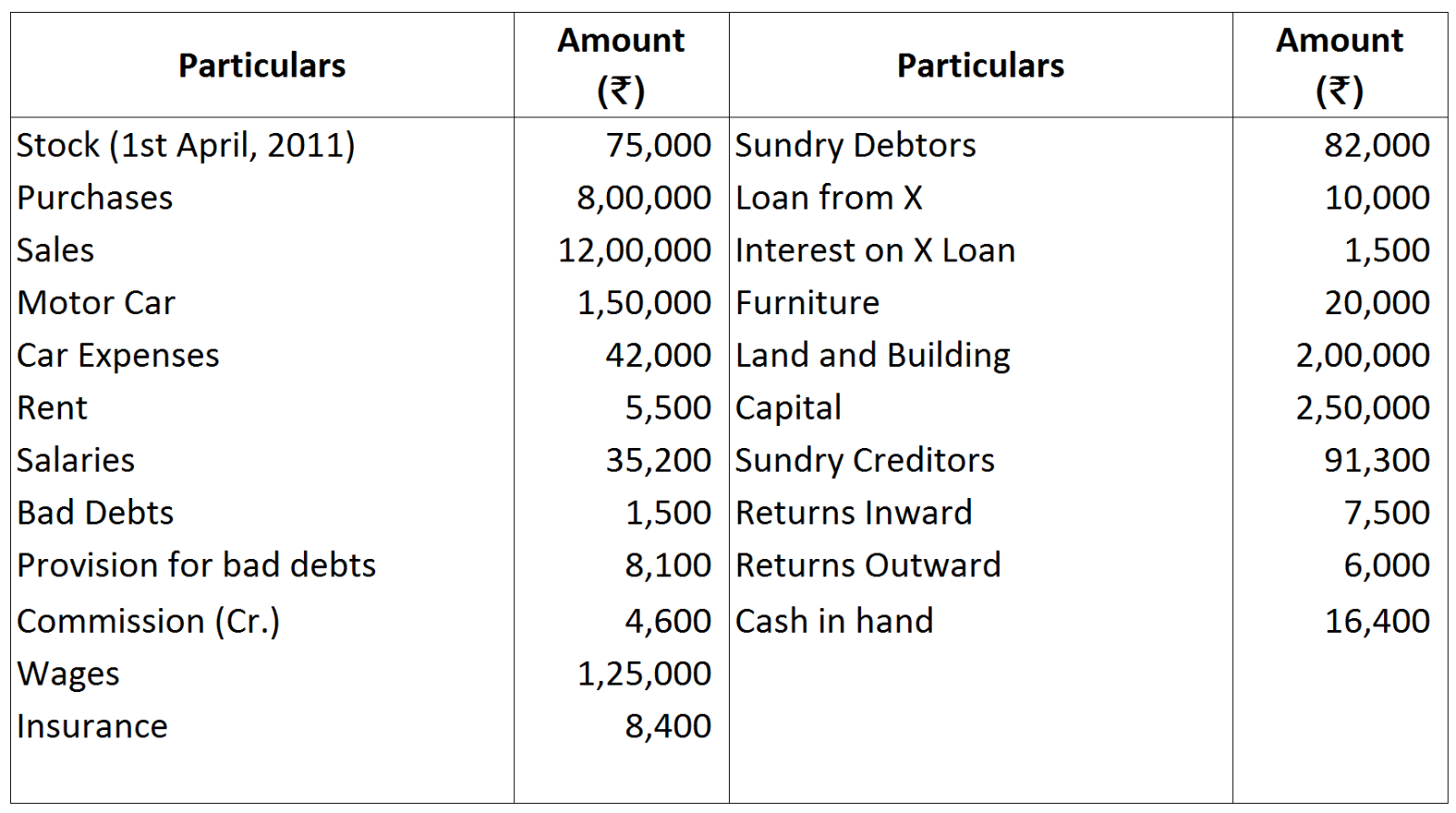
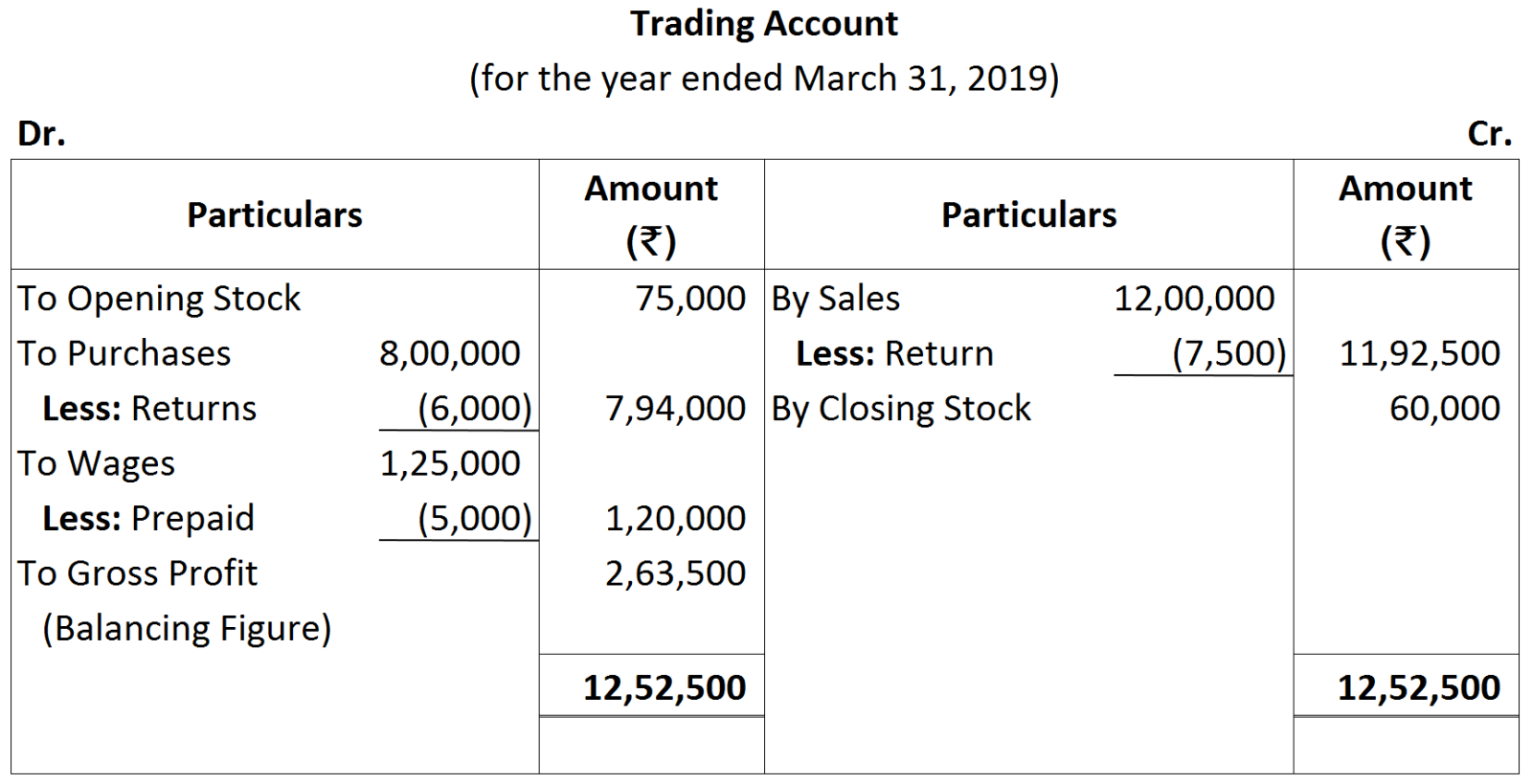
From the following balances, prepare Trading and Profit and Loss Account and the Balance Sheet:

Closing Stock was of ₹ 70,000 but its net realisable value was estimated at ₹ 60,000.
Answer


Note: Closing Stock is recorded at cost price or market price which is lower.
View full question & answer
Question 476 Marks
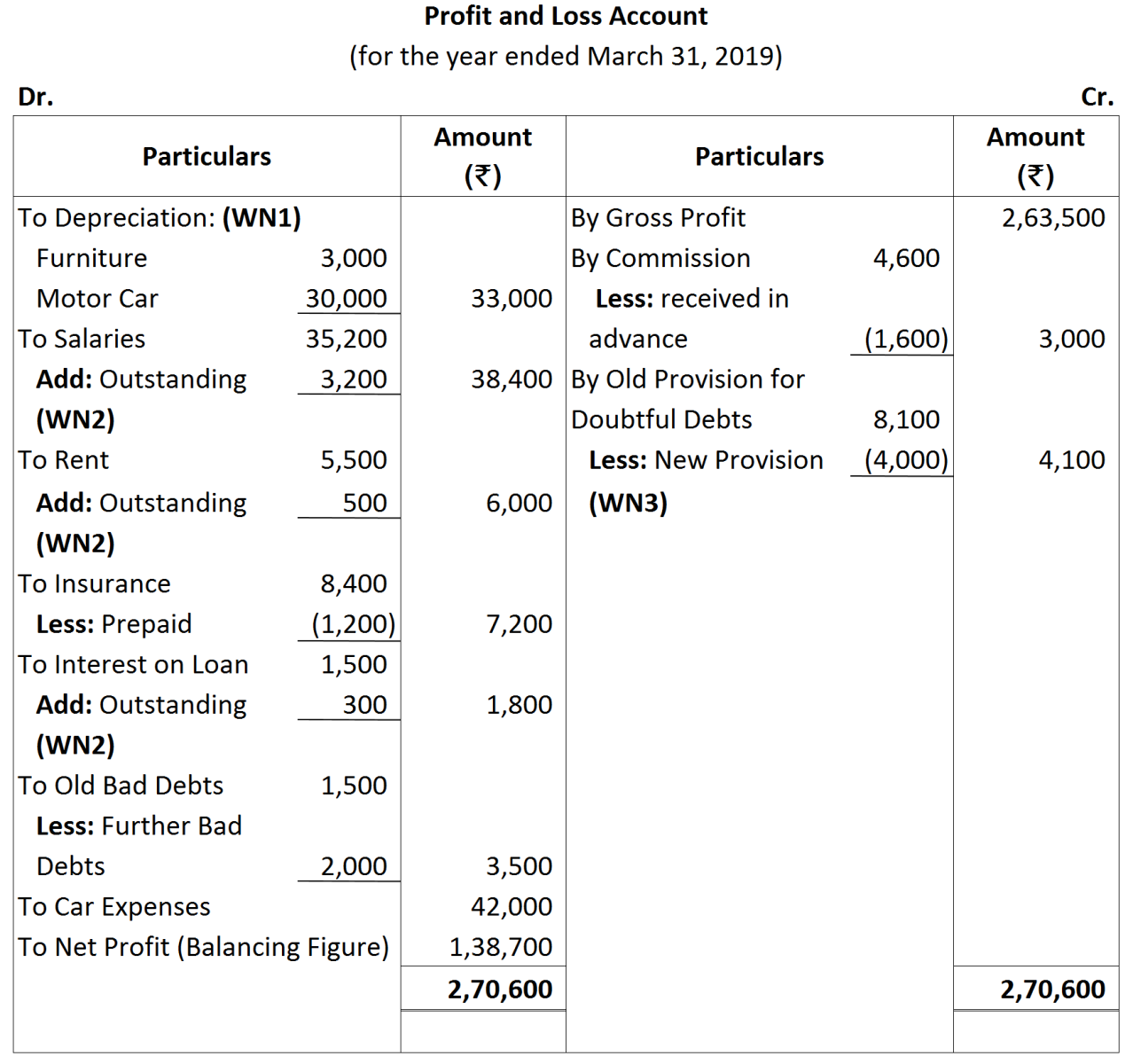
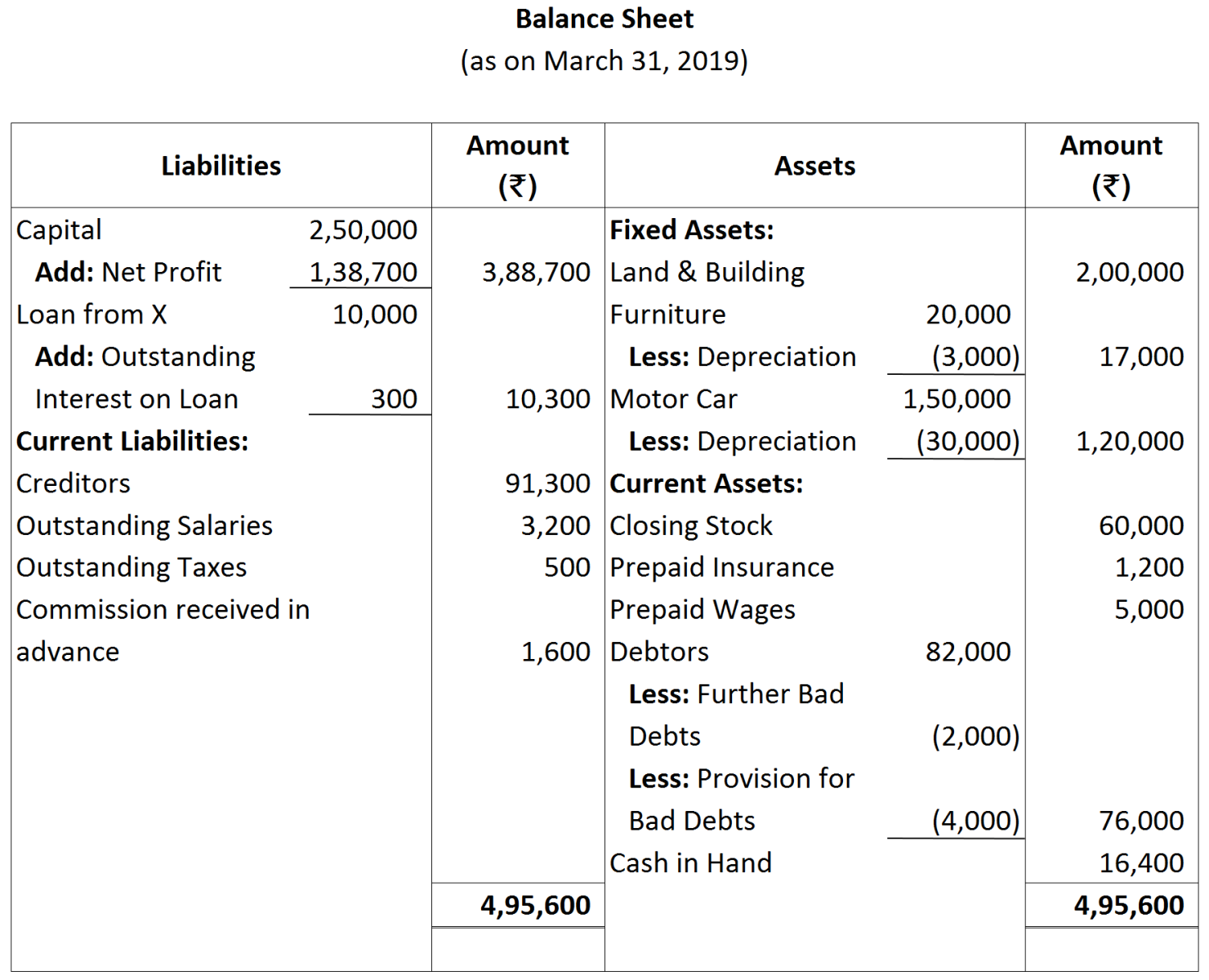
From the following figures prepare the Trading and Profit and Loss Account for the year ended 31st March, 2019 and the Balance Sheet as at that date:

Adjustments:
  1. Commission include ₹ 1,600 being commission received in advance.
  2. Write off ₹ 2,000 as further Bad-debts and maintain Bad-debts provision at 5% on debtors.
  3. Expenses paid in advance are: Wages ₹ 5,000 and Insurance ₹ 1,200.
  4. Rent and Salaries have been paid for 11 months.
  5. Loan from X has been taken at 18% p.a. interest.
  6. Depreciate furniture by 15% p.a. and Motor Car by 20% p.a.
  7. Closing Stock was valued at ₹ 60,000.
Answer


Working Notes:
WN 1: Calculation of Depreciation,
Depreciationon Furniture $=20,000\times\frac{15}{100}=3,000$
Depreciationon Motor Car $=1,50,000\times\frac{20}{100}=30,000$
WN 2: Calculation of Outstanding Expenses,
Salaries for 11 months = 35,200
Salary for 1 month $=\frac{35,200}{11}\times1=3,200$ = Salary Outstanding
Rent for 11 months = 5,500
Rent for 1 month $=\frac{5,500}{11}\times1=500$ = Rent Outstanding
Interest on Loan $=10,000\times\frac{18}{100}=1,800$
Interest paid = 1,500
$\therefore$ Interest Outstanding = 300(1,800 - 1,500)
WN 3: Calculation of Provision for Doubtful Debts,
Provision for Doubtful Debts $=(\text{Sundry Debtors}-\text{Further Bad Debts})\times\frac{\text{Rate}}{100}$
Provision for Doubtful Debts $=(82,000-2,000)\times\frac{5}{100}=4,000$
View full question & answer
6 Marks Question - Account STD 11 Commerce Questions - Vidyadip