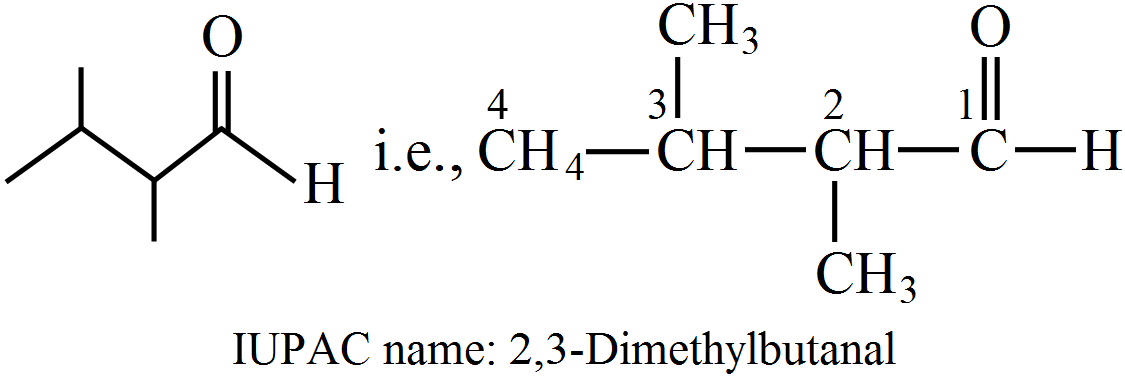
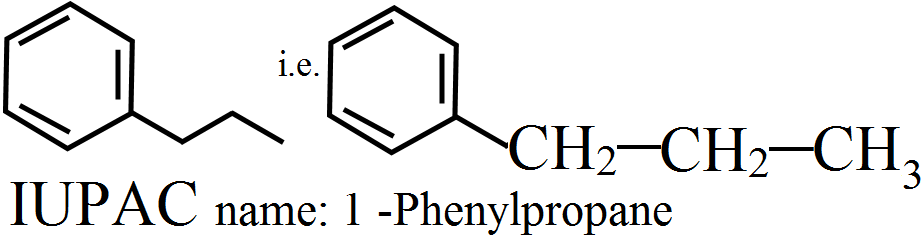
Question

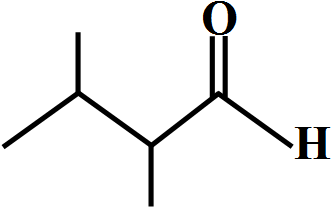
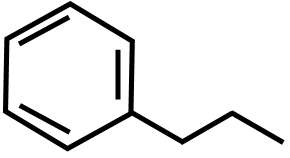
Give IUPAC name of the following compounds:
  1.  
  1.  

Answer

  1.  
  1.  

Need a full question paper?

Generate a complete, print-ready paper with questions like this in minutes — across 16+ boards, with answer keys.
Start Generating Free

Similar questions

An average healthy man needs about 10000 kJ of energy per day. How much carbohydrates (in mass) he will have to consume assuming that all this energy needs are met only by carbohydrates in the form of glucose? The enthalpy of combustion of glucose is $2816 \mathrm{~kJ} \mathrm{~mol}^{-1}$.
Enthalpy is an extensive property. In general, if enthalpy of an overall reaction A → B along one route is $\Delta_\text{r}\text{H}$ and $\Delta_\text{r}\text{H}_1,\Delta_\text{r}\text{H}_2,\Delta_\text{r}\text{H}_3......$ represent enthalpies of intermediate reactions leading to product B. What will be the relation between $\Delta_\text{r}\text{H}$ for overall reaction and $\Delta_\text{r}\text{H}_1,\Delta_\text{r}\text{H}_2,.....$etc. for intermediate react.
Calculate oxidation state of V in $\text{VO}_3^-$ and Fe in $\left(\mathrm{FeF}_6\right)^{3-}$
Consider the following equilibrium:
$\text{CO}_2(\text{g})+\text{C (graphite)}\rightleftharpoons2\text{CO}(\text{g})$
Write the equilibrium expression for $\text{K}_{\text{c}}$ and calculate its units.
Calculate the free energy change when 1 mole of NaCl is dissolved in water at 298 K . (Given, lattice energy of $\mathrm{NaCl}=$ $-777.8 \mathrm{~kJ} \mathrm{~mol}^{-1}$, hydration energy $=-774.1 \mathrm{~kJ} \mathrm{~mol}^{-1}$ and $\Delta \mathrm{S}=0.043 \mathrm{~kJ} \mathrm{~K}^{-1} \mathrm{~mol}^{-1}$ at 298 K ).
Classify the following pairs as position, chain, functional isomers or metamers:
  1. Diethylamine and Methylpropylamine.
  2. Ethanol and Dimethylether.
What happens when:
Sodium metal is heated in free supply of air?
For real gases the relation between p, V and T is given by van der Waal's equation
$\Big(\text{p}+\frac{\text{an}^2}{\text{V}^2}\Big)(\text{V}-\text{nb})=\text{nRT}$
where, 'a' and 'b’are van der Waals' constants, 'nb' is approximately equal to the total volume of the molecules of a gas.'a' is the measure of magnitude of intermolecular attraction.
  1. Arrange the following gases in the increasing order of ‘b'. Give reason.
$O_2, CO_2, H_2, He$​​​​​​​
  1. Arrange the following gases in the decreasing order of magnitude of 'a'. Give reason.
$CH_4, O_2, H_2​​​​​​​$​​​​​​​
If the value of an equilibrium constant for a particular reaction is $1.6 \times 10^{12}$, then at equilibrium, what will be present in the system?
What happens when 1, 2-Dibromo ethane reacts with excess of alc. KOH?