Question
Give preventive methods by giving examples of corrosion?

Answer

Corrosion can be prevented by the following methods:
  1. Galvanizing: Galvanizing is a process of giving a thin coating of zinc on iron or steel materials to protect them from corrosion. Zinc, being more electropositive than iron, undergoes corrosion first. Thus, it prevents corrosion of iron. However, if zinc layer goes away and the inner iron gets exposed, then the inner iron layer will start to rust.
  2. Tinning: Tinning is the process of giving a coating of tin over other metals. Cooking vessels, made of copper and brass get a greenish coating due to corrosion. This greenish coating is poisonous. If food is kept in such a vessel, it gets spoiled. Therefore, copper and brass vessels are coated with tin (kalhai) to prevent corrosion.
  3. Anodizing: The process of coating metals such as aluminium and copper with a thin and strong layer of their oxides by electrolysis is called anodizing process. For this, the copper or aluminium article is used as the anode. As this oxide layer is strong and uniform all over the surface, it is useful for the prevention of the corrosion of the metal.
  4. Electroplating: Electroplating is the process in which a less reactive metal is coated on a more reactive metal by electrolysis. It protects the object made of reactive metal from corrosion. For example, silver-plated spoons, gold plated ornaments, etc.
  5. Alloying: The homogenous mixture formed by mixing metal with other metals or nonmetals in a certain proportion is called an alloy Alloying helps to decrease the intensity of corrosion of metals. For example, stainless steel does not get stains with air or water and also does not rust. It is an alloy made from 74% iron, 18% chromium and 8% carbon.

Need a full question paper?

Generate a complete, print-ready paper with questions like this in minutes — across 16+ boards, with answer keys.
Start Generating Free

Similar questions

Why does human being have an important place in the environment?
Explain the factors affecting the rate of chemical reaction with example.
There are four tiny organisms A, B, C and D. The organism A is a parasitic protozoan which causes a disease known as kala-azar. The organism B is a microscopic single-celled animal which causes malaria disease in human beings. The organism C is a unicellular animal which can change its body shape according to need, it has no fixed shape. The organism D is also a unicellular animal which is slipper-shaped having a large number of tiny hair all around its body.
  1. Name the organisms A, B, C and D.
  2. Name one characteristic body feature of organism A.
  3. Name the insect which carries organism B and transmits it from one person to another.
  4. What name is given to the asexual method of reproduction of (i) organism A, and (ii) organism B?
  5. Where do organisms C and D live?
When a broken piece of the stem of a plant X is planted in the soil, a new plant grows from it in a week's time. The leaves of plant X also have many small entities Y in their margins which can fall to the ground alone or alongwith leaves and grow into new plants.
  1. Name a plant which X could be.
  2. What are the entities Y present on the leaves of X known as?
  3. Name a plant other than X which can be reproduced from its leaves.
  4. Name a common plant grown in many homes which can be propagated from its broken stems like plant X.
  5. Name a kind of dormant organs present in dry stems of old grass plants lying in the fields which get activated and produce green grass plants after the rains.
'Save energy' is the need of the hour.
State whether an electric heater will consume more electrical energy or less electrical energy per second when the length of its heating element is reduced. Give reasons for your answer.
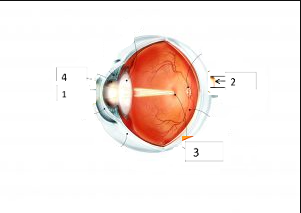
Write the function of the human eye and label parts of the figure given below.

Image
What are the demerits of Mendeleev’s periodic table?
A cylindrical structure P in our body begins in continuation with medulla and extends downwards. It is enclosed in a bony cage Q and surrounded by membranes R. As many as x pairs of nerves arise from the structure P. The structure P is involved in the reflex actions of our body and conduction of nerve impulses to and from another organ S of our body with which it forms CNS.
  1. Name the structure P.
  2. Name (i) bony cage Q, and (ii) membranes R.
  3. How much is x?
  4. Name the organs S.
  5. What are the reflexes involving structure P only known as?
What does the central nervous system in humans consist of? What is the job of the central nervous system?