Question
Give reasons for the following:
  1. $[\text{SiF}_6]^{2-}$ is known whereas $[\text{SiCl}_6]^{2-}$ is not known.
  2. Diamond is covalent, yet has high melting point.
  3. Boric acid is considered as a weak acid.
  4. Boron is unable to form $\text{BF}^{3-}_6$ ion.
  5. $\text{BF}_{3}$ behaves as a Lewis acid.
Answer

i. $\left[\mathrm{SiF}_6\right]^{2-}$ is known whereas $\left[\mathrm{SiCl}_6\right]^{2-}$ is not known since six large size atoms i.e. six chlorine atoms cannot be accommodated around silicon atoms but six small size atoms (F atoms) can be comfortably accomodated.
ii. Diamond is a covalent solid but has a high melting point due to its three dimensional network structure.
iii. Boric acid is not able to release $\mathrm{H}^{+}$ions on its own, hence is a weak acid. It first receives $\mathrm{OH}^{-}$ions from water molecule to complete its octet and inturn releases $\mathrm{H}^{+}$ions.
iv. Boron is unable to form $\mathrm{BF}_6^{3-}$ ion due to the non availability of d-orbitals.
v. Boron in $\mathrm{BF}_3$ has only six electrons and hence can accept a pair of electron, thereby can act as Lewis acid.

Need a full question paper?

Generate a complete, print-ready paper with questions like this in minutes — across 16+ boards, with answer keys.

Start Generating Free

Similar questions

1. What is the general molecular formula of saturated monohydric alcohols?
2. Write structural formulae for compounds named as-
a. 1-Bromoheptane
b. 5-Bromoheptanoic acid
What is smog? How is classical smog different from photochemical smogs?
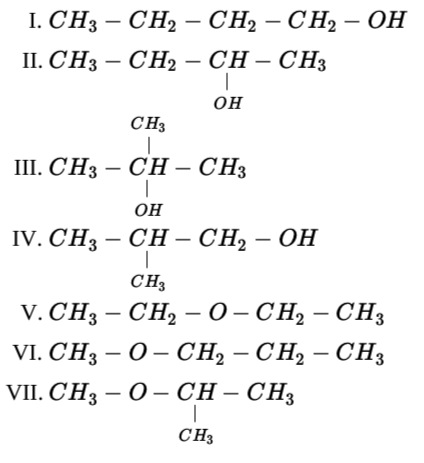
1. Identify the pairs of compounds which are functional group isomers.
Image
2. Explain, how is the electronegativity of carbon atoms related to their state of hybridization in an organic compound.
Calculate the total pressure in a mixture of $8$ g of dioxygen and $4$ g of dihydrogen confined in a vessel of $1 dm ^3$ at $27^{\circ} C . R =$ 0.083 bar dm3 K
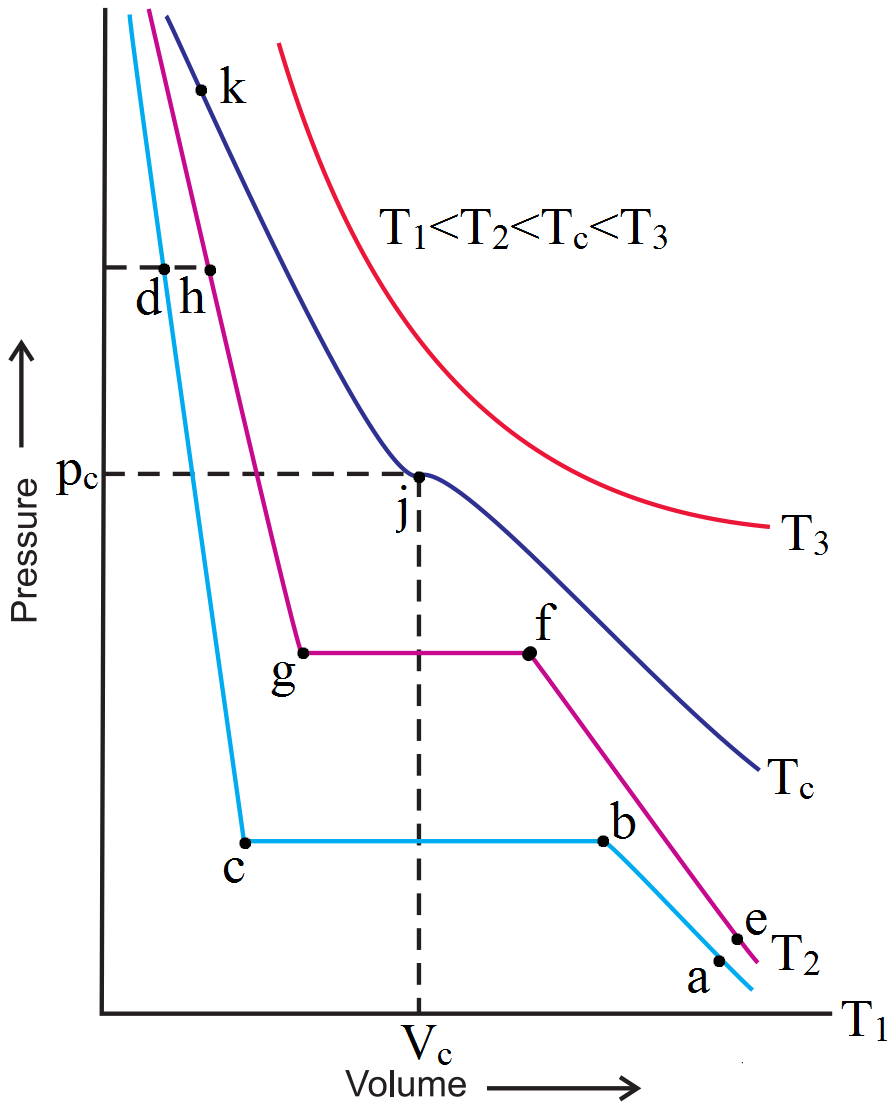
Isotherms of carbon dioxide at various temperatures are represented in the figure. Answer the following questions based on the figure.

i. In which state will $CO _2$ exist between the points a and b at temperature $T _1$ ?
ii. At what point will $CO _2$ start liquefying when temperature is $T _1$ ?
iii. At what point will $CO _2$ be completely liquefied when temperature is $T _2$ ?
iv. Will condensation take place when the temperature is $T_3$ ?
v. What portion of the isotherm at $T _1$ represent liquid and gaseous $CO _2$ at equilibrium?
Explain why cation are smaller and anions larger in radii than their parent atoms?
Calculate the strength of $5$ volume $H_2O_2$.
What are the various factors due to which the ionization enthalpy of the main group elements tends to decrease down a group?
Explain different definitions of oxidation and reduction processess with example.
What is the pH of 0.001 M aniline solution? The ionisation constant of aniline is $4.27 \times 10^{-10}$. Calculate the degree of ionisation of aniline in the solution. Also calculate the ionisation constant of the conjugate acid of aniline.