Question
Give the main differences between physical changes and chemical changes.

Answer

  PHYSICAL CHANGE   CHEMICAL CHANGE
i No, new substance is formed in a physical change.  i New substance is formed in a chemical change.
ii It is a temporart change. ii A chemical change is a permanent change.
iii It is easily reversible. iii This process is usually irreversible.
iv Very little heat or light energy is usually absorbed or given out in this process. iv A lot of heat or light energy is absorbed or given out in this process.
v Mass of substance does not alter. v Mass of substance does alter in this process.

Need a full question paper?

Generate a complete, print-ready paper with questions like this in minutes — across 16+ boards, with answer keys.
Start Generating Free

Similar questions

There is a large group of materials P which can be divided into three groups Q, R, and S on the basis of their properties. The substances belonging to group Q can be solids, liquids or gases. The solids belonging to group Q are usually electrical insulators. Most of the substances of group R are solids which are good conductors of electricity. The substances belonging to group S are neither insulators like Q nor good conductors like R. The properties of S are intermediate between those of Q and R.
  1. What could the group of materials P be?
  2. Name the substances Q. Give two examples of such substances.
  3. Name the substances R. Write two examples of such substances.
  4. Name the substances S. Give two examples of such substances.
  5. Out of Q, R and S, which substances are malleable and ductile?

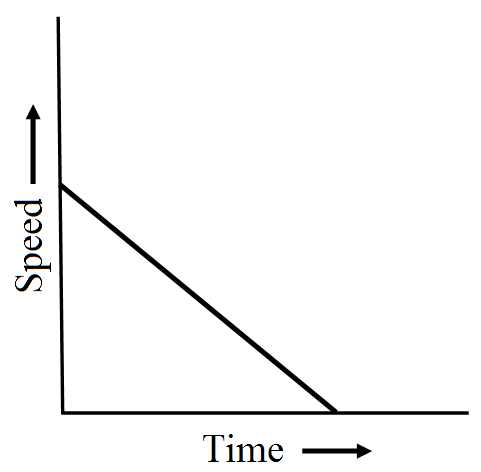
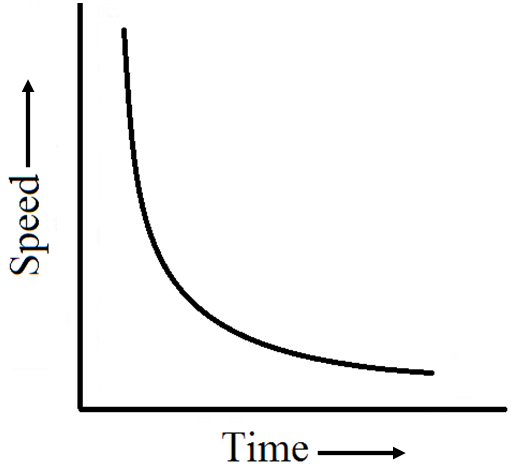
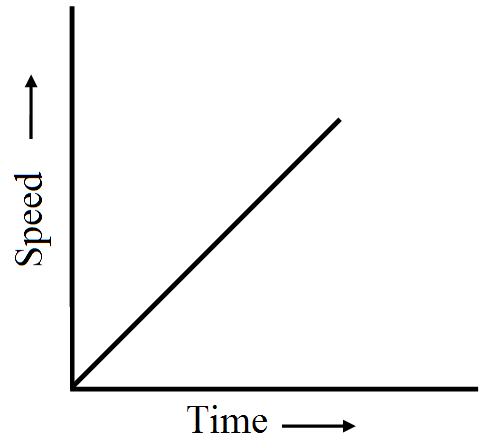
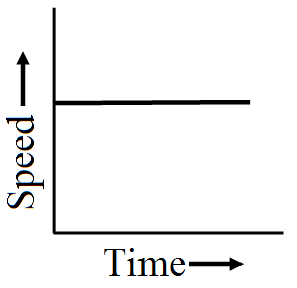
What type of motion is represented by each one of the following graphs?


Show by using the graphical method that:$\text{s}=\text{ut}+\frac{1}{2}\text{at}^2$
where the symbols have their usual meanings.
Describe a simple experiment to show that the prongs of a sound producing tuning fork are vibrating.
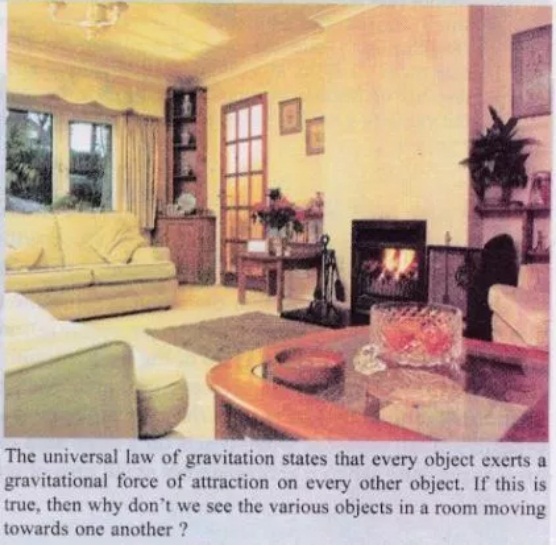
Universal law of gravitation states that every object exerts a gravitational force of attraction on every other object. If this is true, why don’t we notice such forces? Why don’t the two objects in a room move towards each other due to this force?
Explain the mechanism of compost formation.
The electronic configuration of an element Z is 2, 8, 8.
  1. What is the atomic number of the element?
  2. State whether element Z is a metal or a non-metal.
  3. What type of ion (if any) will be formed by an atom of element Z? Why?
  4. What is special about the outermost electron shell or the atom of this element?
  5. Give the name and symbol of element Z.
  6. Name the group of elements to which Z belongs.
An element $X$ forms the following compounds with hydrogen, carbon and oxygen:
$H_2X, CX_2, XO_2, XO_3$
Show by means of graphical method that:
v = u + at
where the symbols have their usual meanings.
How will you separate camphor, common salt and iron nails from their mixture?