Question
Give three examples of a transaction processing system.

Answer

Transaction Processing System (TPS) refers to a computerised system that records, processes, validates and stores routine transactions that occur in various functional areas of a business on daily basis. Some of the examples of Transaction Processing System are enlisted as:
  1. Automatic Teller Machine (ATMs): These are those machines that handle the bank transactions through the use of specialised computer programs.
  2. Payroll Applications: These are the applications that help to execute payroll programs using terminal and online processing. These are commonly used for preparing payroll or salary of the employees.
  3. Order Processing: With the help of TPS applications, orders are collected from clients either manually or through mails and telephonic calls. Thereafter, these orders are processed to initiate invoicing, account receivables and inventory control processing. These are now-a-days widely used in almost every spheres of business, such as online purchasing of tickets, online booking, etc.

Need a full question paper?

Generate a complete, print-ready paper with questions like this in minutes — across 16+ boards, with answer keys.

Start Generating Free

Similar questions

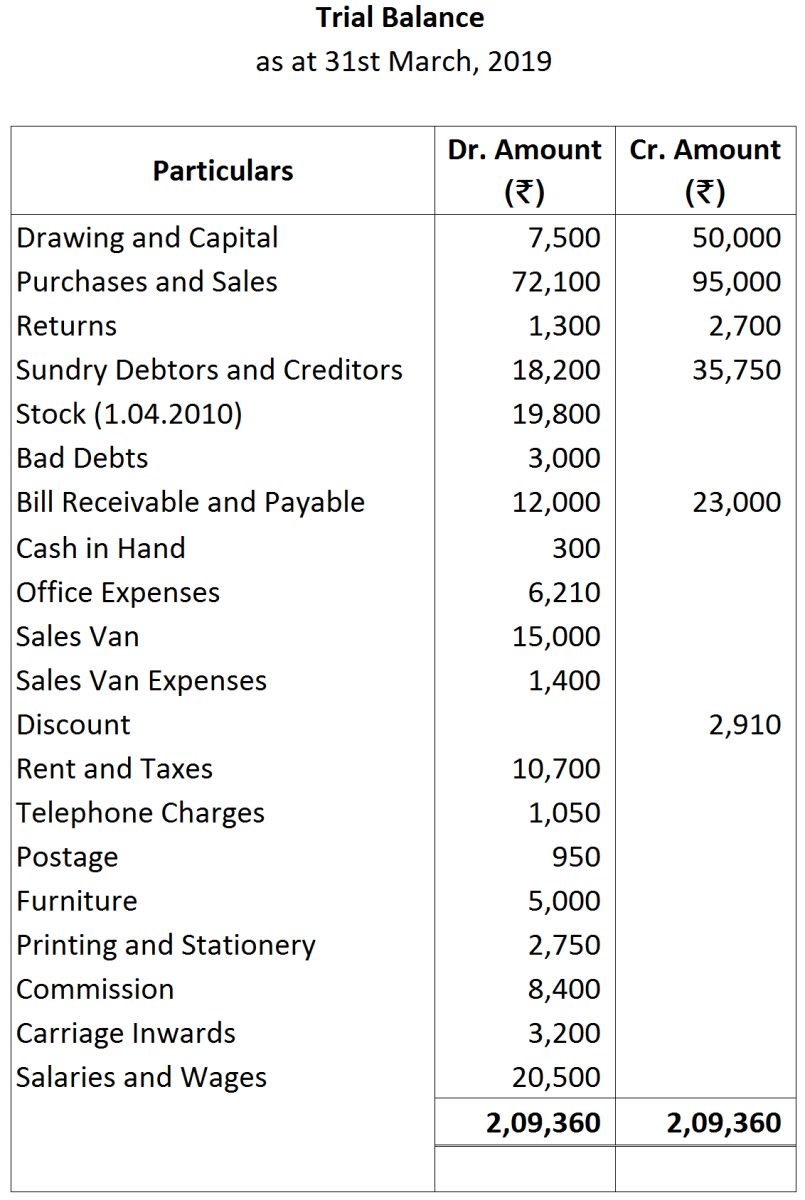
From the following balances, as on $31^{st}$ March, $2019,$ prepare Trading and Profit and Loss Account and Balance Sheet:

Closing Stock on $31^{st}​​​​​​​$​​​​​​​ March, $2019$ was valued at $₹ 14,500$.
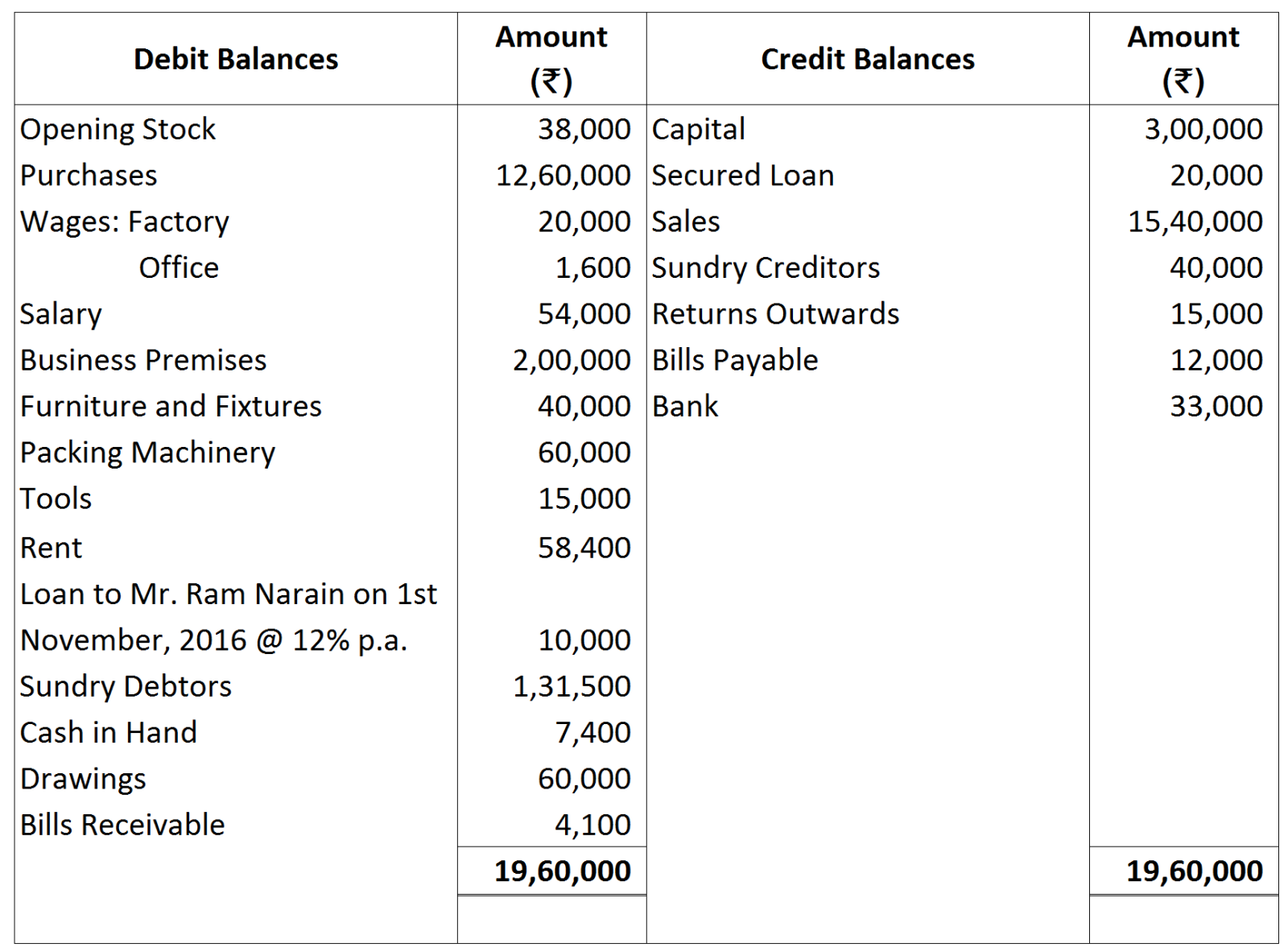
From the following Trial Balance of Mr. Tarun Ghosh, prepare Trading and Profit and Loss A/c for the year ending 31st March, 2017 and a Balance Sheet as at that date:

Adjustments:
  1. Closing Stock amounted to ₹ 50,000.
  2. Goods costing ₹ 8,000 were sent to a customer on sale or return basis for ₹ 10,000 on 30th March, 2017 and had been recorded in the books as actual sales.
  3. Allow 8% interest on Capital and charge ₹ 3,000 as interest on drawings.
  4. Depreciate: Business premises by 5%, Furniture and Fixtures by 20% and Packing Machinery by 10%. Tools are to be revalued at ₹ 12,000.
  5. $2\frac{1}{2}\%$ for discounts is to be provided on Debtors.
  6. ₹ 1,500 is to be provided for Bad and Doubtful Debts.
Ram Prashad keeps his books on Single Entry System and from them and the particulars supplied, the following figures were gathered together on 31st March, 2019:
Book Debts ₹ 10,000; Cash in Hand ₹ 510; Stock-in-Trade (estimated) ₹ 6,000; Furniture and Fittings ₹ 1,200; Trade Creditors ₹ 4,000; Bank Overdraft ₹ 1,000; Ram Prashad stated that he started business on 1st April, 2018 with cash ₹ 6000 paid into bank but stocks valued at ₹ 4,000. During the year he estimated his drawings to be ₹ 2,400. You are required to prepare the statement, showing the profit for the year, after writing off 10% for Depreciation on Furniture and Fittings.
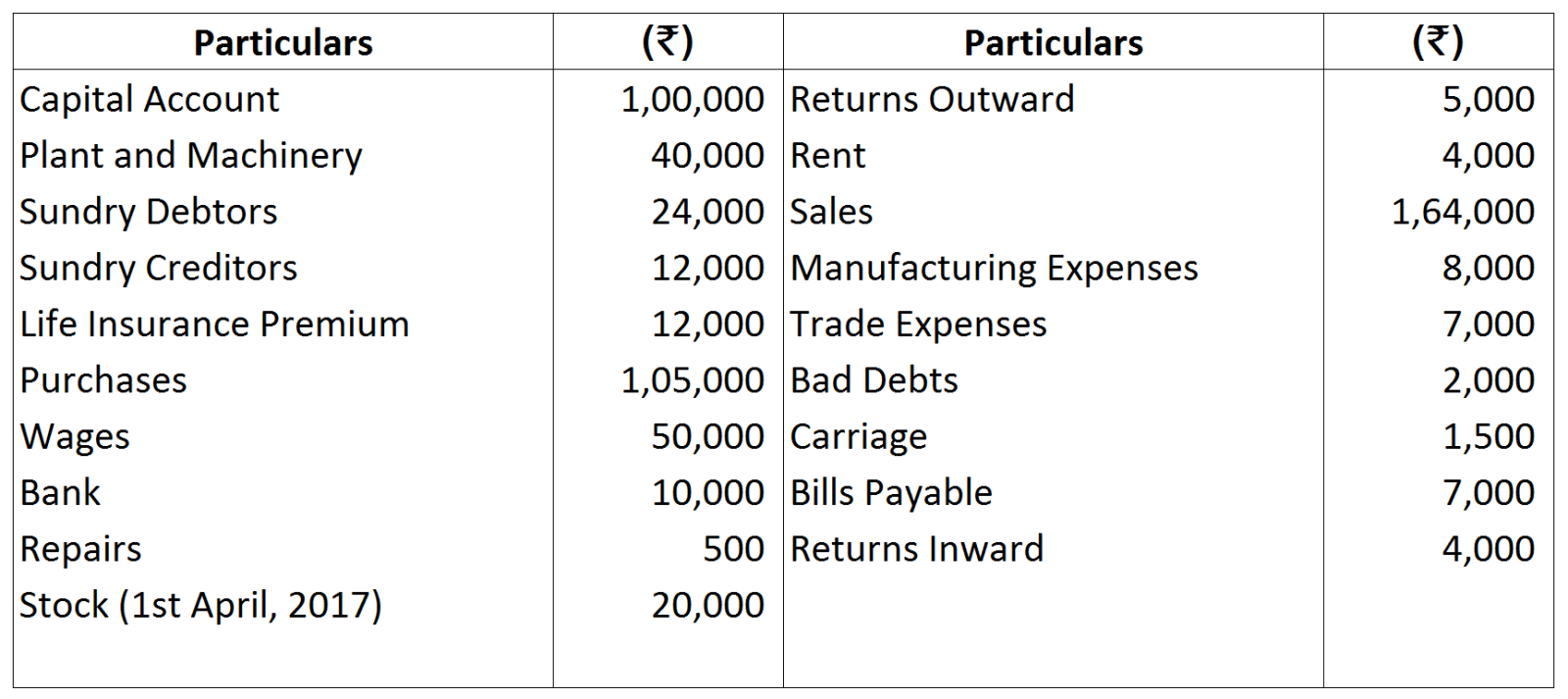
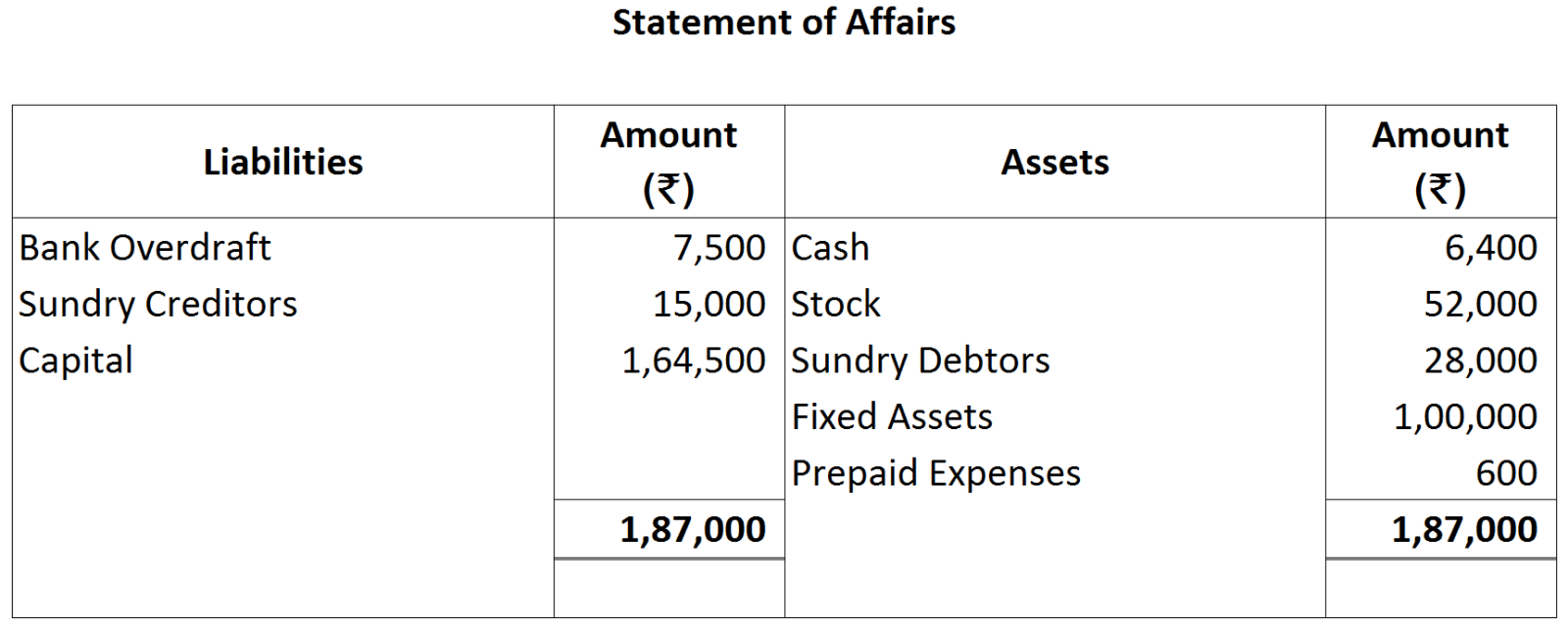
Gopal keeps incomplete records. On $1^{st}$ April, $2016, $ his position was as follows:
His position on $31^{st}$ March, $2017$ was as follows: Cash in hand $₹\ 3,000;$ Cash at Bank $₹\ 5,000;$ Stock $ ₹\ 44,000;$ Debtors $₹\ 21,000$; Fixed Assets $₹\ 80,000$; Creditors $₹\ 22,000$. You are informed that Gopal has taken stocks worth $₹\ 4,500$ for his private use and that he has been regularly transferring $₹\ 2,000$ per month from his business banking account by way of drawings. Out of his drawings he spent $₹\ 15,000$ for purchasing a Scooter for the business on $1$st October, $2016.$

You are requested to find out his profit or loss and to prepare the Statement of Affairs after considering the following:
  1. Depreciate Fixed Assets and Scooter by $10\%$ p.a.
  2. Write off Bad-Debts $₹\ 1,000$ and provide $5\%$ for doubtful debts on Sundry Debtors.
  3. Commission earned but not received by him was $₹\ 2,500.$
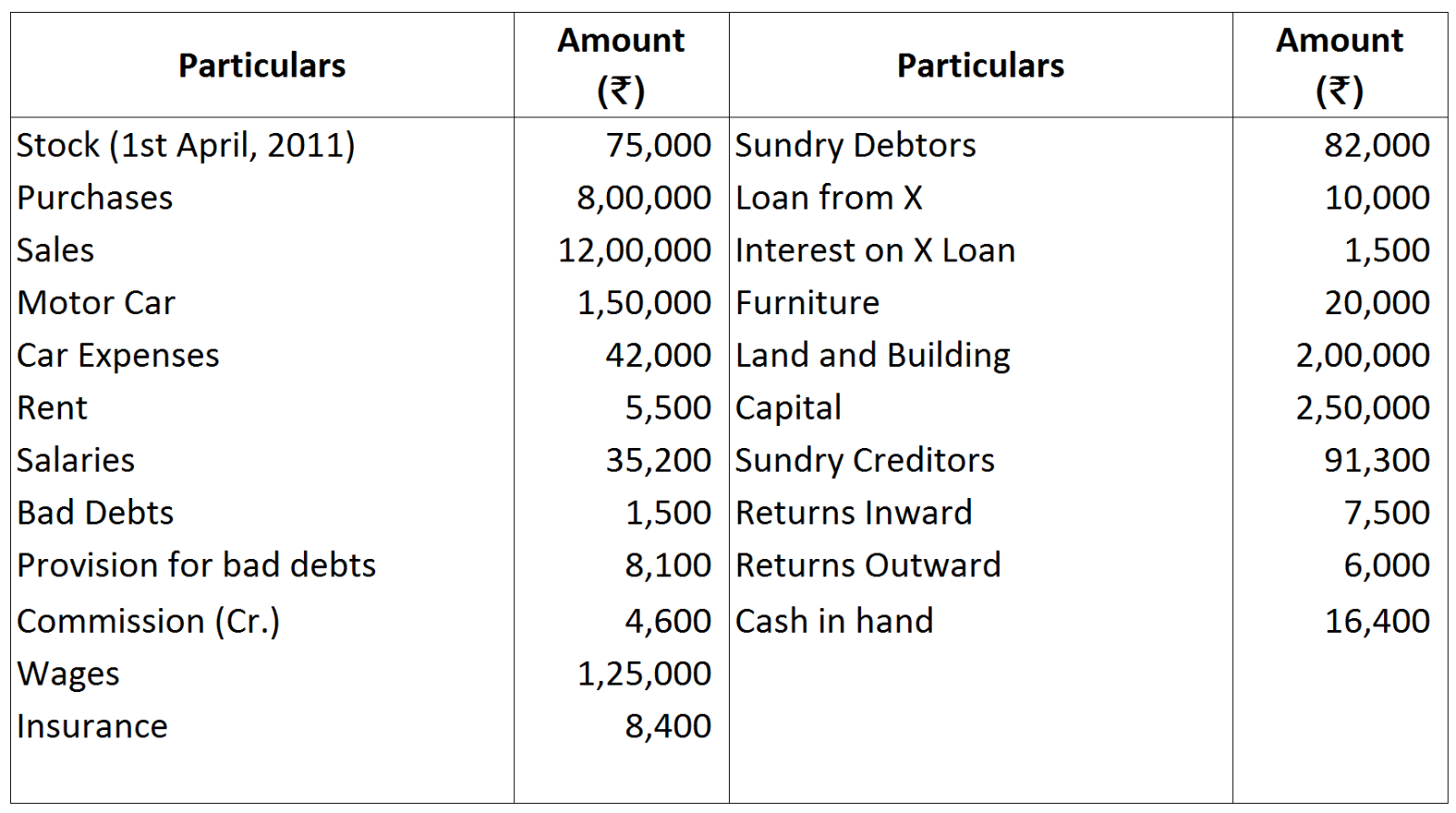
From the following figures prepare the Trading and Profit and Loss Account for the year ended 31st March, 2019 and the Balance Sheet as at that date:

Adjustments:
  1. Commission include ₹ 1,600 being commission received in advance.
  2. Write off ₹ 2,000 as further Bad-debts and maintain Bad-debts provision at 5% on debtors.
  3. Expenses paid in advance are: Wages ₹ 5,000 and Insurance ₹ 1,200.
  4. Rent and Salaries have been paid for 11 months.
  5. Loan from X has been taken at 18% p.a. interest.
  6. Depreciate furniture by 15% p.a. and Motor Car by 20% p.a.
  7. Closing Stock was valued at ₹ 60,000.
From the following balances extracted from the books of Sharma, prepare the Trading and Profit & Loss Account for the year ended 31st March 2019 and Balance Sheet as at that date after taking into consideration the adjustments given below:

Adjustments:
  1. Closing Stock was valued at ₹ 61,700.
  2. Depreciate Furniture and Machinery @10% p.a. and Sale Van @20% p.a.
  3. Outstanding Rent amounted to ₹ 900.
  4. Bad Debts ₹ 200.
  5. Make a provision for Doubtful Debts @5% on Debtors.
  6. Charge one-fourth of salaries and wages to the Trading Account.
  7. A new machinery was purchased on credit and installed on 31st December 2018 costing ₹ 15,000. No entry for the same has yet been passed in the books.
From the following figures prepare the Trading and Profit and Loss Account for the year ended 31st March, 2019 and the Balance Sheet as at that date:

Adjustments:
  1. Commission include ₹ 1,600 being commission received in advance.
  2. Write off ₹ 2,000 as further Bad-debts and maintain Bad-debts provision at 5% on debtors.
  3. Expenses paid in advance are: Wages ₹ 5,000 and Insurance ₹ 1,200.
  4. Rent and Salaries have been paid for 11 months.
  5. Loan from X has been taken at 18% p.a. interest.
  6. Depreciate furniture by 15% p.a. and Motor Car by 20% p.a.
  7. Closing Stock was valued at ₹ 60,000.
X bought a machine for ₹ 25,000 on which he spent ₹ 5,000 for carriage and freight. ₹ 1,000 for brokerage of the middleman, ₹ 3,500 for installation and ₹ 500 for an iron pad. The machine is depreciated @ 10% p.a. on Written Down Value basis. After three years, the machine was sold to Y for ₹ 30,500 and ₹ 500 was paid as commission to the broker through whom the sale was effected. Find out the profit and loss on sale of machine.
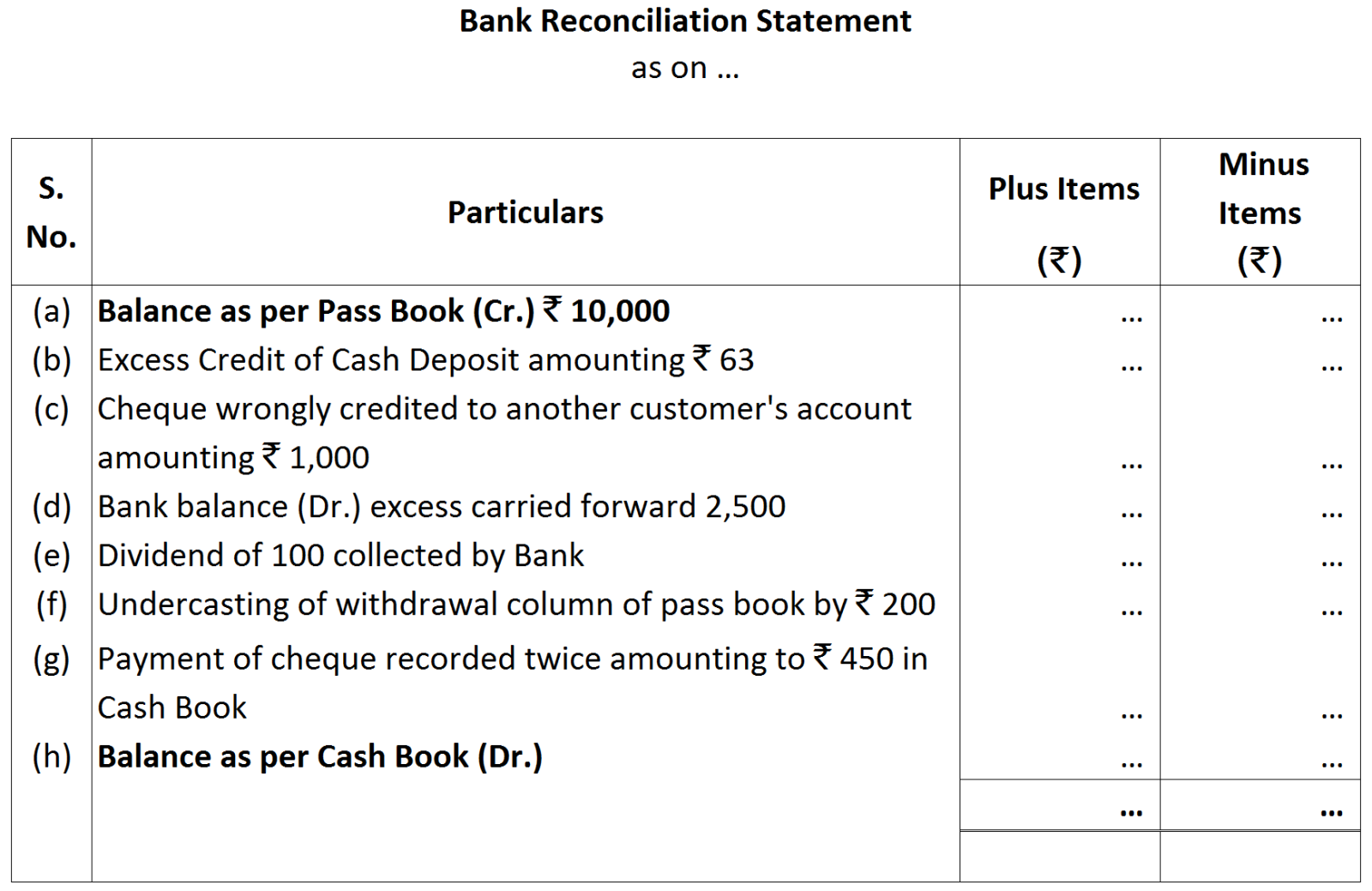
Complete the following Bank Reconciliation Statement:
What do you mean by programmed or casual reports?