Question
What do you mean by programmed or casual reports?

Answer

  1. Programmed Reports: These reports contain information useful for decisionmaking situations that the users have anticipated to occur. There are two types of reports within this report type: Scheduled and On demand.
  • Scheduled Reports: The reports, which are produced according to a given time frame, are called scheduled reports. The time frame may be daily, weekly, monthly, quarterly or yearly. Some examples of scheduled reports are: Trial Balance, Ledger, Statement of Cash Transactions (Cash Book), Statement of Ageing Accounts, Closing Stock Report, Profit and Loss Account and Balance Sheet, etc.
  • On Demand Reports: The reports, which are generated only on the triggering of some event, are called On demand reports. Some examples of On demand reports are a Customer’s Statement of Account, Inventory Re-order Report, Stock in hand Report for a Selected Group of items, etc.
  1. Casual Reports: There are reports, the need for which is not anticipated, the information content of which may be useful but casually required. These are adhoc reports and are generated casually by executing some simple queries without requiring much of professional assistance. As opposed to programmed reports, casual reports are generated as and when required.

Need a full question paper?

Generate a complete, print-ready paper with questions like this in minutes — across 16+ boards, with answer keys.
Start Generating Free

Similar questions

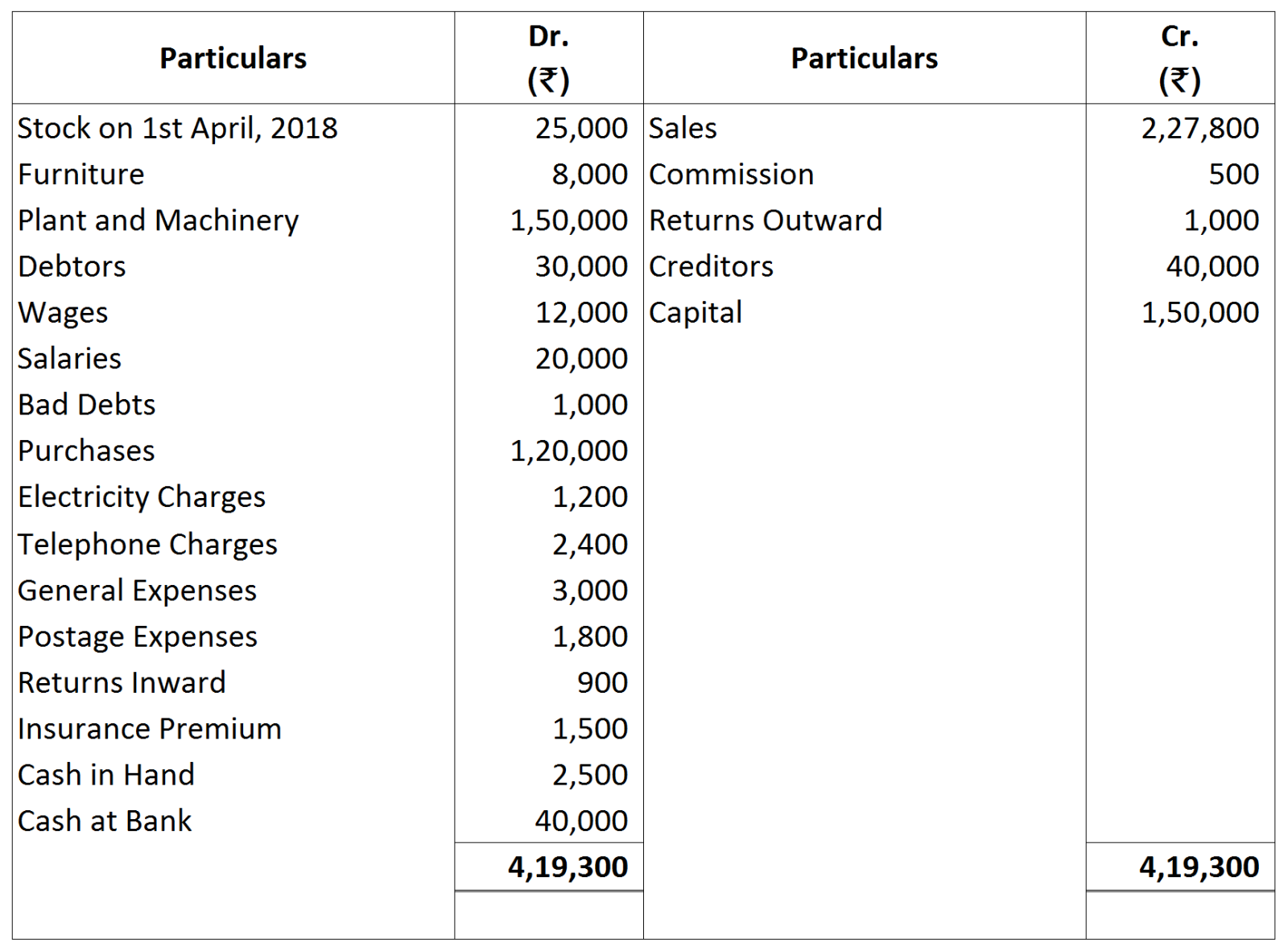
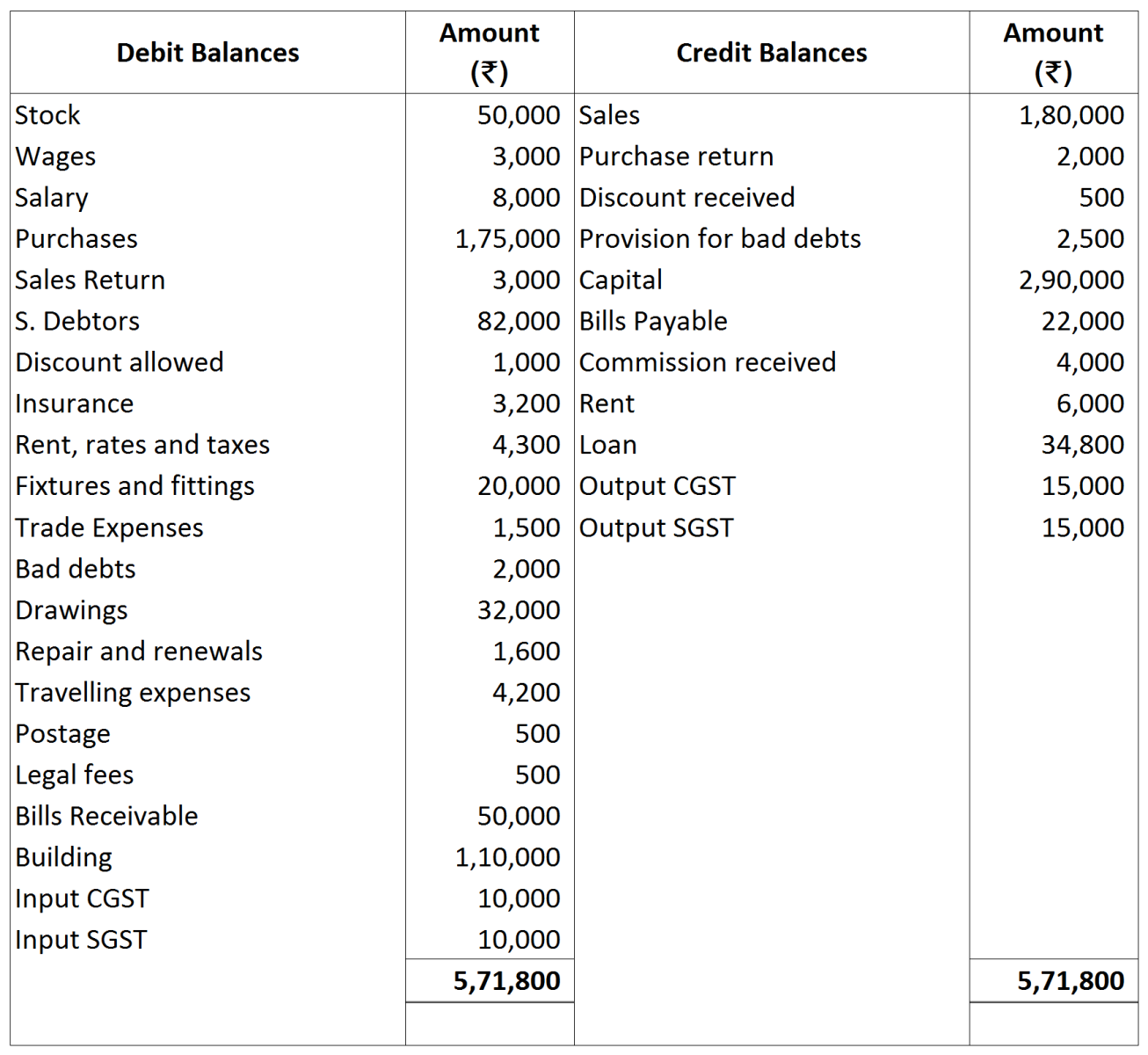
Prepare a Trading and Profit & Loss account for the year ending March 31, 2018, from the balances extracted of M/s Rahul Sons. Also prepare a balance sheet as at that date.

Adjustments:
  1. Commission received in advance ₹ 1,000.
  2. Rent receivable ₹ 2,000, subject to levy of CGST and SGST @ 9% each.
  3. Salary outstanding ₹ 1,000 and insurance prepaid ₹ 800.
  4. Further Bad-debts ₹ 1,000 and provision for Bad-debts @ 5% on debtors and provision for discount on debtors @ 2%.
  5. Closing Stock ₹ 32,000.
  6. Depreciation on Building @ 6% p.a.
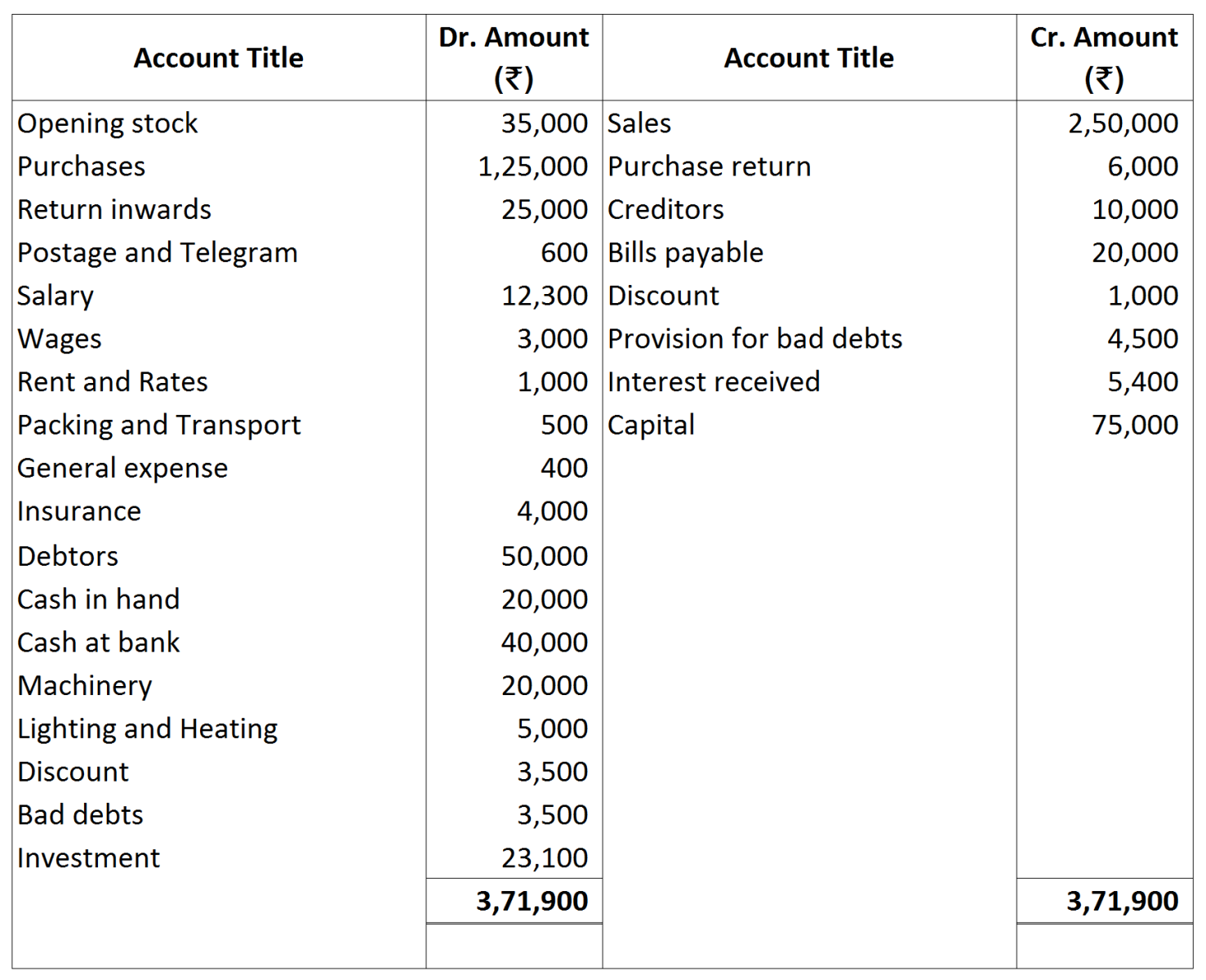
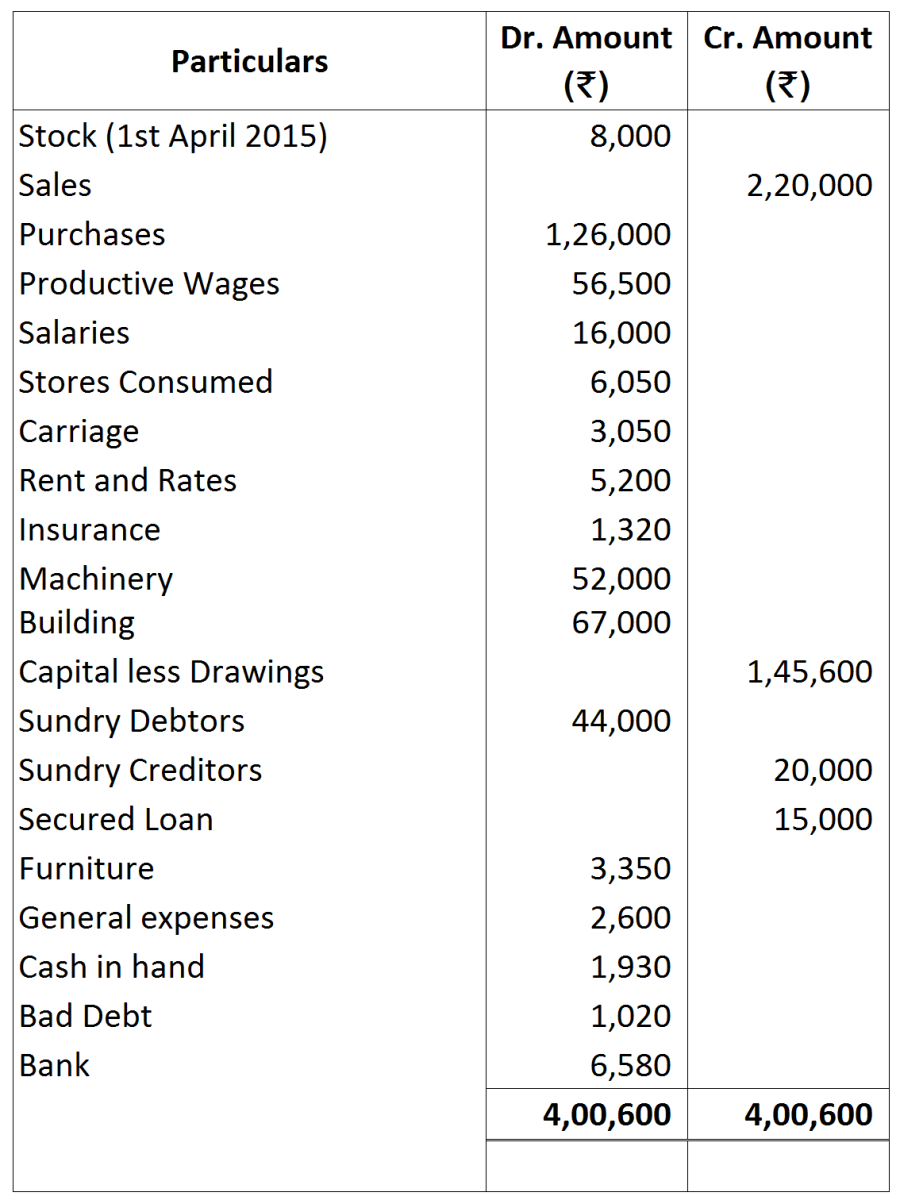
Following is the Trial Balance as on 31st March 2016. Prepare Trading and Profit and Loss Account and Balance Sheet:

Additional Information:
  1. Stock on 31st March 2016 is ₹ 20,600.
  2. Depreciate machinery @ 10% p.a.
  3. Make a Provision @ 5% for Doubtful Debts.
  4. Provide $2\frac{1}{2}\%$ for discount on sundry debtors.
  5. Rent and Rates include security deposit of ₹ 400.
  6. Insurance prepaid ₹ 120.
Trial Balance of a business as at 31st March, 2019 is given below:

Prepare Trading and Profit and Loss Account for the year ended 31st March, 2019 and Balance Sheet as at that date after taking into account the following adjustments:
  1. Closing Stock was valued at ₹ 7,000.
  2. Outstanding liabilities for wages were ₹ 600 and salaries ₹ 1,400.
  3. Depreciation is to be provided @ 5% p.a. on fixed assets.
  4. Included in Plant and Machinery is a machine purchased for ₹ 10,000 on 1st October, 2018.
  5. Insurance premium paid in advance ₹ 200.
On 1st June, 2019, A sold goods to B for ₹ 250. B gave to A his acceptance payable 1 month after date. Before maturity B requests A to renew it, which A does adding ₹ 10 to the new bill for interest.
Make the necessary Journal entries to record these transactions in the books of both Aand B.
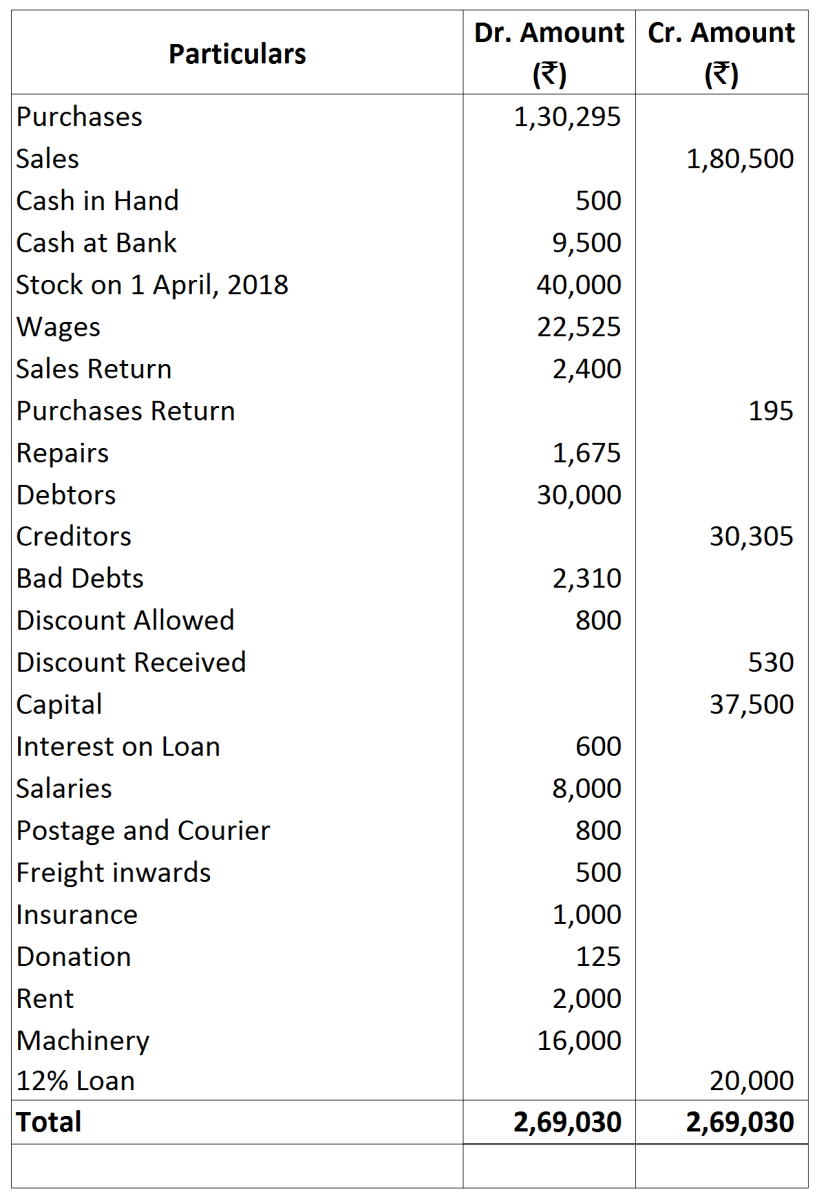
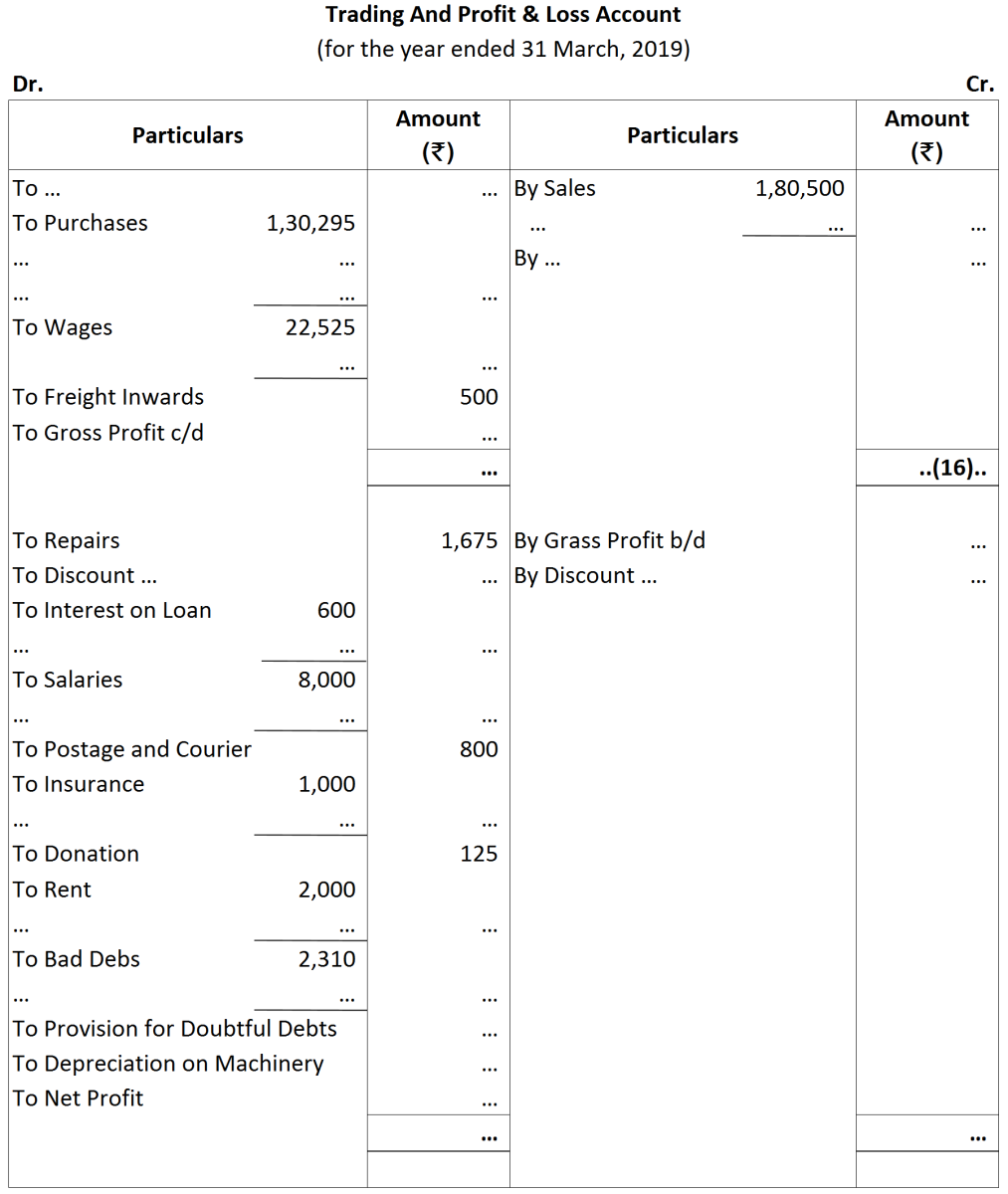
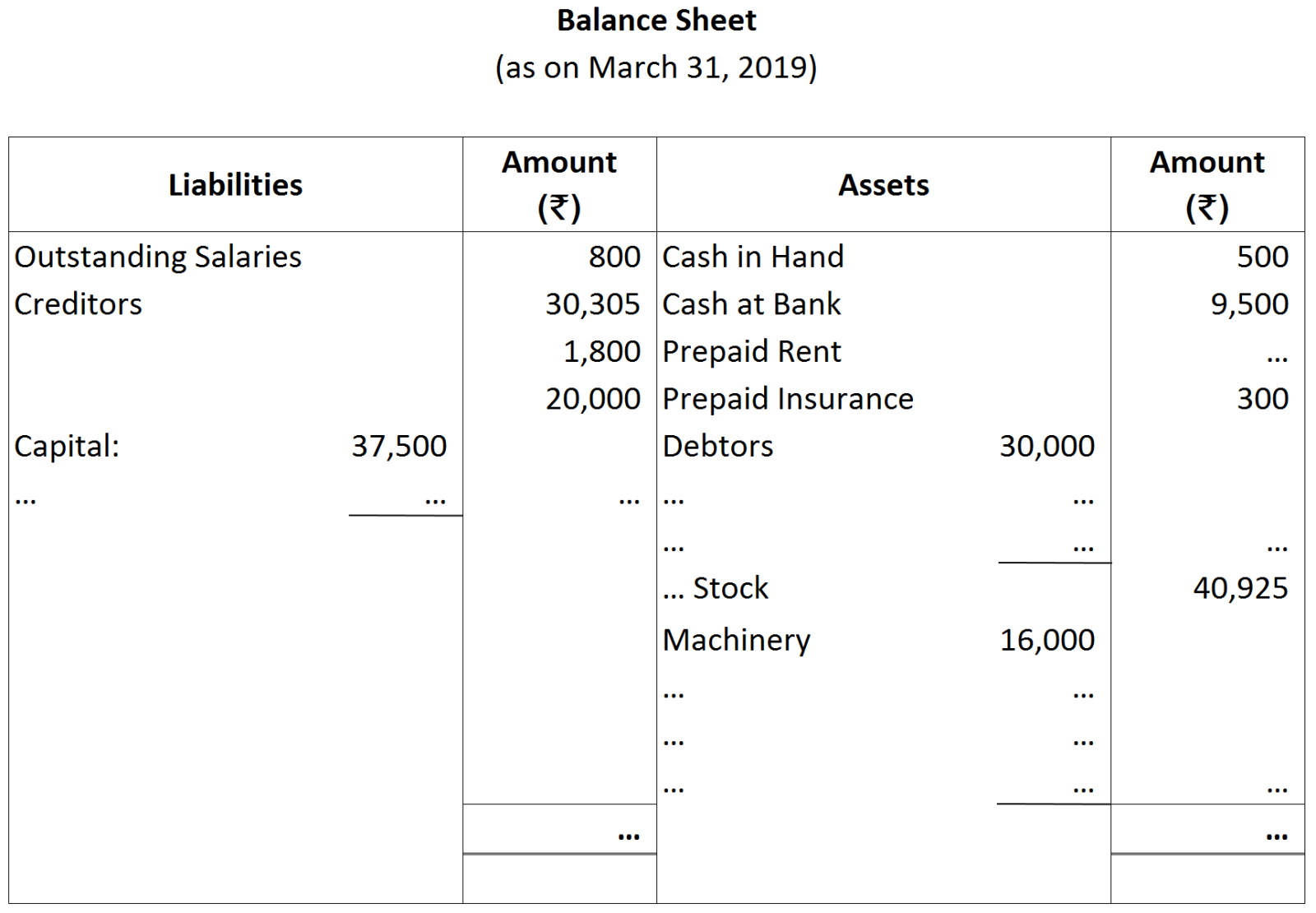
From the following Trial Balance of Mr. Ramesh, you are required to complete the missing figures of Trading Account, Profit and Loss Account and Balance Sheet for the year ending 31st March, 2019:
Adjustments:
  1. Amount of Purchases includes a machine purchased on 1st October, 2018 for ₹ 4,000 and wages include ₹ 2,000 paid for its installation.
  2. Provide for depreciation on Machinery @ 10%.
  3. Stock on 31st March, 2019 was worth ₹ 40,925.
  4. Salaries unpaid ₹ 800 and rent is paid up to 30th June, 2019.
  5. Write off further bad debte ₹ 400 and create a provision of 5% debtors for doubtful debts.
  6. Prepaid insurance ₹ 300.

From the following balances of the year ended 31st December, 2013 and additional information, prepare the trading and profit and loss account and the balance sheet M/s Ram Lai Sons.
Name of AccountsAmt(Rs)Name of AccountsAmt(Rs)
Capital80,000Insurance600
Purchases82,000Salaries12,500
Sales1,10,000Bad Debts200
Return Outwards1,000Carriage on purchases200
Building45,000Commission (credit)1,500
Opening Stock15,000Cash in hand5,000
Debtors20,100Cash at Bank25,000
Creditors28,000Sales tax paid5,000
Furniture7,000Sales tax collected3,500
Wages1,800Interest on investment500
Rent5,100  
Additional Information
i. Closing stock was valued at Rs 20,000.
ii. Provide depreciation on building @ 5% and on furniture @10%.
iii. Outstanding salaries Rs 1,000.
iv. Unexpired insurance Rs 50.
v. Accrued commission Rs 300.
vi. Provide for manager's commission at 5% on net profit after charging such commission.
Briefly explain the concept of GST.
Prepare a trading and profit and loss account of M/s Green Club Ltd. for the year ending March 31, 2017. from the following figures taken from his trial balance :
Adjustments:
  1. Depreciation charged on machinery @ 5% p.a.
  2. Further bad debts 1,500, discount on debtors @ 5% and make a provision on debtors @ 6%.
  3. Wages prepaid 1,000.
  4. Interest on investment @ 5% p.a.
  5. Closing stock 10,000
Give journal entries for the following adjustments in final accounts assuming CGST and SGST @ 9% each:
  1. Closing Stock ₹ 80,000.
  2. Outstanding salaries ₹ 21,000.
  3. Insurance premium amounting to ₹ 15,000 is paid in advance.
  4. ₹ 9,000 received for rent related to the next accounting period.
  5. Commission accrued but not received during the accounting year ₹ 1,500.
  6. Write off ₹ 500 as further bad debts.
  7. Goods costing ₹ 8,000 destroyed by fire and insurance company admitted a claim for ₹ 5,000 only.
  8. Goods costing ₹ 10,000 (Market value ₹ 11,000) were taken by proprietor for personal use.
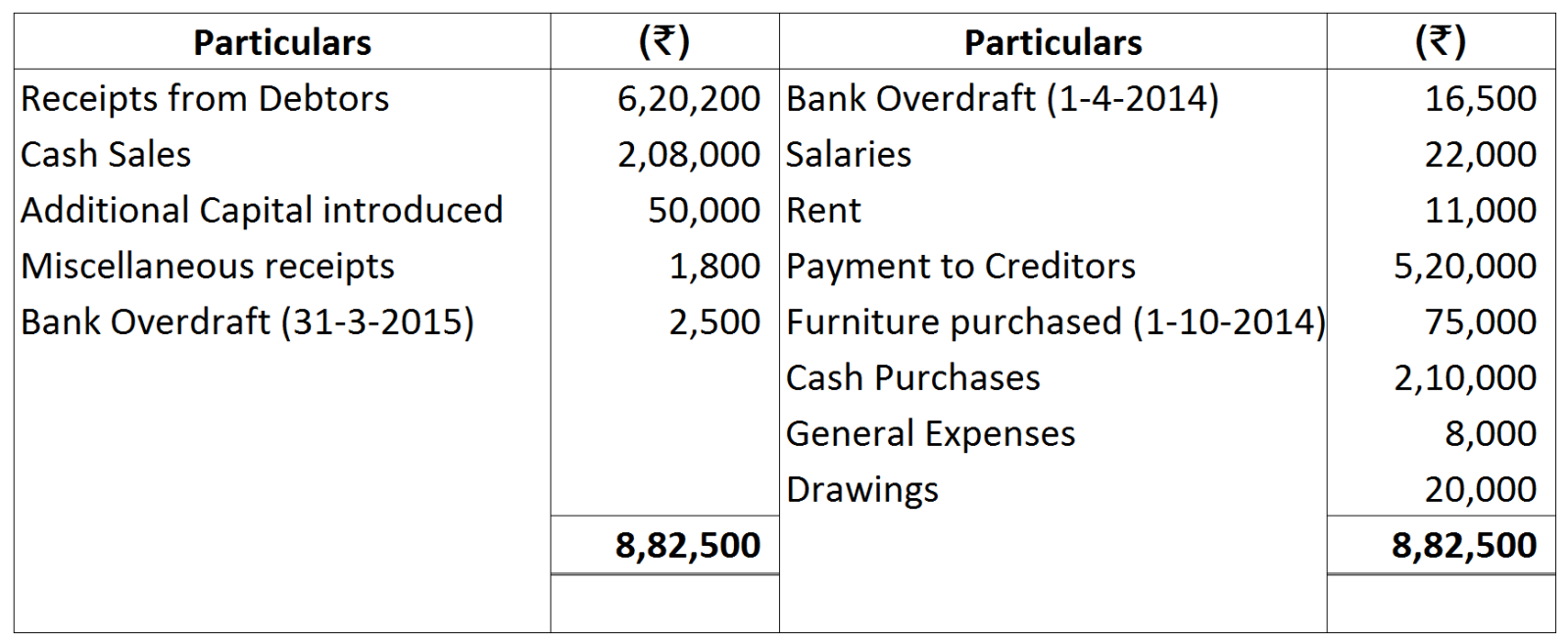
Mr. Manoj keeps incomplete records. During the year $2014-15$ the analysis of his cash book was as under:

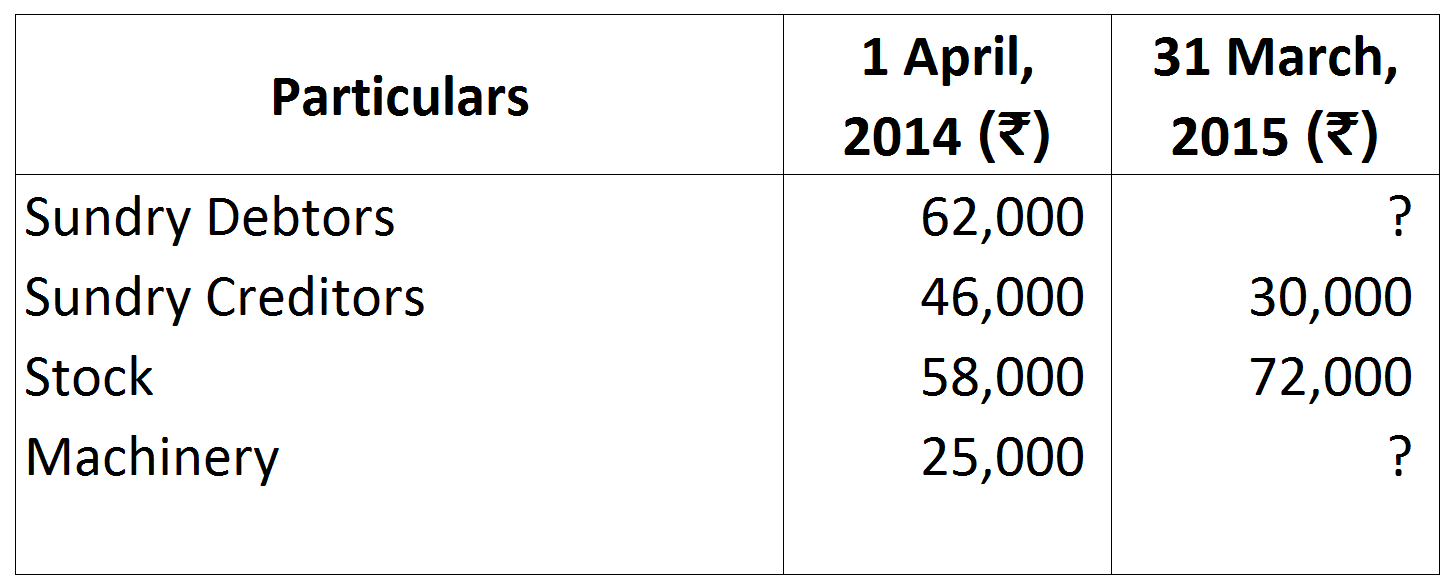
Other Informations:
  1. Credit sales during the year were ₹ $7,00,000$
  2. Sales Returns were ₹ $10,000$
  3. Discount allowed to debtors ₹ $8,400$
  4. Discount received from creditors ₹ $6,000$
  5. Bad-debts written off during the year ₹ $11,400$
Adjustments:
  1. Write off further bad-debts ₹ $2,000$.
  2. Provide $5\%$ for doubtful debts and $2\%$ for discount on debtors and creditors.
  3. Charge $10\%$ p.a. depreciation on furniture.
  4. One month salaries and one month rent was outstanding.
Prepare Trading and Profit & Loss Account for the year ended $31^{st}$ March, $2015$ and a Balance Sheet as at that date.