Question
Give two examples each of longitudinal waves and transverse waves.

Answer

Longitudinal waves:
  1. The waves which travel along a spring when it is pushed and pulled at one end.
  2. Sound waves in air.
Transverse waves:
  1. The waves produced by moving one end of a long spring up and down rapidly, while other end is fixed.
  2. The water waves or ripples formed on the surface of water in a pond.

Need a full question paper?

Generate a complete, print-ready paper with questions like this in minutes — across 16+ boards, with answer keys.

Start Generating Free

Similar questions

A ball X of mass 1kg travelling at 2m/s has a head-on collision with an identical ball Y at rest. X stops and Y moves off. Calculate the velocity of Y after the collision.

Which has more number of atoms?
100g of N2 or 100g of NH3
Describe structure of a chromosome.
On the basis of shape and functions of cells how epithelial tissues are classified? Explain with diagram the various types of epithelial tissues.
How will you separate camphor, common salt and iron nails from their mixture?
Iron powder and sulphur powder were mixed together and divided into two parts A and B. When part A was heated strongly over a burner, then a substance C was formed. The part B was, however, not heated at all. When dilute hydrochloric acid was added to substance C, then gas D was evolved and when dilute hydrochloric acid was added to part B then gas E was evolved.
  1. What type of substance is B?
  2. What type of substance is C?
  3. Name the gas (i) D, and (ii) E?
  4. Write one characteristic property of gas D.
Which separation techniques will you apply for the separation of the following?
  1. Sodium chloride from its solution in water.
  2. Ammonium chloride from a mixture containing sodium chloride and ammonium chloride.
  3. Small pieces of metal in the engine oil of a car.
  4. Different pigments from an extract of flower petals.
  5. Butter from curd.
  6. Oil from water.
  7. Tea leaves from tea.
  8. Iron pins from sand.
  9. Wheat grains from husk.
  10. Fine mud particles suspended in water.

Discuss the various methods which are used to control plant diseases.
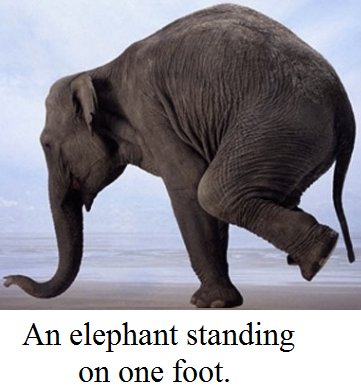
An elephant weighing 40,000N stands on one foot of area 1000cm2 whereas a girl weighing 400N is standing on one ‘stiletto’ heel of area 1cm2.

  1. Which of the two, elephant or girl, exerts a larger force on the ground and by how much?
  2. What pressure is exerted on the ground by the elephant standing on one foot?
  3. What pressure is exerted on the ground by the girl standing on one heel?
  4. Which of the two exerts larger pressure on the ground: elephant or girl?
  5. What is the ratio of pressure exerted by the girl to the pressure exerted by the elephant?
Write down symptoms of sick animals. Discuss any two diseases of cattle.