Question
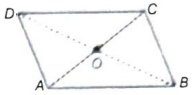
Given a parallelogram ABCD Complete each statement along with the definition or property used.
Image
(i) $A D=$ _____________ $\qquad\text{ }$ (ii) $\angle D C B=$ _____________
(iii) $O C=$ _____________$\qquad$ (iv) $m \angle D A B+m \angle C D A=$ _____________
Answer

(i) $A D=B C$, since in a parallelogram, opposite sides are equal.
(ii) $\angle D C B=\angle D A B$, since in a parallelogram, opposite angles are equal.
(iii) $O C=O A$, since the diagonals of a parallelogram bisect each other.
(iv) $m \angle D A B+m \angle C D A=180^{\circ}$, since in a parallelogram, the sum of any two adjacent angle is $180^{\circ}$.

Need a full question paper?

Generate a complete, print-ready paper with questions like this in minutes — across 16+ boards, with answer keys.

Start Generating Free

Similar questions

When is the sum of two multiples of 3 , a multiple of 6 and when is it not? Explain the different possible cases, and generalise the pattern.
Determine whether the statements below are 'Always True', 'Sometimes True', or 'Never True'. Explain your reasoning.
(i) The product of a multiple of 6 and a multiple of 3 is a multiple of 9 .
(ii) The sum of three consecutive even numbers will be divisible by 6 .
(iii) If abcdef is a multiple of 6 , then badcef will be a multiple of 6 .
(iv) $8(7 b-3)-4(11 b+1)$ is a multiple of 12 .
Which of the following numbers are not perfect squares?
(i) 2032
(ii) 2048
(iii) 1027
(iv) 1089
A mixture of paint is prepared by mixing 1 part of red pigment with 8 parts of base. In the following table, find the parts of base that need to be added.
Parts of red pigment1471220
Parts of base8
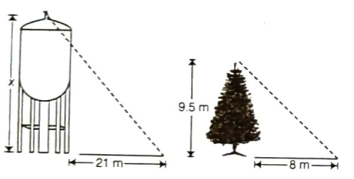
A water tank casts a shadow 21 m long. A tree of height 9.5 m casts a shadow 8 m long at the same time. The lengths of the shadows are directly proportional to their heights. Find the height of the tank.
Image
Which of the following are perfect cubes?
(i) 400 $\qquad~~$ (ii) 3375 $\quad$ (iii) 8000
(iv) 15625 $\quad$ (v) 9000 $\quad$ (vi) 6859
(vii) 2025 $\quad~$ (viii) 10648
Fill in the blanks in the following table by a suitable number, if $x$ and $y$ vary directly.
x2--124-
y31512--21
Suppose you are using the number system that uses sticks to represent numbers, as in Method 1. Without using either the number names or the numerals of the Hindu number system, give a method for adding, subtracting, multiplying and dividing two numbers or two collections of sticks.
Expand $(3 j+2 k)^2$ using both the identity and by applying the distributive property.
ABCDE is a regular pentagon. The bisector of angle A meets the side CD at M. Find $\angle \text{AMC}.$