MCQ
Given the sets $A = \{ 1,\,2,\,3\} ,\,B = \{ 3,4\} , C = \{4, 5, 6\}$, then $A \cup (B \cap C)$ is
  • A
    $\{3\}$
  • $\{1, 2, 3, 4\}$
  • C
    $\{1, 2, 4, 5\}$
  • D
    $\{1, 2, 3, 4, 5, 6\}$

Answer

Correct option: B.
$\{1, 2, 3, 4\}$
b
(b) $B \cap C = \{ 4\} $, $A \cup (B \cap C) =$ $\{1, 2, 3, 4\}.$

Need a full question paper?

Generate a complete, print-ready paper with questions like this in minutes — across 16+ boards, with answer keys.
Start Generating Free

Similar questions

The common roots of the equations ${{x}^{12}}-1=0$, ${{x}^{4}}+{{x}^{2}}+1=0$ are [EAMCET 1989]
Let ${S_n} = 1 + q + {q^2} + ..... + {q^n}$ and ${T_n} = 1 + \left( {\frac{{q + 1}}{2}} \right) + {\left( {\frac{{q + 1}}{2}} \right)^2} + ...... + {\left( {\frac{{q + 1}}{2}} \right)^n}$ where $q$ is a real number and $q \ne 1$. If ${}^{101}{C_1} + {}^{101}{C_2}.{S_1} + ...... + {}^{101}{C_{101}}.{S_{100}} = \alpha\, {T_{100}}$ then $\alpha $ is equal to
Let the lines $(2-i) z=(2+i) \bar{z}$ and $(2+i) z+(i-2) \bar{z}-4 i=0,$ (here $\left.i^{2}=-1\right)$ be normal to a circle $C$. If the line $iz +\overline{ z }+1+ i =0$ is tangent to this circle $C$, then its radius is
A bag contains $3$ white and $2$ black balls and another bag contains $2$ white and $4 $ black balls. A ball is picked up randomly. The probability of its being black is
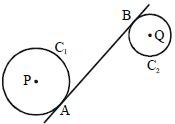
In the figure shown, radius of circle $C_1$ be $ r$ and that of $C_2$ be $\frac{r}{2}$ , where $r= \frac {1}{3} PQ,$ then length of $AB$ is (where $P$ and $Q$ being centres of $C_1$ $\&$ $C_2$ respectively)
If ${({a^m})^n} = {a^{{m^n}}}$, then the value of $'m'$ in terms of $'n'$ is
$\frac{{\tan \,\,\left( {x\,\, - \,\,{\textstyle{\pi  \over 2}}} \right)\,\,.\,\,\cos \,\,\left( {{\textstyle{{3\pi } \over 2}}\,\, + \,\,x} \right)\,\, - \,\,{{\sin }^3}\,\left( {{\textstyle{{7\pi } \over 2}}\,\, - \,\,x} \right)}}{{\cos \,\,\left( {x\,\, - \,\,{\textstyle{\pi  \over 2}}} \right)\,\,.\,\,\tan \,\,\left( {{\textstyle{{3\pi } \over 2}}\,\, + \,\,x} \right)}}$ when simplified reduces to :
If the parabola ${y^2} = 4ax$ passes through the point $(1, -2)$, then the tangent at this point is
The relation $R$ defined on the set of natural numbers as $(a, b) : a$ differs from $b$ by $3$ is given:
${\rm{cosec }}A - 2\cot 2A\cos A = $