Question
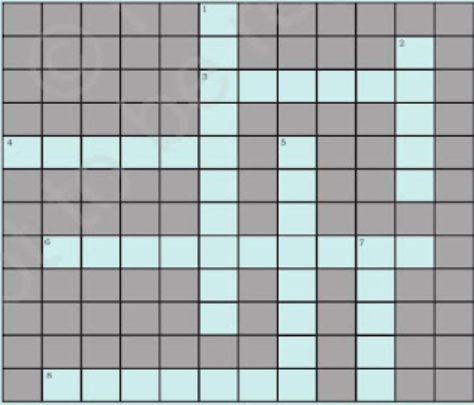
Here is a crossword puzzle: Good luck!
Image
Across
$3.$ Liquid waste products
$4.$ Solid waste extracted in sewage treatment
$6.$ A word related to hygiene
$8.$ Waste matter discharged from human body
Down
$1.$ Used water
$2.$ A pipe carrying sewage
$5.$ Micro-organism which causes cholera
$7.$ A chemical to disinfect water
Answer

Get the step-by-step solution for this question inside the Vidyadip app.

Get the answer in the app

Need a full question paper?

Generate a complete, print-ready paper with questions like this in minutes — across 16+ boards, with answer keys.

Start Generating Free

Similar questions

Explain the different types of inorganic and organic impurities generally present in sewage.
Ria went to a plant nursery with her mother. The gardner approached them and asked about their choice of plant. Ria’s mother wanted a flowering plant with fragrance. Gardner showed them a plant and told them that this variety has been prepared by a method of vegetative propagation of stems. Ria grew curious and asked some Questions to gardner.
  1. What is vegetative propagation?
  2. What are methods of producing new plants using stem?
  3. Name any two plants where this method of reproduction is used. Is this a asexual or sexual method?
  4. What values do you observe in Ria?
State any two uses of each (i) plane mirror (ii) convex mirror (iii) concave mirror (iv) concave lens and (v) convex lens.
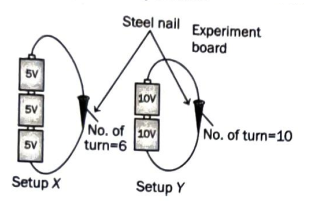
Geeta had setup the experiment as shown in figure.
Image

She found out that the steel nail in setup X had attracted less iron pins than the steel nail in setup Y. What could be the reason for this?
Draw in your notebook the symbols to represent the following components of electrical circuits: connecting wires, switch in the ‘OFF’ position, bulb, cell, switch in the ‘ON’ position, and battery
Rainforests offers hospitable climatic conditions to support huge population of animals. Explain how?
What is the role of natural indicators in identifying acidic and basic substances?
Match the items given in Column $I$ with one or more items of Column $II.$
  Column I   Column II
$(a)$ A plane mirror. $(i)$ Used as a magnifying glass.
$(b)$ A convex mirror. $(ii)$ Can form image of objects spread over a large area.
$(c)$ A convex lens. $(iii)$ Used by dentists to see enlarged image of teeth
$(d)$ A concave mirror. $(iv)$ The image is always inverted and magnified.
$(e)$ A concave lens. $(v)$ The image is erect and of the same size as the object.
    $(vi)$ The image is erect and smaller in size than the object.
Explain the various steps involved in water treatment plant.
Distinguish between a parasite and a saprotrophs.