Question
How do metals react with oxygen?

Answer

Metals combine with oxygen on heating in air and metal oxides are formed.
Metal + Oxygen $\rightarrow$ Metal oxide
$2 Na _{( s )}+ O _{2( g )} \longrightarrow Na _2 O _{( s )}$
Sodium oxide
$2 Mg _{( s )}+ O _{2( g )} \longrightarrow 2 MgO _{( s )}$
Magnesium oxide

Need a full question paper?

Generate a complete, print-ready paper with questions like this in minutes — across 16+ boards, with answer keys.
Start Generating Free

Similar questions

What possible values of resultant resistance one can get by combining two resistances, one of value $2$ ohm and the other $6$ ohm?
What is meant by dominant genes and recessive genes? Give one example of each.
Find the position and nature of the image of an object $5\ cm$ high and 10cm in front of a convex lens of focal length $6\ cm.$
XY compound is formed by X (Atomic number 11) and Y (Atomic number 17), then answer the questions given below.
  1. Determine the position of the element X and Y periodic table.
  2. X and Y belongs to which of the following: metals, nonmetals or metalloids?
  3. From which block the elements X and Y are?
  4. Determine the electronic configuration and valency of these elements.
What do you mean by a precipitation reaction? Explain giving an example.
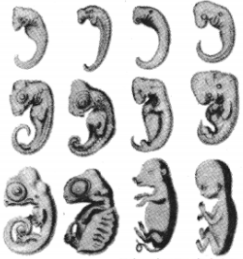
Observe the picture and answer the following questions:
Image

(1) Which evidence of evolution is shown in the picture?
(2) What can be proven with this proof?
(3) Give one more example of evidence of evolution.
A copper sphere of $100g$ mass is heated to raise its temperature to $100^\circ C$ and is released in water of mass $195g$ and temperature $20^\circ C$ in a copper calorimeter. If the mass of calorimeter is $50g,$ what will be the maximum temperature of water?
Ten bulbs are connected in a series circuit to a power supply line. Ten identical bulbs are connected in a Parallel circuit to an identical power supply line.
  1. Which circuit would have the highest voltage across each bulb?
  2. In which circuit would the bulbs be brighter?
  3. In which circuit, if one bulb blows out, all others will stop glowing
  4. Which circuit would have less current in it?
  1. A ray of white light breaks up into its components while passing through a glass prism. Draw a ray diagram to show the path of rays?
  2. Mark the least deviated colour in your diagram?
  3. Why do different coloured rays deviate differently in a prism?
Identify the type of chemical reaction given below:
i. $CuSO _4+ Fe \longrightarrow FeSO _4+ Cu$
ii. $\quad 2 M g + O _2 \longrightarrow 2 M g O$
iii. $\quad 2 KClO _3 \longrightarrow 2 K C l +3 O _2 \uparrow$