Question
How does a metal react with water?

Answer

Sodium and potassium react vigorously with water to evolve hydrogen. Calcium reacts with water slowly and less vigorously to evolve hydrogen and the metal floats on water. Magnesium reacts with hot water to evolve hydrogen. Aluminium, iron and zinc do not react with cold or hot water but they react with steam to evolve their oxides and hydrogen.
$2 Na _{( s )}+2 H _2 O _{( l )} \rightarrow 2 NaOH _{( aq )}+ H _{2( g )}+\text { heat energy }$
$2 K _{( s )}+2 H _2 O _{( l )} \rightarrow 2 KOH _{( aq )}+ H _{2( g )}+\text { heat energy }$
$2 Ca _{( s )}+2 H _2 O _{( l )} \rightarrow 2 Ca ( OH )_{2( aq )}+ H _{2( g )}$
$Mg _{( s )}+2 H _2 O _{( hot )} \rightarrow Mg \left( OH _{2( aq )}+ H _{2( g )}\right.$
$2 Al _{( s )}+3 H _2 O _{\text {steam }} \rightarrow Al _2 O _{3( s )}+3 H _{2( g )}$
$3 Fe _{( s )}+4 H _2 O _{\text {steam }} \rightarrow Fe _3 O _4+4 H _{2( g )}$
$Zn _{( s )}+ H _2 O _{\text {steam }} \rightarrow ZnO _{( s )}+ H _{2( g )}$

Need a full question paper?

Generate a complete, print-ready paper with questions like this in minutes — across 16+ boards, with answer keys.

Start Generating Free

Similar questions

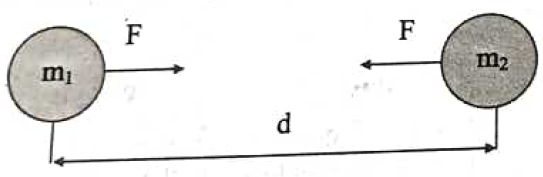
Observe the figure and answer the questions:
Image
$i.$ State Newton's universal law of gravitation.
$ii.$ If the distance between the two bodies is tripled, how will the gravitational force between them change?
$iii.$ What will happen to gravitational force, if mass of one of the objects is doubled?
An object of height 4 cm is kept in front of a concave lens of focal length 20 cm. If the object distance is 30 cm, find the position and the height of the image.
Will light travel through a glass slab with the same velocity as it travels in air?
State the factors on which the strength of an electromagnet depends. How does it depend on these factors?
What happens when silver chloride is exposed to sunlight? Write a chemical equation for this reaction. Also give one use of such a reaction.
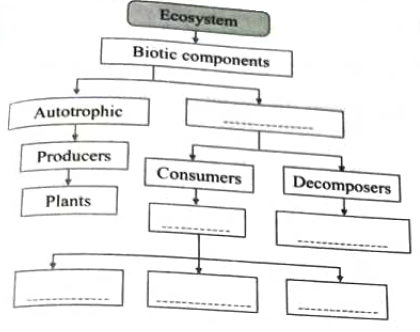
Complete the flowehart:
Image
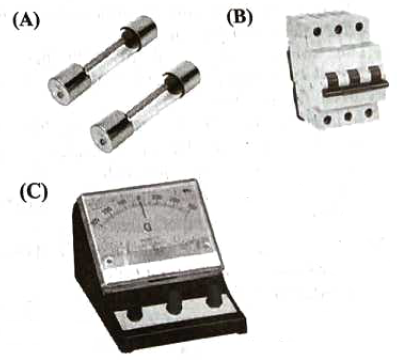
Identify figures A, B, C and give their uses:

Image
Derive the expression for the heat produced due to a current ‘I’ flowing for a time interval ‘t’ through a resistor ‘R’ having a potential difference ‘V’ across its ends. With which name is this relation known?
Read the following paragraph and answer the questions based on it:
If heat is exchanged between a hot and cold object, the temperature of the cold object goes on increasing due to gain of energy and the temperature of the hot object goes on decreasing due to loss of energy.
The change in temperature continues till the temperatures of both the objects attain the same value. In this process, the cold object gains heat energy and the hot object loses heat energy. If the system of both the objects is isolated from the environment by keeping it inside a heat resistant box, then no energy can flow from inside the box or come into the box.

i. Heat is transferred from where to where?
ii. Which principle do we learn about from this process?
iii. How will you state the principle briefly?
Explain the application of heating effect of electric current in an electric bulb.